All posts
8 Best Credit Management Software in 2026 (AI Monetization)
Blog· Ryan Echternacht·Nov 3, 2026
Credit-based pricing is becoming a popular way for software and AI companies to charge customers for product usage. According to DataDab's B2B SaaS AI Pricing Premium Index, 35.2% of priced AI offers use metered credits.
However, managing credits comes with several challenges. You need to track customer balances, record credit consumption, process automatic top-ups, and prevent users from exceeding their limits.
Doing this manually can lead to billing errors, revenue leakage, and unhappy customers.
The best credit management software automates these routine credit processes while giving customers more control over their spending.
This guide compares the best credit management platforms for AI monetization and helps you choose the right software for your needs.
TL;DR
Here are the best credit management software for monetizing AI products.
- Stigg
- Metronome
- Maxio
- Orb
- Zuora
- Lago
- Zenskar
Top 8 Credit Management Platforms for AI Monetization in 2026
These are the best credit management software solutions to consider.
1. Schematic
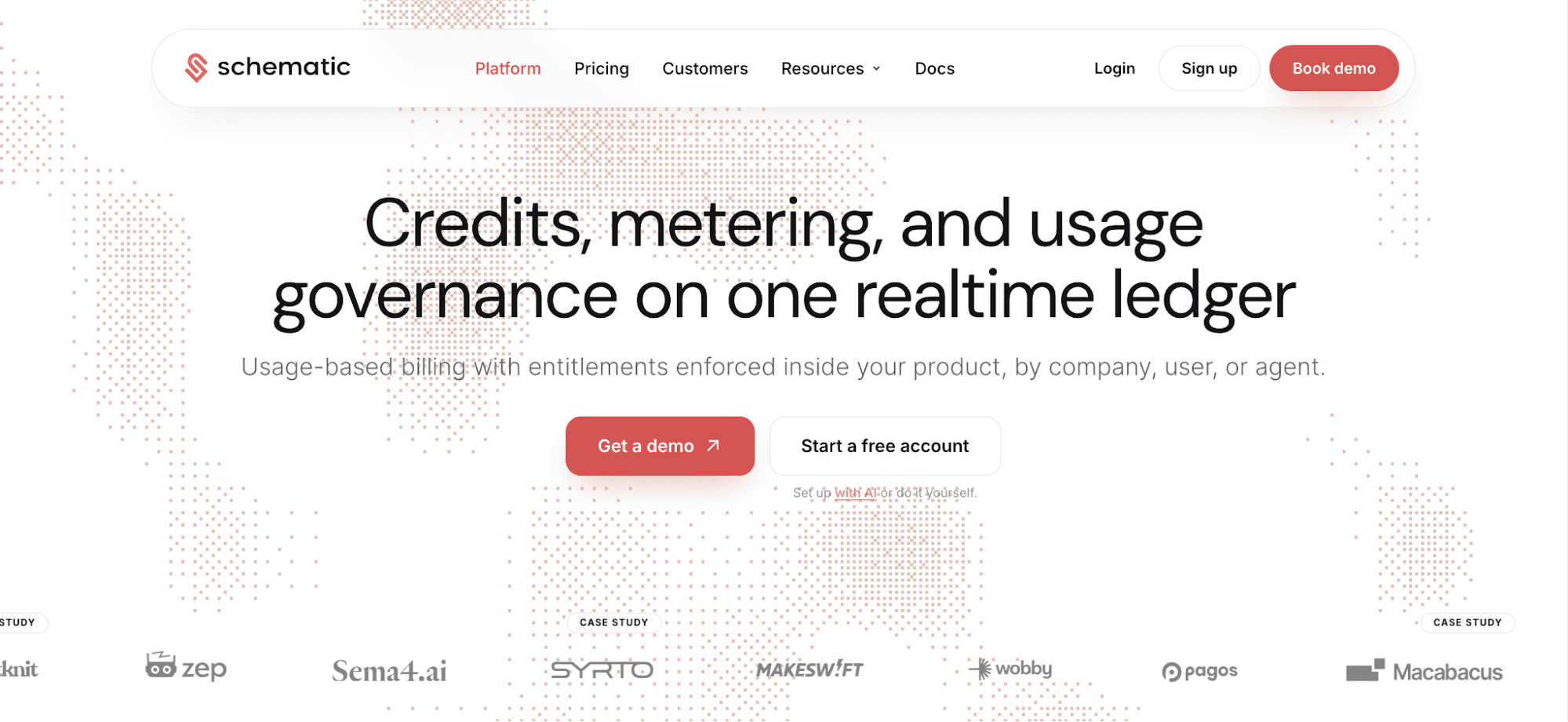
Schematic is the best credit management platform for software and AI companies selling usage-based plans to enterprises.
Credits, metering, software entitlements, and usage governance controls live on a real-time ledger. Teams can track credit consumption, enforce limits, and give customers full visibility and control over their usage.
Schematic stands out for its enterprise credit wallets. These can record every grant, burn-down, automatic top-up, and rollover that finance teams can reconcile.
Native credit wallets also show customers exactly what they use and owe to prevent runaway bills or unexpected access throttling.
Before a paid action runs, the server checks what the user is entitled to based on their subscription plan, payment status, or custom overrides.
Schematic compares the cost of a feature with the company's credit balance and usage limits. It returns the credit rate and current balance so the application can decide whether to proceed.

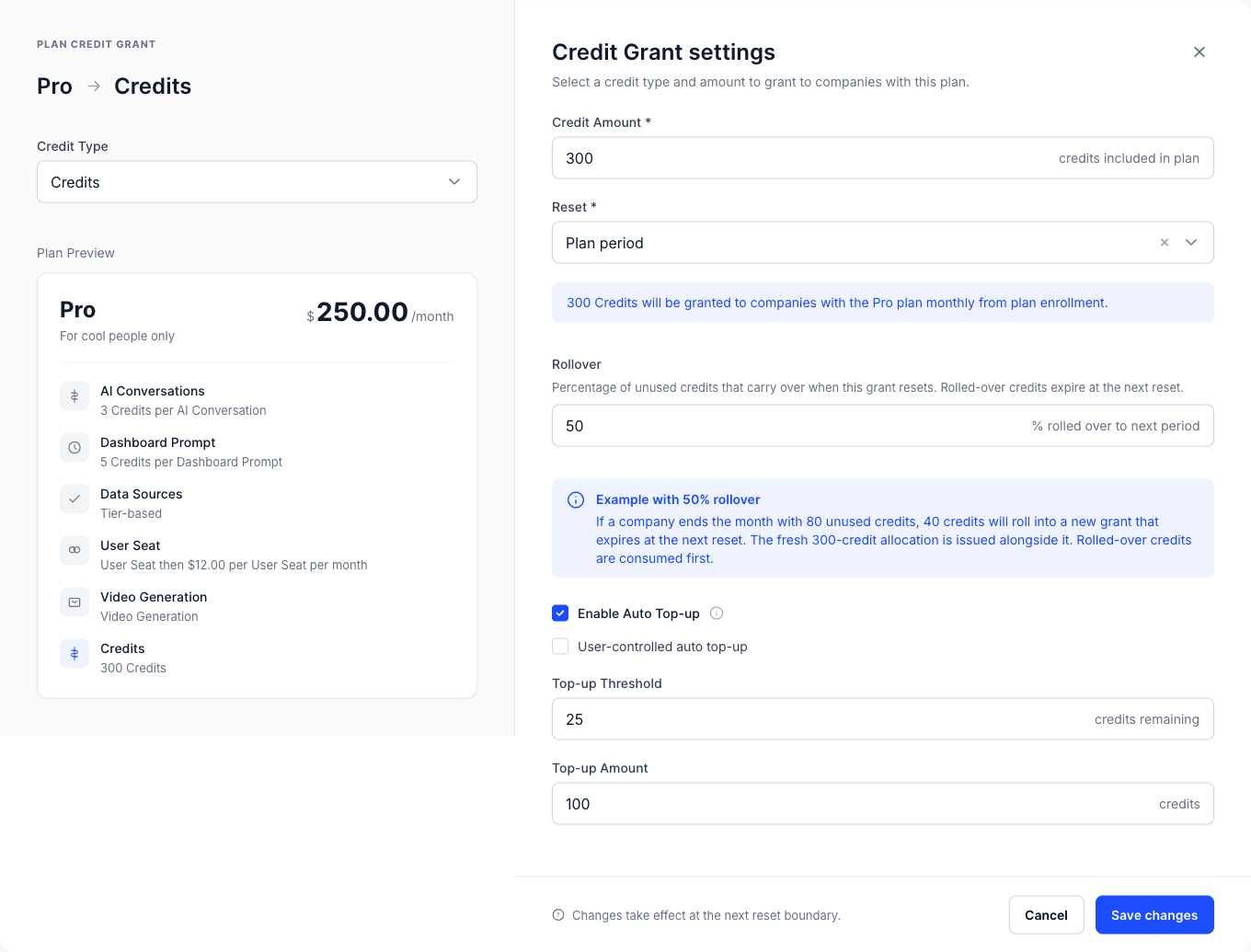
Schematic also supports credit rollovers and expiry windows. Unused credits can carry into the next billing period or expire based on predetermined rules. Priority consumption lets promotional or older credits burn down first.
For AI agents running at the same time, concurrency-safe holds reserve credits before work starts. Schematic commits or releases those credits based on the result, preventing two agents from spending the same balance.
Key Features
- Enterprise credit wallets: Give enterprise customers real-time visibility into credit usage and spend forecasts.
- AI metering: Track AI credits, tokens, API calls, and other usage events once to power invoices, entitlements, and predictive analytics.
- Configurable spending limits: Let customers set usage caps and spending limits per company, per seat, or per agent.
- Runtime entitlement engine: Monitor entitlements against their cap and enforce limits as soon as the customer exceeds the threshold.
- Rollovers, expiry windows, and priority consumption rules: Carry unused credits forward, set expiration dates, and use promotional or older credits first.
- Concurrency-safe holds: Reserve, commit, or release credits to prevent AI agents from spending the same balance twice.
- Real-time event log: View credit grants, deductions, and entitlement checks as they happen for faster debugging and implementation.
- Credit-based revenue recognition: Record credit activity through an append-only, export-ready ledger to meet ASC 606 rules.
- Plan versioning: Update pricing plans, migrate customers, and maintain legacy pricing without code deployment.
- Schematic MCP: Let AI assistants access financial data, check current balances, grant credits, and identify companies near their limits.
2. Stigg
Source: Stigg.io
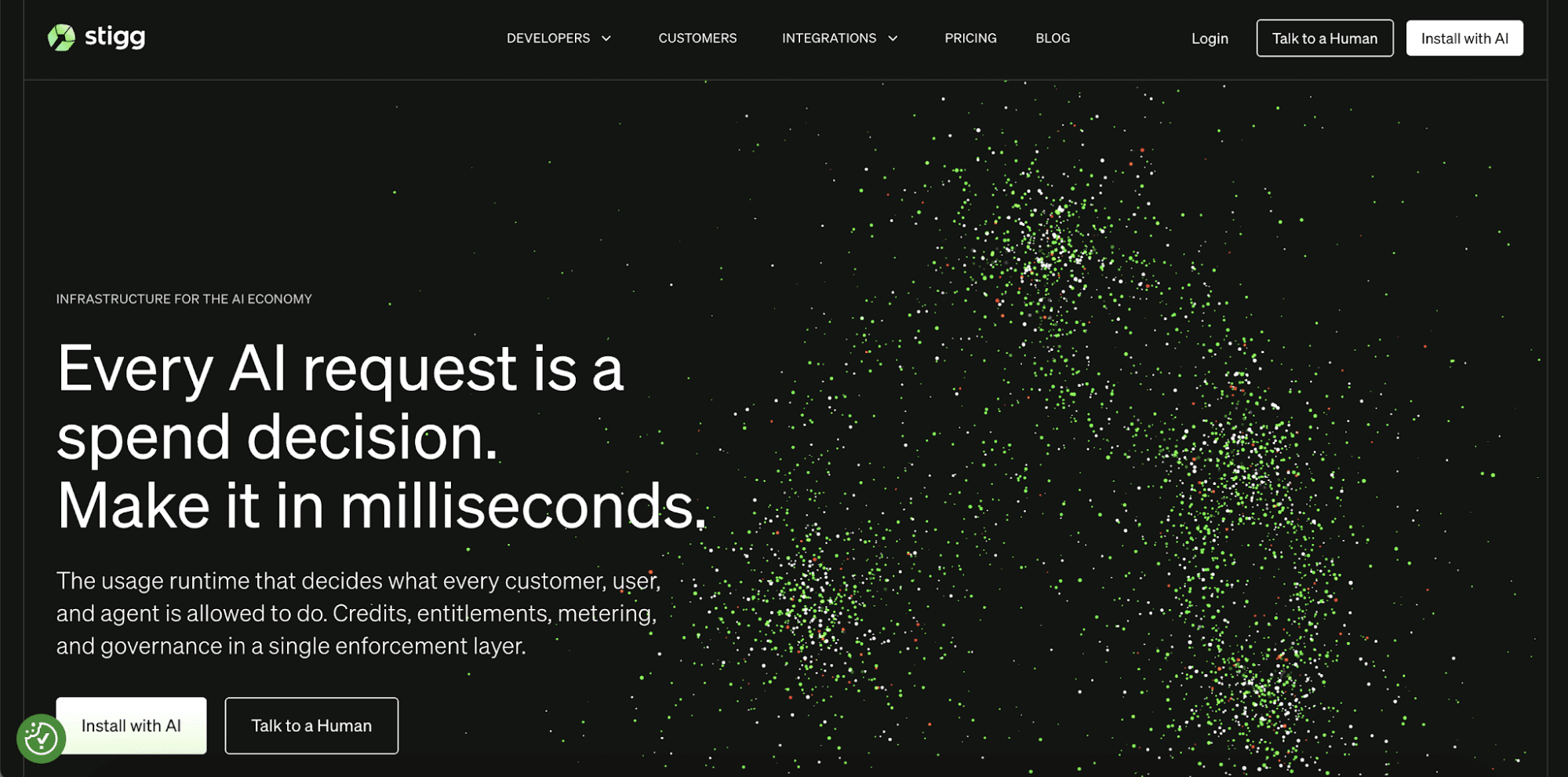
Stigg is known for its financial-grade credit infrastructure. It helps software and AI companies manage credit-based pricing and enforce credit limits before customers exceed their budgets.
Stigg's credit engine includes customer wallets, shared pools, and a double-entry ledger. Each pool contains separate credit grants for every product, workspace, user, or agent.
Credit teams can set each grant's amount, effective date, expiration date, category, cost basis, and consumption priority.
Stigg then applies these rules when customers spend credits on metered features. For example, promotional credits can be consumed before paid credits.
The ledger records two entries per transaction to prevent overwritten balances. It also tags all deductions so they're easier to group or filter.
Stigg works alongside existing billing solutions rather than replacing them. Engineering runs the credit engine using one SDK without touching other financial systems.
Key Features
- Credit wallets: Manage prepaid, recurring, and promotional credit grants with configurable expiration and priority consumption rules.
- Double-entry ledger: Record every credit transaction with matching debit and credit entries for accurate balance tracking.
- Credit enforcement: Check remaining credits, usage limits, and entitlements before each request runs.
- Real-time metering: Track and aggregate tokens, inference calls, and agent actions as customers use your product.
- Self-serve controls: Let customers set budget caps for individual users, teams, and AI agents.
3. Metronome
Source: Metronome.com
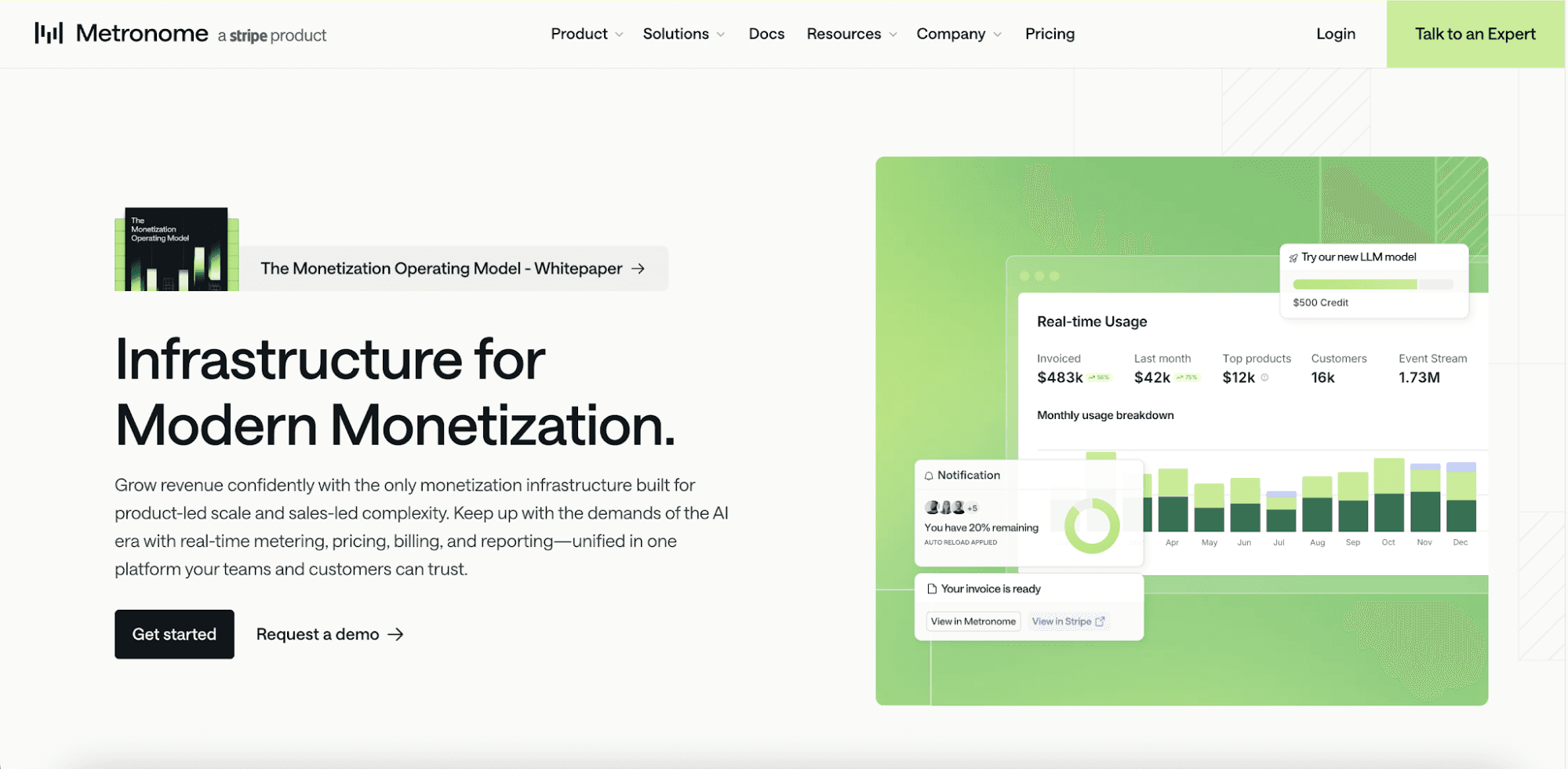
Metronome provides an AI monetization infrastructure with pricing levers for prepaid credits and product-specific credits.
With prepaid pricing, customers purchase credits in bulk before using the product. Companies can set minimum purchase amounts and offer a discounted per-unit rate depending on purchasing volume.
Metronome can also grant free credits for specific products or services. These work well for trial pricing or targeted promotions without affecting the revenue from other products.
The platform also applies credits and commitments to individual invoice line items. This helps finance teams separate committed spending from overage charges, monitor financial health, and improve revenue reporting for each product.
Plus, customers can see their usage in real time through the built-in billing dashboard. Buyers can even configure alerts and limits to gain more predictability over their spending.
Key Features
- Credit software pricing levers: Support prepaid credits, product-specific credits, volume discounts, and custom pricing models, among others.
- In-product billing dashboard: Show customers real-time usage, spending, and configurable spending alerts.
- Real-time reports and insights: Monitor committed revenue, retention rates, and margins to make data-driven credit decisions.
- Centralized rate cards: Manage pricing rules, rates, credit models, and commitments in one place.
- Granular customer configuration: Set custom contract terms, credit policies, discounts, pricing overrides, and scheduled price changes for individual customers.
4. Maxio
Source: Maxio.com
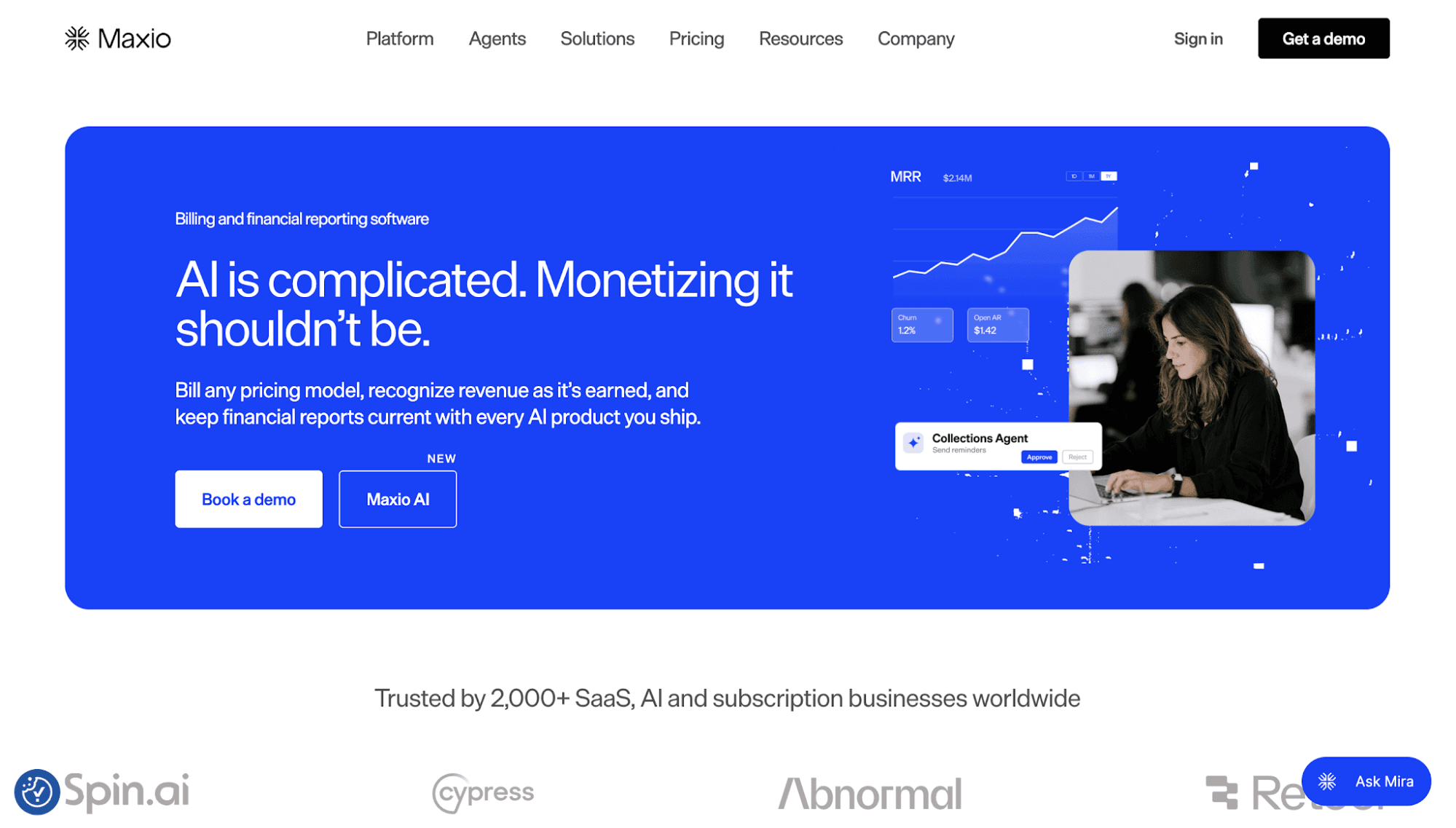
Maxio combines billing, financial reporting, and credit wallets in a monetization infrastructure. Native wallets track remaining tokens, credits, or dollars, with balances updated when usage arrives from a connected meter or manual ledger entry.
Teams can add credit packs to the product catalog and set expiration and rollover rules without engineering help.
When a customer starts a subscription, Maxio creates and funds a wallet based on the plan's entitlements. It can reload credits on a set schedule or accept manual top-ups.
Each usage event enters the ledger. Teams can easily see accounts with low balances, trigger automatic credit refills, and check current balances through an API or webhook.
Beyond credit management, Maxio automates invoice delivery, subscription management, and revenue recognition.
Key Features
- Credit wallets: Track prepaid credits, tokens, and dollar balances. You can also configure top-ups, expiration dates, and rollover policies.
- Native ledger: Record every credit activity from connected meters or manual data entries.
- Usage metering and billing: Charge customers for credits, API calls, AI tokens, seats, or data volume.
- Automated invoicing and revenue recognition: Generate accurate invoices and automate revenue reporting to simplify ASC 606 and IFRS 15 compliance.
- Subscription management: Manage recurring billing, automate subscription renewals, and run dunning workflows from the same platform.
5. Orb
Source: withOrb.com
Orb is a popular usage-based billing platform that can support different pricing models, including prepaid credits.
Platform-wide credits let customers spend credits on all tools inside the application. Meanwhile, product-specific credits limit credit consumption to certain features or SKUs.
Orb also provides a credit ledger that can report on credit-based revenue and simplify revenue recognition under ASC 606.
To support product-led go-to-market strategies, Orb can allocate free credits to new customers on a trial or freemium pricing plan.
Orb even allows teams to experiment with revenue and credit data to find the ideal price points and make more informed credit decisions.
Key Features
- Prepaid credits: Offer platform-wide or product-specific credits for paid plans, trials, and usage commitments.
- Credit ledger: Track credit consumption and report on revenue in one place.
- Pricing iteration and simulations: Test pricing changes and experiment on revenue data before launching new plans.
- Automated invoicing and revenue recognition: Translate raw usage data into accurate invoices and recognize revenue in compliance with ASC 606 rules.
- Experience kit: Build customer-facing billing dashboards, pricing calculators, and checkout flows.
6. Zuora
Source: Zuora.com
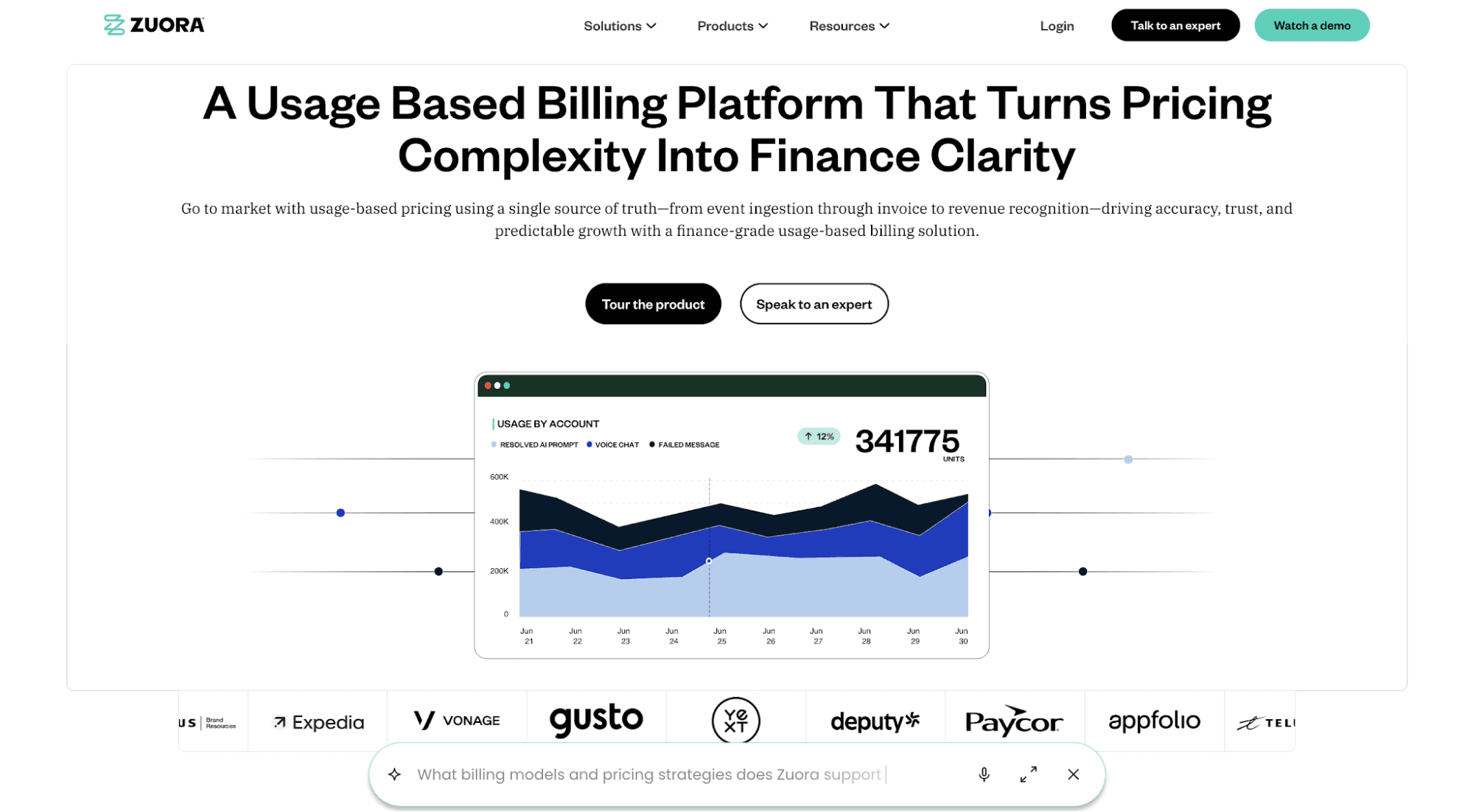
Zuora is another usage-based billing solution that can model any pricing out of the box. These include prepaid drawdown, AI credits, top-ups, minimum commitments, tiers, and overages.
As customers use the product, Zuora records consumption and updates usage balances in real time. Customer dashboards and threshold alerts help users monitor spending before credits run out.
The platform can meter usage events at scale and provide a complete audit trail for both internal and external data pipelines.
It can also simplify audits through usage waterfall reports. These reports break down recognized and deferred revenue in prepaid and committed usage contracts to reduce manual reconciliation.
Plus, Zuora's built-in accounting controls connect every invoice, recognition event, and adjustment throughout the entire order-to-cash cycle. This gives finance teams more control over monetization.
Key Features
- Configurable pricing models: Set up AI credits, prepaid, tiered, volume-based, and commitment pricing without code.
- Customer transparency tools: Provide usage dashboards, spending alerts, and detailed invoices to help customers track costs.
- Real-time metering: Process usage events in real time to update customer balances and calculate charges.
- Usage waterfall reports: Track recognized and deferred revenue from prepaid credits and usage commitments.
- AI-driven forecasting and account scoring: Predict future usage, identify growth opportunities, and evaluate customer risk signals using AI-powered insights.
7. Lago
Source: getLago.com
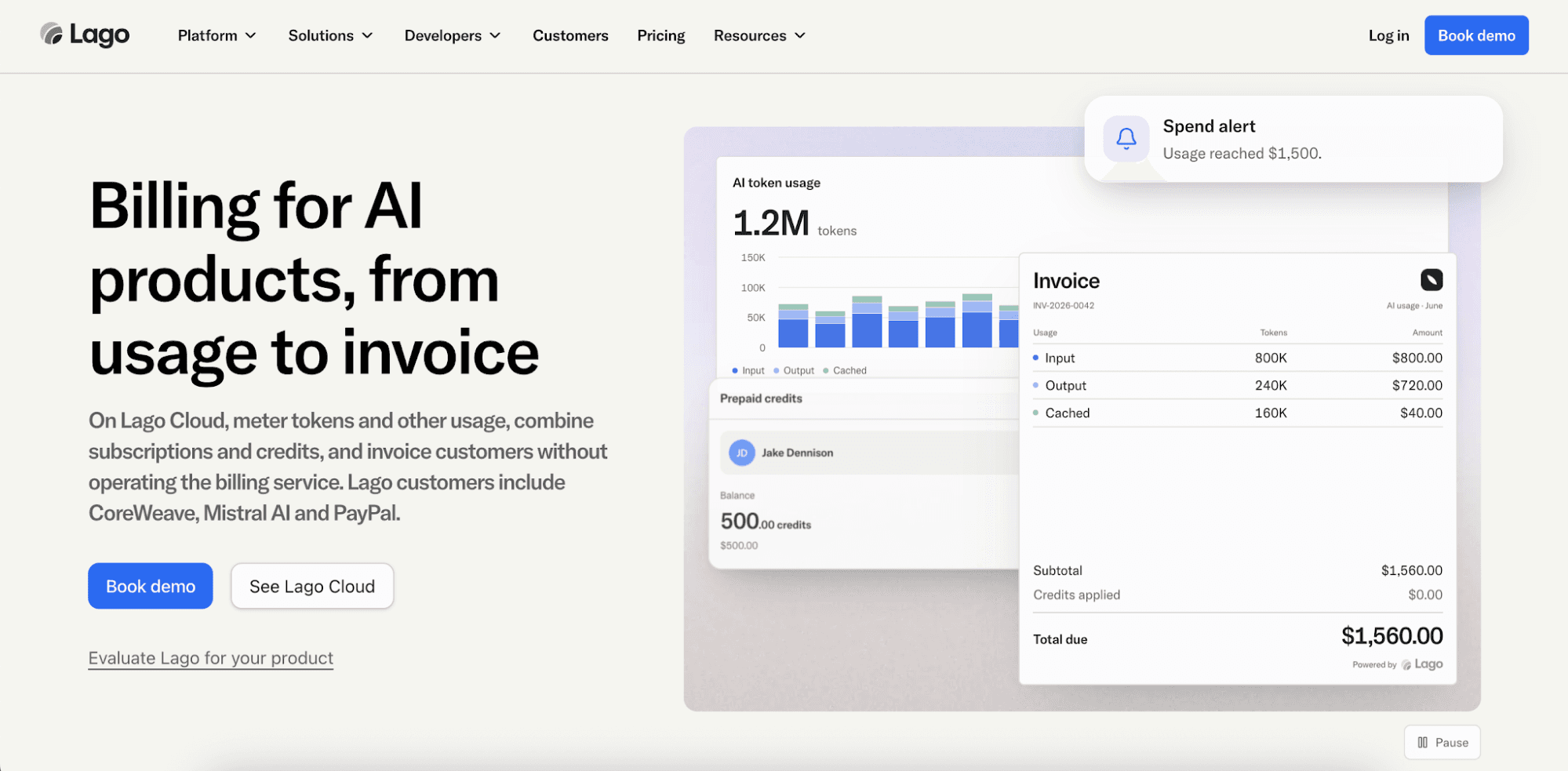
Lago helps companies bill for AI products using prepaid credits or tokens combined with recurring subscription fees.
Teams can sell or grant credits, monitor ongoing wallet balances, and set automatic refills. Customers can view their remaining credits in real time, while finance teams collect payments before usage to improve cash flow.
For AI agents, Lago can assign separate prepaid wallets and link them to specific metrics, such as LLM tokens.
Lago also includes an Agent SDK that meters and prices each LLM call. Once usage data arrives, the wallet automatically updates the remaining balance.
The platform even sends alerts when credits run low or reach zero. Applications can then use these alerts to pause agents, notify customers, or trigger top-ups before balances run out.
Key Features
- Prepaid credits: Sell or grant credits, track wallet balances, and refill wallets before usage stops.
- Configurable spend controls: Set spending thresholds, send alerts when customers reach their credit limits, and control access to paid features.
- Agent SDK: Meter and price LLM calls while tracking credit consumption for individual AI agents.
- Usage billing and invoicing: Convert metered usage into invoices that combine subscription fees, usage charges, and prepaid credits.
- Quotes and order forms: Create custom quotes from the product catalog, track revisions, and automatically generate the order form when contracts are approved.
8. Zenskar

Source: Zenskar.com
Zenskar helps SaaS and AI companies manage credits, product entitlements, and usage billing from one dashboard.
Teams can configure expiry or rollover policies for prepaid and postpaid credits without asking developers to change the billing code.
The platform tracks each customer's remaining credit balance in real time. When usage exceeds an allowance, it automatically calculates the overage and adds it as a separate invoice line item.
Zenskar also provides reports and alerts for credits. Teams can receive alerts when customers reach spending thresholds or when usage data does not match a contract.
Built-in analytics can break down key performance indicators, such as recurring revenue, customer lifetime value, and revenue waterfall. Meanwhile, credit reports can be done and ready to present within minutes.
Key Features
- Prepaid and postpaid credits: Manage customer credits with configurable expiration dates, rollover rules, and overage charges.
- Usage metering: Collect usage data through APIs, CSV files, and data warehouses to calculate billable consumption.
- Revenue analytics: Monitor revenue, credit consumption, and billing performance through reports and alerts.
- Entitlement checks: Track customer entitlements and remaining balances in real time.
- Revenue recognition: Automate contract amendments, sync journal entries, and modify revenue rules or performance obligations.
Tips for Choosing the Right Credit Management Software
The credit management software market is growing quickly. Keep these tips in mind when choosing the right platform for your needs.
Evaluate Real-Time Metering Capabilities
Check how quickly the software turns product activity into credit deductions.
Autonomous agents can consume thousands of credits, tokens, or API calls in a short time. Choose credit management software that can process those events without delay.
Look for continuous monitoring, accurate event tracking, and support for different consumption rates. The system should assign each event to the correct customer and prevent duplicate charges when requests are retried.
Accurate metering helps finance teams charge for actual credit consumption while giving customers live visibility into their balance.
Look for Credit Wallets and Ledgers
Invest in a platform that gives customers a clear credit balance and complete transaction history.
Credit wallets should support prepaid, recurring, and promotional credits, along with expiration dates, rollovers, and automatic top-ups.
Meanwhile, a reliable ledger records every grant, deduction, refund, and adjustment without deleting previous transactions. It should cover the entire credit lifecycle, from purchase to consumption or expiration.
Finance and support teams should be able to review credit operations without asking developers to search application logs.
Confirm whether customers can use a shared credit pool for the entire company or assign separate credit wallets to individual users and AI agents.
Check Support for Priority Consumption and Concurrency-Safe Holds
Customers may have multiple credit grants with different spending rules. For example, they may receive promotional credits on top of prepaid credits.
Look for priority consumption settings that determine which credits get used first. In most cases, promotional credits usually expire before purchased credits. The platform should let you change these rules without modifying application code.
Concurrency-safe holds are also important for AI workloads. These reserve credits before a task starts, which can prevent multiple agents from spending the same balance.
Once the task finishes, the credit system commits the actual charge and releases unused credits.
Review Integration Options
Check whether the credit management platform connects with your existing payment solutions, customer relationship management (CRM) platforms, accounting tools, and accounts receivable software.
These integrations keep credit purchases, usage-based charges, invoices, billing data, subscriptions, and payments in sync.
Look for monetization SDKs, APIs, and webhooks that work with your current systems.
Plus, having access to a model context protocol (MCP) server can simplify credit processes. The MCP server lets AI assistants read billing and plan information. Use a single prompt to grant promotional credits, check payment history, and identify customers that are about to churn.
Limited integration options may force your engineering team to maintain custom code or reconcile credit data manually.
Assess Usage Governance Controls
Credit management software should do more than track balances after customers consume credits.
Look for credit checks that happen before expensive requests run, especially for AI agents and API calls.
The platform should support spending caps, daily limits, usage warnings, and rules for handling depleted balances. Check whether your team or your customer can set these controls by company, user, or agent.
Buyers should also be able to view their real-time balances, receive spending alerts, and manage credit top-ups.
Lastly, review how the platform handles soft limits, hard caps, and overages. Strong usage controls prevent surprise bills and unexpected access throttling.
Manage Credits and Ship Usage-Based Billing Customers Trust With Schematic
Schematic provides the complete usage-based billing platform for companies that want to manage credits, entitlements, and metering in one place.
Native wallets record every credit grant, rollover, deduction, and automatic top-up. They also give customers real-time visibility into what they are using, forecasts of where they will land, and spending limits they set themselves.
The built-in entitlement engine tracks usage against the cap and enforces policies the moment they are saved. Customers avoid runaway bills and unexpected access throttling.
Every check and metered event streams back in milliseconds. Balances, limits, and usage remain current everywhere the product reads them.
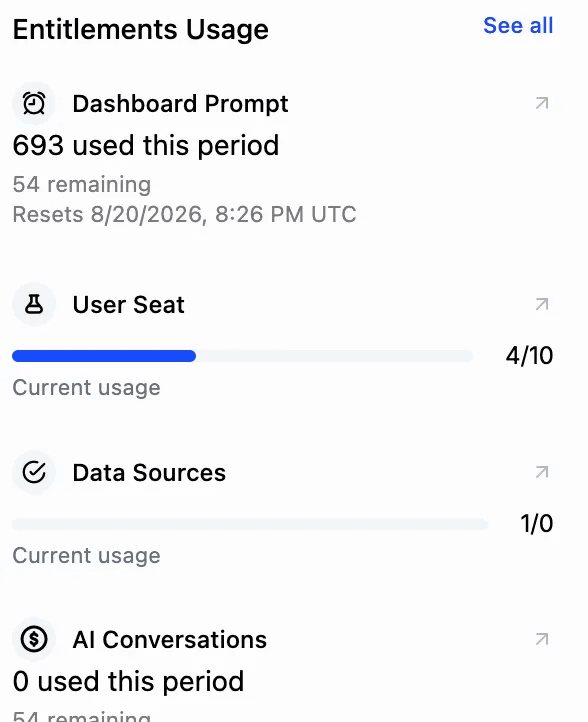
Max Ade from Pickleheads shares, "We needed an entitlement system for usage-based pricing without building it from scratch, and we wanted non-technical team members to manage it easily."
With Schematic, pricing lives as data on a real-time ledger. Changing plans, credit rollover policies, and priority consumption rules can be done through configuration.
Engineering no longer maintains complex pricing logic or builds billing infrastructure from scratch. Commercial teams can continuously iterate on monetization.
FAQs About the Best Credit Management Software
What is the best credit management software?
The best credit management software depends on your credit pricing model, usage volume, and billing needs. Schematic is a top choice for software and AI companies that sell to global enterprise customers. It combines credit wallets, real-time metering, billing, runtime entitlement enforcement, and usage governance controls in one platform.
Why is a credit management system important?
A credit management system helps businesses grant credits, track current balances, meter usage events, and automate invoice calculations. It can also prevent billing errors, control spending, and give customers real-time visibility into their credit consumption. This can improve customer trust and financial reporting.
Why do SaaS and AI companies charge customers for credits?
SaaS and AI companies use credits to charge customers for product consumption. Credit-based pricing helps businesses collect payments in advance, protect gross margins, enable natural revenue expansion, and offer flexible packaging.
What is the difference between credit management and credit risk management software?
In the context of AI monetization, credit management software covers prepaid credits, wallets, and usage-based billing. It can grant credits, meter usage, configure rollover or expiry rules, and provide real-time visibility into consumption.
Credit risk management software analyzes credit scores, payment history, and bad debt exposure to help businesses manage credit risk. This is useful for reviewing online credit applications and extending payment terms.