 Ryan Echternacht
Zuora is a popular usage-based billing platform for enterprises and fast-growing companies. It can automate billing operations, scale monetization, and connect usage-based pricing to revenue operations.
The software can be useful when spreadsheets or traditional billing systems can no longer keep up with new custom plans, product offers, and customer contracts.
That said, Zuora's usage billing software is not the right fit for every team. Some companies may need more control over product access, SaaS entitlements, and usage limits.
This guide breaks down the advantages and downsides of using Zuora for usage-based billing.
TL;DR
- Zuora is an enterprise billing platform for SaaS and AI companies that need to manage recurring subscriptions and usage-based pricing models.
- Zuora handles usage-based billing through its built-in mediation and rating tools. Configurable widgets show live usage data to customers.
- Its main benefits include support for large usage volumes, flexible pricing models, finance integrations, and AI-powered usage forecasting.
- However, Zuora's downsides are long implementation times, a steep learning curve, missing customer usage controls, and the lack of support for runtime access enforcement.
- Schematic provides a user-friendly and complete usage-based billing platform with credit wallets, self-service controls, and configurable spending limits.
What Is Zuora?
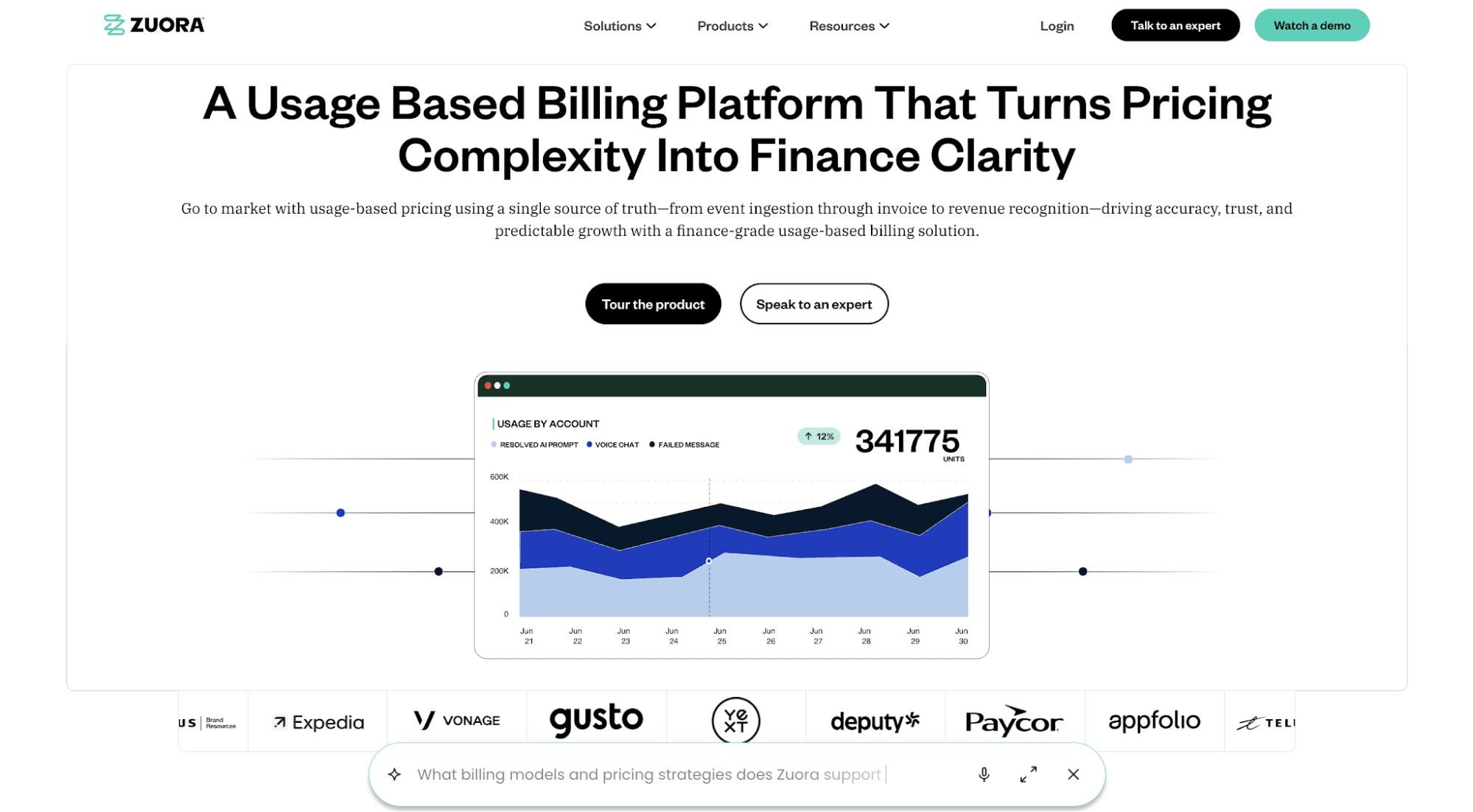
Zuora is a cloud-based monetization platform built for companies with recurring subscription-based models and usage-based pricing.
It provides a single source of truth for usage data. Billing teams can handle event ingestion, invoice generation, and revenue recognition in one place.
Source: Zuora.com
Zuora also automates subscription billing, payment processing, revenue recognition, quoting, financial reporting, and analytics.
These help teams manage complex billing scenarios, multiple sales channels, and millions of customer transactions without performance trade-offs.
At the same time, Zuora supports compliance with accounting standards while unifying revenue streams across different currencies.
Zuora can even connect with payment gateways, customer relationship management (CRM) software, enterprise resource management (ERP) systems, and other tools. Seamless integrations can unify the entire quote-to-cash process and eliminate fragmented systems.
How Does Zuora Handle Usage Billing?
Zuora manages usage billing through its built-in mediation and rating tools. Organizations can monetize every product activity in real time by collecting usage events and turning those raw usage metrics into billable charges.
Zuora's finance-aware product catalog enables product teams to ship any usage-based model based on their business needs. Configure pay-as-you-go, prepaid offers, volume discounts, tiered pricing, overage fees, and minimum commitments.
Meanwhile, sales reps can quote usage contracts, create multi-year agreements, or combine variable usage-based charges with fixed subscription fees.
Zuora also ties every usage event to revenue recognition rules. It helps finance teams record the right amount of usage revenue to comply with ASC 606 and IFRS 15 standards.
Plus, it can surface live consumption data through configurable widgets. These give buyers real-time visibility into their current usage and credit balances.
However, Zuora customers cannot set their usage limits, control automatic top-up rules, and decide what happens at the limit. This can undermine trust and confidence in usage-based pricing.
Key Features of Zuora's Billing System
Zuora offers several capabilities that help turn billing complexity into clarity.
- Usage metering and rating: Capture product activity and consolidate usage records to monetize users based on their actual consumption.
- Flexible pricing and packaging: Support flexible billing models and iterate on packaging to remain competitive in the market.
- Subscription management: Adjust pricing mid-billing cycle, update product offers, trigger renewals, and track subscription metrics without IT involvement.
- Global payments orchestration: Zuora integrates with several payment solutions to support different currencies and payment methods. It can also prevent involuntary churn by retrying failed payments.
- E-invoicing and tax compliance: Country-specific invoice templates and built-in connectors to leading tax management solutions can simplify tax compliance.
- Built-in extensibility: Create custom business logic, workflows, events, and user interface pages that adapt to business needs.
- Integrated quoting: Unify the entire quote-to-cash process for clean data handoffs.
Pros of Using Zuora for Usage-Based Billing
Zuora gives SaaS and AI companies powerful tools for managing complex usage billing scenarios. Here are the advantages of using the platform.
Manage Usage Data at Scale
Zuora can process a high volume of usage events without slowing down performance. It is useful for SaaS and AI companies that sell to enterprise buyers. These users generate large amounts of product activity every day.
Zuora collects raw usage metrics, such as API calls, tokens, transactions, and compute time. Then, it applies pricing rules to aggregated usage data.
Teams can charge a flat rate per usage unit (e.g., $0.50 for a single transaction) or offer volume discounts for large consumption (e.g., $1 for 10-100 tokens, $0.90 for 100-200 tokens, and so on).
Zuora also generates a complete audit trail across the entire data pipeline. It provides end-to-end traceability from usage activity to billing and recognized revenue, giving finance teams more control over compliance.
Configure Usage-Based Pricing Models Without Code
With Zuora, internal teams can quickly design and deploy usage-based pricing models. They can set up pay-as-you-go, prepaid credits, tiered plans, volume discounts, and overage pricing through configuration, not code.
They can also combine usage-based pricing with subscription billing when they want revenue predictability from a base fee while still capturing upside from variable charges.
RevOps teams no longer depend on engineering for implementing usage-based models. They can configure different pricing structures out of the box.
Integrate Usage-Based Billing With Revenue and Finance Workflows
Zuora Billing connects to the Zuora Revenue product, which automates revenue recognition workflows for usage-based pricing. Finance teams avoid manual data reconciliation when closing the books.
Built-in accounting controls also enable finance departments to keep every billing invoice and subledger data aligned with compliance standards.
Meanwhile, usage waterfall reports can break down recognized and deferred revenue for either prepaid or committed contracts.
Predict Usage Trends Using AI-Powered Analytics
Zuora helps teams forecast future revenue using live usage data and machine learning-based projections.
Instead of waiting for invoices to show what already happened, finance and RevOps can estimate how customer consumption may change over time. They gain a better view of expected usage, upcoming charges, and possible revenue shifts for a specific product.
Zuora can also improve pipeline planning by analyzing how current customer behavior may affect future billing.
Plus, the platform offers predictive account scoring based on usage, helping teams identify upsell opportunities and churn risks earlier.
Cons of Using Zuora for Usage-Based Billing
Despite its powerful capabilities, Zuora's usage billing software still has a few downsides that SaaS companies should review before committing.
Longer Implementation Timelines
Zuora can take longer to implement than traditional payment tools because of the platform's complexity. G2 reviews mention an average implementation time of six months.
The initial setup involves product catalog modeling, data migration, testing, and finance alignment. Businesses also need to connect Zuora with CRM software, ERP systems, product analytics, and data warehouses.
This can affect the developer experience, especially for teams that want to launch usage billing quickly.
Steep Learning Curve
Zuora includes many settings, modules, billing rules, and workflow options. That depth can take time to learn, especially for people who have not worked with enterprise billing software before.
Configuring the system to specific business needs is also overly complex. Some processes require multiple steps that could be simplified.
Due to the platform's steep learning curve, internal teams need training before they can confidently configure products, update pricing, fix billing issues, recognize the correct revenue, or generate reports.
Unexpected Billing Spikes or Access Throttling for Customers
Usage billing can produce variable invoices when consumption increases quickly. If customers see unexpected usage spikes, they may dispute their bill or lose access unexpectedly.
Zuora tries to solve these problems by providing usage balances, threshold notifications, and detailed invoices. While these tools help users monitor spending, they are not enough to prevent runaway spending and access throttling.
Zuora lacks a self-service interface that allows customers to set their limits, change credit top-up rules, and define what happens when they reach the usage threshold.
It's up to admins and product managers to configure minimum and maximum thresholds. Customers end up fearing usage-based billing because they cannot trust that usage will stay within budget.
Missing Entitlements and Feature Access Enforcement
Zuora does not enforce access inside the product at runtime. A billing record alone cannot decide whether a customer can run another AI request, access a premium feature, or allow usage beyond plan limits.
Zuora is useful for metered billing and subscription pricing, but access updates often happen after invoicing, renewals, or plan changes.
Commercial teams cannot control what a customer can access at the exact moment they initiate a request.
Engineering teams try to solve the problem by adding custom entitlement rules directly into application code. Those rules can manage feature access, usage limits, and product behavior when customers reach predefined thresholds.
However, hardcoding entitlement logic can lead to technical debt, especially when customers require custom plans, rates, and negotiated terms.
Each pricing or packaging change may require an engineering sprint. RevOps cannot frequently iterate on monetization because developers first need to update, test, and deploy code.
How Schematic Manages Usage Billing
Schematic is the best Zuora alternative for companies that want to sell usage-based plans, meter credits, manage software entitlements, enforce limits in real time, and give customers complete control over their consumption.
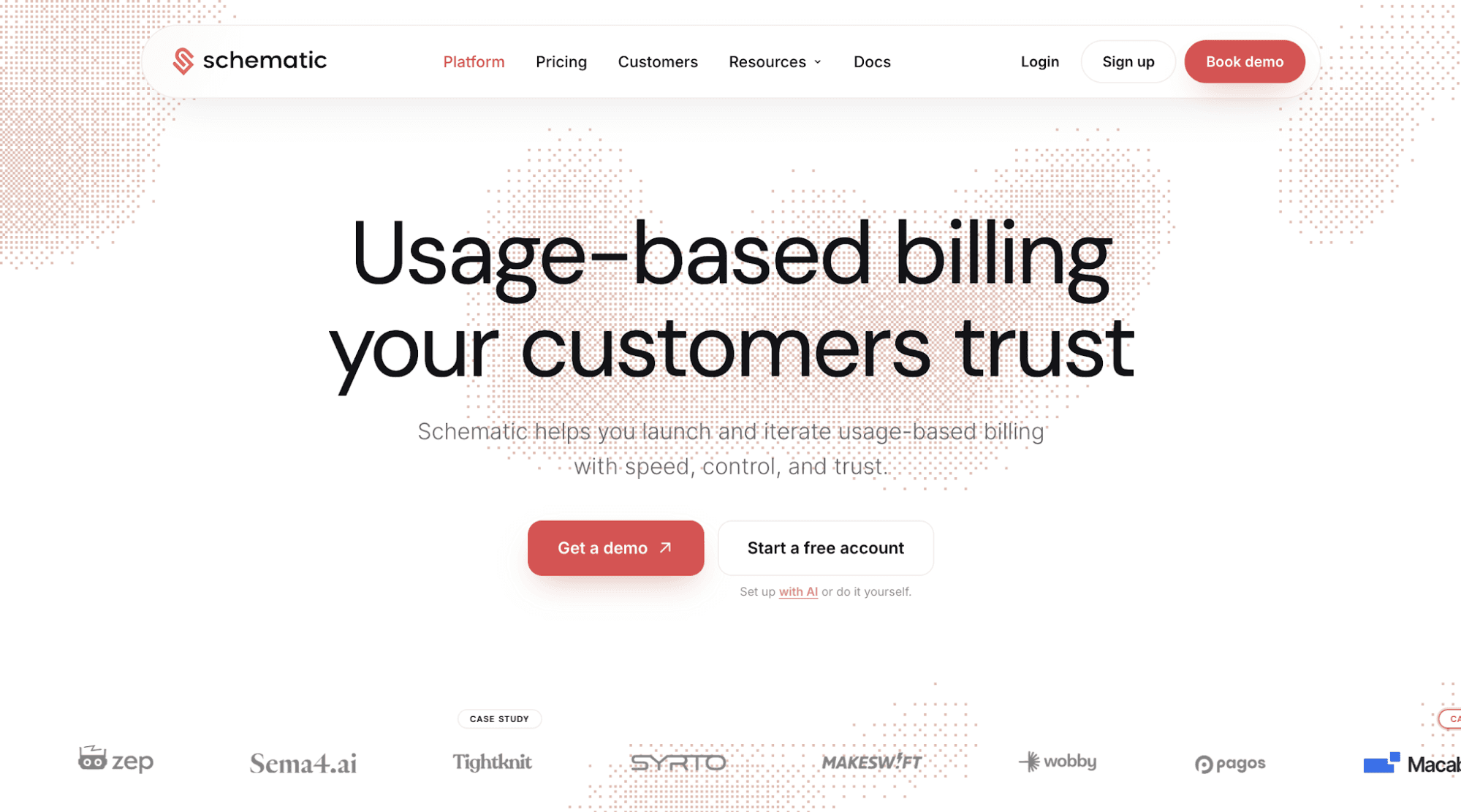
Schematic provides enterprise-ready credit wallets that can track every grant, deduction, rollover, top-up, and remaining balance.
Customers gain real-time visibility into their usage. They can also set per-seat and per-agent limits, receive notifications when consumption is near the threshold, and define what happens at the cap. They can enforce hard limits to block access or allow continued usage through soft limits.
Schematic also features a real-time entitlement engine that resolves every access question in milliseconds. Customers can only use features or request certain actions that they are entitled to based on their plan or contract terms.
Vendors protect their profit margins by preventing runaway costs and usage spikes, which are common in AI products.
Switch to Schematic for Usage-Based Billing That Customers Can Trust
Zuora is a popular usage billing platform for a reason. It's powerful, scalable, and compliant with revenue recognition standards.
However, it falls short when companies need an intuitive and customer-friendly platform that can enforce access and usage limits at runtime.
Consider switching to Schematic to provide enterprise customers with real-time visibility into usage, spend forecasts, self-service controls, and configurable spending limits.
Schematic gives both buyers and sellers confidence that usage will stay within budget. Customers will only be charged for what they expect.
It's the best monetization platform if you want to make usage-based billing transparent and trustworthy.
FAQs About Zuora Usage Billing
What is Zuora Billing?
Zuora Billing is one of the most popular tools when it comes to usage-based and recurring billing. It helps companies manage product catalogs, pricing rules, invoices, payments, renewals, usage-based charges, and finance workflows from one system.
What is usage-based billing?
Usage-based billing charges customers based on how much of a product or service they consume. Common billing units include API requests, tokens, storage, transactions, compute time, credits, and other measurable product activity.
What are Zuora's disadvantages?
Zuora can take longer to implement and may require technical expertise to configure because of the steep learning curve. The platform also lacks support for real-time access enforcement and self-service customer controls for setting usage limits.