All posts
The Ultimate Guide to Freemium Pricing for SaaS Companies
Blog· Ryan Echternacht·Jun 15, 2026
Ryan Echternacht·Jun 15, 2026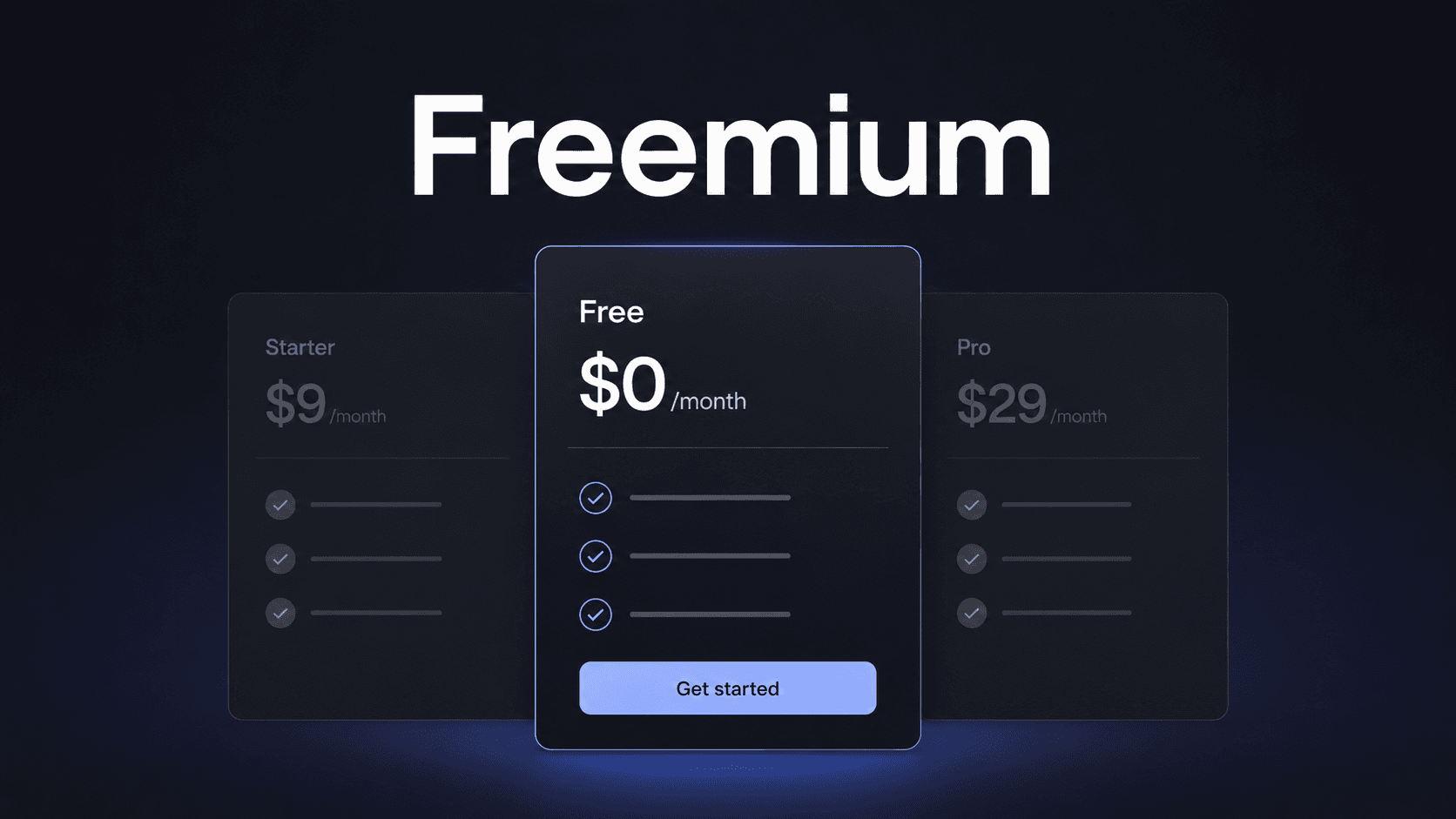
Freemium is one of the most common growth models for SaaS companies. A pricing study reveals that 54.1% of SaaS products offer freemium.
It lets users try a basic version of the product for free, with the option to pay for advanced features, higher usage limits, or better support.
This business model can lower sign-up friction and help more users see the product's value before paying for the premium version.
However, freemium is not just about giving something away for free. It requires a clear strategy.
The free plan should be useful enough to attract users. At the same time, the paid plan must give customers a strong reason to upgrade.
This guide covers what freemium actually means, its benefits, and its challenges. We'll also share tips on how to design a freemium strategy that can generate meaningful revenue for your SaaS business.
TL;DR
- Freemium pricing lets SaaS companies offer a free version of the product with limited features, then charge for additional capabilities or higher usage.
- Freemium is different from a free trial because users can continue using the free plan, while a free trial ends after a predetermined period.
- It can lower sign-up friction, reduce acquisition costs, support word-of-mouth growth, and help teams learn from user behavior.
- A successful freemium strategy needs a clear value proposition, smart plan limits, helpful onboarding, timely upgrade prompts, and smooth billing experiences.
- Schematic helps SaaS and AI companies ship any pricing model, including freemium, and drive conversions with strategic upgrade paths.
What Is Freemium?
Freemium is a pricing model where a SaaS company gives users free access to a basic version of its product.
The word combines free and premium, since users can start for free and pay later for more value.
In a freemium model, the free plan can attract many users. Some of those customers later subscribe to a paid version of the product when they need additional features, higher usage limits, more seats, or better support.
Freemium is a volume game because only a small percentage of free users will become paying customers. SaaS companies need enough free users coming in, so the smaller group that upgrades can still support sustainable revenue growth.
Freemium Model vs. Free Trial
A freemium business model gives users a basic version of the product for free forever. Customers can keep using it without paying, but they can only access limited features. If they want to get more value, they need to upgrade to a paid tier.
A free trial works differently. It allows customers to use all features for a set trial period. After that time ends, they must pay to continue using the product or service.
Freemium makes sense when:
- Your product is easy to use from the start
- Your costs per free user are low
- Your free and premium features can be separated clearly
- Your target market prefers to test the platform without upfront costs
Choose trial pricing if:
- Your product needs more setup or support
- You cannot support ongoing free user costs
- Your platform needs a full demonstration to show value
- Your users are more likely to act during time-pressured evaluation periods
Benefits of a Freemium Pricing Model
Freemium pricing can help SaaS companies grow faster when the free tier leads a vast majority of users toward paid value.
Lower the Barrier to Entry
A freemium approach makes it easy for users to try your SaaS product without upfront commitment. This matters because many buyers do not want to talk to sales teams or enter card details before they know if a tool fits their needs.
With freemium, new users can easily sign up, test your software product, and see how much value they get.
It also gives users a reason to keep coming back. Once they use your product more often, upgrading feels like the next clear step.
For SaaS companies, this can mean more sign-ups and higher chances of turning users into paid users.
Reduce Customer Acquisition Costs
Getting someone to try a new SaaS product is often the hardest part of the sales process. A free version removes much of that friction by giving people a chance to experience the product before making a buying decision.
Instead of convincing every prospect through sales outreach or paid campaigns, you can let the product do part of the work. Interested users can sign up on their own, explore the platform, and decide whether it meets their needs.
You can attract users from blog posts, search engines, customer recommendations, and other channels without pushing them directly into a sales conversation.
Over time, this can lower the cost of bringing in new users and create a more scalable way to grow.
Encourage Word-of-Mouth Growth
A free tier gives people a simple reason to share your product with others.
They do not have to convince a friend or teammate to spend money. They can simply encourage peers to try the product because it’s free.
That small step compounds. If your SaaS product solves a real problem, users will eventually talk about it in Slack groups, team chats, or social media posts.
Satisfied users can become brand ambassadors. They may not pay right away, but they can bring in more users.
This can lead to viral growth, where product adoption increases through word-of-mouth instead of paid marketing campaigns.
Receive Valuable Data and Customer Feedback
A freemium model provides a massive user base that you can learn from. You can see how free users behave before they ever talk to sales or pay for a premium tier.
For example, you can track which features they try first, where they drop off, and what actions lead to plan upgrades. Use this data to improve your freemium product and convert users, which can drive more revenue.
Free users can also share valuable feedback. Their questions, complaints, and requests can help you enhance onboarding, support, and monetization strategies.
Enable Multiple Revenue Streams
Freemium gives you more than one way to generate revenue. Some users may upgrade because they need more seats for their team. Others may pay for higher usage limits, additional functionalities, premium services, or more integrations.
You can also offer in-app purchases for users who are not yet ready to pay a subscription fee.
Even if freemium users do not upgrade to a paid tier, you can still monetize them through ads, sponsorships, partner offers, or affiliate programs.
Support Product-Led Growth
Freemium supports product-led growth because users can try the product before they talk to sales. The product does the first part of the selling.
This go-to-market strategy works well when users can sign up, test the software application, reach value fast, and invite others.
Slack is a notable example of a SaaS company that uses a freemium model to support product-led growth. Customers start with the free version for daily chats. Many eventually pay for the higher tiers when they need additional features, AI-powered capabilities, and compliance support.
Canva is another good example. Users can design for free, then move to paid plans for brand kits, premium assets, larger storage, and higher AI allowance.
These go-to-market examples show how freemium can help SaaS companies gain market share by letting users try the product first and pay when their needs grow.
Challenges in Implementing Freemium
Freemium can drive growth, but it can also lead to greater costs and problems if the pricing model is not built well.
Free Users Don't Upgrade to Paid Plans
Converting free users into paying customers can be challenging.
The problem usually starts when there is little difference between the free and premium tiers. If users can get everything they need without paying, they have no clear reason to upgrade.
Some users may also fail to see the value of special features. Others may never reach the usage limits that trigger an upgrade.
Free Users Can Increase Operating Costs
Many SaaS companies underestimate the cost of serving free users. Every free account can consume storage, bandwidth, computing resources, customer support, and other product infrastructure.
While these costs may seem small for one user, they can add up quickly as your customer base grows.
This is why teams need to understand their marginal costs. If serving additional free users becomes expensive, the free plan can put pressure on profitability.
Operating costs may increase faster than revenue. Support teams can also become stretched if large numbers of non-paying users need assistance.
Freemium Attracts Low-Intent Users
Freemium can bring in potential customers, but not all of them are a good fit.
Some people sign up because it is free, not because they have a real need for your product. These users may never activate, invite teammates, or move to a paid plan.
Low-intent users can make your numbers look better than they are. Sign-ups may increase while revenue stays flat.
Freemium Makes Revenue Forecasting Harder
Freemium can make revenue harder to predict because users do not pay right away. Some may upgrade in days, while others can take months. Many users may never upgrade at all.
A SaaS company may have a massive user base, but still struggle to estimate future cash flow.
How to Build a Successful Freemium Pricing Strategy
Below are some tips you can follow when implementing freemium pricing.
1. Define Your Free Value Proposition
Users need to know that your SaaS product is worth their time. That's why you should emphasize your core value in the free tier.
They must be able to solve a pain point, finish a task, or see a clear result without paying first. If they do not feel the payoff early, they may leave before you get the chance to sell premium services.
The free plan should still be a limited version of the product. It should give users enough value to trust the tool, but not so much that they have no reason to upgrade.
2. Separate Free Features From Paid Features
Decide which product features belong in the free plan and which parts should require payment.
The free version should include basic features that help users solve a real problem.
Meanwhile, paid plans should offer additional functionalities. This may include more seats, higher limits, advanced reports, more integrations, compliance capabilities, or better support.
The goal is to make feature access easy to understand. Users should know what they can do for free and what they gain when they upgrade.
This balance matters. If the free plan is too limited, users may leave. If it gives away too much value, users might never pay for the higher tier.
3. Create a Clear Upgrade Path
Users should know when and why they need to move to a paid plan. If the upgrade path is unclear, free users may keep using the product without paying or leave once they hit a limit.
Set limits for usage-based billing to encourage natural upgrades. For example, free users only get a limited number of projects, reports, contacts, or AI credits.
Another option is to gate features. Users should subscribe to a paid plan to use advanced capabilities, such as automation, analytics, or AI tools.
They are more likely to upgrade when they reach a point where the free tier no longer meets their needs.
4. Use Onboarding Wisely
Sign-ups do not mean much if users never activate. A free user who creates an account but does not reach value is unlikely to upgrade.
Your onboarding should guide users toward the first action that proves the product works. For a project tool, that may be creating a task. In a marketing platform, this may be sending a campaign.
The goal is to help users reach the "aha" moment quickly, so they understand why your product is worth using. That makes them more likely to stick around and upgrade to a premium plan.
5. Prompt Upgrades at the Right Time
Many SaaS companies make the mistake of asking users to upgrade too early. If users have not experienced the product's value yet, they have little reason to pay.
Instead, use upgrade prompts to catch users when they need something more. This could happen when they reach a usage limit, try to add more teammates, access an advanced feature, or need greater capacity.
The prompt should connect the upgrade to the user's goal. Explain what becomes possible with the paid plan and why it helps them move forward.
Good timing makes upgrades feel natural. The best prompts appear when users are already engaged and looking for more from the product.
6. Remove Billing Friction
When users are ready to upgrade, the payment process should be simple. Any delay gives them time to rethink.
Keep the checkout flow short. Show the pricing clearly. Make billing terms easy to understand. And let customers upgrade without needing to contact sales.
After payment, users should immediately access the new features included in the paid tier. They should not have to wait for manual approval, account reviews, or setup steps.
The transition from free to paid should feel smooth.
7. Test and Refine Your Freemium Strategy
Your freemium pricing strategy should change as you learn how users behave.
Track how individuals move from sign-up to activation, from activation to daily use, and from daily use to upgrades.
You can also leverage analytics to see which limits, upgrade prompts, emails, and onboarding steps lead to conversions.
Then, adjust one thing at a time. For example, you can tweak usage caps, change pricing page copy, and add or remove feature gates.
Key Metrics You Should Track to Measure Freemium Success
Tracking the right metrics helps you understand whether your freemium model is driving revenue and growth.
- Free-to-paid conversion rate: It shows the percentage of free users who become paying customers. It helps you see whether your free plan creates enough reason to upgrade.
- Activation rate: It tracks how many users reach a key product milestone. This may be creating a project or inviting a teammate.
- Customer acquisition cost: This calculates how much you spend to gain each new user or customer.
- Customer lifetime value: It's the total revenue a customer brings over time. This helps you understand whether upgraded users are worth the cost of acquiring them.
- Churn rate: It shows the number of paying customers who cancel during a set period. A high churn rate means users may upgrade, but they do not stay long enough.
- Engagement levels: This tracks how often users return and use the product. Strong engagement can signal that users see value and may be more likely to upgrade.
- Time-to-conversion: It measures how long it takes a free user to become a paying customer.
- Revenue per user: It shows how much money each user brings in on average. This helps you compare total revenue growth between free and paid users.
How Schematic Supports Freemium
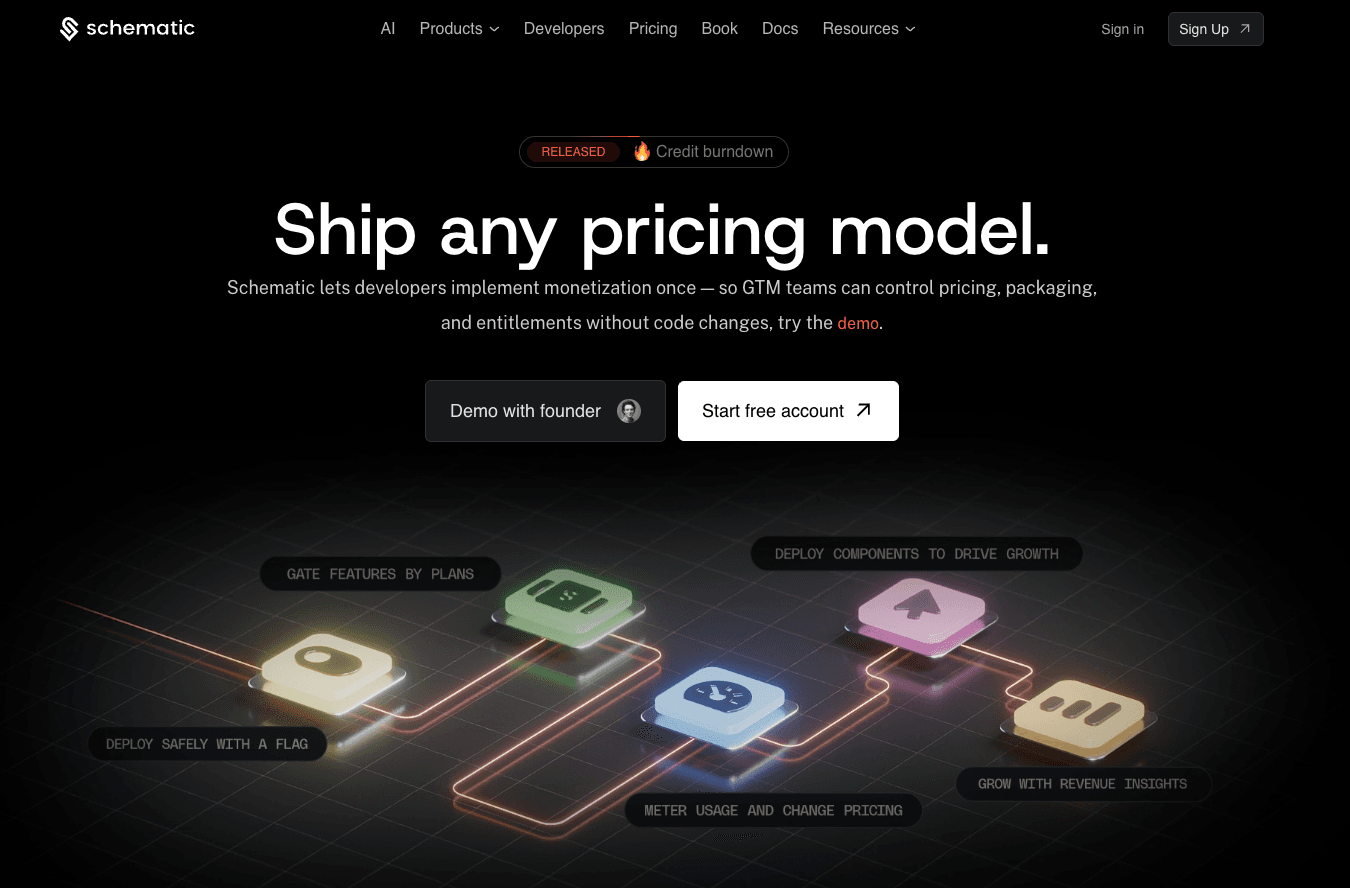
Schematic is the monetization operating system that helps modern SaaS and AI companies launch any pricing model, including freemium.
Schematic decouples pricing logic from the application code. It also centralizes the product catalog, including plans, software entitlements, add-ons, and overrides.
Business teams get a control plane they can use. RevOps can launch a freemium plan without waiting on developers. A product manager can set limits, gate features, and use paywalls to convert free users to paid users.
The platform is built on Stripe, so you can continue using Stripe as the billing system. Schematic extends Stripe with real-time access control, usage enforcement, and customer lifecycle management.
FAQs About Freemium
What is an example of freemium?
An example of freemium is a SaaS tool that lets users access basic features for free, then charges for higher limits, team access, advanced tools, or better support. Slack, Canva, and Schematic are real-world examples.
What is the meaning of freemium?
Freemium means a product offers a free plan and premium plans. Potential users can start with the free tier. Once they see the product's value and need more features, they can upgrade to paid tiers.
Does freemium mean free?
Freemium does not mean the entire product is free. It simply means that users get free access to part of the product. To use higher limits or advanced features, individuals should subscribe to a paid plan.