 Ryan Echternacht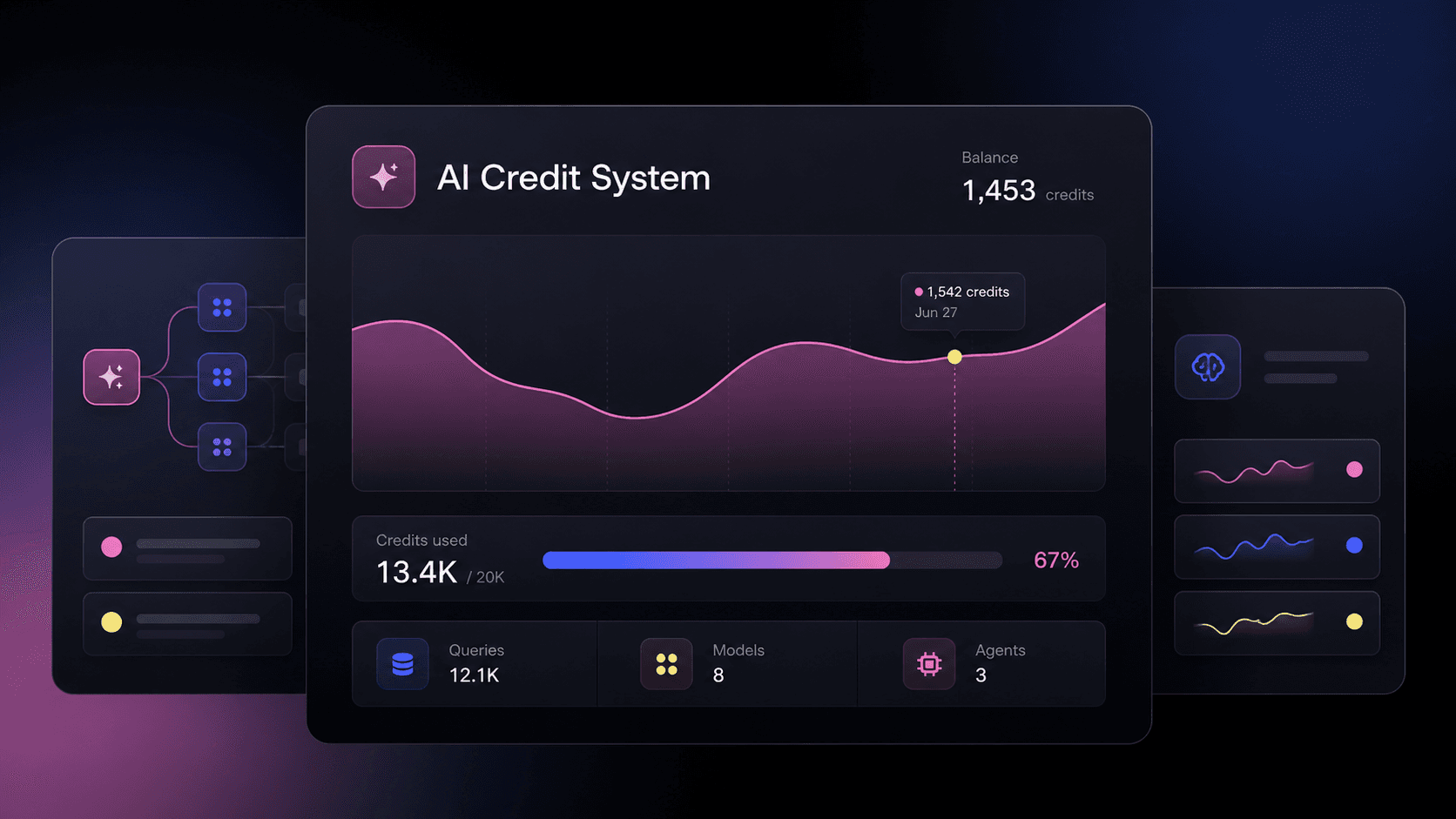
Pricing AI features is different from pricing SaaS.
With most traditional SaaS products, you can charge per seat or per plan because usage is fairly predictable. But AI changes that. One user might generate a few outputs. Another might run thousands of requests in a day.
This creates a problem. Your costs scale with AI usage, but your pricing often doesn’t.
An AI credit system helps you address this challenge. Instead of forcing users into fixed plans, you give them AI credits that map to actions like image generation. Doing so keeps your revenue in line with your costs while giving you the flexibility to adjust pricing over time.
This article discusses everything about the AI credit system, including its definition, how it works, its benefits, its applications, and best practices for implementing one.
TL;DR
- An AI credit system is a pricing model where users pay with credits that represent usage across AI-powered features.
- It works by assigning credit costs to actions and deducting credits as users interact with the product.
- The system introduces predictability, enables granular monetization, scales revenue with AI usage, reduces the barrier to entry, and simplifies pricing changes.
- Companies can apply an AI credit system in different ways, including usage-based billing, credit burndown, tiered plans, seat-based pricing, and hybrid models.
- Schematic helps SaaS companies launch, manage, and iterate on AI credit monetization while enforcing access in-product at runtime.
What Is an AI Credit System?
An AI credit system is a usage-based pricing model for AI products.
Credits act as a unit of value. Each action, such as data analysis, image generation, or an API call, uses a fixed number of credits.
Instead of charging per plan or per seat, you assign credit costs to different AI-powered features. Credits are consumed as customers use the product.
This system ties spending directly to actual usage data, unlike flat subscriptions. It gives customers more flexibility in how they use the product without forcing them into one specific tier or use case.
How Does an AI Credit System Work?
An AI credit system works by assigning a credit cost to each action inside your SaaS or AI product.
You define what one credit represents. This could be tied to compute cost, API usage, or another internal metric.
Next, you set how many credits each AI feature uses. For example, creating an image often consumes more credits than merely generating text.
Customers get a set number of credits. This can come from a monthly plan or a one-time purchase.
Each action reduces the total number of remaining credits in their balance.
When users run out of credits, you control what happens next. You can block access to AI features, enable customers to purchase additional AI credits, or prompt an upgrade to a higher tier.
Behind the scenes, your monetization system tracks AI credit usage. This lets you measure how much each user consumes credits and charge based on actual usage at the end of the billing cycle.
Key Advantages of an AI Credit System
Many SaaS companies turn to an AI credit system due to its ability to streamline AI pricing. Here are the advantages you can expect:
Introduce Predictability
An AI credit system helps control unpredictable usage, which is common in pay-as-you-go pricing.
Users start with a fixed number of credits. This gives them a clear idea of how much they can use the product before paying for more AI credits. It reduces surprise charges and avoids billing disputes.
This is especially useful when pricing AI products. Usage can vary based on AI model complexity, retries, or prompt behavior. Without a clear limit, costs can spike quickly.
For SaaS businesses, an AI credit system also keeps billing predictable. You know how many credits are sold and can estimate usage patterns over time.
Capture Revenue Upfront
An AI credit system lets you collect payment before usage happens.
Customers often pre-purchase credits that they consume over time. When their balance runs low, they can top up their account to continue using your product.
As a vendor, this means you get paid upfront, even if usage happens later. You are better protected from runaway spending.
However, cost control is still important in prepaid credits because unexpectedly large bills can cause disputes. You can set soft and hard limits and provide a customer-facing dashboard to help users track their usage.
Enable Granular Monetization of AI Features
An AI credit system lets you assign different credit values to various actions.
A single request can cost fewer credits, while more resource-heavy tasks can cost more credits per action. It reflects the actual cost behind each AI feature.
This level of control helps you price more accurately. You avoid underpricing advanced AI features or overpricing simple ones.
It also opens up other ways to monetize your product. You can introduce new features and assign credit costs without changing your entire pricing structure.
Scale Revenue With AI Usage
With an AI credit system, your revenue increases as AI credit usage grows.
Customers who get more value from your product naturally spend more credits.
You are no longer limited by flat plans. You can charge overage fees for heavy users who exceed their monthly allowance.
Meanwhile, light users avoid paying for features they rarely use.
Each customer pays based on how much they use the product. This makes pricing fair without hurting your revenue.
Lower Barrier to Entry
An AI credit system makes it easier to deploy pricing and attract users.
You don’t need to design complex plans up front. You can launch quickly with a simple credit-based model and adjust pricing over time based on usage history.
The entry point for customers is low. They can start with a small number of credits instead of subscribing to an expensive monthly plan.
As they see value, they can buy additional credits or upgrade when needed. There’s no pressure to commit early.
This approach can drive faster adoption and support product-led growth.
Simplify Pricing Changes
As AI evolves, your costs and product usage will eventually change.
Fortunately, an AI credit system lets you respond to those changes quickly.
Instead of changing plans or restructuring pricing tiers, you can simply adjust the number of credits consumed by each AI feature. You can base these changes on how expensive it is to run the AI feature or how much value it offers.
You can also test pricing changes with less risk. Small updates are easier for users to understand compared to entire pricing overhauls.
Common Ways to Apply an AI Credit System
An AI credit system is flexible. It can support different pricing models depending on how you want to package and sell your product.
Below are the common ways you can apply an AI credit system:
Enable Simple Usage-Based Billing
This pricing model charges users based on how many credits they use.
There are no fixed plans or bundles. Customers use the product with no upfront commitment and pay based on total credits consumed over time.
Each action reduces their credit balance. The more actions they generate, the more credits are consumed.
Pricing stays directly tied to usage. There is no need to choose a plan in advance.
Credits act as the unit of measurement for all activity inside the product.
Use Credit Burndown
In the credit burndown model, customers buy credits upfront. As they use AI-powered features, credits are consumed and "burn down" over time.
Many SaaS companies combine credit burndown with recurring monthly/yearly plans. Users receive a set number of credits that they can use for a given period, and AI credits reset at the next billing cycle.
If they run out of credits before the next reset date, they can purchase additional credits via bundles, top-ups, or plan upgrades.
Bundle AI Credits Into Subscription Tiers
This model combines AI credits with tiered pricing.
Each plan comes with a set credit allocation. Higher tiers include more credits and often a lower cost per credit.
Users subscribe to a plan and consume credits as they use AI features. The plan defines how many credits they get each period.
This keeps pricing predictable while still allowing flexibility in usage. Customers don’t need to think about each action. Instead, they just use the product and consume credits from their balance.
It also makes it easier to structure plans. Different tiers can match various levels of usage without changing how the core system works.
Combine AI Credits With Seat-Based Pricing
In this model, a customer buys seats, and each seat comes with a set number of AI credits. For example, purchasing five seats might include 5 × 50k credits.
The customer consumes these credits to use AI features. They can also purchase additional credits if they need more usage beyond what’s included.
This pricing model is common for companies with legacy products that want to convert seats to credits.
Adopt Hybrid Pricing
Hybrid pricing is one of the most popular models and is slowly replacing traditional subscriptions and seat-based billing. According to Growth Unhinged, hybrid models are now up from 27% to 41%.
As its name suggests, a hybrid model combines AI credits with other pricing structures.
You might offer a base subscription that includes a set number of credits, then allow users to purchase additional AI credits as needed. This blends predictable pricing with usage-based charges.
A hybrid model also helps you serve different customer types. Some users want predictable pricing. Others prefer to pay based on usage.
Plus, it gives you more control over how you package your product. You can adjust plans, credit limits, or add-ons without changing the entire billing system.
Best Practices for Implementing an AI Credit System
Here are the best practices to follow when adopting an AI credit system:
Keep Pricing Simple and Transparent
Users should quickly understand how many credits each action costs. Avoid complex formulas or hidden pricing rules.
List credit costs next to AI features. Show examples of how AI credits are consumed in real scenarios.
Simple and transparent pricing builds trust. If users understand how AI credits work, they are more likely to use the product with confidence.
Provide Clear Visibility Into AI Credit Balance
Users should always know how many AI credits they have left.
Display the remaining credit balance in a user-friendly dashboard. Make sure this number updates immediately as users perform actions.
Break down usage by feature to help customers understand where credits are going.
Set Usage Caps or Burn Rate Limits
Give users control over how fast AI credits are used. Some users may consume credits quickly without realizing it. This can lead to surprise charges.
Set optional limits. Users can define how many credits they want to use within a period.
You can also add safeguards. For example, pause usage when a limit is reached. This protects users from overspending. It also builds trust in your pricing model.
Prompt Users to Top Up or Upgrade Plans
Don’t wait until customers run out of AI credits.
Send reminders when balances are low. Show prompts inside the product when users are close to their limit.
Make it easy to buy additional AI credits or upgrade plans in a few clicks. This allows continued product usage without interruption.
Run AI Credit Monetization with Schematic
Schematic provides a structured way to manage AI credit monetization without a billing rebuild.
Schematic integrates with Stripe and acts as the system of record for credits, plans, software entitlements, limits, add-ons, and exceptions. It ensures access in the product lines up with Stripe billing and subscription state.
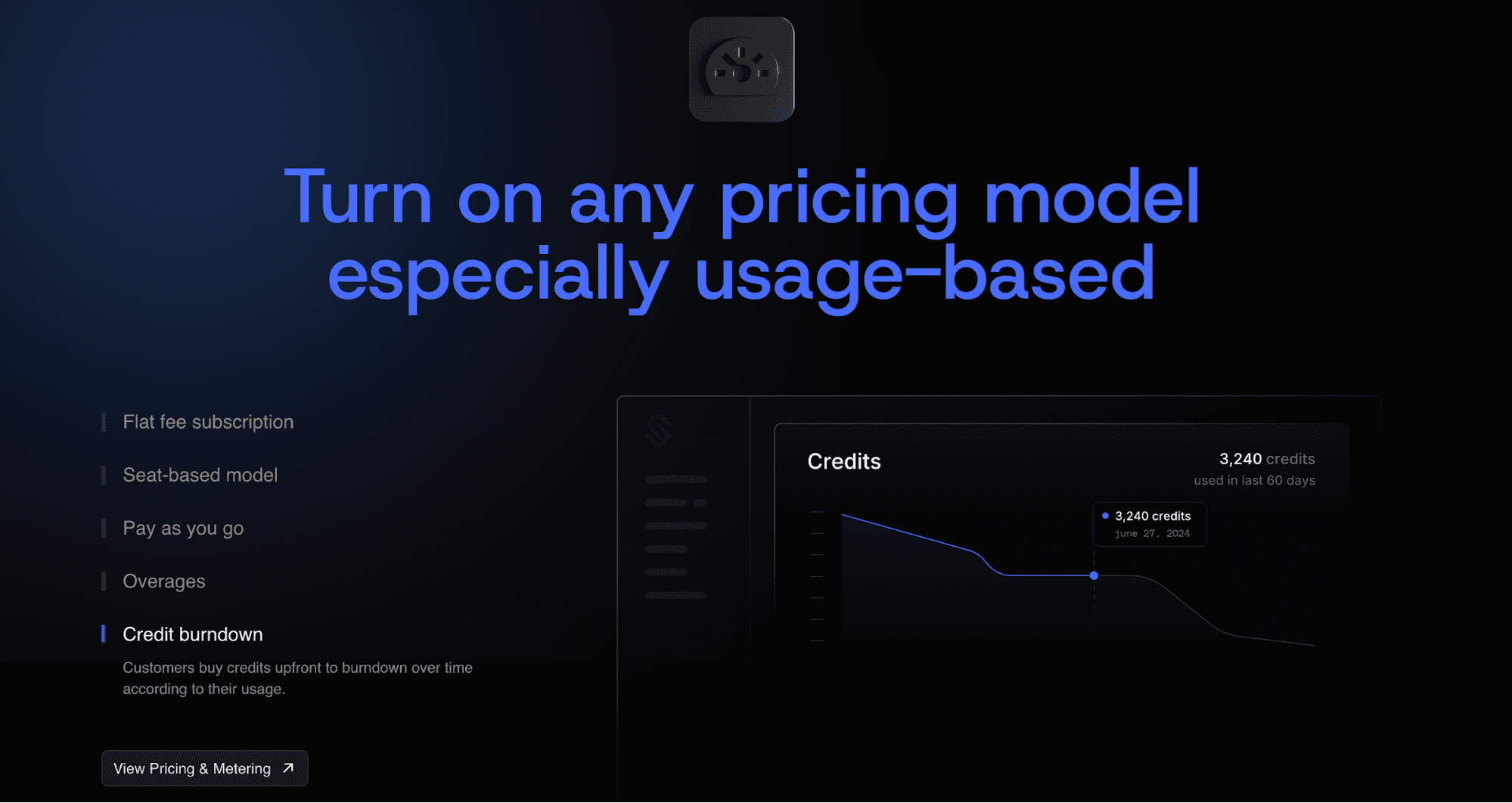
With Schematic, engineering stops writing and maintaining billing code. The platform evaluates and enforces access in-product at runtime.
Product teams can continuously iterate on packaging and limits without hard-coded logic.
FAQs About the AI Credit System
Why do SaaS companies use credit-based pricing?
SaaS companies use AI credit pricing to match revenue with usage. AI costs vary by activity, so fixed plans don’t always work. Credit-based pricing charges based on how much customers use the product, while keeping billing flexible and easier to manage.
How do you calculate credit consumption in an AI credit system?
AI credit consumption is calculated based on how each feature is priced. You assign a credit cost to actions, such as generating images or processing data. Every time a user performs an action, credits are deducted based on that predefined cost.
Is an AI credit system suitable for all SaaS products?
No, it works best for SaaS products with variable usage. If usage is predictable, flat pricing still makes sense. AI credit systems are more useful when costs change based on activity, such as AI features, APIs, or data processing.
How do AI credits work?
AI credits act as a unit of usage inside a product. Users receive credits through a plan or purchase them upfront. Credits are deducted from the balance as customers use features. Once credits run out, they can buy more or upgrade to continue using the product.