All posts
6 Top B2B SaaS Go-to-Market Strategy Examples to Learn From
Blog· Ryan Echternacht·Oct 15, 2026
Ryan Echternacht·Oct 15, 2026
An effective SaaS go-to-market strategy determines how fast a B2B software company gets its first users, wins paying customers, and grows into a stable business.
However, there is no one-size-fits-all GTM strategy that works for every B2B SaaS product. Some companies grow through self-serve users, while others rely on sales teams, channel partners, or a mix of both.
If you are unsure which approach to follow, it helps to study how proven B2B SaaS companies brought their products to market.
In this guide, we'll look at six B2B SaaS go-to-market strategy examples from Slack, HubSpot, Notion, Zoom, Salesforce, and LiveRamp. These examples will provide valuable insights to help you develop your own GTM strategy.
TL;DR
- B2B SaaS go-to-market strategy examples show that there are many ways to launch a product: Slack used product-led growth, HubSpot grew through inbound marketing, and Notion relied on a community.
- Zoom combined freemium and enterprise sales, Salesforce expanded through a hybrid sales and account growth model, and LiveRamp used account-based marketing.
- Successful SaaS GTM strategies have these things in common: strong product experience, clear value proposition, fast time-to-value, aligned teams, pricing that matches the distribution model, and room to improve over time.
- Schematic is the complete monetization platform that supports sales-led, self-serve, and hybrid GTM motions. It helps software and AI companies price what they sell, bill for consumption, and enforce entitlements at runtime.
How Is a B2B SaaS Go-to-Market Strategy Different?
A B2B SaaS go-to-market strategy is different from other business models because the buyer is rarely one person.
Unlike consumer products, most B2B software deals involve multiple decision-makers, such as end users, managers, finance teams, and IT departments. They do not buy on impulse. That leads to longer and more complex sales cycles.
Software-as-a-service is also more difficult to grasp for buyers. Users require proof, case studies, and a clear ROI justification before signing up.
A successful GTM strategy explains who the product is for, what specific pain points it addresses, and why your product is the best fit.
The go-to-market plan should also nurture relationships and deliver continuous value throughout the customer's journey. After all, SaaS businesses depend heavily on recurring revenue.
If target customers do not see ongoing value, they may cancel plans prematurely, switch tools, or fail to expand their account. That affects revenue growth.
6 B2B SaaS Go-to-Market Strategy Examples You Can Learn From
Let's take a look at how top B2B SaaS companies brought their products to market.
1. Slack (Product-Led Growth)
Slack originated as an online game at Tiny Speck, a gaming company founded by Stewart Butterfield in 2009. After the game failed, the business turned the tool into a team communication platform and publicly launched Slack in August 2013.
Slack’s GTM success was built around product-led growth strategies. Instead of forcing teams into long sales calls, Slack enabled them to try the product through a freemium model. Small teams could start using it at no cost, see value fast, and invite more teammates.
That created natural viral growth loops and helped Slack differentiate itself from a crowded market dominated by established players like Atlassian (HipChat) and Microsoft (Skype).
Slack allowed one team to create channels, bring co-workers in, and show other departments how useful it is. Shared workspaces and team-based usage made the product more valuable as more people joined.
Word-of-mouth also played a major role in Slack's early growth stage. Users recommended Slack because it made work feel faster and less tied to email.
The mix of free access, fast time-to-value, viral team usage, and strong product experience helped Slack reach unicorn status in October 2014, just over a year after its public launch.
2. HubSpot (Inbound Marketing as a GTM Strategy)
HubSpot was founded in 2006 by Brian Halligan and Dharmesh Shah, who observed a shift in the buying process in the SaaS market. It primarily catered to small to medium companies that wanted to attract potential customers organically without using paid advertising or marketing channels.
HubSpot has since grown into a comprehensive customer relationship management (CRM) software with AI-powered tools for enterprise sales, marketing, and service teams.
The platform pioneered the "inbound marketing" concept and built its go-to-market strategy around it. HubSpot attracted its target audience through blog posts, guides, templates, courses, and e-books. Every piece of content was optimized for search engines to amplify online reach.
HubSpot also offered free marketing and sales tools, which lowered the barrier to entry and helped the company build a customer base.
Inbound marketing as a GTM strategy worked because HubSpot sold to companies that already needed help with lead generation and online growth. Its content answered those questions before buyers were ready to talk to a dedicated sales team.
A startup founder, marketer, or sales leader could read a guide, use HubSpot's free CRM, join a webinar, and then upgrade their pricing plan as the next logical step.
3. Notion (Community-Led Growth)
Established in 2013 and officially released in 2016, Notion is an all-in-one workspace for notes, docs, tasks, wikis, and project planning. It helps teams build their own systems in one place instead of switching between separate tools.
Notion’s GTM strategy leaned on community-led growth and bottom-up adoption instead of a top-down enterprise sales funnel.
The product was flexible, allowing users to shape it around their own needs. For example, a founder could use it as a project management tool, while a team leader could use it as a company wiki.
That flexibility made existing customers want to share how they used the product. Templates, tutorials, social posts, and creator-led content became part of Notion’s growth loop.
Notion also supported a community-led GTM motion through its ambassador and affiliate programs. Under the ambassador program, Notion's power users led local communities, organized events, shared translations, and developed tutorials. Meanwhile, the affiliate program gave influencers a way to earn financial rewards for referring new users.
Notion turned its customer base into advocates and its most effective marketers, which led to massive growth. As of September 2024, Notion has reached over 100 million users.
4. Zoom (Hybrid Approach)
Zoom is a video meeting and team communication platform founded by Eric Yuan in 2011. The company launched its software in 2013, entering a crowded market dominated by large players, such as Cisco Webex and Skype for Business.
Zoom used a hybrid GTM strategy, combining both product-led and sales motions, to win trust in a space where buyers already had known options.
The freemium pricing model helped users try the product with low risk. Small teams could quickly start meetings, test call quality, and invite participants without talking to sales teams.
Zoom emphasized ease of use, cross-device compatibility, and features like screen sharing. Once more people used Zoom at work or in school, the company could sell paid plans to larger accounts.
Then, enterprise sales and marketing teams helped Zoom move upmarket. These teams targeted established companies that already had active Zoom users, clear demand, and a reason to buy more seats.
Currently, Zoom is using a partner and referral program to support sustainable growth. Resellers, distributors, and agency partners are introducing other Zoom solutions (beyond Zoom Rooms) to more customers.
5. Salesforce (Sales-Led Growth)
In 1999, Salesforce was established by Marc Benioff, Dave Moellenhoff, Parker Harris, and Frank Dominguez.
It changed business software by bringing CRM to the cloud, giving companies a way to manage sales without on-premises software or heavy setup. It pioneered the Software-as-a-Service model.
Throughout the years, Salesforce's GTM strategy has constantly changed to adapt to evolving market conditions. It combined multiple distribution models to reach different buyer personas and meet varying customer needs effectively.
Salesforce initially focused on small and medium-sized businesses that wanted a more accessible CRM. The cloud-based delivery model made it easier for these organizations to start using sales software without high upfront costs.
From there, Salesforce grew inside those accounts. Once a team used the CRM tool, Salesforce could cross-sell more products from its growing portfolio, such as service, marketing, and analytics solutions.
Then, Salesforce expanded into new markets. After building strong customer ties in one sector, it acquired other software companies to target new customers in specific industries.
Salesforce has successfully moved from SMB adoption to large enterprise deals. It uses a mix of go-to-market approaches, such as sales-led growth, account expansion, and product portfolio growth.
6. LiveRamp (Account-Based Marketing)
Established in 2011 and acquired by Acxiom in 2014, LiveRamp is a data collaboration platform. It helps innovative brands connect, control, and activate data to transform customer experiences and generate measurable outcomes.
LiveRamp’s GTM strategy is built around account-based marketing (ABM). Rather than targeting a broad market, LiveRamp focuses on a smaller list of high-value enterprise accounts that closely match its ideal customer profile.
This go-to-market approach makes sense for a complex platform like LiveRamp. Large companies often have specific data needs, privacy concerns, and buying teams that require a more tailored GTM execution and unique value proposition.
By using ABM, LiveRamp can speak to each account’s business problem, industry, and use case.
Marketing and sales teams find it easier to execute multi‑touch, multi‑channel sequences across selected accounts. For example, they can send personalized sales outreach, ads, and content marketing to attract high-value customers.
What These B2B SaaS Go-to-Market Strategy Examples Have in Common
A strong GTM strategy has these things in common:
Great Product Experience
An effective go-to-market strategy starts with a product that people want to keep using. This matters because B2B SaaS buyers do not only consider the sales pitch. They also judge how the product works once they start using it.
Slack, Zoom, and Notion grew because users could feel value inside the product, and satisfied customers shared it with their network. The product did not need heavy training before it made sense.
Make sure your own product also provides a great user experience. Customers should find it easy to sign up, use the features, and share with others.
Strong Value Proposition
Each SaaS GTM strategy example above had a clear reason for buyers to care.
Slack simplifies team communication. HubSpot helps companies attract leads through inbound content marketing. Notion enables users to tailor the workspace to their unique needs.
A strong value proposition tells buyers what problem you solve, who you solve it for, and why your product is worth choosing over the others. This becomes your competitive advantage in the SaaS market. It should be simple enough for a sales representative, digital marketer, founder, or user to explain.
Fast Time-to-Value
The best B2B SaaS GTM strategies show value quickly.
Slack enables teams to start chatting immediately. Zoom allows users to join or host a meeting quickly. Notion lets users build a useful page or template without contacting customer support teams.
Faster time-to-value reduces doubt. It helps potential customers see why the product matters before they lose interest or need more approval.
Distribution Model Matches Pricing
A strong GTM strategy aligns pricing strategies with the way customers buy a product.
Low-cost SaaS products often grow through free plans, self-serve sign-ups, and in-product upgrades. Buyers don't need to go through a long sales process before they start.
On the other hand, high-cost SaaS products usually need more support before a deal closes. Buyers may want demos, flexible pricing, security review, and help from sales teams. They also conduct extensive market research and read customer feedback when making a purchase decision.
This is why Slack, Notion, and Zoom could grow through low-friction entry points. LiveRamp needs a more focused account-based approach because its product caters to large companies with more complex needs.
Aligned Marketing, Sales, and Customer Success Teams
Top B2B SaaS companies understand that a GTM strategy works best when marketing, sales, and customer success teams share the same goal.
Your marketing plan should attract customers with the right message. Your sales strategy must turn that interest into clear buying conversations. Then, customer success should help users adopt the product, see value, and renew.
When these teams are not aligned, buyers hear mixed messages. Sales and marketing efforts may go to waste. A department may promise things the product cannot support. Customer success might need to fix gaps that started before the deal closed.
Strong alignment creates a smoother path from first touch to long-term customer loyalty and customer satisfaction.
Continuous Iteration
Salesforce shows why a GTM strategy should keep changing as the company and product evolve.
It did not rely on one fixed GTM motion. Salesforce started by selling cloud-based CRM software to SMBs that wanted an easier way to manage sales. Later on, Salesforce focused on enterprise deals, industry-focused solutions, and partner-led growth.
Treat your go-to-market strategy as an ongoing process of iteration and optimization. Your first plan will help you enter the market. Meanwhile, the next strategy should help you grow accounts, increase brand awareness, reach more customers, and defend your position.
Common GTM Mistakes You Should Avoid
Learning from top examples is important, but you should also know which mistakes to avoid when developing your own GTM strategy.
Targeting Too Many Customer Segments
Trying to sell to everyone makes your GTM strategy weak. Each customer segment has different problems, reasons to buy, budgets, and decision-makers.
When you focus on a broad target market, your messaging becomes unclear. Lead quality also drops because you attract people who are not a strong fit.
Proper customer segmentation helps you avoid this common mistake. Start with one target market and learn the customer's pain points before expanding.
Copying Competitors' GTM Strategies
Competitors' GTM strategies may look smart, but they will not necessarily work for your B2B SaaS company.
Their pricing, brand, product maturity, team size, funding, customer base, market demand, and sales cycle length may be very different from yours.
Copying their GTM motion can push you toward the wrong channels, buyers, or pricing strategies.
Adding Sales-Led Motion Too Early
Some B2B SaaS companies add sales calls, demos, and account reps before the product or price needs them.
That can slow down growth if buyers are ready to sign up on their own. It can also raise customer acquisition costs (CAC) before the company has a repeatable sales process.
A sales-led motion makes sense when buyers need help, deals are larger, or the product is complex to understand.
However, if the product is simple and low-cost, you should focus first on product-led onboarding and self-serve sign-ups.
Relying on a Single Channel
A single distribution channel can create early traction, but it should not carry your whole GTM strategy to the end.
For example, you can use SEO and content marketing in the early growth stage. Then, consider another channel strategy to reach and engage new buyers as your product evolves.
Neglecting Existing Users
Many B2B SaaS companies focus so much on acquiring new customers that they forget the people already using their product.
That is a costly mistake. Existing users can renew, upgrade, invite teammates, share feedback, and refer new buyers.
Your GTM strategy shouldn’t end at acquisition. Make sure it also focuses on ongoing product adoption, customer success, and expansion revenue.
Ignoring Success Metrics
Ignoring success metrics makes it hard to know whether your GTM strategy is working.
Website traffic, demos, or sign-ups are worth celebrating, but those numbers do not always show the complete picture.
You also need to know which distribution channels bring customers, where conversion rates drop, and how much it costs to win a deal.
Track key performance indicators (KPIs) and SaaS metrics, like customer acquisition cost and customer lifetime value (CLV), to measure success. They show if your GTM motion can scale without wasting budget.
For example, a high CAC often indicates that your marketing and sales efforts might be too expensive and erode profit margins.
How Schematic Fits Into Your B2B SaaS Go-to-Market Strategy
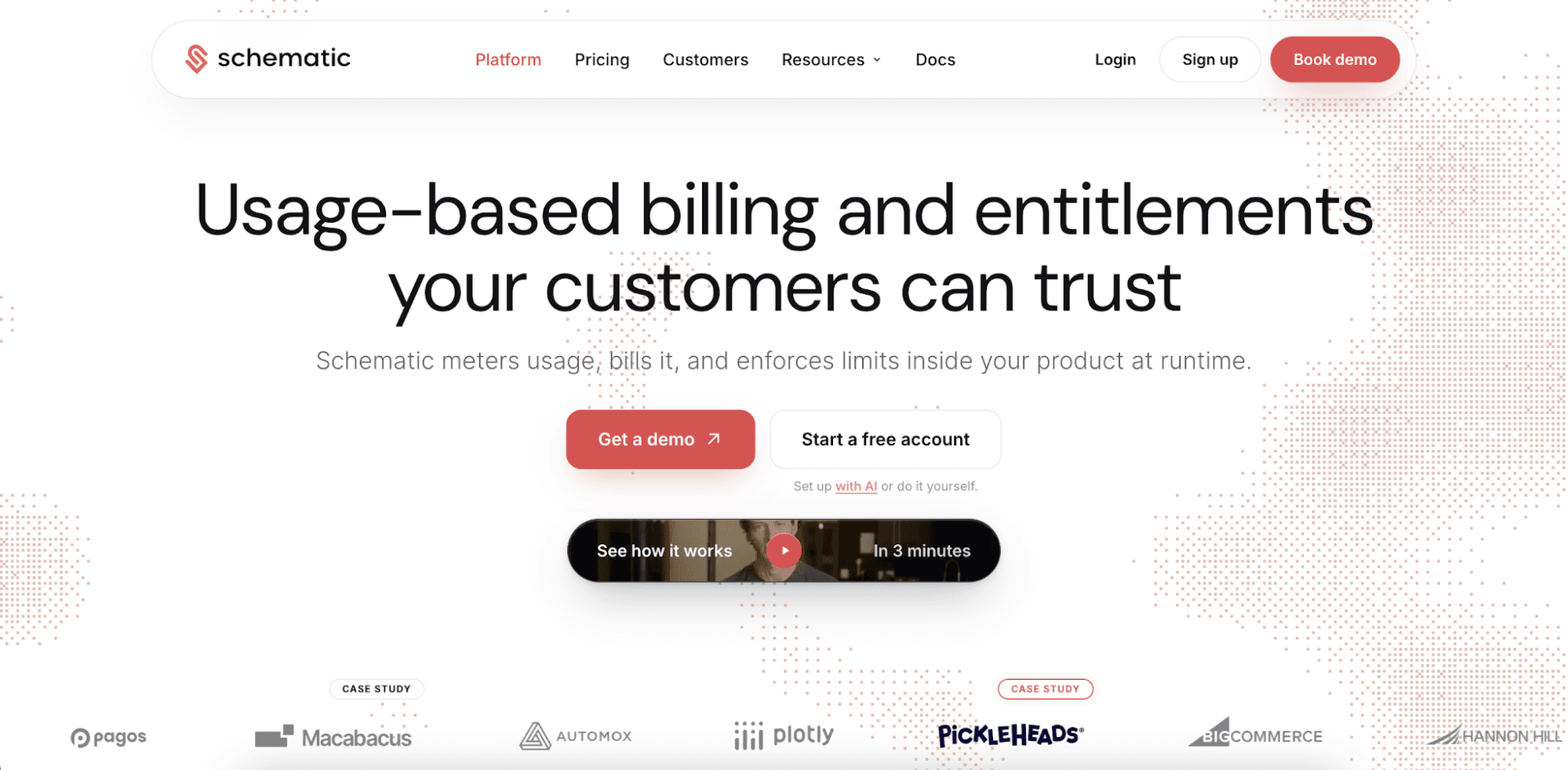
Schematic is the complete monetization platform for software and AI companies that want to close enterprise accounts. It gives GTM teams one place to price what they sell, bill for product usage, and enforce software entitlements in real time.
Schematic supports sales-led growth, self-serve (or product-led) motion, or a combination of both go-to-market strategies.
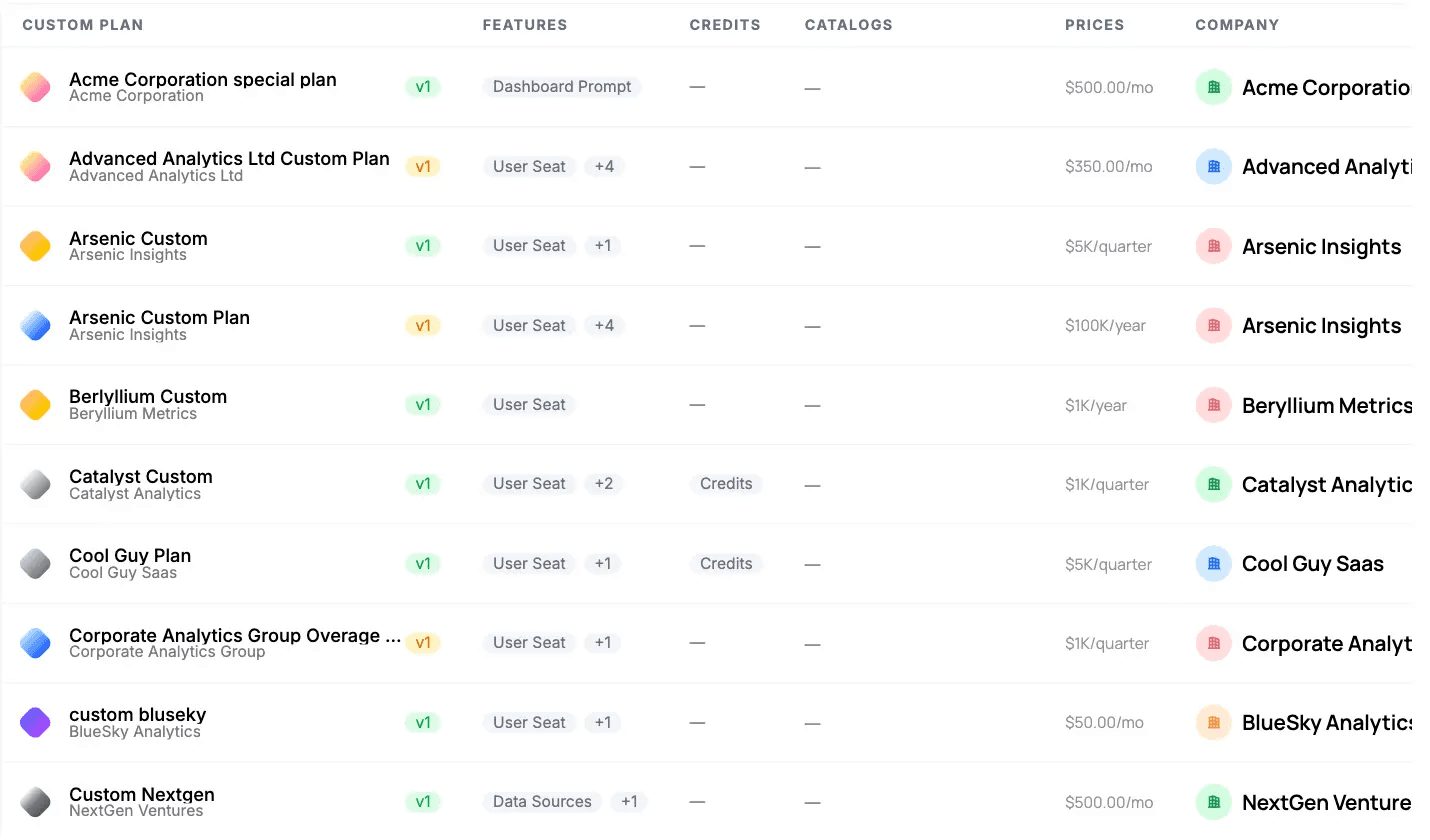
For a sales-led GTM approach, Schematic lets teams build custom plans, set contract terms, provision entitlements, and meter usage. Sales and product managers can also offer add-ons, extra seats, overrides, and tier upgrades to grow existing accounts.
Max Ade from Pickleheads shares, "The ability to give customers overrides and exceptions to their plan limits is a must-have feature for any billing platform."
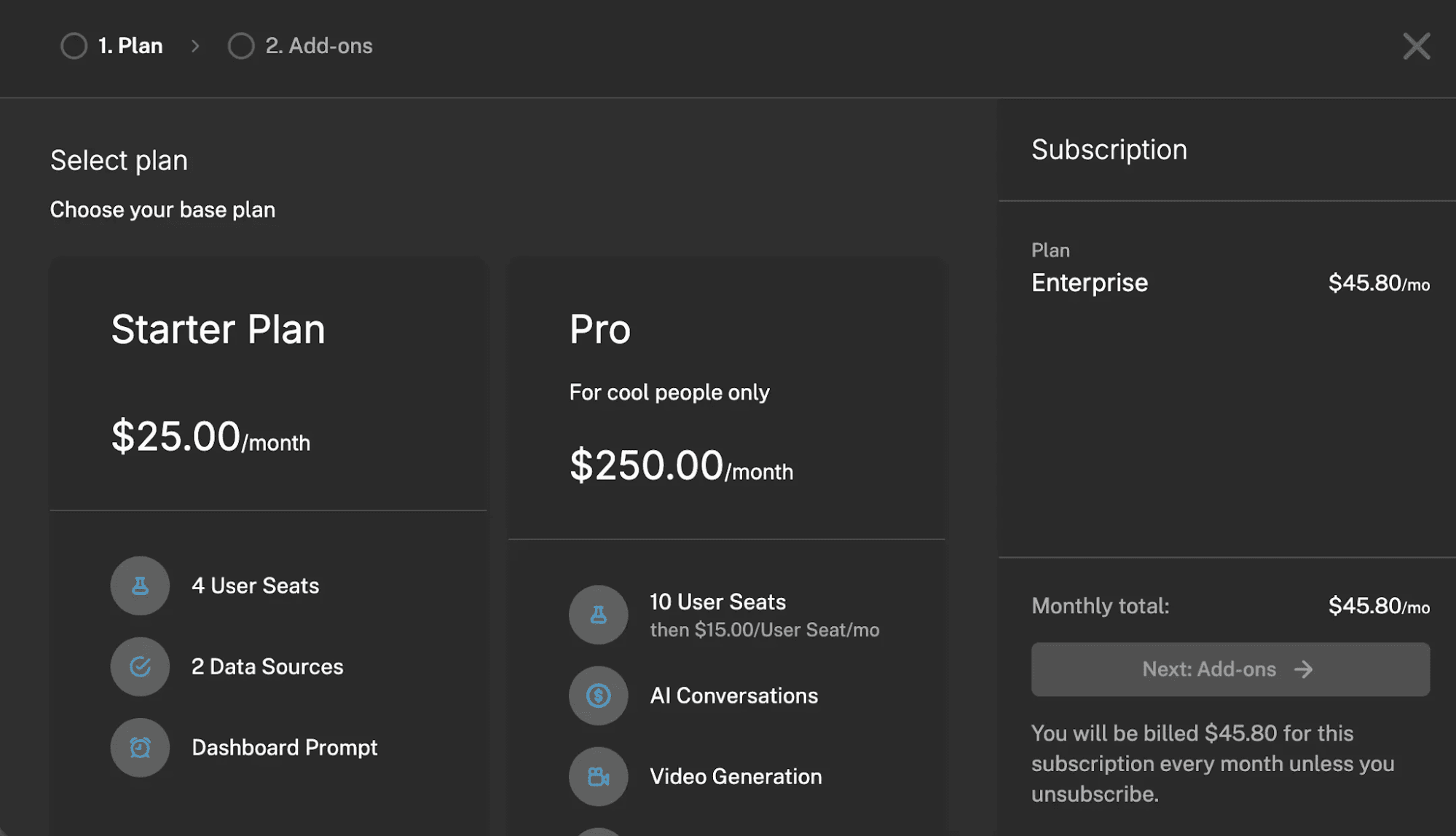
To support a self-serve motion, Schematic gives buyers real-time visibility and control over their consumption. They can see usage in the portal, choose their plan, add seats, purchase add-ons, buy credit bundles, and manage auto top-ups.
What sets Schematic apart is its real-time entitlement engine and robust enterprise credit wallets. They give customers spend forecasts, self-service controls, and configurable spending limits to prevent runaway bills or unexpected access throttling.
FAQs About B2B SaaS Go-to-Market Strategy Examples
What is the best go-to-market strategy for B2B SaaS companies?
The best B2B SaaS GTM strategy depends on your product, pricing strategy, target market, and sales cycle. Product-led growth works well for simple and low-cost SaaS tools. Sales-led motions might be better for complex platforms that need sales support and personalized demos.
What is the difference between a GTM and a marketing strategy?
A go-to-market strategy is a strategic blueprint for launching and scaling a software product. It is often time-bound. On the other hand, a marketing strategy is an ongoing plan for building brand awareness, retaining customers, and improving market positioning.
Should SaaS startups use a product-led or sales-led GTM strategy?
SaaS startups should choose based on their target audience and product complexity. If users can try the product, see value fast, and upgrade on their own, product-led growth makes sense. However, if buyers need demos, approvals, or custom support, a sales-led approach is likely a better fit.