 Ryan Echternacht
Consumption-based pricing has become popular for SaaS and AI products with variable usage patterns. This pricing model allows companies to charge customers based on how they use a product instead of a flat fee.
A consumption model aligns pricing more closely to operational costs and a buyer's perceived value of the product.
Those who incur higher costs for your company and get more value from the product pay a large sum of money. Meanwhile, hobbyists who rarely consume costly resources pay less.
In this guide, we'll explain what consumption-based pricing is, how it works, and the key benefits to expect.
TL;DR
- Consumption-based pricing charges customers based on how much of a product or service they consume, such as tokens, credits, or compute resources.
- It works by collecting usage data, metering customer activity, applying pricing rules, generating invoices, processing payments, and enforcing usage limits.
- Key benefits include stronger value alignment, lower barrier to entry, natural revenue growth, margin protection, and higher customer satisfaction.
- To implement consumption pricing, choose the right usage metric, calculate costs, select the right pricing model, use reliable billing systems, and give customers visibility and control over usage.
- Schematic helps software and AI companies launch consumption-based pricing that customers can trust with real-time usage visibility, spend forecasts, self-service controls, and configurable spending limits.
What Is Consumption-Based Pricing?
Consumption-based pricing is a software monetization model where customers pay for actual consumption inside the product. It's also known as usage-based billing.
Unlike subscription-based pricing that charges a fixed recurring fee for software access, consumption pricing bills customers a different amount each billing cycle based on actual usage.
If buyers consume more of the product, they pay more. Accounts that rarely use the platform pay a smaller amount. Pricing feels fair because customers are only charged for the resources they use.
Consumption inside the product can vary depending on the vendor. It could mean cloud computing resources, data storage, AI credits, tokens, API calls, or transactions.
Consumption-based pricing is popular in modern SaaS and AI products with fluctuating usage patterns. It allows companies to capture higher revenue when usage increases.
How Does Consumption-Based Pricing Work?
A consumption model involves collecting usage data from the product and then metering and rating it for accurate invoice generation. Here's the step-by-step workflow consumption-based pricing follows:
Usage Data Collection
Consumption-based pricing starts with collecting raw consumption data from the product. This can include API calls, credits, tokens, compute time, storage use, transactions, messages sent, or completed tasks.
For AI products, data collection may happen every time a model request, agent action, or workflow runs.
Each usage event should connect to the right customer or account ID. The consumption billing system also records important details, such as time, product feature, and quantity.
Usage Metering
Usage metering turns raw consumption events into measurable units that can be billed.
Businesses use metering systems to track usage by seat, AI agent, product, feature, or account. The data stored may include event counts, token totals, credit consumption, or compute time.
The system also handles duplicate data, retries, and delayed events to ensure usage totals remain accurate.
Usage Rating
The next step involves rating, which means applying pricing rules to metered usage and converting it into billable charges.
The price can stay the same for every unit or change based on how much the customer consumes the product.
With flat-rate metered pricing, each billable unit has the same price. A company might charge $0.05 for every API call regardless of usage volume.
Tiered pricing is where users pay less per unit as their usage increases. For example, the first 0–1k credits cost $0.02 each, the next 1k–10k credits are priced at $0.0150 each, and usage beyond 10k credits is billed at $0.0125 per unit.
Invoice Generation
Once usage has been rated, the billing system creates a record of what the customer owes. The invoice can show the total consumption, the price applied to that usage, any overage charges, and any volume discounts.
Some software companies generate one usage line item for customer billing, while others break down usage-based charges by product, feature, seat, or agent.
Invoices may also combine consumption pricing with fixed subscription fees. These are common among SaaS and AI businesses that implement a hybrid pricing model.
Payment Processing
After creating invoices, the SaaS company collects payment based on the agreed terms.
In a postpaid model, users pay after their usage has already occurred. Prepaid models work differently because they require customers to fund a credit balance or usage wallet in advance.
The usage billing software accepts payments through an integrated payment gateway or payment solution.
Payment can be collected automatically through a saved credit card, bank account, digital wallet, or another payment method.
Other billing solutions can also automate dunning workflows to retry failed payments and notify the customer before they churn involuntarily.
Limit Enforcement
Limit enforcement controls what happens when customers reach a usage, credit, or spending threshold.
A company may send a warning, allow overage pricing, block additional usage, or prompt the user to purchase more credits, depending on customer behavior.
Soft limits can notify customers about usage threshold levels without restricting software access. Meanwhile, hard limits can stop usage once the cap has been reached.
Popular Consumption-Based Pricing Examples
Here are a few examples of companies implementing consumption-based pricing.
PostHog
PostHog provides a complete product analytics and developer platform for companies building web applications.
Source: PostHog.com
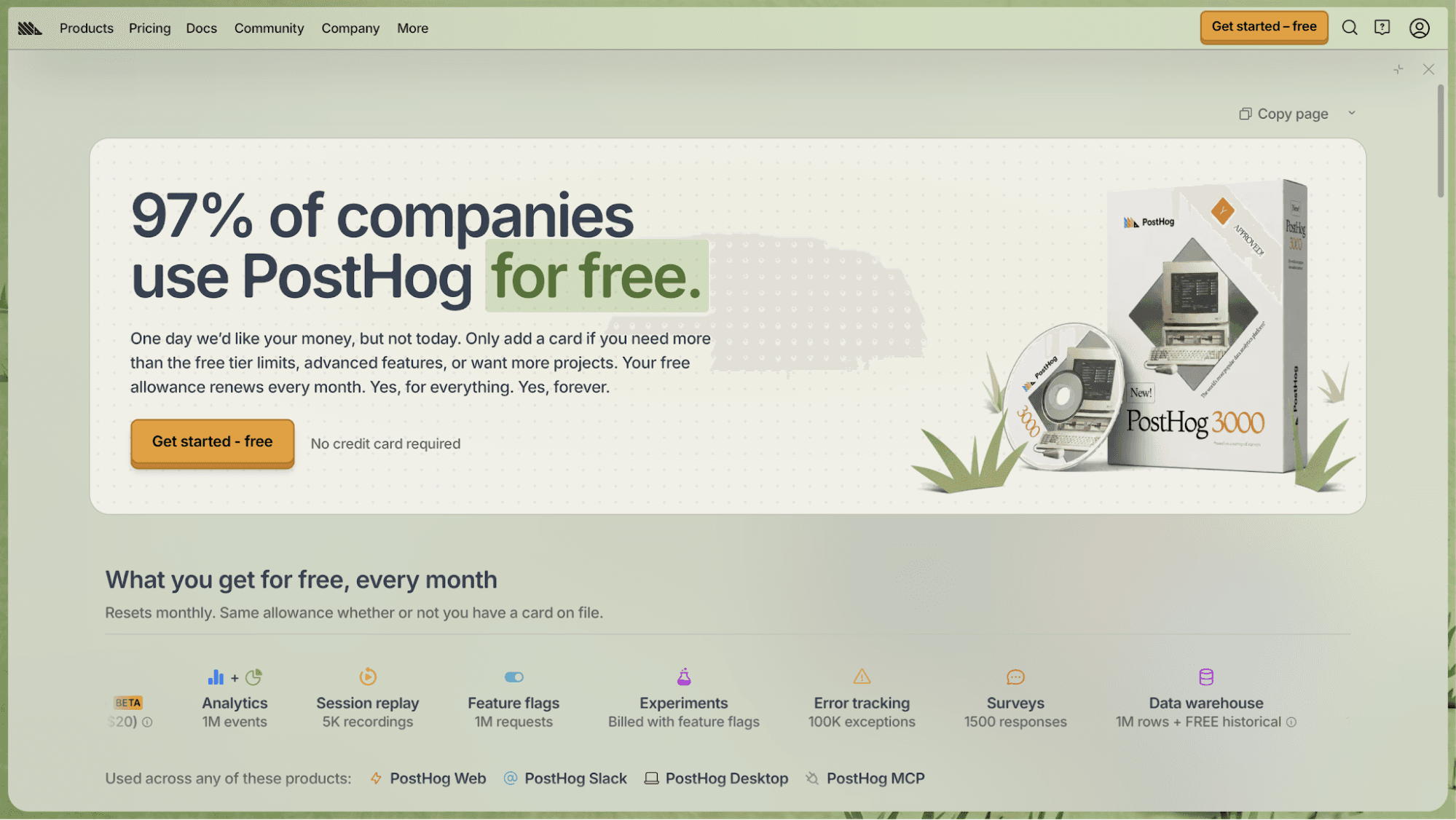
PostHog combines freemium pricing with pay-as-you-go pricing.
Customers receive a monthly free allowance for each product, such as 1 million analytics events and 5,000 session replay recordings. Usage stops at the consumption limits to prevent unexpected costs and surprise bills.
Customers who need more from the product can add a payment method and move to pay-as-you-go pricing. They keep the same free allowances and only pay for consumption that exceeds the threshold.
PostHog also lets customers set usage limits for individual products to control spending.
Pickleheads
Pickleheads is a popular mobile app that helps users find pickleball courts in their area.
Source: Pickleheads.com
Pickleheads worked with Schematic to monetize their platform using a consumption-based model.
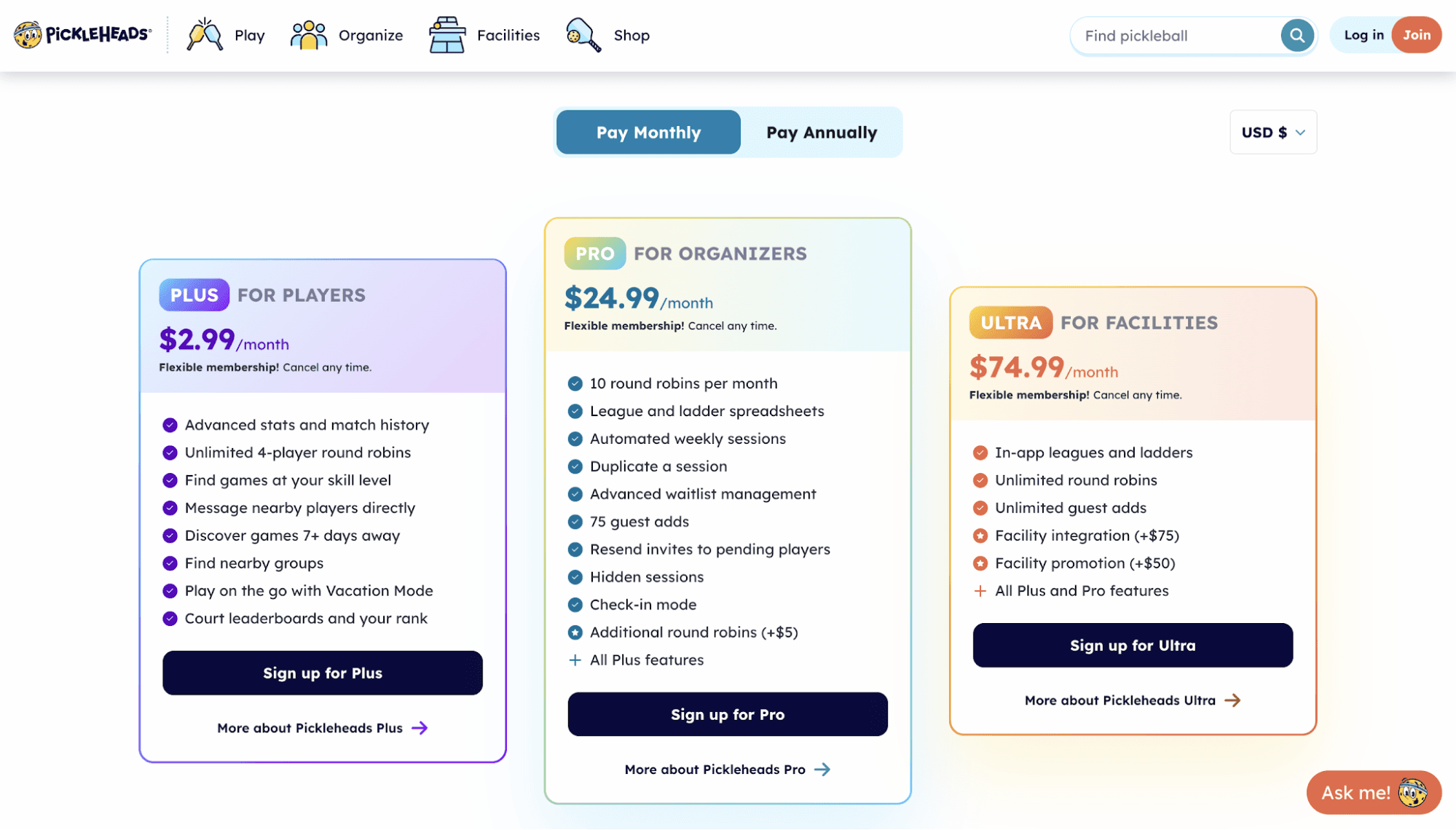
It offers three subscription plans with usage limits based on the number of round robins an organizer can run.
The Plus plan comes with two round robins per month, while the Pro tier increases the allowance to 10 per month. The Ultra plan removes the consumption cap and includes unlimited round robins.
This pricing structure lets different customer segments choose the best plan based on expected activity.
Pickleheads also offers other ways to expand customer usage, such as paying for extra round robins or guest invites.
Vercel
Vercel is a developer tool for building, hosting, and deploying websites and applications.
Source: Vercel.com
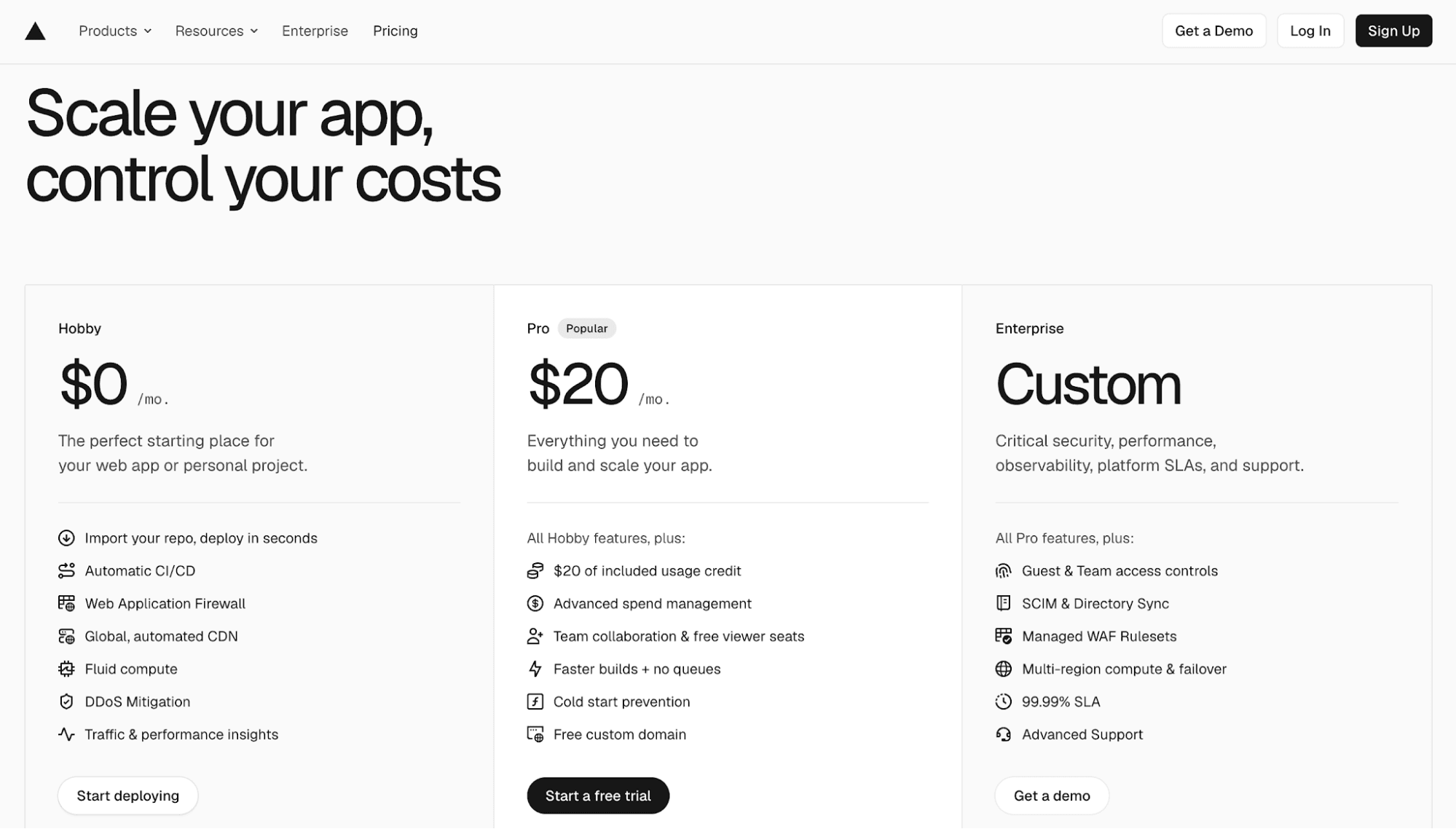
Vercel's pricing uses a hybrid billing model. It combines seats, usage credits, and overage charges under one pricing structure.
The Hobby plan is free to use, but it comes with consumption limits.
Customers who need more usage need to pay for the Pro tier. The cost starts at $20 per month and includes one developer seat plus $20 in monthly usage credits. Those credits can be consumed for infrastructure resources inside Vercel.
The Pro plan also includes set usage allowances for cloud services, such as data transfer and edge requests. When buyers exceed the threshold, additional consumption is billed as overage fees.
Zep
Zep provides the enterprise infrastructure that solves long-term memory management for large language models (LLMs).
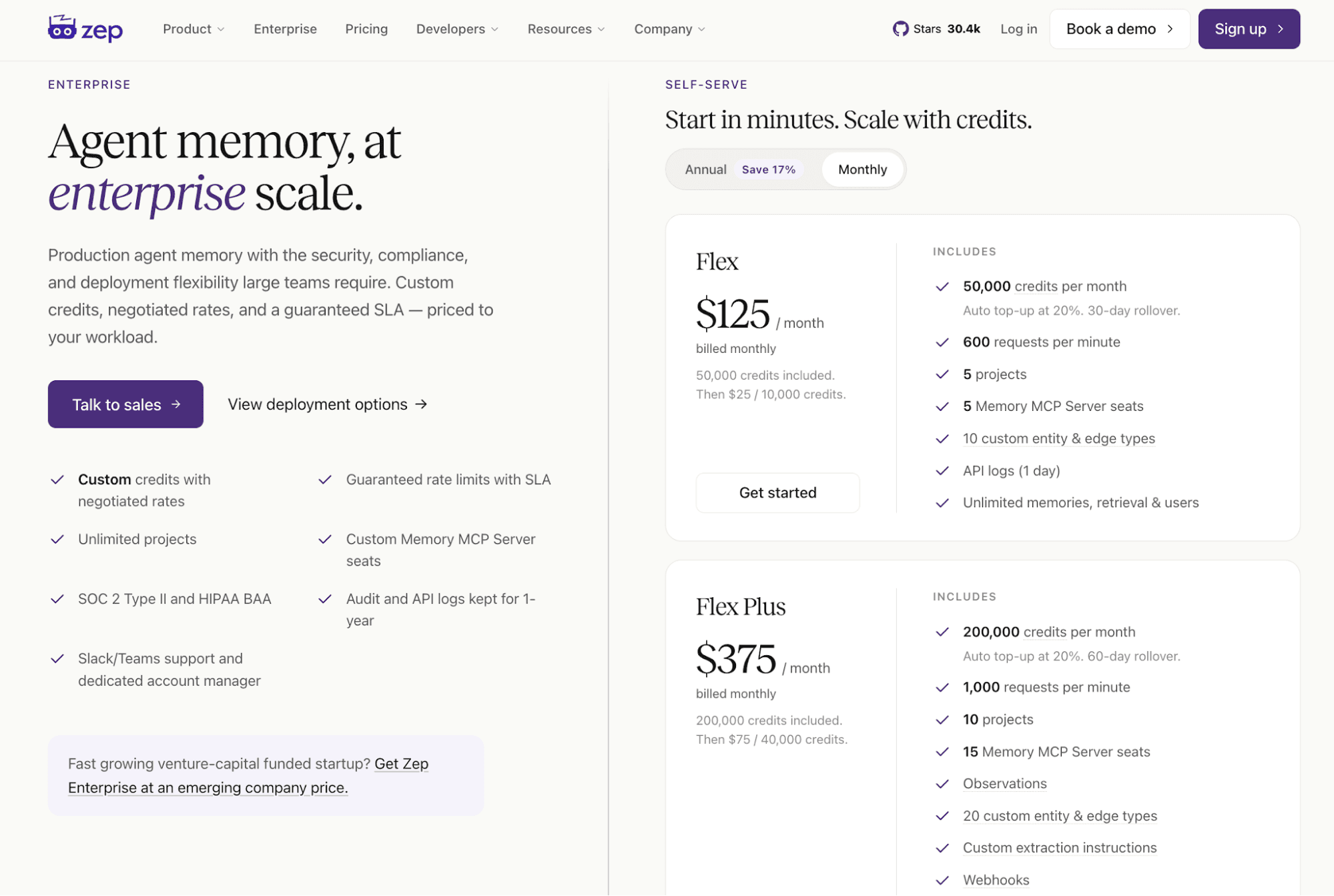
Source: getZep.com
Zep turned to Schematic, a complete usage-based billing platform, to build a flexible pricing model and support real-time usage monitoring and enforcement.
Zep combines subscription pricing and credit-based pricing. The Flex plan costs $125 per month and includes 50,000 credits. Customers who need more can buy another 10,000 credits for $25.
The Flex Plus tier costs $375 per month and includes 200,000 credits. Additional blocks of 40,000 credits are priced at $75.
Both paid plans also include configurable automatic top-up and credit rollover policies. These give customers flexibility to handle variable costs and consumption.
Key Benefits of Using Consumption Pricing
Consumption-based pricing offers several advantages to SaaS and AI companies. Let's take a closer look below.
Stronger Value Alignment
Consumption pricing aligns what customers pay with how much they use the product. Compared to fixed pricing, this creates a closer connection between customer spend and product value.
Light users pay less because they consume fewer resources, while power users pay more as their usage increases.
This usage-based model can also respond faster to changes in customer demand. As buyers receive more value from the product, pricing scales with their activity.
Lower Barrier to Entry
In consumption-based pricing, customers can start using the product without committing to a large contract or expensive plan. They can begin with low usage and increase spending later.
That's why consumption pricing is popular among SaaS and AI companies with product-led go-to-market strategies. Buyers can test the product with less financial risk before making a larger commitment.
A simple self-service purchasing process can also lower customer acquisition costs by reducing the need for manual selling. Sales reps can focus more time on larger accounts that need custom pricing models and contract terms.
Potential for Upside
A consumption model allows SaaS and AI companies to earn additional revenue when customers use their product more.
An account that starts with low usage may later increase API calls, credits, storage data volume, or compute activity. This creates upside that is tied directly to consumption.
Unlike other pricing models, companies do not require customers to upgrade to higher-tier plans before generating more revenue. Their spending can increase as their consumption patterns change.
Natural Revenue Growth
Consumption-based pricing can turn product adoption into revenue growth.
As customers receive greater value from the platform, they are more likely to spend more money. They can send more requests, run additional AI tasks, or process larger data.
Revenue can naturally grow without requiring sales teams to negotiate a new contract every time a customer needs more capacity. Expansion can happen through natural customer consumption rather than sales talks.
Consumption pricing is a good fit for products where value is tied to usage.
Margin Protection
Consumption-based billing helps companies charge in line with the costs created by customer activity, especially when usage varies significantly between accounts.
This is useful for AI products where each request may incur variable costs for model calls, tokens, GPUs, storage, or other infrastructure.
A fixed subscription can leave the company paying higher service costs without receiving more revenue from heavy users.
Consumption pricing can protect gross margins by charging power users a higher amount.
Higher Customer Satisfaction
Consumption pricing can meet customer expectations by giving buyers a clearer connection between what they use and what they pay. Customers may feel more comfortable starting small when they are not forced into a plan built for much higher usage.
Real-time usage dashboards and spend controls can also make consumption-based charges easier to understand. That transparency can support stronger customer retention by reducing billing disputes.
Buyers can choose how much they consume and control costs based on their own needs, which can create a more positive buying experience.
Tips for Successfully Implementing a Consumption Model for Pricing
Follow these tips to successfully implement consumption-based pricing models.
Tie Consumption Metric to Product Value
Choose a usage metric that reflects how customers get value from your product. The best metrics are easy to explain, track, and connect to customer activity.
SaaS companies may charge for API calls, transactions, storage, or monthly active users (MAU). AI companies often bill for credits, tokens, model requests, generated outputs, or agent actions.
By using a clear metric, customers can easily understand why higher consumption leads to higher costs.
Calculate the Costs of Delivering Each Unit
Compute how much it costs to deliver each billable unit before setting a price. Include cloud infrastructure, AI model fees, data storage, third-party APIs, support costs, and other variable costs tied to consumption.
For AI products, operational costs can change based on the model, task, or amount of compute required.
Compare unit costs with the price you plan to charge. Doing so helps you establish rates that support healthy margins.
Don't forget to review unit costs often, especially when vendors adjust prices or customers start using your product in new ways.
Choose the Right Consumption-Based Pricing Model
Implement usage-based pricing models that match customer behavior, usage patterns, and your revenue goals.
Here are the most popular consumption models you can consider.
- Pay-as-you-go: Buyers pay only for the units they consume. The final bill can change based on actual usage.
- Credit burndown: Customers buy credits in advance and spend them as they use product features, services, or AI agents.
- Tiered pricing: Also known as volume pricing, it charges customers different rates based on usage levels. Higher usage may move them into a lower per-unit price tier.
- Fixed fee with overages: Customers pay a fixed recurring fee that includes a usage allowance, then pay extra when they exceed the limit. This hybrid model gives companies predictable recurring revenue while still capturing growth from increased usage.
- Custom pricing with minimum commitments: Enterprise accounts agree to a minimum level of spend or usage, often in return for custom rates, discounts, or contract terms.
Test the Model Before Full Rollout
Test your pricing strategy with a small group of beta users before applying it to the rest of your customer base.
Review usage patterns and customer feedback. Look at how bills change for light, average, and heavy users.
Then, check whether prices are easy to understand and whether your margins remain healthy as usage grows.
Pay closer attention to customers who reduce usage after seeing higher costs. Explain what each consumption metric means and how it connects to product value to improve adoption.
Invest in Scalable Billing Infrastructure
Consumption pricing needs reliable billing infrastructure that can handle large amounts of usage data without losing or double-counting events.
Invest in a usage-based billing platform that supports SaaS metering, runtime enforcement, and invoicing.
Other key features to consider include credit wallets, plan versioning, concurrency-safe holds, a real-time event log, and an append-only ledger for ASC 606 compliance.
The best software can process high event volumes while keeping product usage, customer balances, pricing rules, and invoices in sync.
Give Customers Real-Time Visibility and Control Over Usage
According to an IDC study of 300 companies, 74% of customers worry about runaway bills when pricing lacks transparency.
To solve this trust problem in consumption pricing, you should give buyers complete visibility and control over their usage.
Show usage totals, credit balances, spending levels, and plan limits inside the product. Send alerts when customers approach a threshold or run low on credits.
Allow customers to set spending caps, approve overages, buy more credits, or enable automatic top-ups.
These controls reduce billing disputes because buyers can see exactly how much they have used in real time without waiting for invoices to arrive.
Monitor Customer Usage Patterns and Iterate on Pricing
Review how customers use your product after launching the consumption model. Monitor changes in usage volume, account growth, unit costs, credit consumption, and customer spend.
Compare light and heavy users to see whether the model works for both groups. Pay attention to accounts that stop using the product because costs rise too quickly.
However, you should also look for heavy users who generate high costs for your business without creating enough revenue.
Use what you've learned to adjust prices, tiers, credits, commitments, or included usage in a subscription plan.
Consumption pricing should change when customer behavior, product features, or infrastructure costs change.
Schematic Solves the Trust Problem in Consumption-Based Pricing
Schematic is the best usage billing platform for software and AI companies selling consumption-based plans to enterprise customers.
Teams use Schematic to meter credits, manage software entitlements, enforce usage limits at runtime, and give customers real-time visibility into consumption.
Enterprise credit wallets show balances, spend forecasts, usage limits, and self-service controls. Customers can manage top-ups and spending caps before usage leads to a large bill or unexpected access throttling.
Schematic also stands out for its real-time entitlement engine. Flag checks answer access questions from the same ledger used for billing, while one event stream powers entitlements and invoices. It keeps balances, limits, and usage updated everywhere the product reads them.
Schematic gives both the provider and the buyer confidence that consumption will stay within budget. This leads to lower friction during procurement, faster sales cycles, more predictable expansion, and higher long-term revenue.
FAQs About Consumption-Based Pricing
What is a consumption-based pricing model?
A consumption-based pricing model charges customers based on how much of a product or service they use. Common billing units include API calls, credits, tokens, transactions, storage, or compute.
Is there a difference between consumption-based and subscription models?
Yes. Subscription pricing charges a fixed recurring fee for software access, while consumption pricing bills customers based on usage. Some companies combine both pricing strategies in a hybrid model. Customers pay a base subscription fee that includes a usage allowance, then pay overage fees when they exceed the limit.
What are the pros and cons of consumption-based pricing?
Consumption pricing can lower the barrier to entry, support product-led growth, align costs with customer value, support natural revenue growth, and protect margins. The tradeoffs include less predictable bills, harder revenue forecasts, more billing complexity, and the need for accurate metering and real-time usage tracking.
Why do SaaS companies use consumption pricing?
SaaS companies use consumption pricing when usage varies widely or when service costs increase with consumption. Revenue can grow as customers use more while giving smaller customers a lower starting cost than fixed subscription plans.