 Ryan Echternacht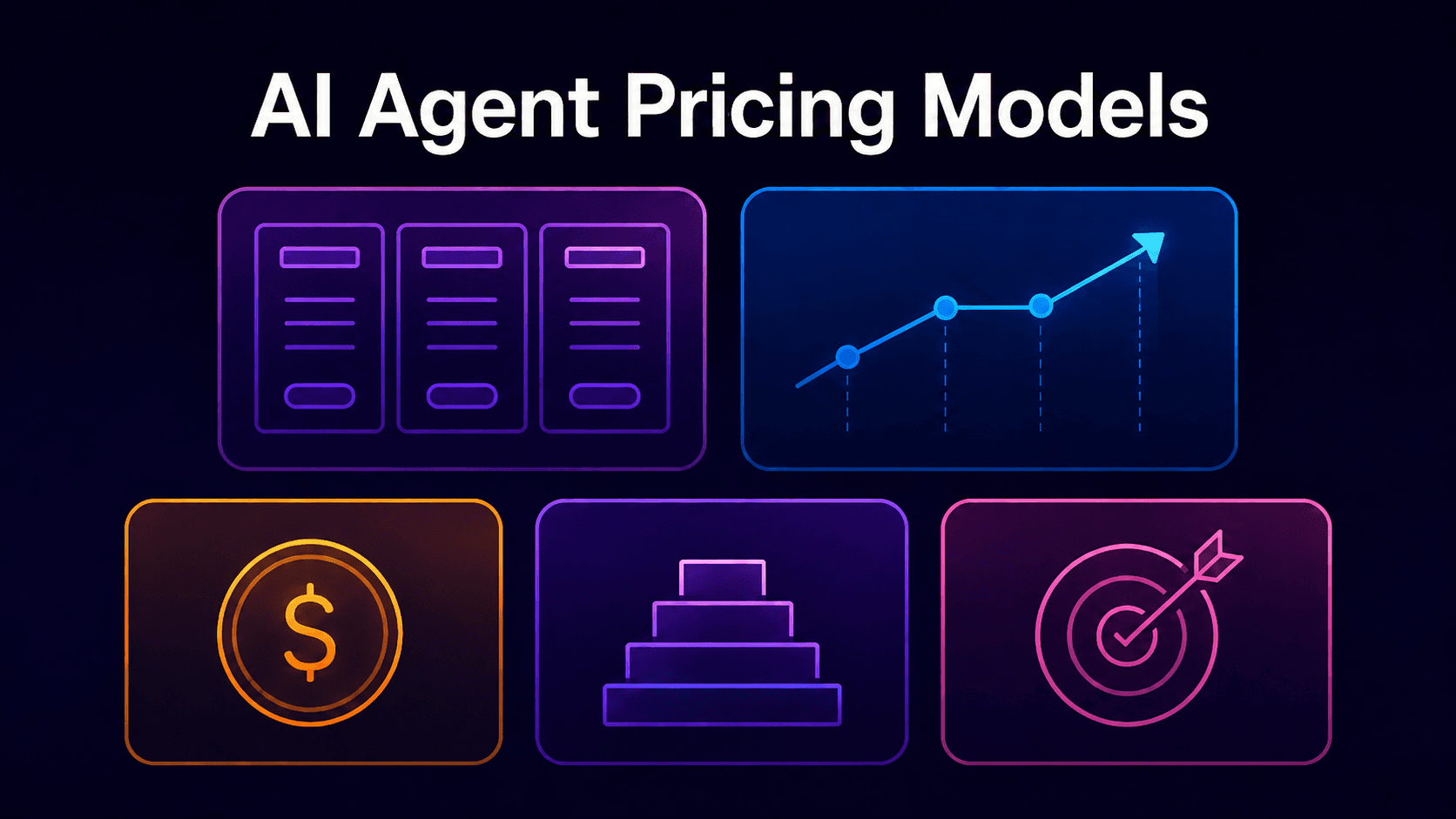
Pricing AI agents is not the same as pricing standard software. Instead of charging a fixed platform fee for access, you bill customers for actions, workflows, business outcomes, or the value the agent delivers.
The pricing model you choose plays an important part in AI SaaS monetization.
A weak pricing model can lead to high service costs, low profit, or confused buyers. Meanwhile, a strong model makes the bill simple to understand and gives your company room to grow as customer usage increases.
This guide breaks down the AI agent pricing models that AI companies can use. We'll also explain when each model fits and how to choose the right one for your agent.
TL;DR
- The five best AI agent pricing models are usage-based, credit-based, outcome-based, value-based, and hybrid pricing.
- Usage-based pricing fits AI agents with changing activity, while credit burndown can create predictability and give customers more control over their usage.
- Outcome pricing suits agents that deliver clear results, whereas value-based pricing fits high-impact products. Hybrid pricing is a great choice for any business that wants flexibility.
- Static subscriptions and seat-based pricing often fail because AI agents can create unpredictable costs and work without a direct link to user seats.
- Schematic helps AI companies ship any AI agent pricing model without rebuilding their billing infrastructure by adding usage metering, a credit ledger, access control, and in-product components on top of Stripe.
Top 5 AI Agent Pricing Models Explained
AI agent companies can choose from five different pricing models to monetize their agents. Let's break down each one below.
1. Usage-Based Pricing
Usage-based pricing bills customers based on how much they use an AI agent. Common usage metrics include tokens, API calls, compute time, and queries.
Instead of paying a flat fee, customers pay a variable fee depending on actual usage. This makes pricing fair. Power users are charged more, while customers who rarely use the agent pay less.
The usage billing software tracks each usage event, applies the set rate, and adds the charges to the customer’s invoice at the end of the billing cycle.
The main benefit is flexibility. A pay-as-you-go pricing structure allows customers to use the AI agent without a large upfront commitment. As customers receive value from the agent, they can naturally increase their usage.
AI companies can capture higher revenue as product usage scales. They can also protect gross margins, especially if computing costs are tied to consumption.
The downside is the unpredictability that comes from usage. Most companies might receive unstable recurring revenue because they aren't charging a fixed fee for software access.
Customers may also worry about high bills, especially when concurrent agents can cause usage to scale quickly. Real-time usage enforcement is important.
Per-Action Pricing
Per-action pricing is a type of usage-based pricing that bills customers for each task the agent performs. Charges are based on tokens, minutes, or completed tasks. It mirrors usage-based pricing from business process outsourcing (BPO) organizations and call centers.
This AI pricing model makes sense for agents that handle varied tasks at unpredictable times. It also supports transparent pricing because customers only pay for a specific interaction with the agent.
However, per-action pricing offers little room to stand out in the AI market. Buyers may compare agents by price alone, which can push rates lower as model inference costs become cheaper.
Per-Workflow Pricing
Per-workflow pricing is another form of usage-based pricing. It charges customers when an AI agent completes an entire workflow. Pricing is tied to the completed process rather than each small action taken.
This pricing model works well for AI agents that execute multi-step processes and provide clear intermediate deliverables. Examples include conducting account research, sending an outreach email, and replying to the conversation. It works best when each workflow has a clear start, end, and result.
That said, implementing per-workflow pricing has a few disadvantages. There's the risk of price compression if the AI agent completes a basic process, pushing vendors to lower their rates.
On the other hand, complex workflows are difficult to price and may cause profit losses when they run longer than expected.
2. Credit-Based Pricing
Credit-based pricing is where customers buy AI credits upfront and consume them every time they run a workflow or complete an action using the AI agent.
For example, a basic text request may use one credit, while a longer workflow might use 10 credits.
Many AI agent companies turn to credit-based pricing because most usage units aren't intuitive. Developers can understand API calls, tokens, and embeddings. However, non-technical customers don't know the meaning of these terms, let alone estimate how many they'll need.
Credits give customers a consistent and more predictable budget to work with, even when the AI agent behaves inconsistently and causes usage to spike.
Instead of showing every technical charge, AI companies can present one simple unit that is easier to track. For instance, they can tell users that embedding a file will cost five credits.
A shared credit pool also allows customers to draw from the same balance when using different tools, such as chat, file processing, and search. Plus, company-level pools can fit autonomous agents better than individual allocations.
However, credits may still feel unclear when customers don't know how much each action costs. Companies should show usage, balances, limits, and top-up options inside the product.
3. Outcome-Based Pricing
Outcome-based pricing, also known as success-based pricing, charges customers only when an AI agent delivers a tangible business result.
Both the AI company and the end user should agree on what counts as success, how it will be tracked, and how much each result will cost.
For example, a customer support agent can charge for each resolved support ticket. Meanwhile, a sales agent can bill customers for every qualified lead it creates. Other outcome-based components may include completed bookings, recovered payments, or approved claims.
The outcome pricing model makes sense when the product delivers measurable outcomes that can be linked directly to the AI agent.
The biggest benefit of this model is strong value alignment and low risk of competitive displacement. Customers pay for results rather than access or agent activity.
On the flipside, it can be difficult to define and measure outcomes that your business and the customer will agree on. This is one of the reasons why outcome-based pricing is still out of reach for 95% of the AI market, based on a Growth Unhinged report.
Attribution is also a major challenge. Outside factors usually affect results, which can lead to billing disputes and less predictable revenue.
4. Value-Based Pricing
Value-based pricing sets the price of an AI agent based on the benefit customers receive rather than the cost of running it.
AI companies usually study how the agent saves time, cuts labor costs, reduces risk, or helps customers earn more revenue.
The price may vary by customer group because larger organizations often gain more value than smaller teams. This creates stronger value alignment between the price paid and the result delivered.
Value-based pricing offers the highest customer alignment because buyers pay based on the business gain they expect.
The drawback is that value can be hard to measure. AI agent companies should research customer needs, test willingness to pay, and explain why the price is fair.
5. Hybrid Pricing
Hybrid pricing combines two or more pricing methods in one offer. A common hybrid model includes a base fee for access to specific agent capabilities plus an additional charge tied to usage, credits, tasks, or results.
This flexible pricing model gives AI companies a steady source of predictable revenue while still letting them capture upside when usage scales.
Most customers also prefer a hybrid model because it keeps costs predictable and offers budget stability without limiting future growth. They can naturally increase usage when workloads change.
However, hybrid pricing is one of the most difficult pricing models to implement. AI agent companies should explain each charge clearly, track usage correctly, provide cost controls for customers, and keep pricing easy to understand. Advanced metering systems are also required for the billing infrastructure.
Should You Use Static Subscription or Seat-Based Pricing for AI Agents?
No. Static subscriptions and seat-based pricing are often a poor fit for autonomous AI agents.
A flat monthly subscription works best when product usage is predictable, and service costs remain fairly steady. AI agents are different. They usually run many tasks at once, retry failed steps, consume credits rapidly without warning, and create concurrent usage risks.
A fixed recurring fee can leave an AI company paying more to serve a customer than it earns from the subscription plan.
Per-seat pricing also doesn't make sense for AI monetization. This pricing model assumes that each human user logs in and uses the product during set hours.
However, a deployed agent does not log in, take breaks, or wait for a person to start each task. It can automatically resolve tickets, draft files, and book meetings around the clock. For that reason, user count may have little connection to agent activity or customer value.
Pricing should reflect the work completed, resources used, or results created.
How to Choose the Right Pricing Model for AI Agents
Here are some tips to keep in mind when selecting the right AI agent pricing model.
Identify the Task Your AI Agent Performs
Start by defining the exact job the AI agent handles. Does it complete an action, run an entire workflow, support a human user, or work independently?
A task-based, pay-as-you-go model may fit agents with clear and repeatable actions. Meanwhile, workflow-based pricing might suit agents that execute longer processes with several steps.
If you're selling an autonomous agent, consider an outcome or success-based pricing model because the agent can deliver measurable outcomes.
Determine the Customer Value Created
Look at the result customers receive from the AI agent. The value can come from saved time, lower labor costs, faster service, fewer errors, or added revenue.
For example, when an agent resolves a ticket, the buyer gains a clear result that may support outcome-based pricing.
Compare the result with the work customers would otherwise do by hand. Choose a pricing model that reflects the benefit they receive.
Calculate the Underlying Costs of Serving Each Customer
Track every cost linked to agent use, such as model calls, storage, support, and cloud infrastructure fees. Analyze how those costs change as usage grows. Your cost curve may increase quickly for complex workflows, multiple retries, or premium models.
Use this data to test your unit economics at low, average, and heavy usage levels.
Select a pricing model that covers variable costs and leaves room for profit. Then, set limits or enable overage pricing when customer activity hits predefined thresholds.
Consider Your Ideal Customer Profile
Know who you are selling to before choosing a pricing model and a billing metric.
Developers and technical teams can understand tokens, compute time, or API calls. Pure usage-based pricing can work well for them.
However, small business owners may have different expectations. They want simplicity and a clear unit they can understand. Outcome-based pricing makes sense because these customers might prefer pricing based on conversations, reports, or tickets resolved.
Enterprise accounts, on the other hand, usually want predictability and clear cost controls. You can implement a hybrid model that combines a base subscription fee with usage-based pricing.
Match the pricing model to the buyer’s knowledge, willingness to pay, and need for cost certainty.
Run a Pilot and Gather Feedback
Test the pricing model with a small group of users before a full launch. Monitor usage, infrastructure costs, customer feedback, and profit for each account.
Ask buyers whether the pricing model feels fair and whether they can predict their monthly spend. Then, compare what customers say with how they actually use the AI agent.
Analyze the results to improve your pricing and packaging strategy. A pilot gives you a chance to test different approaches before sticking to a model that works.
Common Mistakes to Avoid When Monetizing AI Agents
Poor pricing choices can confuse buyers, reduce trust, and leave AI companies with weak margins. Below are the common mistakes you should avoid when monetizing AI agents.
Choosing a Unit Metric Customers Do Not Understand
Do not base pricing on a technical unit that buyers cannot connect to value. Tokens, model time, and tool calls might make sense to developers, but many casual buyers will not know what those units mean. A confusing metric makes it hard to compare plans, estimate costs, or approve a purchase.
Instead, choose a billing unit that reflects a clear action or result, such as a completed report, resolved case, or saved time. Customers should understand what they are buying without needing a technical guide.
Charging Customers for Failed or Incomplete Tasks
You should not charge the full amount when an agent fails to complete the promised work. AI doesn't always deliver predictable performance, so you need clear billing rules for errors, retries, and partial results.
If you have a credit burndown pricing model, place a temporary hold before the task starts. Deduct the credits only after the AI agent completes the action. Release the hold when the activity fails. Doing so can prevent unfair charges and reduce billing disputes over unfinished work.
Using Seat-Based Pricing for Autonomous Agent Work
Per-seat pricing is not the right choice when the AI agent performs work without constant human input.
A small team may run thousands of agent tasks, while a large organization might use the AI agent rarely.
Seat counts will not show how much work the product performs or how much value it creates. Pricing should follow actions, workflows, credits, or results instead.
You can still use seat-based pricing for platform access, admin controls, or shared features. However, they don't make sense for autonomous agents.
Charging the Same Fixed Monthly Fee for Small Businesses and Enterprises
Do not use a fixed monthly price for customers with very different needs.
A small business might only complete a few tasks each week, while an enterprise account can run many agents at the same time. The larger account may also need custom limits, support, security controls, and contract terms.
A fixed monthly fee can overcharge smaller buyers and undercharge larger ones.
You should build pricing around usage, value, company size, or service needs. Give different customers clear upgrade paths rather than placing every account in one package.
Hiding Usage, Limits, and Overage Charges
Many AI companies make the mistake of treating pricing as a finance strategy instead of a product experience. Customers should not have to wait until the end of the month to learn how much they used or why their bill increased.
Show usage, credit balances, plan limits, and overage rates directly inside the product. Send alerts before customers reach a cap or trigger an automatic credit top-up.
Clear visibility helps buyers control spending and reduces billing disputes. It also gives customer success teams enough time to step in before blocked tasks or higher costs cause frustration.
Ship Any AI Agent Pricing Model With Schematic
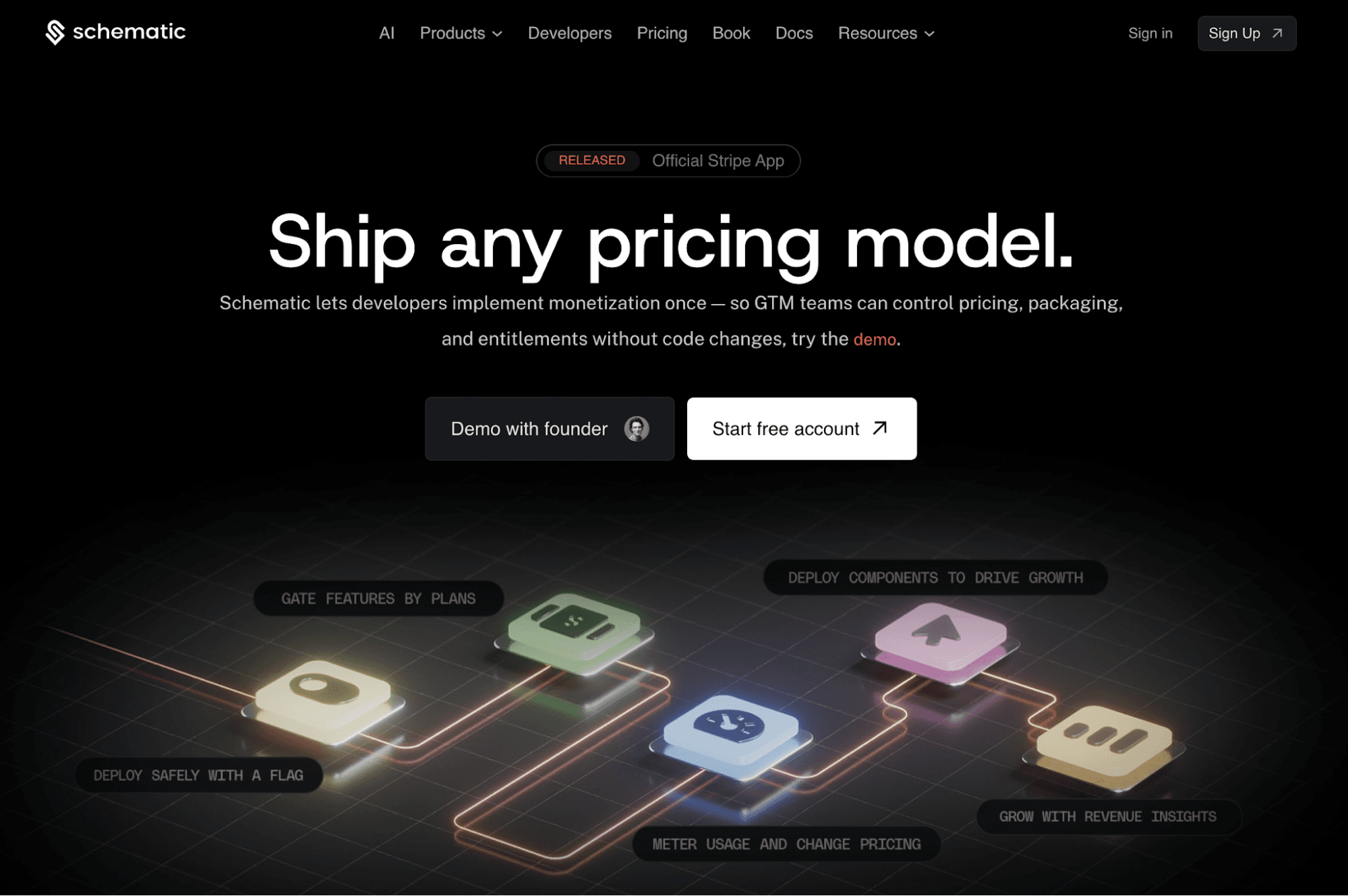
Schematic helps AI agent companies ship any pricing model without rebuilding their billing infrastructure. Implement pay-as-you-go, credit burndown, overages, and hybrid pricing within days.
It works by decoupling pricing logic from the application. This means commercial and go-to-market teams can control pricing, packaging, and software entitlements without waiting for engineering.
Schematic, built on Stripe, serves as the system of record for custom plans, credits, limits, trials, add-ons, and overrides. Stripe continues to handle invoicing and payment processing. Schematic takes care of usage tracking, runtime access enforcement, and metering on a real-time credit ledger.
Schematic also provides embeddable components for pricing tables, customer portals, usage dashboards, and checkout pages. Meanwhile, company profiles show a customer's plan, usage, and limits on one scrolling page. This replaces the need for homegrown admin panels.
FAQs About AI Agent Pricing Models
What is the most common pricing model for AI agents?
Usage-based pricing is one of the most popular AI agent pricing models. Customers pay for actions, workflows, tokens, calls, or compute usage. Many AI companies also add a monthly subscription fee to ensure predictable recurring revenue.
How do you price AI agents?
Start by defining the work the AI agent performs and the value customers receive. Then, calculate costs, choose a clear billing unit, and test pricing with early customers. Most businesses price AI agents per completed workflow, action, or business results delivered.
Can you use seat-based pricing for AI agents?
It depends. Seat-based pricing can work for AI copilots that support people inside team collaboration software. However, per-seat pricing is a poor fit for autonomous agents because their activity and value may have little connection to the number of people who need platform access.