All posts
Credit Management Platform: Top 7 Tools for Monetization (2026)
Blog· Ryan Echternacht·Sep 10, 2026
Ryan Echternacht·Sep 10, 2026
Credits give SaaS and AI companies a simple way to charge for flexible product usage. A customer may spend credits on API calls, automated workflows, image generation, reports, or other paid actions.
The challenging part is managing those credits after launching your credit-based pricing model. You need to monitor balances, track usage events, handle top-ups, hold credits, manage in-product access, and process refunds. Doing these tasks manually in spreadsheets can take a lot of time and lead to billing errors.
The right credit management software helps you manage these tasks in one place. It includes a credit ledger, usage metering, and enforcement, which are the three key pillars for monetizing products with credits.
This article lists the best credit management platforms you can use for AI and SaaS monetization. We'll also share tips on how to choose the right one for your specific needs.
TL;DR
Here are the leading credit management platforms worth looking into.
- Metronome
- Stigg
- Zuora
- Orb
- Zenskar
- Lago
Top 7 Credit Management Platforms for Monetization in 2026
These are the best credit management platforms to help you monetize SaaS and AI products with credits.
1. Schematic + Stripe
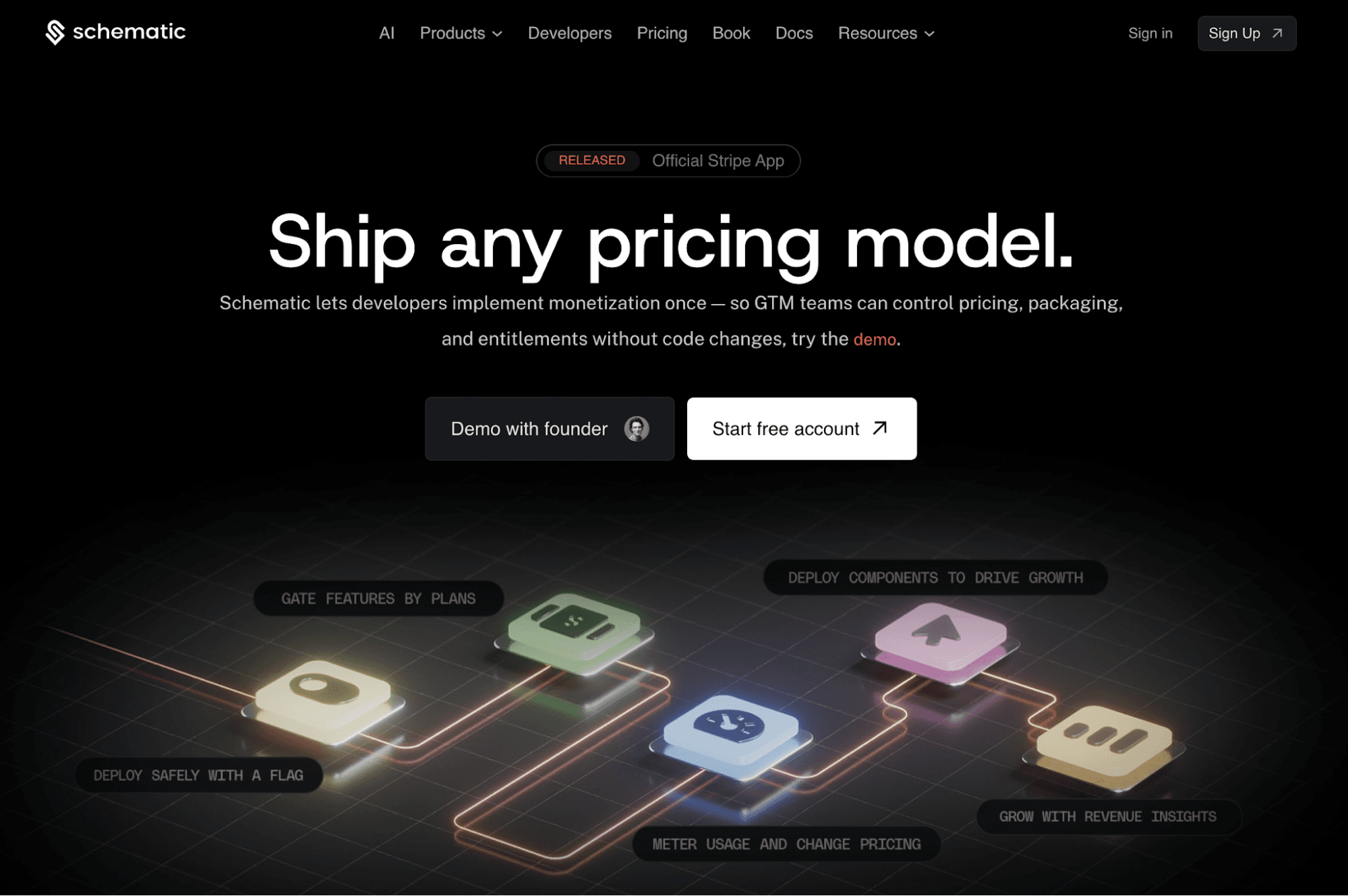
Schematic is the monetization operating system that lets modern SaaS and AI companies ship any pricing model, including credit burndown and usage-based billing.
It offers bi-directional integration with Stripe, so you can quickly import your products, prices, subscriptions, and customer accounts. Then, manage plans, credits, limits, add-ons, trials, software entitlements, and exceptions in Schematic without rebuilding your billing infrastructure.
Schematic provides a full credit ledger with exactly-once event semantics, idempotent writes, and replay safety. Each product action reduces the credit balance only once to ensure accurate billing.
Schematic also supports real-time credit enforcement to control limits before AI actions execute, rather than reconciling the problem later. It checks the latest balance when deciding whether to allow further usage.
The system can place a hold before an action starts, then commit the AI credits once successful or release them after failure.
When a request fails, repeats, or needs a manual correction, Schematic reverses the credit consumption and returns credits to the customer account’s balance.
The platform even allows automatic top-ups for credit burndown plans. When the customer’s balance is below a pre-set threshold, it automatically purchases the specified number of credits to ensure uninterrupted usage.
Key Features
- Centralized product catalog: Define and manage custom plans, credits, limits, add-ons, trials, and overrides in one place.
- Native Stripe app: Control product access, track the customer lifecycle, and enforce usage directly in Stripe.
- Credit ledger: This is where you can easily monitor credit grants, consumption, and balances.
- Usage metering and pricing: Track product usage events and apply pay-as-you-go, prepaid, credit overage, volume, or graduated pricing.
- Runtime access enforcement: Evaluate current credit balance and usage limits before granting access.
- Credit refunds: Return credits to an account when a request failed, was retried, or needs correction.
- Auto top-ups: Enable automatic credit top-ups when a customer’s balance reaches a pre-set threshold.
- Credit rollovers: Carry unused credits into the next billing period instead of forfeiting them.
- Drop-in billing components: Drag and drop usage dashboards, pricing tables, self-service portals, and other customer-facing systems.
- Standalone migrations: Move companies between plan versions on demand without scrambling for migrations.
2. Metronome
Source: Metronome.com
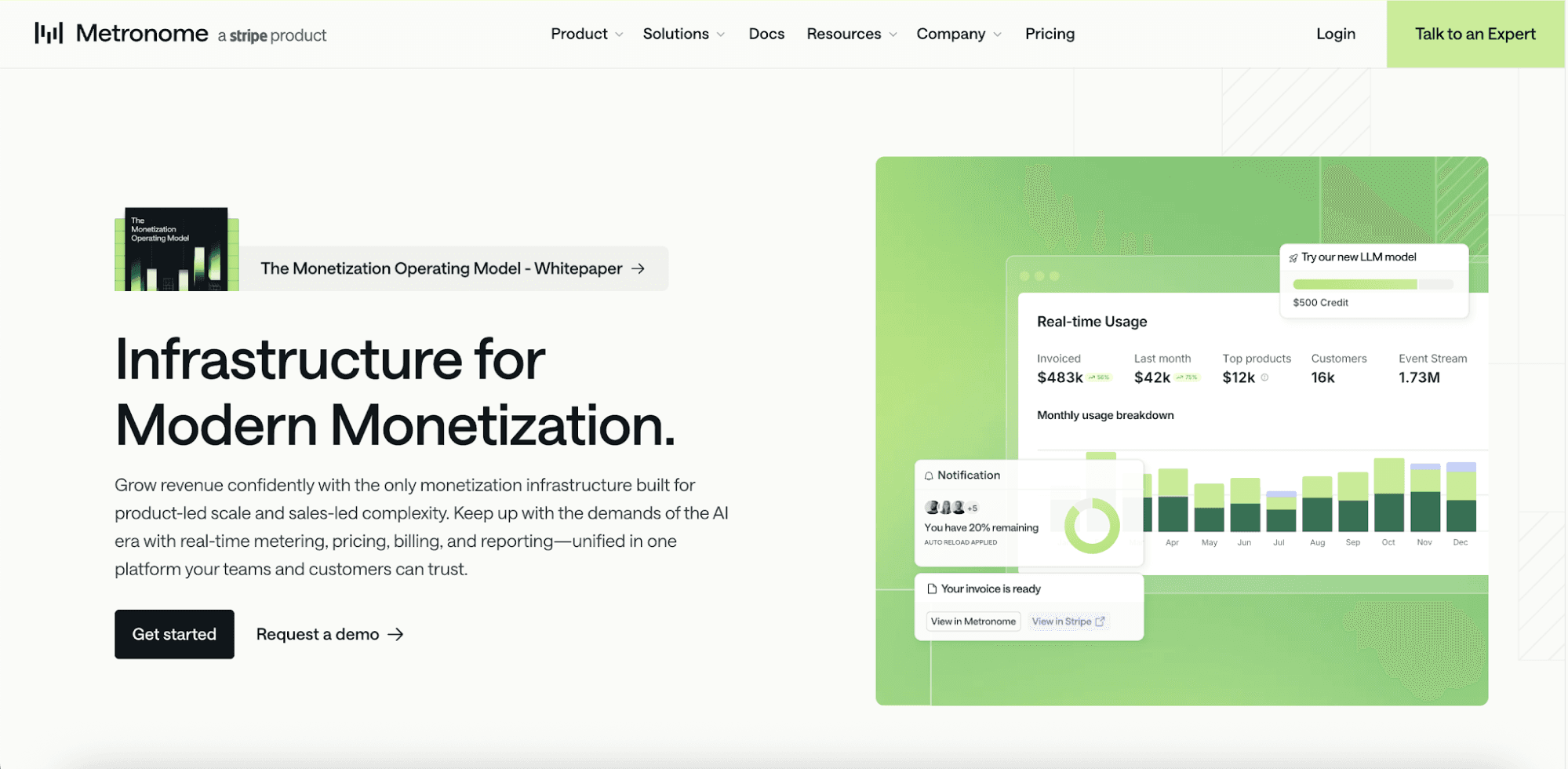
Metronome is a modern monetization infrastructure that combines real-time metering, usage billing, pricing, and reporting.
It aligns pricing with different go-to-market strategies and supports several commercial models. These include prepaid credits and pay-as-you-go.
With prepaid credit pricing, customers purchase credits in bulk before using the product. Companies usually set minimum purchase amounts and offer larger discounts as usage volume increases.
Teams can grant free credits that apply only to specific products and services to protect margins. These are useful for trial pricing, promotions, or reimbursement for downtime.
Metronome can also encode prepaid and postpaid commits directly into customer contracts. Prepaid commits require payment in advance, while postpaid commits set a minimum amount due later.
Plus, Metronome applies customer credits and commits to individual invoice line items instead of aggregating them. This helps finance teams separate committed spend from overage charges for each product, which supports more accurate billing and revenue reporting.
Key Features
- Usage-based and credit-based pricing: Charge customers for actual consumption or let them purchase credits in advance for usage over time.
- Pricing levers: Configure different pricing metrics, structures, commercial models, and incentives. You can implement prepaid and postpaid commitments, or offer free credits.
- Line-item attribution: Separate line items based on whether product usage draws down a credit, a commit, or follows overage pricing.
- Customer experience tools: Provide a transparent billing experience using thresholds, customer dashboards, real-time risk alerts, and a credit ledger.
- Real-time reports: Track product consumption, conduct margin analysis, and monitor daily revenue to make data-driven credit decisions.
3. Stigg
Source: Stigg.io
Stigg offers a financial-grade credit infrastructure that helps SaaS and AI companies manage credit-based pricing.
Built-in wallets, credit ledgers, expiry rules, and priority consumption logic make credit burndown simple and transparent.
Customers receive a credit pool for their chosen currency that they can use for metered features. All actions, such as grants, deductions, expirations, revocations, and adjustments, are recorded in the ledger.
The pool is made of credit blocks, which follow distinct rules for amount, creation date, effective date, expiration date, category, cost basis, and priority.
Stigg then applies real-time consumption logic to decide which credit blocks to consume first. This is useful if the business sells paid, recurring, and promotional credits because these can burn down in the intended order.
Stigg also allows customers to continue using the product even after their credit balance reaches zero. Rather than stopping access, it tracks the extra usage as a negative credit balance through an overdraft grant. It provides a clear record of the deficit so that companies can bill for overages or settle the balance later.
Key Features
- Credit wallets: Track each customer’s live balance for every credit currency.
- Append-only ledger: Record grants, top-ups, deductions, expirations, adjustments, and revocations.
- Real-time credit burndown: Deduct credits as soon as customers use metered product features.
- Usage metering: Track and aggregate raw usage data, such as tokens, API calls, and agent actions.
- Entitlement management: Control what a customer is entitled to use based on what they've purchased.
4. Zuora
Source: Zuora.com
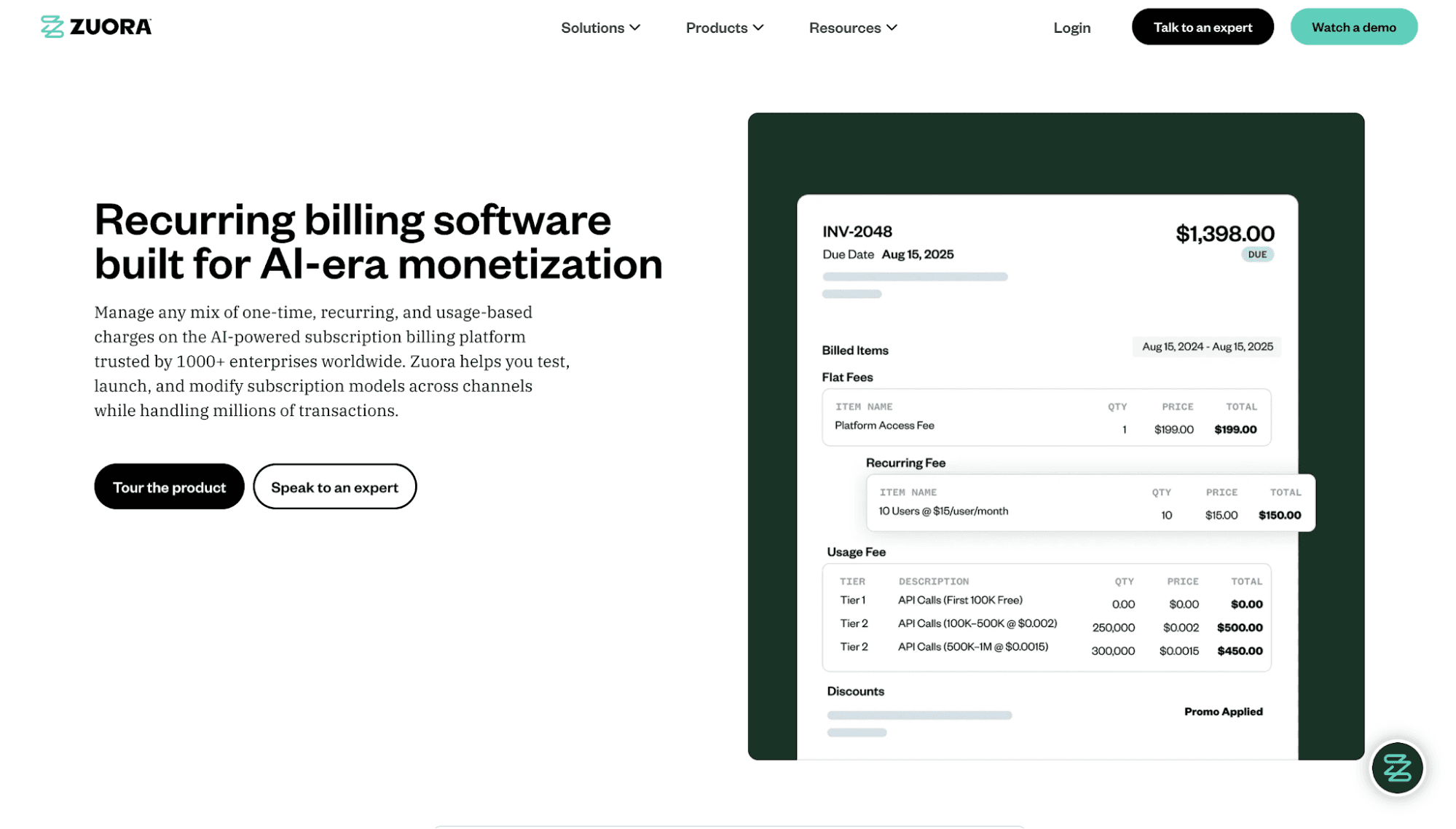
Zuora is an AI-powered credit management and subscription billing platform in one. It can help companies implement various usage-based billing models, including prepaid credits, pay-as-you-go, minimum commitments, tiered usage, and hybrid pricing.
Zuora's built-in support for prepaid credit models lets customers buy credits upfront that they can consume over time.
The platform automatically meters consumption, deducts credits, and triggers top-up or overage alerts when usage exceeds thresholds.
Zuora also helps build positive customer relationships by showing current usage and billing details. Teams can configure the customer portal with a credit balance widget. This displays the current balance, usage window, and percentage consumed, which allows users to plan their usage.
Zuora can even detect anomalies and consumption trends to support proactive credit risk management and usage forecasting.
Key Features
- Flexible pricing catalog: Support usage or hybrid models, such as prepaid credits, pay-as-you-go, and tiered pricing.
- Prepaid with drawdown: Sell credits upfront and draw down the balance as customers use the product.
- Usage metering and rating: Capture usage data, apply pricing rules, and calculate usage-based charges.
- Configurable customer portal: Surface usage and billing details directly to users to prevent disputes.
- AI-driven insights: Detect unusual usage patterns and forecast revenue from billing data.
5. Orb
Source: withOrb.com
Orb is known for its automated usage-based billing platform. It can help SaaS and AI companies meter usage at scale and charge customers per credit, token, or action.
Orb offers two distinct credit systems: the prepaid ledger and the customer credit balance.
The ledger takes care of usage commitment and consumption tracking. It also creates blocks with an amount, effective date, and optional expiration to deduct credits in a specific order. It is designed for customers who want to commit to usage upfront and purchase trial credits.
The balance, on the other hand, serves as a digital credit wallet for accounts receivable. It is used for refunds, small balance carryovers, and goodwill credits. It only uses the customer's billing currency and has no impact on revenue.
Orb also includes an experience kit that allows credit teams to communicate pricing effectively. Any change made in Orb can reflect in customer-facing systems, such as checkout flows, pricing calculators, and dashboards.
Key Features
- Automated usage billing engine: Meter usage, generate invoices, and manage contracts without relying on manual processes.
- Prepaid ledger: Track usage commitment, monitor credit consumption, and deduct credits in a specific order.
- Credit balance: Modify what the customer owes on the next billing cycle.
- Experience kit: Create customer dashboards, checkout flows, and pricing calculators with built-in transparency tools.
- Audit trails: Record specific events and pricing rules to support continuous risk monitoring and customer behavior analysis.
6. Zenskar

Source: Zenskar.com
Zenskar helps companies handle usage data at scale and charge customers using prepaid or postpaid credits. Teams can import events through APIs, upload CSV files, or pull data from more than 100 data warehouses. They can then turn raw activity into trackable billing metrics without changing the source data.
Zenskar makes it easier to manage prepaid credits, free units, and SaaS entitlements in one dashboard. The platform automatically tracks each customer’s balance, calculates overages, and adds those charges as separate invoice line items.
Each customer account has its dedicated credit balance in Zenskar. Teams can issue credit or debit adjustments from the customer page.
It even supports various billing scenarios, such as refunds, promotional credits, or outstanding payments. Every paid action draws down the available balance to reduce manual credit management tasks and simplify the payment cycle.
Key Features
- Usage metering and billing: Turn raw usage data into billable metrics and invoice line items.
- Credit balance: Track each customer’s credit consumption, remaining balance, and overages as usage occurs.
- Revenue recognition: Create revenue schedules, performance obligations, and journal entries from contract and usage data to ensure compliant credit operations.
- AI-powered analytics: Analyze financial statements, usage trends, growth metrics, customer churn, and other risk signals.
7. Lago
Source: getLago.com
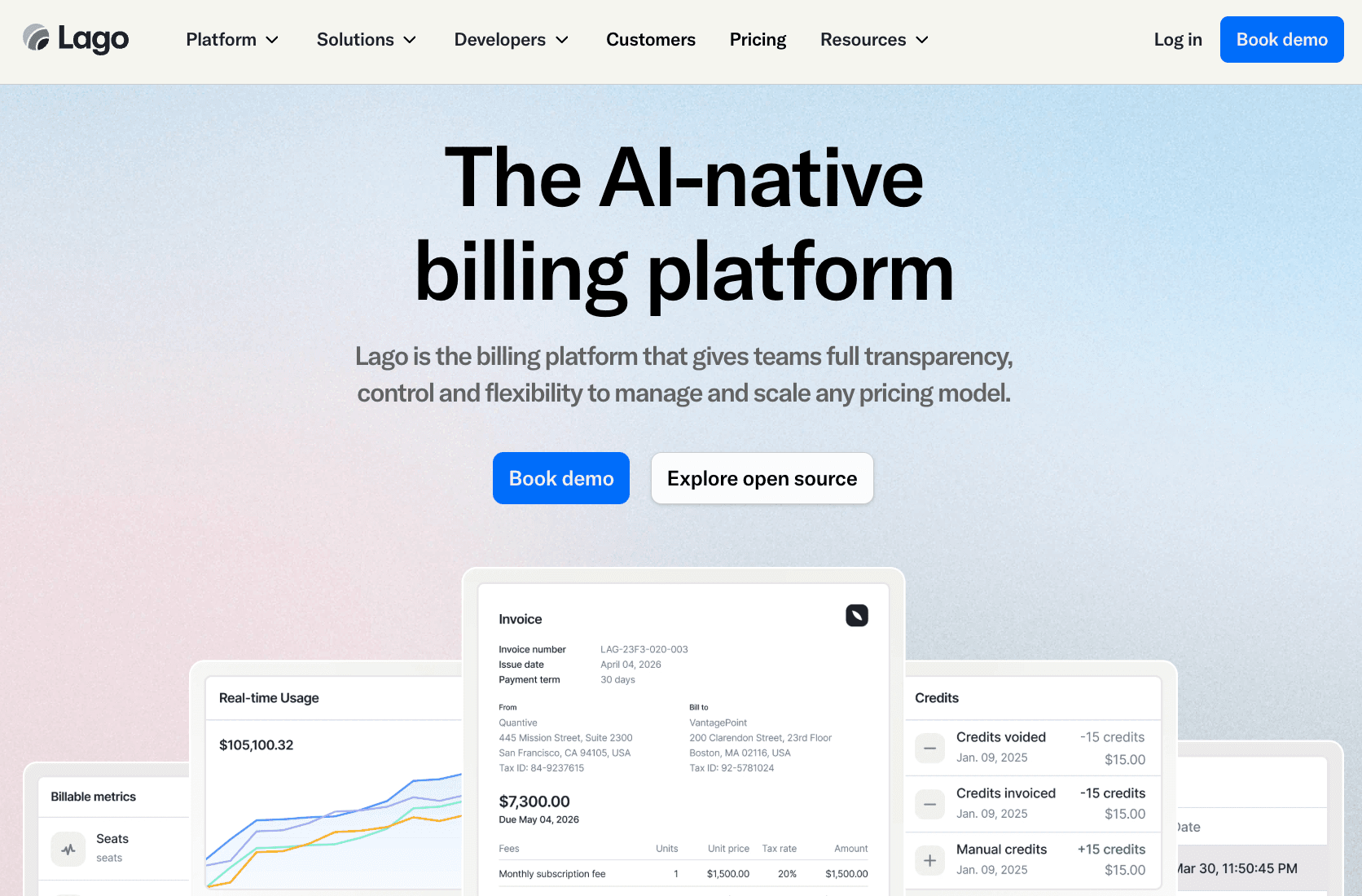
Lago is an AI-native billing platform that can support any pricing model, including prepaid credits. Credit-based pricing provides better spend visibility and improves cash flow by collecting payments in advance.
Teams can create up to five active wallets for each customer. Every wallet may have its own credit value, priority, billable metric scope, recurring top-up rules, and transaction limits.
Lago then applies available credits when it generates a subscription or progressive billing invoice, which reduces the total amount.
The platform also tracks both the invoiced balance and the ongoing balance. The former reflects the remaining prepaid credits in the customer's wallet. Meanwhile, the latter provides a real-time estimate of credit consumption.
By default, Lago credits carry over to the next billing period until the wallet balance is zero. However, teams can set an expiration date to void all remaining credits instantly once the date is reached.
Key Features
- Usage metering: Bill customers based on credits, tokens, compute hours, or API calls used.
- Credit wallet: Create prepaid wallets with custom limits, priorities, top-up rules, and billable metric scopes.
- Entitlement management: Control feature access based on payment status and contract terms.
- Revenue analytics: Forecast revenue based on past usage data and payment history.
- Seamless cash collection: Integrate Lago with any payment solution to get paid faster.
What Can SaaS and AI Companies Do With a Credit Management Platform
A credit management platform gives teams one system for monetizing SaaS or AI products, tracking balances, and applying pricing rules.
Ship Credit-Based Pricing
SaaS and AI companies can launch credit-based pricing within days using a dedicated credit management platform.
They can easily assign credit costs to paid features or actions. These include API calls, tokens, reports, projects, storage, autonomous agents, and images.
Then, teams can grant credits as part of a subscription plan, sell prepaid packs, or charge for extra usage after the balance is depleted.
A credit management platform connects those pricing rules to product activity and automatically updates balances as customers use the product.
Set Credit Expiration and Rollover Rules
You can set credit policies to control how long credits remain valid and whether unused balances move into the next billing period. You may allow paid credits to roll over while promotional credits expire at the end of the month.
You can also decide which credit block gets used first. For example, credits with the nearest expiration date may be spent before newer credits.
Clear rules help you manage risk and give customers a clear reason to use purchased credits within a set billing period.
Support Credit Top-Ups
A credit management platform allows customers to buy more credits once their balance reaches a pre-set threshold. It can support manual purchases and automatic top-ups.
For automatic top-ups, you determine the threshold and top-up amount. The automated credit software instantly adds credits and charges the saved payment method when the balance drops to that set point.
This setup ensures that customers never run out of credits. It also helps your company capture upside when customers use more than the credits included in their plan.
Give Customers Visibility Into Credit Usage
With credit management software, you can show customers their current balance, previous purchases, usage history, and expected credit costs inside the product.
Providing a clear dashboard and customer onboarding portal helps users see which actions consume the most credits.
You can also set up automated alerts to warn accounts when balances are low or when usage changes quickly.
This level of continuous monitoring helps customers plan spending, prevents billing disputes, and makes credit-based pricing easier to understand.
Handle Credit Refunds
You can refund credits when a paid action fails, produces the wrong result, or charges the same customer twice.
Instead of updating the account balance by hand, you can rely on the credit management platform to reverse the original deduction automatically.
You can also issue partial refunds when a task only uses part of the expected credit amount.
The credit software ensures that every refund appears in the ledger with a timestamp and reference to the original event. This provides a clear and auditable record for support, product, and mid-market finance teams.
Pricing Structures That Credit Management Platforms Should Support
A reliable credit management platform supports several pricing structures to help companies match billing to customer expectations and buying habits.
Prepaid Credits
In prepaid credit pricing, customers purchase credits in advance that they can use over time. Each paid action or feature usage deducts a set number of credits from the available balance.
This pricing structure suits companies offering multiple products. Different actions or features can draw from a single balance.
Customers benefit from prepaid budget control, which helps them avoid surprise bills. They can also start with a small bundle and grow into larger usage at their own pace.
Example: Stability.ai is a developer platform that charges API usage based on prepaid credits. One credit is equal to $0.01.

Source: Stability.ai
Pay-As-You-Go Pricing
Pay-as-you-go pricing charges customers only when they use the product. Companies can sell credits as needed instead of requiring a recurring monthly plan.
This pricing structure often fits customers with irregular or seasonal usage. It supports product-led growth by lowering the barrier to entry.
The downside is unpredictable invoices and revenue for companies.
Example: Mailchimp offers a pay-as-you-go plan for users who send emails less often. Customers buy email credits when needed. Each email sent to a single contact costs one credit.

Source: Mailchimp.com
Hybrid Pricing
Hybrid pricing combines more than two pricing models. It may include a recurring subscription fee and credit-based charges.
Hybrid monetization is becoming more popular as businesses launch new AI features. According to Simon-Kucher's Global Software Study, 45% of companies use two or more monetization models.
Key benefits of hybrid models include predictable baseline revenue, expansion revenue support, and customer value alignment.
However, it requires reliable usage tracking, entitlement management, and runtime enforcement.
Example: Figma offers four pricing tiers, with each plan and seat type having a set number of credits.

Source: Figma.com
How to Choose the Best Credit Management Software for Monetization
Below are some tips you can follow to choose the right credit software for your specific needs.
Check Real-Time Usage Metering Capabilities
Review how the credit management software collects and processes usage data. It should support product events, such as API calls, tokens, agent tasks, storage, or generated content.
Check whether the platform can combine internal and external data from your app, data warehouse, payment system, and third-party tools.
You can also ask the vendor how the system handles duplicate, late, or out-of-order events.
Real-time usage metering is important for accurate billing.
Verify Credit Ledger Accuracy
Invest in credit software that records every credit grant, purchase, deduction, refund, top-up, and expiration in a clear ledger.
Look for idempotent writes, event deduplication, replay support, and immutable entries. These controls help prevent double charges and missing deductions.
Make sure the platform can accurately connect credit-based charges to a customer, usage event, timestamp, and reason.
Review Integrations With Other Systems
Check whether the credit management platform connects with your billing provider, payment processor, data warehouse, customer relationship management (CRM), and accounts receivable software.
Built-in integrations reduce manual data entry and human errors. Teams can save time and focus on more important tasks instead of reconciling data from separate systems.
Evaluate Customer-Facing Tools
The credit management software should support the needs of startup, mid-market, and enterprise customers through embedded widgets, portals, alerts, and custom dashboards.
Choose a platform that can surface usage, current balance, and expected credit costs before a paid action begins.
These help limit customer exposure to surprise charges by displaying low-balance warnings, usage trends, and overage notices before the next invoice arrives.
Consider Support for Different Pricing Models
You may use credit-based pricing now, but your pricing strategy needs to adjust as the product evolves or customers' needs change.
Invest in a platform that supports various pricing models, such as outcome-based pricing, volume discounts, or hybrid plans.
You should be able to change rates, modify pricing rules, create custom contracts, and keep existing customers on older plans while new customers automatically move to new pricing.
Schematic Manages Credit-Based Pricing Without Hardcoded Logic
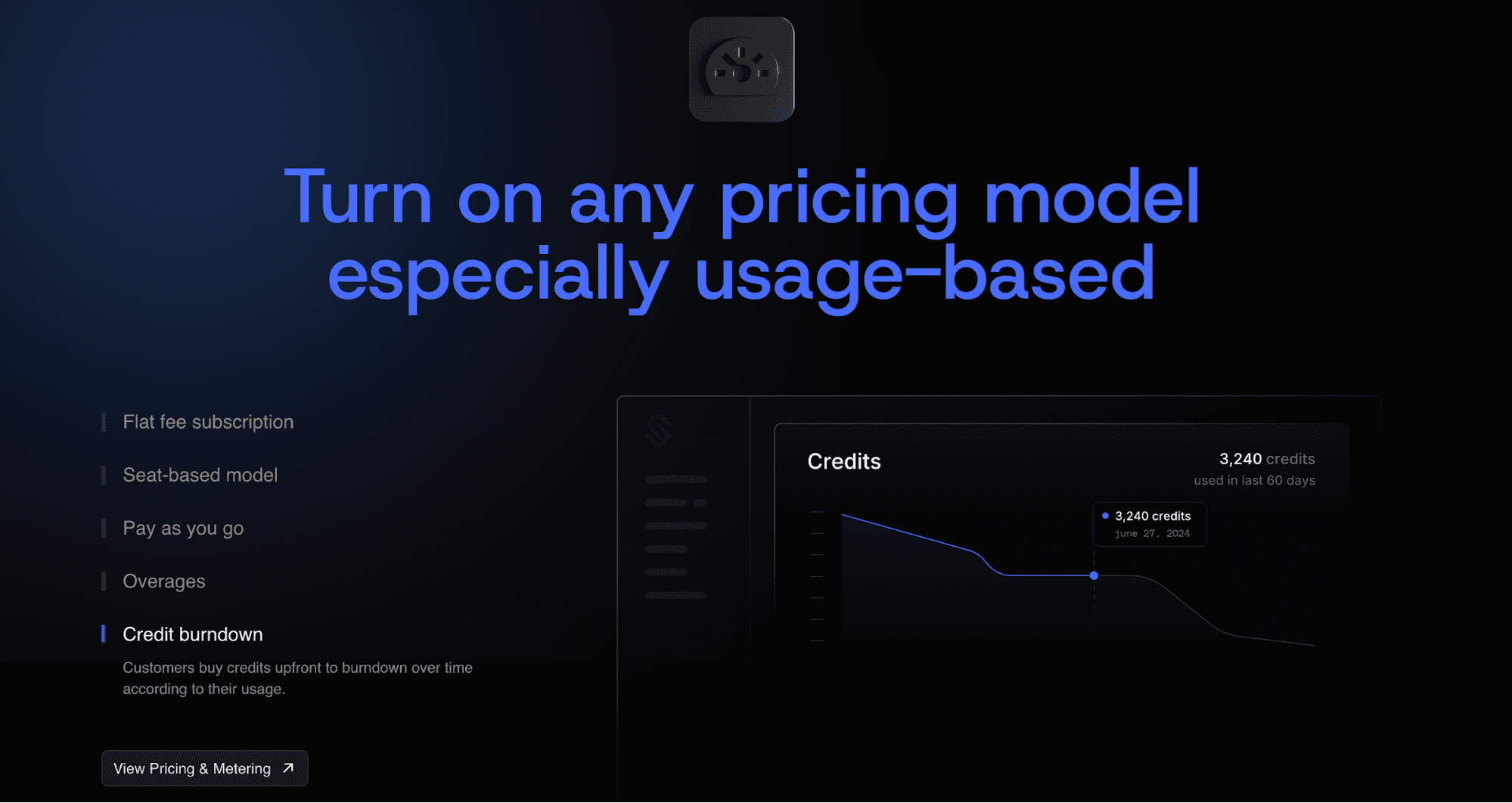
Schematic helps modern SaaS and AI companies manage credit-based pricing without code changes. It works by decoupling billing logic from the application and centralizing the product catalog.
Teams can create a credit type, grant subscription plan credits for each billing period, and define how many credits each feature consumes.
Schematic’s real-time credit ledger reduces the balance as customers use paid actions or features. It can also sell top-up bundles through checkout pages and enable automatic top-ups before the balance reaches zero.
Schematic holds credits before committing them. If the request fails, the system automatically refunds credits to the company's account.
Customers can view their current balance through the customer portal. Go-to-market teams, on the other hand, receive valuable insights into product usage. They can identify upgrade opportunities and adjust pricing to reduce churn risks.
Stripe continues to handle payments, invoices, and revenue recognition. Schematic makes Stripe better by providing usage metering, credit enforcement, billing components, and customer admin dashboards.
FAQs About Credit Management Platform
What is credit management software?
In monetization, credit management software refers to a specialized system designed to handle credit-based charges. It can grant credits, draw down the balance, set expiration rules, enable automatic top-ups, and handle refunds.
However, credit management software can also mean another thing entirely. It describes a platform that helps businesses evaluate customer credit risk and customer creditworthiness. Finance teams can make consistent credit decisions and reduce bad debt exposure.
Can a credit management platform prevent runaway spending?
Yes. It can prevent runaway spending by tracking credit consumption in real time, warning customers when balances are low, holding credits before costly actions, and blocking usage after hitting a pre-defined threshold.
Why do AI and SaaS companies use credits?
Businesses are turning to credit-based pricing because it creates predictability and improves cash flow by collecting payment in advance. Credits can also unify billing across multiple products, services, and usage metrics.