 Ryan Echternacht
An entitlement management system controls access to the product based on what a customer has purchased.
It reflects limits, trials, and billing state directly in the product instead of handling those rules through custom code.
For example, if a customer exceeds their included API calls, the system can apply overage pricing or restrict further requests automatically.
This guide explains what an entitlement management system is, what it governs in SaaS products, and how it fits into your stack.
TL;DR
- An entitlement management system decides what an account can do in your product based on plan and contract terms, not just identity or roles.
- It governs plans and packaging, metered usage, trials, credits, and account-specific overrides so access matches what customers paid for.
- Runtime enforcement follows a simple flow: authenticate the user, evaluate the plan and usage at request time, allow or deny access requests, then record usage for future checks.
- Schematic provides an entitlements layer on top of Stripe, so teams can change plans, limits, and exceptions without hard-coding checks in the app.
What Is an Entitlement Management System?
An entitlement management system evaluates whether an account is allowed to perform a specific action inside a product. The decision is based on subscription data and packaging rules, not just identity.
Identity confirms who the user is. Role-based access control (RBAC) restricts permissions based on user roles.
Entitlements define what the account has paid for and what usage or features are available.
The system evaluates context such as:
- Active plan
- Included limits
- Contract terms
- Subscription status
For example, an admin role may allow inviting teammates. An account subscribed to the Pro plan may include 10 seats, advanced reporting, and 100,000 API calls per month.
If usage exceeds that limit, the entitlement management software can block additional requests or allow continued usage while recording overage events for billing.
Many software vendors package plans differently for self-serve customers, enterprise buyers, and resellers. Entitlements reflect those packaging rules inside the product.
They can also support external entitlements, such as agency seats, reseller access, or shared environments with other business partners.
An entitlement management platform connects plans, limits, and subscription state directly to product behavior without embedding pricing rules in controllers.
What an Entitlement Management System Governs in SaaS Products
In day-to-day product operations, an effective entitlement management system appears in how plans are structured, how usage is enforced, how trials expire, how credits are deducted, and how enterprise overrides are applied.
Plans and Packaging
Plans define how your software products are packaged and sold. Each plan bundles features, usage limits, and pricing into a structured offering.
For example, a Pro plan might include five seats, advanced analytics, and API access. In a well-designed entitlements layer, those inclusions are stored as structured data rather than hard-coded feature checks.
When pricing or packaging changes, you update the plan definition instead of rewriting logic tied to access permissions.
This approach makes it easier to manage new features, adjust packaging, and support changing business models without time-consuming deployments.
Metered Usage
Metered usage applies when pricing depends on measurable consumption. That could include API requests, AI credits, storage volume, or active seats.
The entitlement management software tracks usage against defined limits and determines whether the account remains within its allowance. If usage exceeds the plan’s limit, the system can block additional requests or apply overage pricing tied to billing.
Clear usage enforcement helps efficiently manage access while keeping billing and product behavior aligned.
Trials and Time-Based Access
Trials grant temporary access to features or usage under defined conditions.
A 14-day trial, for example, may include limited API calls and access to premium features. When the trial ends, premium capabilities are removed unless the account converts to a paid subscription.
No manual toggles are required. The entitlement rules handle the transition automatically.
Credits and Prepaid Balances
Some SaaS companies charge existing customers for usage through prepaid credits rather than fixed limits.
An account might purchase 1 million AI tokens upfront. Each request deducts from that balance.
When the credit balance reaches zero, additional token usage is restricted until more credits are added.
Managing entitlements at this level keeps usage tracking, billing, and product behavior tightly connected, reducing security risks caused by manual overrides.
Account-Specific Overrides
Enterprise agreements often include custom contract terms that differ from public plans, especially when customers need to meet specific industry regulations.
An account may receive a higher API limit, additional seats, early access to certain features, or restrictions customized for business partners.
Overrides attach directly to the account record and adjust entitlements without branching product logic.
This keeps access management predictable while still supporting negotiated terms.
Main Components of an Entitlement Management Solution
An entitlement system has four key components. Each one supports consistent access decisions inside your product without scattering plan checks throughout the codebase.
System of Record
The system of record stores plans, limits, add-ons, and account-specific overrides. It acts as the authoritative source for plan and entitlement data.
Plans function like an access package tied to billing. Instead of scattering configuration in different services, you manage user entitlements in one place.
That structure simplifies managing access rights when packaging changes or enterprise contract terms are updated.
A centralized record also supports audit trails and helps maintain compliance when contract terms or pricing conditions change.
Evaluation Engine
The evaluation engine processes entitlement checks during product execution.
Input may include:
- Account identifier
- Plan reference
- Usage counters
- Subscription status
- Relevant account attributes
The output is a clear decision. Permit the action or deny access. The decision reflects plan limits, overrides, and billing state.
A well-designed engine mitigates potential security risks and data breaches by granting only the access defined by the plan and contract terms.
Enforcement Points
Enforcement points are where you implement entitlement management decisions.
Common locations include:
- API endpoints
- UI feature rendering
- Background processing tasks
Each enforcement point checks whether the account has the right access before executing the action, independent of individual user permissions.
If usage exceeds limits or a subscription becomes inactive, the product restricts the operation in real time.
Enforcing entitlements inside the request flow ensures consistent behavior for all software applications tied to the product.
Billing and Usage Integration
An entitlement system must integrate with billing and usage tracking. Subscription state syncs from Stripe. Usage events are sent from the product.
When subscription status changes, the system updates access decisions automatically. When usage increases, counters reflect the latest consumption.
Tight integration between billing and entitlements helps reduce operational costs, supports accurate renewal terms, and keeps access aligned with what the customer has paid for.
These components form the foundation of effective software entitlement management inside modern SaaS products.
How an Entitlement Management System Works
An entitlement management system evaluates access during the lifecycle of a product request.
First, a user authenticates through the identity provider, which confirms identity and assigns a role inside the application.
The product then receives a request, such as generating a report, calling an API endpoint, or handling a user action to request access to a gated feature.
Before executing the action, the product calls the entitlement layer.
This engine evaluates the account’s plan, limits, usage counters, credits, contract overrides, and Stripe subscription state against defined access policies. It determines whether to allow the request, limit it, or deny it.
If usage exceeds a quota, the engine may apply overage logic or begin limiting access to prevent abuse or other potential threats, such as runaway API consumption.
If a subscription becomes inactive, it can revoke premium features while preserving core data visibility.
The product enforces the decision immediately inside the request flow, especially for endpoints handling sensitive information. Usage events and other user activities are recorded and fed back into the entitlement system for future evaluations.
The result is consistent software access based on billing and plan data without hard-coded pricing logic in the application.
Real Runtime Scenarios
In practice, entitlement rules surface during product events, such as upgrades, downgrades, usage spikes, and billing changes. Clear entitlement enforcement prevents unauthorized access, protects revenue, and supports long-term customer satisfaction.
Scenario 1: Usage-Based Expansion
A customer exceeds the included API calls, and the system applies overage pricing while allowing requests to continue. Usage tracking and billing remain aligned without forcing a plan change or manual updates.
The entitlement layer evaluates the resources needed for continued access and enforces limits automatically. Engineering does not intervene. Product behavior matches contract terms in real time.
Scenario 2: Plan Downgrade
A customer moves from Pro to Free, which reduces the seat allowance and removes advanced analytics from the UI. Accounts above the new limit are flagged immediately.
Access changes are enforced without waiting for support tickets or manual cleanup. An entitlement management system controls how access, limits, and consumption are enforced at the account level, while roles determine user-level permissions.
That separation protects digital assets tied to higher tiers and strengthens the organization’s security posture.
Scenario 3: Contract Expiration
A temporary enterprise override reaches its end date, the custom quota is removed, and the account returns to the standard limits defined in billing.
Time-bound overrides help minimize risk. They prevent long-term exposure to elevated limits and reduce the chance of insider threats abusing extended access to critical systems.
Scenario 4: Subscription State Change
An invoice becomes past due, which may trigger revoking access rights for write actions while preserving read access. Sensitive operations are limited until billing is resolved.
The product enforces these rules consistently, whether deployed in the cloud or on premises.
Customers can still use a self-service portal to submit requests for plan updates, which may trigger internal approval workflows before granting access again.
Where an Entitlement Management System Fits in a Modern SaaS Stack
In a modern SaaS stack, each system owns a specific responsibility, and the entitlement layer sits between billing and the product.
The identity provider assigns roles and verifies credentials to ensure only authorized users receive access. After authentication, Stripe manages the subscription, invoices, and payment state. The product then delivers features and records usage events.
The right entitlement management solution connects billing state and product behavior. When the product receives a request, it calls the entitlement layer to evaluate the account’s plan, limits, usage, and overrides before executing the action.
It does not replace the identity provider or billing software. It acts as the decision layer that translates subscription data and plan definitions into runtime access control.
Tips for Choosing the Best Entitlement Management System
You need the right software to effectively manage entitlements. Below are some tips to choose the best entitlement management software:
Look for Flexible Modeling
Entitlement logic changes constantly as pricing evolves. The best entitlement management system supports plans, add-ons, usage limits, trials, credits, and account-specific overrides without requiring code changes every time packaging changes.
Flexible modeling becomes especially important when supporting enterprise contracts or hybrid pricing models. Instead of hard-coding rules throughout the application, the entitlement layer should let teams define access policies as structured configuration.
That makes it easier to launch new plans, experiment with pricing, and support custom customer agreements without slowing down product development.
According to the 2025 State of AI report, 37% of software companies plan to adjust their pricing. Flexible modeling helps you continuously iterate on SaaS monetization.
Check Integration Capabilities
Make sure the entitlement system connects to the platforms that already drive billing, provisioning, and customer operations. These include subscription management software, billing systems, identity providers, and analytics tools.
Many SaaS companies also rely on enterprise resource planning (ERP) systems and customer relationship management (CRM) software to manage contracts, renewals, and account data.
If entitlement usage data becomes disconnected from your existing systems, access behavior and billing can quickly fall out of sync.
Evaluate Real-Time Performance
Entitlement checks happen during live product requests, so performance is important.
The system should evaluate access quickly without introducing noticeable latency into the user experience. Slow entitlement decisions can affect onboarding flows, API requests, feature access, and usage enforcement.
Real-time performance also matters for operational workflows. For example, the entitlement system may need to immediately apply plan upgrades, revoke expired trials, or respond to self-service access requests without waiting for batch synchronization jobs.
Reliable runtime enforcement keeps product behavior consistent while ensuring subscription changes take effect as soon as they occur.
Review Developer Experience
A strong entitlement system should simplify implementation for software developers and engineering teams instead of introducing another layer of complexity.
Clear APIs, SDKs, documentation, and debugging tools make it easier to integrate entitlement management into the application.
Developer experience also affects how quickly teams can launch pricing changes or support custom agreements.
In well-designed systems, teams can configure plans, limits, and overrides in just a few clicks rather than changing application code.
Consider Scalability
Entitlement complexity increases as SaaS companies grow. What starts as a few simple plan checks can expand into regional pricing rules, reseller agreements, enterprise overrides, and usage-based billing for multiple products.
A scalable entitlement management system should handle that growth without forcing teams to rebuild the architecture later.
Make sure it supports high request volumes, large-scale usage tracking, and consistent runtime enforcement across multiple systems.
Schematic Enforces Access In-Product At Runtime
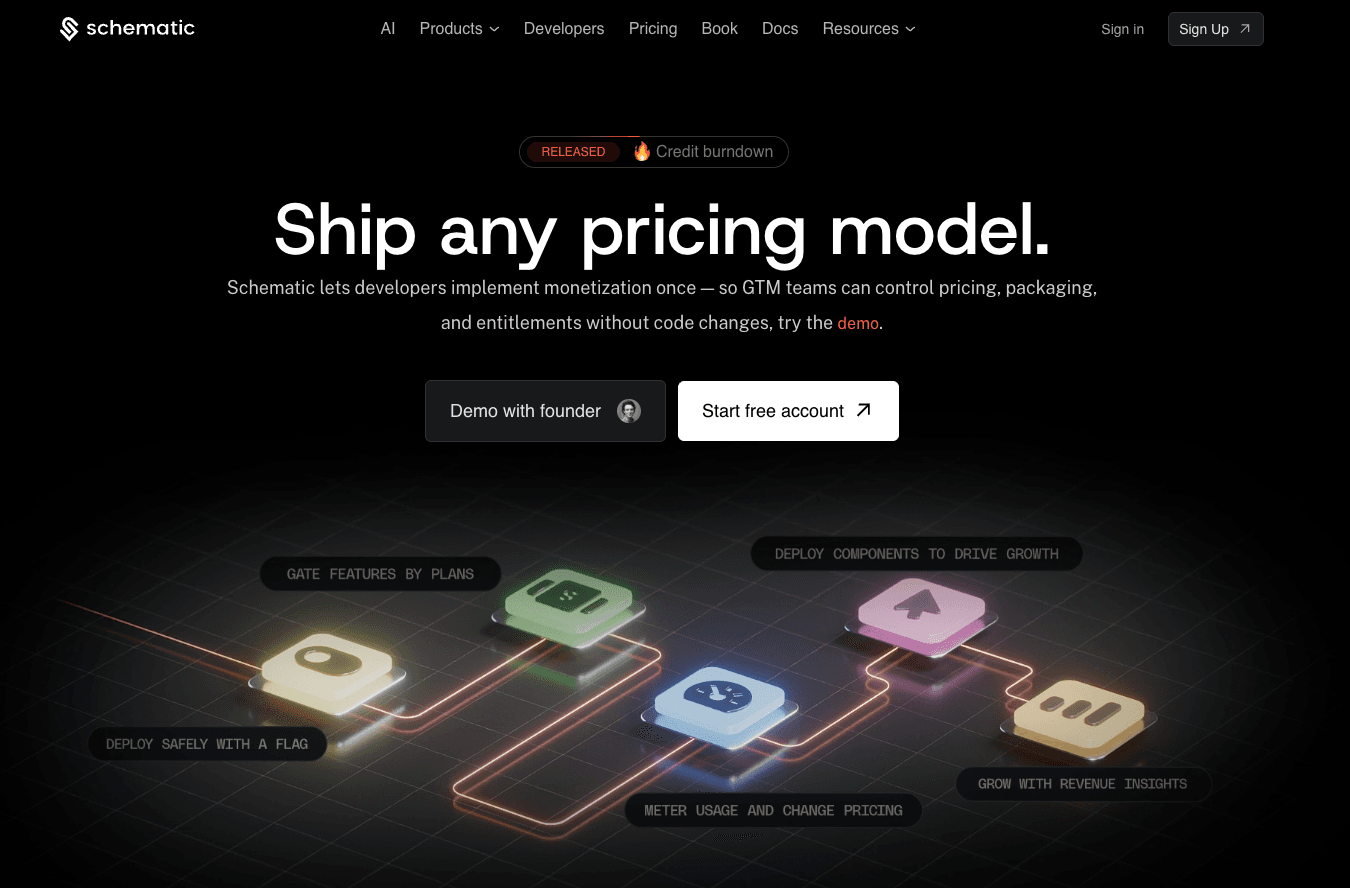
Schematic is the system of record for your product catalog, including plans, SaaS entitlements, limits, trials, credits, add-ons, and overrides.
It is built on Stripe and syncs subscription state directly, so billing and product access stay aligned without webhook glue code.
Instead of embedding pricing rules in controllers or feature checks, the product calls Schematic during the request flow and receives a clear decision fast.
Schematic then enforces access inside the product at runtime.
Engineering only implements monetization once. Product and GTM teams can adjust pricing, packaging, limits, and exceptions without rewriting application logic.
FAQs About the Entitlement Management System
What is an entitlement management system?
An entitlement management system controls what a customer can access inside a SaaS application based on what they've purchased. It connects subscription plans, usage limits, and customer agreements to actual product behavior. This helps teams manage the entire process in one place and reduce human errors that may lead to potential security breaches.
What does an entitlement manager do?
An entitlement manager is responsible for defining, maintaining, and enforcing access rules. They make sure that each account gets the right level of access based on its subscription plan or contract.
How do I enable entitlement management?
To enable entitlement management, define your plans, limits, credits, and overrides as structured data and connect them to your billing system. Then, integrate entitlement management into your product’s access request workflows so every feature check evaluates plan, usage, and subscription state at runtime.
Most teams connect it to Stripe and their identity provider to support automated provisioning when subscriptions start, change, or cancel.
What are the key benefits of user access managed through entitlements?
The key benefits of user access managed through entitlements include consistent enforcement of plan rules, fewer billing mismatches, and clearer boundaries between pricing and application code. Structured entitlement logic reduces manual overrides, improves upgrade flows, and keeps product behavior aligned with billing without hard-coded checks.