 Ryan Echternacht
Artificial intelligence (AI) features and AI agents incur real costs for both sellers and buyers. Each model request, token, agent action, or API call can increase bills for vendors and quickly deplete credits for customers.
This is why SaaS and AI companies that sell AI products need more than basic billing solutions. They should invest in AI access controls software.
The platform checks a customer's subscription plan, AI usage, credit balances, and software entitlements before deciding whether to grant or revoke access. It prevents runaway bills while giving customers clear rules around consumption and spend.
Below, we'll list the best AI access controls software to use. We'll also discuss the importance of controlling and managing access for AI products.
TL;DR
These are the top five AI access control solutions in 2026:
- Stigg
- Chargebee
- Lago
- Autumn
Why Do You Need to Control AI Access?
Controlling access to AI features and autonomous agents is important for several reasons. Let's discuss them below.
Prevent Runaway Costs
AI products can consume more resources than traditional Software-as-a-Service (SaaS). A single prompt may result in a quick, low-cost inference or a longer chain of steps that uses expensive AI models.
Without real-time access controls and usage policy enforcement, bills can suddenly increase. And credit balances might be depleted faster than expected.
AI access controls software helps companies and buyers set usage caps per account or per agent. The product reads those rules and blocks access when the limit is reached.
Agent usage caps are especially important since these non-human identities are becoming more common.
According to Palo Alto Networks, machine identities, including AI agents, now outnumber human identities 109 to 1. They can burn down AI credits rapidly and create concurrent usage risks if companies fail to control access and enforce limits.
Protect Margins
AI-powered features incur real costs each time a customer uses them. If every account receives open access, a power user can consume far more compute resources than the price of the plan covers.
AI access control ensures each customer receives only the AI features, usage allowances, credits, or model access included in its plan.
SaaS companies can also implement consumption billing and overage pricing to align costs with customer value. Heavy users pay more to cover the expenses of consuming large amounts of resources, while accounts that rarely use the product pay less.
Teams can even enforce hard caps to prevent customers from eating into profit margins. Hard limits automatically block access requests once a threshold is reached.
Reduce Billing Disputes
Traditional software often has more predictable user behavior, which makes billing easier to manage. AI is less predictable because one request can trigger very different levels of compute.
Costs can suddenly spike due to prompt length, task retries, or the complexity of machine learning models used to complete a task. A customer may dispute their bill when charges are higher than expected.
Fortunately, AI access controls can reduce this risk by setting clear limits, proactive alerts, and approval rules before usage goes beyond what the buyer expects to pay. This lowers the number of billing disputes that companies need to resolve.
Give Customers Predictability Over Their Spend
Customers want to know how much AI usage is included and the cost of additional requests.
AI access controls software can show credit balances, usage limits, reset dates, and spend thresholds in real time.
Buyers can also receive alerts when they approach a limit. Then, they can choose whether to buy more credits or upgrade to another tier with higher usage allowances.
These real-time visibility and self-service controls make AI spend more predictable.
Enhance Security
AI access controls improve security by limiting who can gain access to costly models, tools, data, and agent actions. They can restrict access to sensitive data based on roles, account rules, or approved workflows.
Access logs and identity governance checks can also detect unauthorized access attempts before risky actions are completed.
The same controls make it easier to manage permissions for autonomous agents, service accounts, and other users to only the resources they need. It even supports the principle of least privilege, where human and non-human identities only receive the bare minimum access to do their jobs.
This reduces security incidents and gives security teams more context when reviewing access events and user activity, which can strengthen the organization's security posture.
5 Best AI Access Controls Software in 2026
Here are the top five AI access controls solutions worth considering.
1. Schematic
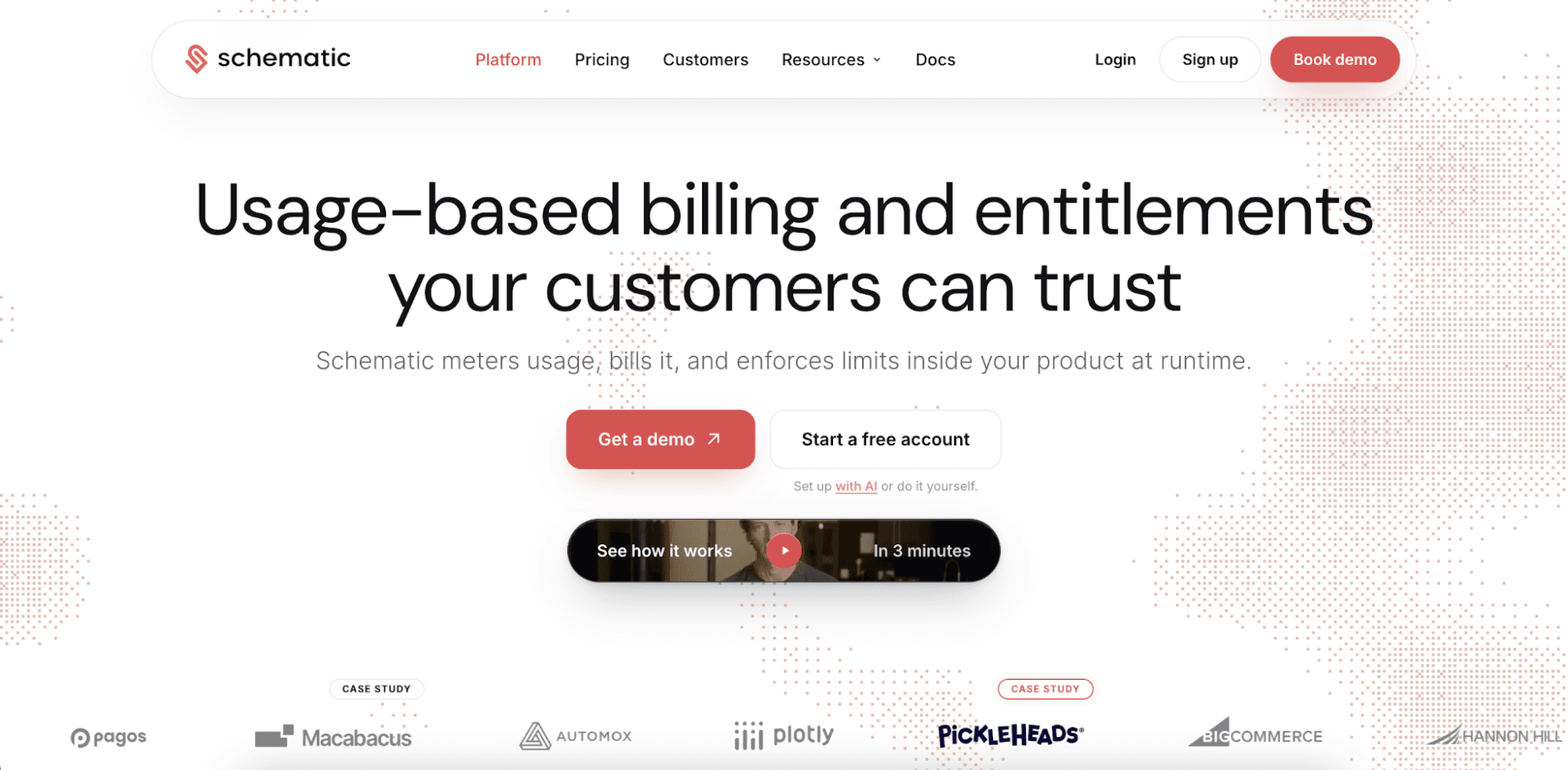
Schematic is the best AI access controls software and usage-based billing platform for SaaS and AI companies.
It combines credit wallets, an entitlement engine, usage metering, and flexible price modeling to control AI access at runtime.
Your company or your customers can set spend caps and send alerts before usage stops. The entitlement engine ensures that policies are enforced at runtime without deploying code or filing a support ticket.
Max Ade from Pickleheads shares, "We needed an entitlement system for usage-based pricing without building it from scratch, and we wanted non-technical team members to manage it easily."
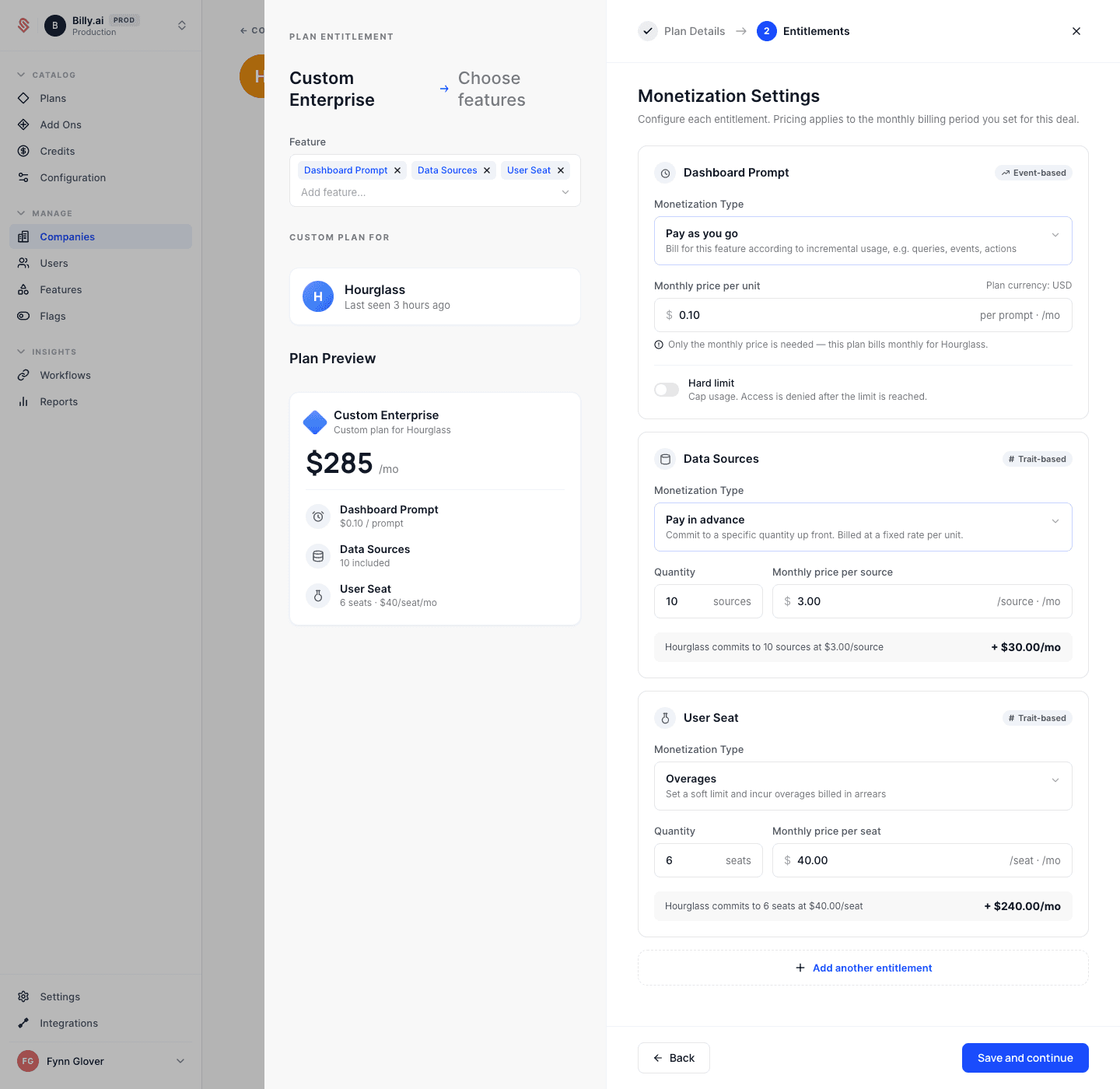
Schematic also ties AI access decisions directly to billing. One flag check gates features using the same real-time ledger that bills customers. The same call works in React, Node, Python, and Go to ensure the user interface (UI) and API are aligned.
Every grant, deduction, and entitlement check streams into a real-time event log, while cached checks run in under 50 milliseconds. This keeps balances, usage, and limits current wherever your product reads them.
Plus, Schematic gives customers real-time visibility and control over their usage. Buyers can forecast spend, configure top-up policies, and define what happens at the limit to prevent runaway bills and access throttling.
Key Features
- Runtime entitlements: Gate features and enforce access at runtime based on each customer’s plan, usage allowances, credits, and custom overrides.
- Usage metering and billing: Track AI consumption events and charge based on usage (e.g., token usage, prompt counts, API calls).
- Enterprise credit wallets: Show current usage and key components of plans as customers use the product.
- Self-service controls: Let buyers set spend caps, change auto top-up rules, and decide what happens once they exceed usage limits.
Auditable ledger: Record every credit grant, deduction, and burn-down in one place to help finance teams reconcile pricing data.
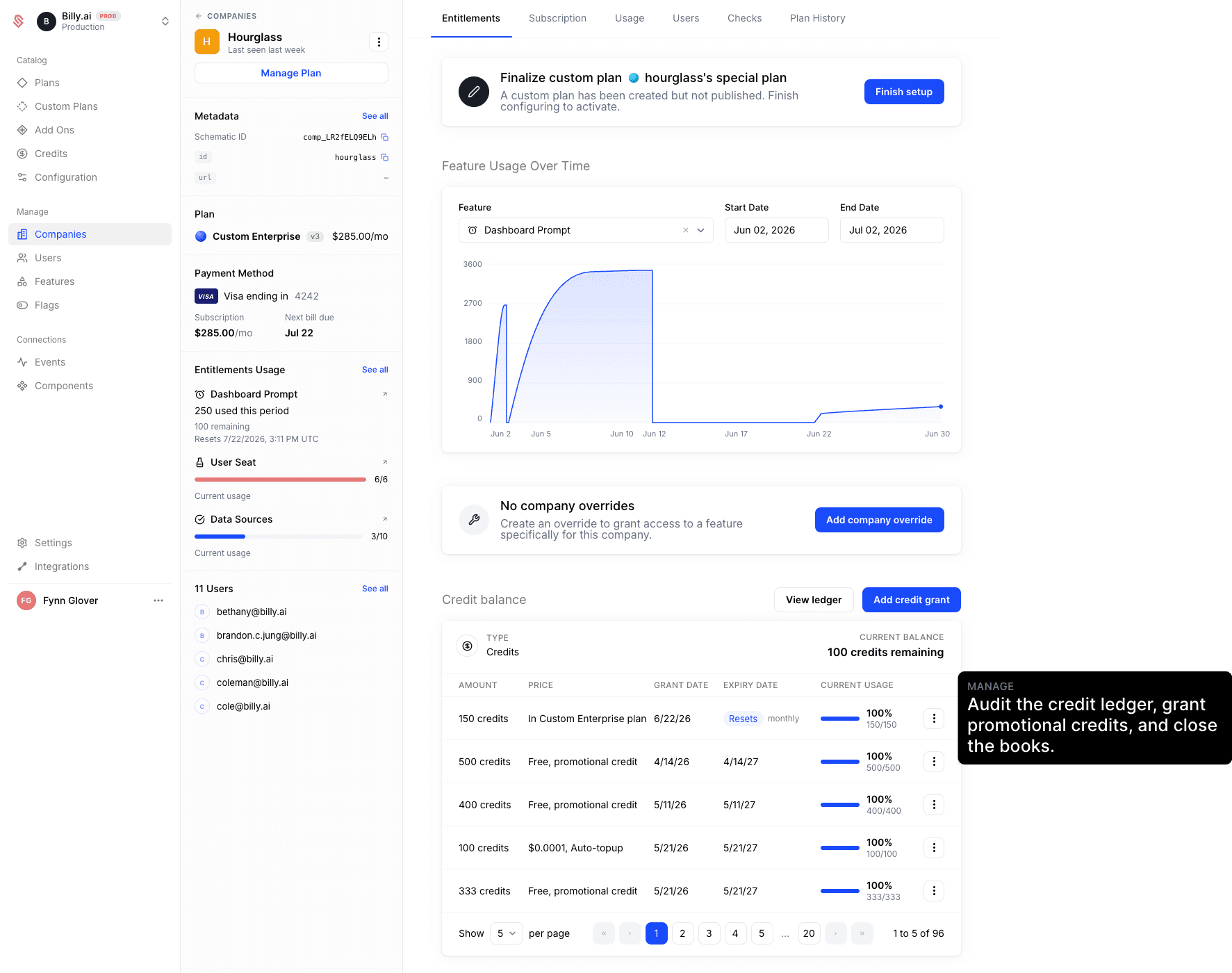
- Plan versioning: Create new plan versions and move customers between plans without changing existing contracts.
- Data security controls: Meet SOC 2 Type 2, GDPR, and PCI Level 1 compliance. Schematic also supports single sign-on and two-factor authentication to secure access.
- Real-time event logs: Stream every grant, deduction, and entitlement check live for faster debugging.
- Concurrency-safe holds: Reserve credits before spending or releasing them based on the action's result.
- Schematic MCP: Connect AI agents to billing data so they can check usage, review plans, and identify customers at risk of churning.
2. Stigg
Source: Stigg.io
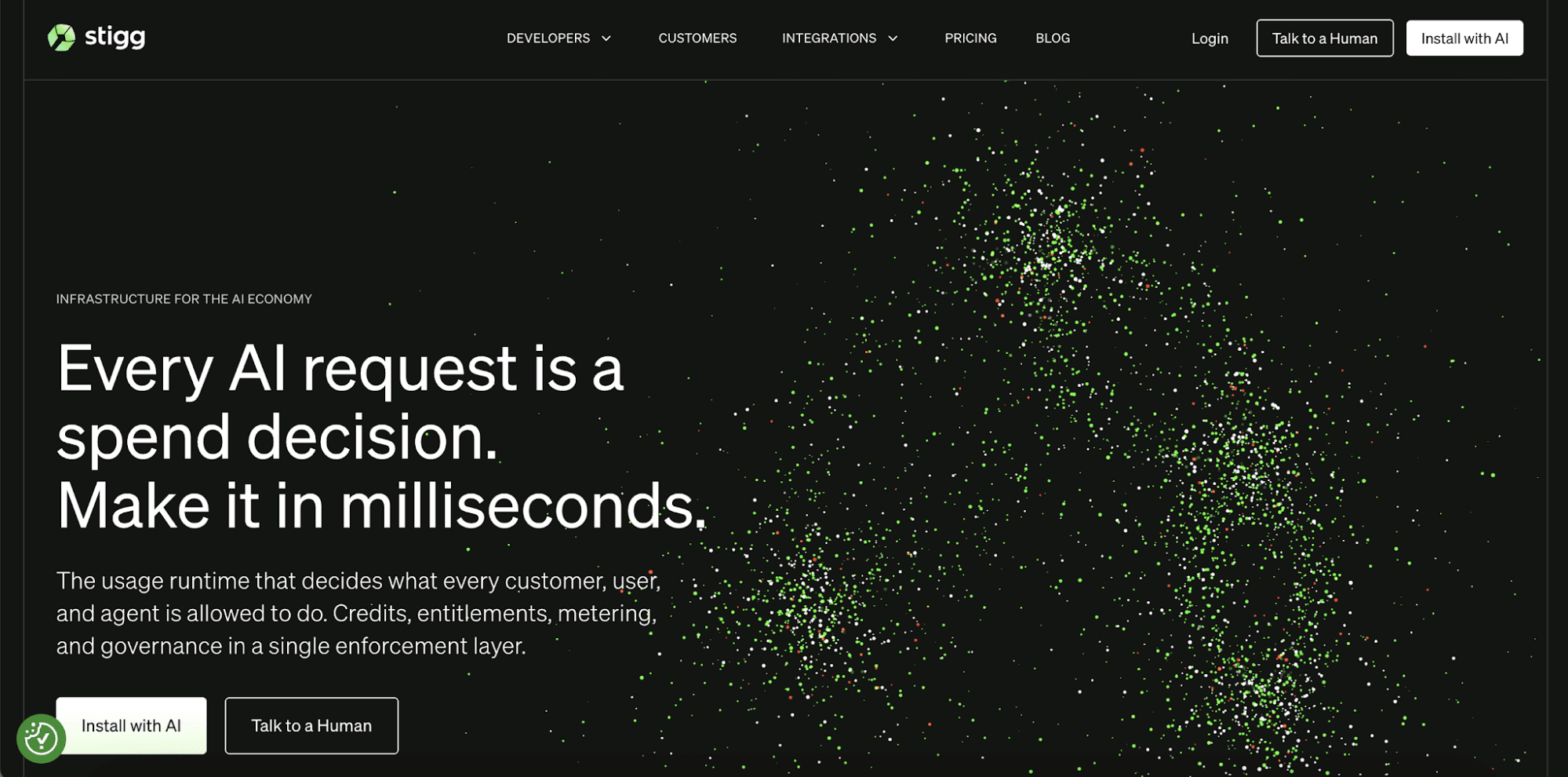
Stigg provides AI access controls for products that need to check credits, limits, and SaaS entitlements before a request runs.
The software makes access decisions by evaluating whether a customer or agent has sufficient credit balance and is within the allowed budget.
Meanwhile, the built-in credit infrastructure includes wallets, ledgers, burn-down rates, expiry policies, and priority consumption logic. AI companies can implement credit-based pricing with more confidence.
With Stigg, teams can also store entitlement logic outside the application's codebase. That makes it easier to introduce new pricing models, tiers, or AI features without a product deployment.
Stigg even supports AI governance by giving customers the ability to set budget caps. The platform enforces them at call time before a single token runs over budget.
Key Features
- Real-time enforcement: Check credits, limits, and entitlements before allowing an AI request to run.
- Financial-grade credit system: Manage wallets, ledgers, burn-down rules, expiry policies, priority consumption logic.
- Entitlement management: Ship pricing models and tiers without requiring an engineering sprint.
- AI governance controls: Customers can configure budget caps per user, team, or agent.
- Usage metering: Capture usage events and deploy them in a virtual private cloud (VPC) for data protection and full ownership.
3. Chargebee
Source: Chargebee.com
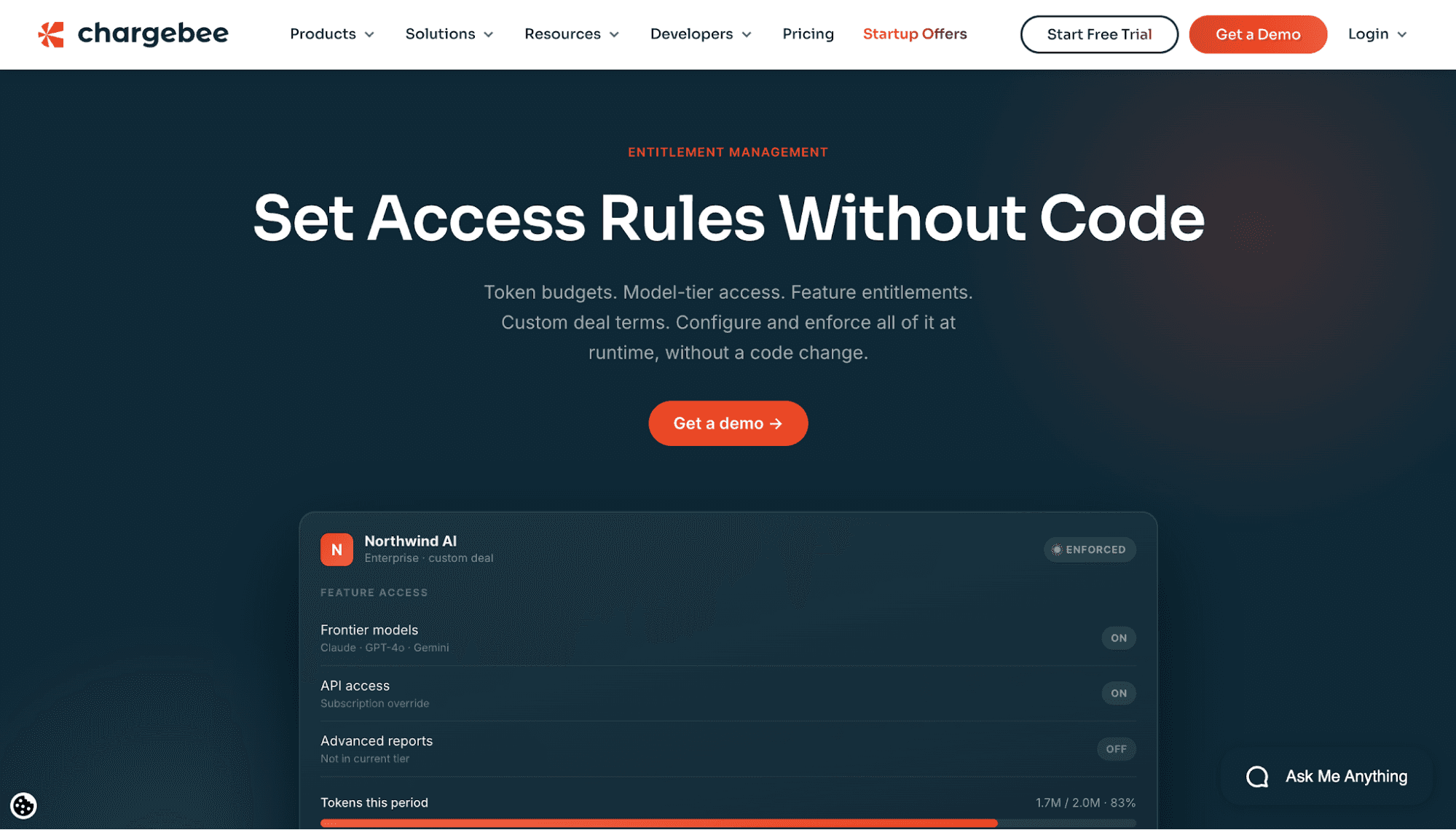
Chargebee helps companies configure token budgets, model-tier access, feature entitlements, and custom deal terms without changing application code. Access rules run in real time and use the same billing record.
Commercial teams can track allocated and consumed usage by feature and customer in real time. Product managers can launch trial pricing, retire features from new plans, grandfather current customers, or apply entitlement changes to all subscriptions.
With Chargebee, non-engineering teams can manage feature access, quotas, and customer-level overrides from configuration.
The platform also maintains a version history for each entitlement change. This helps companies know what changed, when updates were applied, and which customers were affected.
Chargebee prevents revenue leakage by making sure trial overrides expire automatically, enforcing hard caps on expensive features, and blocking unauthorized entry to paid plans buyers have stopped paying for.
Key Features
- Runtime entitlement management: Enforce token budgets, model access, feature rules, quotas, and custom deal terms at runtime without code changes.
- Usage tracking: Track allocated versus consumed usage for each feature and customer as activity happens.
- Customer-level overrides: Change feature access and usage limits for specific customers.
- Entitlement versioning: Keep a history of entitlement changes and grandfather existing customers when new entitlements are introduced.
- Usage controls: Set hard limits, trigger upgrade prompts, and start overage billing when customers exceed usage thresholds.
4. Lago
Source: getLago.com
Lago combines billing and entitlement management in one system. This approach connects feature access directly to pricing, plans, and payment status instead of managing separate billing and feature flag tools.
Product and growth teams can create features, attach them to plans, and set usage allowances without shipping code. They can grant or restrict access based on a customer’s payment status and entitlements.
Lago also allows commercial teams to customize entitlements and set overrides for enterprise contracts to ensure flexible pricing.
Engineering, on the other hand, can use the Lago API to retrieve all entitled features for a subscription plan. They can also track entitlement changes to quickly identify and fix security risks.
Unlike other AI access control solutions, Lago is an open-source platform that can be deployed on your premises or in a VPC. Role-based access control (RBAC) allows security teams to set permissions based on user roles.
Key Features
- Flexible entitlements: Attach features to plans, grant or restrict access, and override entitlements for enterprise contracts.
- Configurable pricing and packaging: Let product and growth teams change feature access and pricing rules.
- Lago API: Retrieve current subscription entitlements and track access changes through the API.
- Flexible deployment: Run Lago in the cloud, on-premises, in a VPC, or on your own infrastructure.
- Security controls: Protect identity data through SOC 2 Type II and use role-based access control to manage user roles and permissions.
5. Autumn
Source: useAutumn.com
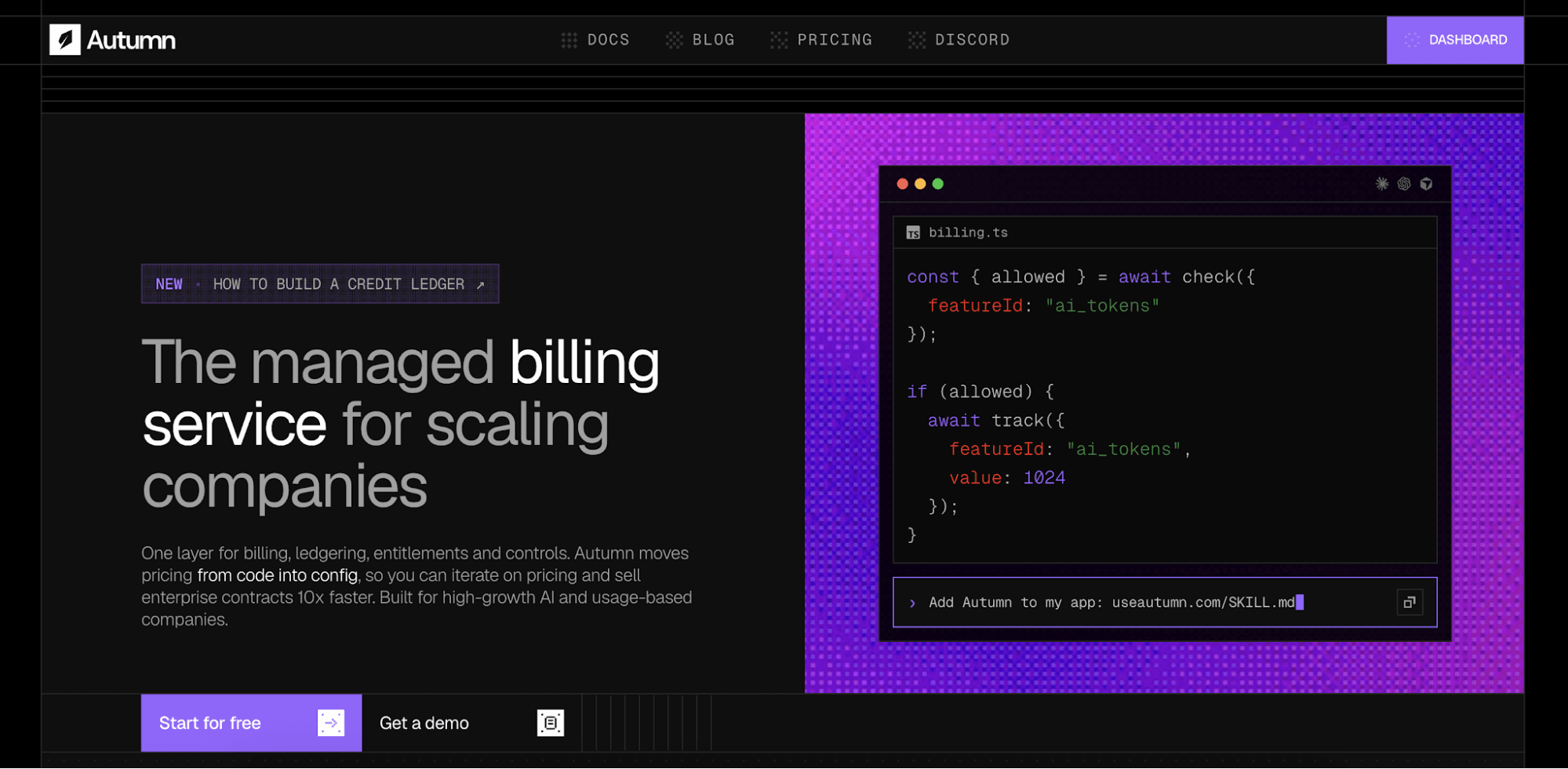
Autumn combines billing, ledgering, entitlements, and AI access controls in one platform. It moves pricing rules out of application code, allowing teams to change plans, limits, and contract terms through configuration.
The platform acts as the billing database for subscription state, balances, feature entitlements, proration, and webhooks. Applications can call on Autumn when someone requests access to a feature. It returns an access decision in near real time.
Autumn also gives customers AI access governance. They can set limits and configure alerts for AI usage.
Other capabilities include custom pricing models, auto top-ups, payment logic, coupon management, and referral programs. These provide everything companies need to manage their entire billing infrastructure.
Key Features
- Usage billing and history: Track customer usage, billing state, and account history through one system of record.
- Entitlement management: Define feature access and usage limits in configuration, then check customer access in near real time.
- AI access and usage governance: Set customer-level alerts, usage limits, and overage rules to control AI consumption.
- Credit ledger: Show recurring, one-time, and rollover credit balances. Then, set priority consumption rules to deduct expiring credits first.
- Seamless integration with Stripe: Connect Autumn to Stripe, which handles invoicing and payment processing.
Schematic Controls Access at Runtime With Entitlements Your Customers Trust
Schematic is the complete monetization platform that meters usage, bills customers, and enforces limits inside your product at runtime. Your app does not need to track each customer’s billing state. One call allows or denies access without building entitlement infrastructure from scratch.
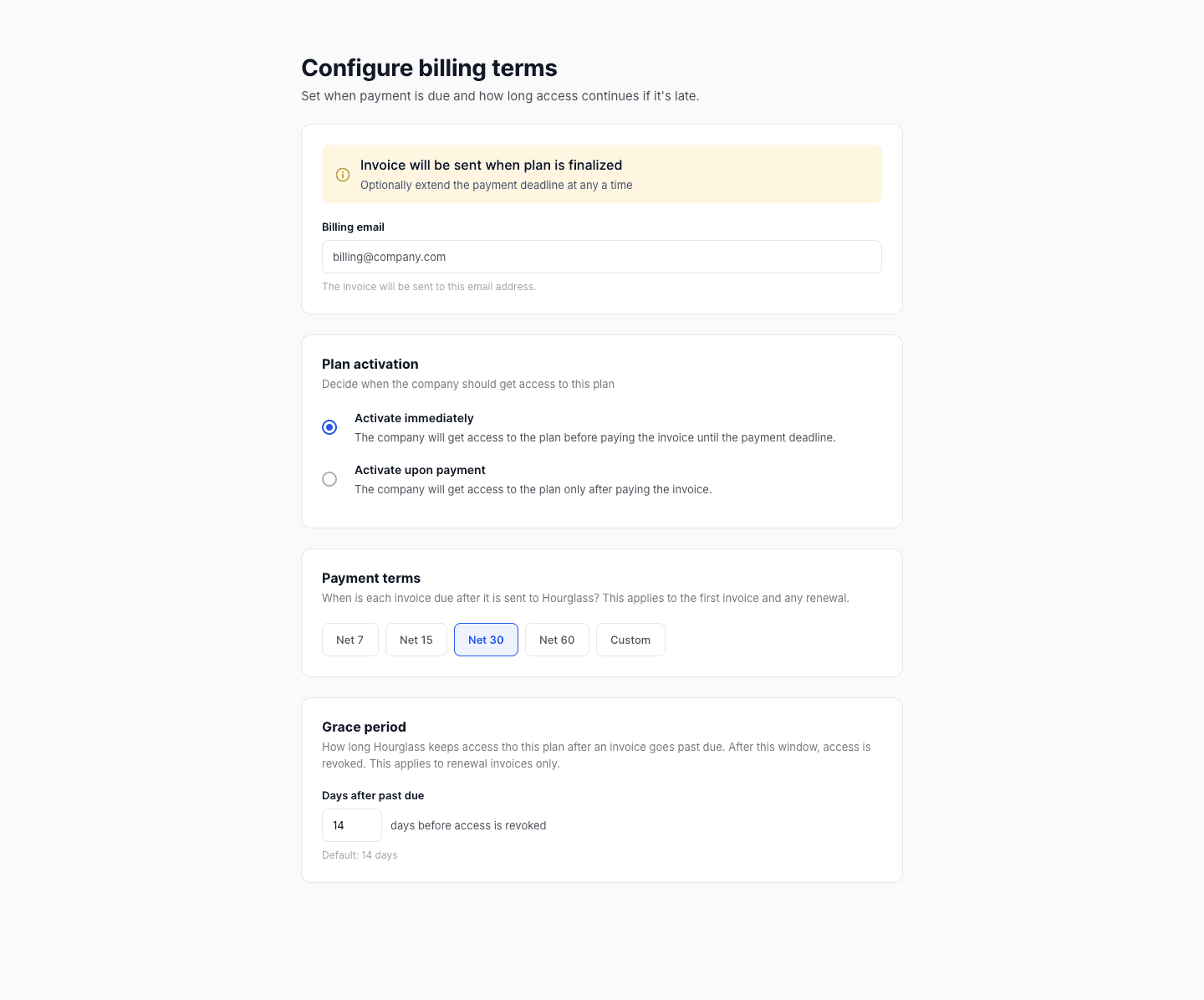
Teams can sell usage-based AI plans and gate features with one flag check in React, Node, Python, or Go. They can also configure billing terms, set a plan activation date, and apply a grace period. Policies take effect as soon as they are saved.
Native credit wallets prevent runaway bills and unexpected access throttling. They give enterprise customers real-time visibility into usage, spend forecasts, self-service controls, and configurable spending limits.
Rahul Gill from Macabacus shares, "Schematic's ability to offer usage caps, bundles, and top-ups gave our customers the cost predictability they need."
Schematic is the only AI access controls software and billing platform that solves the trust problem in usage-based pricing. It helps SaaS and AI companies close deals faster, drive expansion, and earn more revenue.
FAQs About AI Access Controls Software
What is AI in access control?
AI in access control is the process of deciding who or which accounts can use AI features and access data. AI evaluates rules that are connected to billing, entitlements, and monetization. However, some AI systems make access decisions based on a user's role, device, location, and other user attributes.
How is AI access control connected to billing?
AI access control connects what customers pay for with what they can use. A subscription plan and billing state may define feature access, credits, model limits, or usage caps. The entitlement management system then checks those rules before allowing more AI consumption.
What is the difference between AI access control and traditional access control processes?
Traditional access management evaluates roles and supports multi-factor authentication before granting access. AI access control can also check usage, credits, spend limits, and software entitlements to decide whether to allow or block further product activity.
How do access control systems work?
Access control systems check a user, account, or agent against defined rules before allowing access. Traditional identity and access management looks at assigned roles, user identity records, and credentials. Other security systems consider a user's subscription plan, payment status, and entitlements when making access decisions.