All posts
7 Best Chargebee Alternatives for SaaS Billing and Monetization
Blog· Ryan Echternacht·Jul 2, 2026
Ryan Echternacht·Jul 2, 2026
Chargebee works well as a subscription management software solution. It supports recurring billing, payment processing, and revenue recognition. For early-stage SaaS companies, this covers most needs.
But as products scale and AI usage increases, pricing stops being static and seat-based. According to Gartner, 40% of enterprise applications will have task-specific AI agents by the end of 2026. This changes how SaaS monetization works because usage is no longer limited to humans.
Access depends on plan, usage, trials, and contract terms. Teams introduce usage-based billing, add-ons, and limits tied to actual product behavior.
Engineering starts writing billing logic inside the app. Meanwhile, RevOps needs consistent subscription management data shared between CRM, billing, and the product.
At that point, billing alone stops being enough. You need monetization control inside the product, not just on invoices.
This article compares the best Chargebee alternatives in 2026 and explains when each option fits.
TL;DR
These are the top Chargebee alternatives in 2026:
- Metronome
- Orb
- Stigg
- Maxio
- Paddle
- Lago
Why Do SaaS Teams Replace Chargebee?
Chargebee handles subscription billing well, but friction appears as revenue grows and pricing becomes more dynamic.
Its pricing model is tied to monthly or annual revenue thresholds. Once you cross those limits, you either pay overage fees (around 0.75% on all billing) or move to an Enterprise plan. For fast-growing SaaS teams, billing costs rise simply because the business scales.
Support is another pain point. Many users report slow response times and unresolved issues, especially when billing problems affect live customers. When billing sits at the center of revenue operations, delays create risk.
SaaS teams also struggle with usability. Chargebee’s interface is dense and hard to navigate, making routine tasks like managing plans, add-ons, or multiple subscriptions more time-consuming than expected.
The biggest limitation appears when pricing logic needs to run inside the product. Chargebee does not enforce paywalls or software entitlements at runtime. While it provides Entitlements APIs, engineering still has to call those APIs and build access control, usage checks, and limits in application code.
7 Best Chargebee Alternatives in 2026
Not all Chargebee alternatives solve the same problem. Some focus on replacing billing and invoicing. Others extend billing by controlling plans, usage, and access inside the product.
The tools below reflect the most common paths SaaS companies and AI teams take once pricing logic moves beyond invoices and into the application.
1. Schematic + Stripe
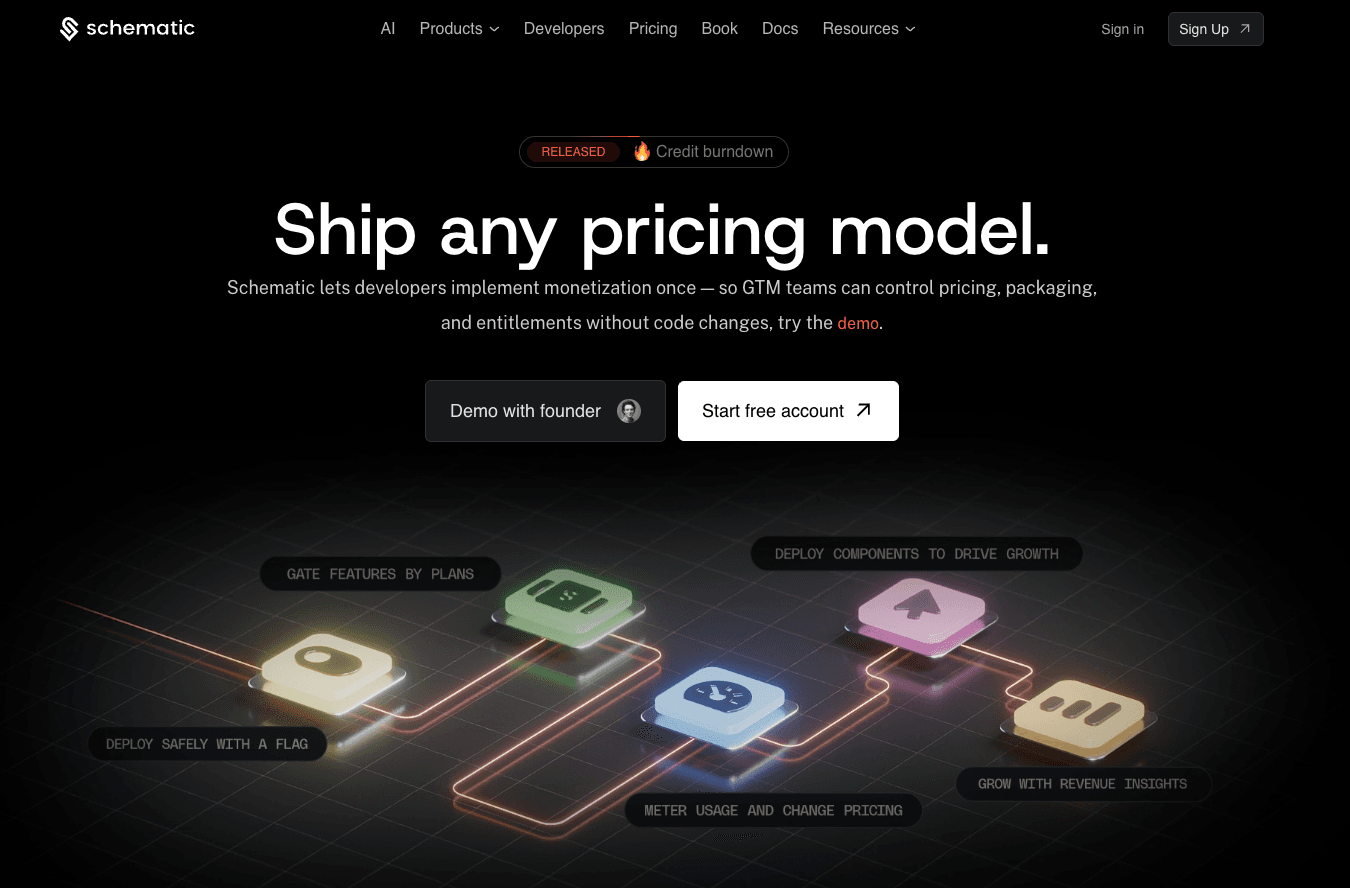
Schematic is a monetization operating system for SaaS and AI companies that brings pricing and access control directly into the product.
The platform, built on Stripe, controls how plans, entitlements, and usage behave at runtime. Stripe remains the billing layer that handles automated invoicing and payment processing.
Unlike Chargebee, which focuses on subscription billing and downstream charges, Schematic becomes the system of record for plans, entitlements, limits, trials, credits, add-ons, and exceptions. Then, it enforces those rules across your product, billing system, go-to-market stack, and user interface.
Teams choose Schematic because it provides the control plane for continuous iteration on monetization.
Common use cases include launching trials of advanced features, enforcing paywalls to encourage plan upgrades, monitoring usage as accounts approach limits, and handling sales-led overrides without hard-coded logic.
Chargebee can bill for these scenarios, but it does not decide what customers can access in the product. Schematic does.
Engineering stops maintaining complex SaaS entitlement logic. Product and GTM teams can change pricing and packaging without code changes.
Key Features
- Product catalog for plans, entitlements, limits, trials, credits, add-ons, and exceptions
- Runtime entitlement checks for feature access, limits, paywalls, and overages
- Support for any pricing model, including flat-fee subscriptions, pay-as-you-go, credit burndown, tiered pricing, and more
- Usage metering for seats, credits, tokens, API calls, MAUs, and AI usage
- Bi-directional Stripe integration to sync billing state with in-product access
- Drop-in billing components for checkout, upgrades, pricing tables, and customer portals
- Revenue insights to identify upgrades, expansion, and churn risk
- Low-latency evaluations designed for in-product enforcement
Pricing Plans
- Starter (Free): Includes basic usage, limited subscriptions and overrides, 500k monthly events, unlimited flags and components, Stripe integration, and more.
- Growth ($200 per month): Provides higher subscription limits and overrides, 10m monthly events, trials, add-ons, timed overrides, scheduled downgrades, and more.
- Enterprise (Custom pricing): Comes with unlimited scale, role-based access controls, data exports, premium support, and more.
- Teams add-on ($500 per month): Adds unlimited webhooks and company overrides for larger internal teams.
2. Metronome
Source: Metronome.com
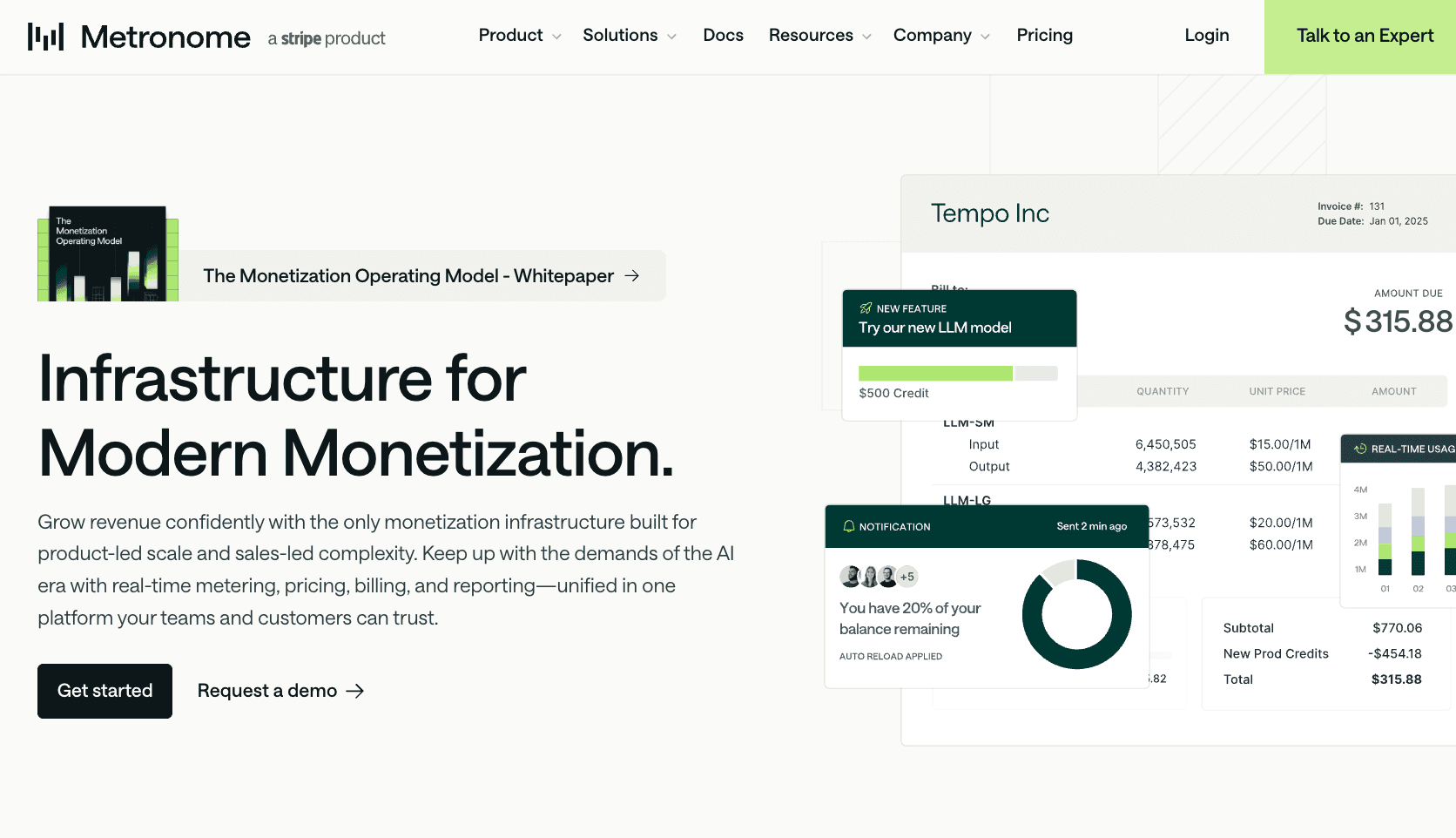
Metronome is a usage-based billing platform designed to align pricing with what the customer actually values inside a product. This could be seats, AI tokens, resolutions, or transactions processed.
Companies often choose Metronome over Chargebee when they need to handle complex usage billing scenarios.
Metronome supports real-time metering, flexible usage metrics, pay-as-you-go pricing, credit models, prepaid or postpaid commitments, and enterprise agreements.
A modular pricing engine adds advanced capabilities like centralized rate cards, pricing templates, native payment integrations, and revenue reporting based on the account, contract, or product.
The platform also shares real-time usage through an in-product billing dashboard. It even gives customers spending control with configurable alerts and limits.
Metronome is a good fit for SaaS businesses that want to make usage billing part of the product experience.
Key Features
- Real-time usage event metering with ultra-low latency alerting
- Pricing building blocks for commits, credits, and rate cards
- Tailored custom pricing using flexible discounts, overrides, and amendments
- In-product billing dashboards
- Revenue forecasts and reporting tools
Pricing Plans
- Starter (Custom pricing): Supports event ingestion, real-time alerting, native Stripe integration, and embeddable billing dashboards.
- Custom (Custom pricing): Includes invoicing integrations, data exports, improved service-level agreements (SLAs), priority support, and tailored pricing for high-volume usage.
3. Orb
Source: withOrb.com
Orb is another platform that specializes in usage-based billing for SaaS and AI companies, where consumption drives revenue.
Teams usually compare Orb with Chargebee when static plans and invoice-first flows fall short for metered pricing and real-time enforcement.
Orb connects raw usage events to contracts, pricing logic, and invoices, so you bill from the same source of truth used by product and finance.
It supports hybrid pricing for self-serve and sales-led deals, with controls for limits, overages, and exceptions.
The platform focuses on billing accuracy and financial reporting for teams that iterate pricing frequently, including AI token pricing and fast-evolving usage models, rather than managing subscriptions alone.
Key Features
- Usage metering and high-volume event ingestion
- Pricing models for tiers, overages, and hybrid usage
- Customer-level usage visibility and spend controls
- Invoice-grade billing and usage reconciliation
- Integrations with CRM, data, and billing systems
Pricing Plans
- Core (Custom pricing): Covers usage ingestion, metering, hybrid billing, and invoicing.
- Advanced (Custom pricing): Adds data warehouse sync, CRM integrations, and premium support.
- Enterprise (Custom pricing): Includes enterprise SLAs, dedicated support, and scale controls.
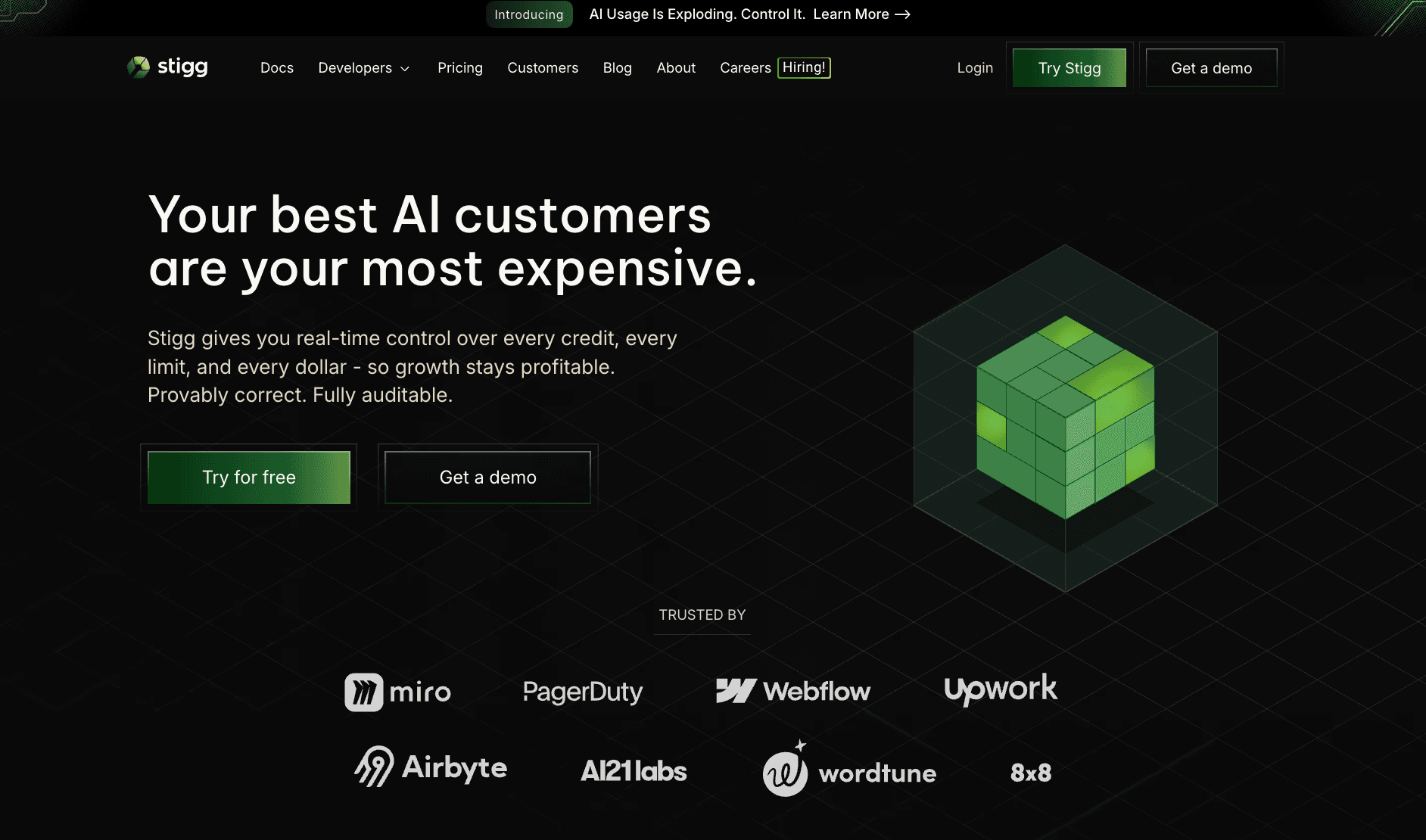
4. Stigg
Source: Stigg.io
Stigg positions itself as a monetization control layer that manages pricing, packaging, entitlements, usage, and basic subscription management from a single unified platform.
Teams often evaluate Stigg as a Chargebee alternative when traditional billing processes cannot express how access, limits, and usage should behave within the product.
Instead of acting as a comprehensive billing platform, Stigg augments existing billing infrastructure by handling product-level monetization logic at runtime.
This approach supports hybrid billing models where plans, usage limits, and overrides change frequently between self-serve and sales-led flows.
Compared to Chargebee, Stigg focuses less on invoicing and more on enforcing pricing strategies tied to real usage. This helps teams align monetization decisions with customer lifecycle management without rewriting application code.
Key Features
- Centralized packaging and contract management through entitlements
- Plan-based access control enforced in-product
- Real-time usage metering aligned with pricing rules
- Support for sales-led overrides and custom plans
- Integrations with billing and data platforms
Pricing Plans
- Sandbox (Free): A free plan for testing packaging, entitlements, and limited usage.
- Growth (Starts at $5,376 per year): Includes higher limits, experiments, and advanced features.
- Scale (Custom pricing): Supports enterprise scale, higher volumes, and dedicated support.
5. Maxio
Source: Maxio.com
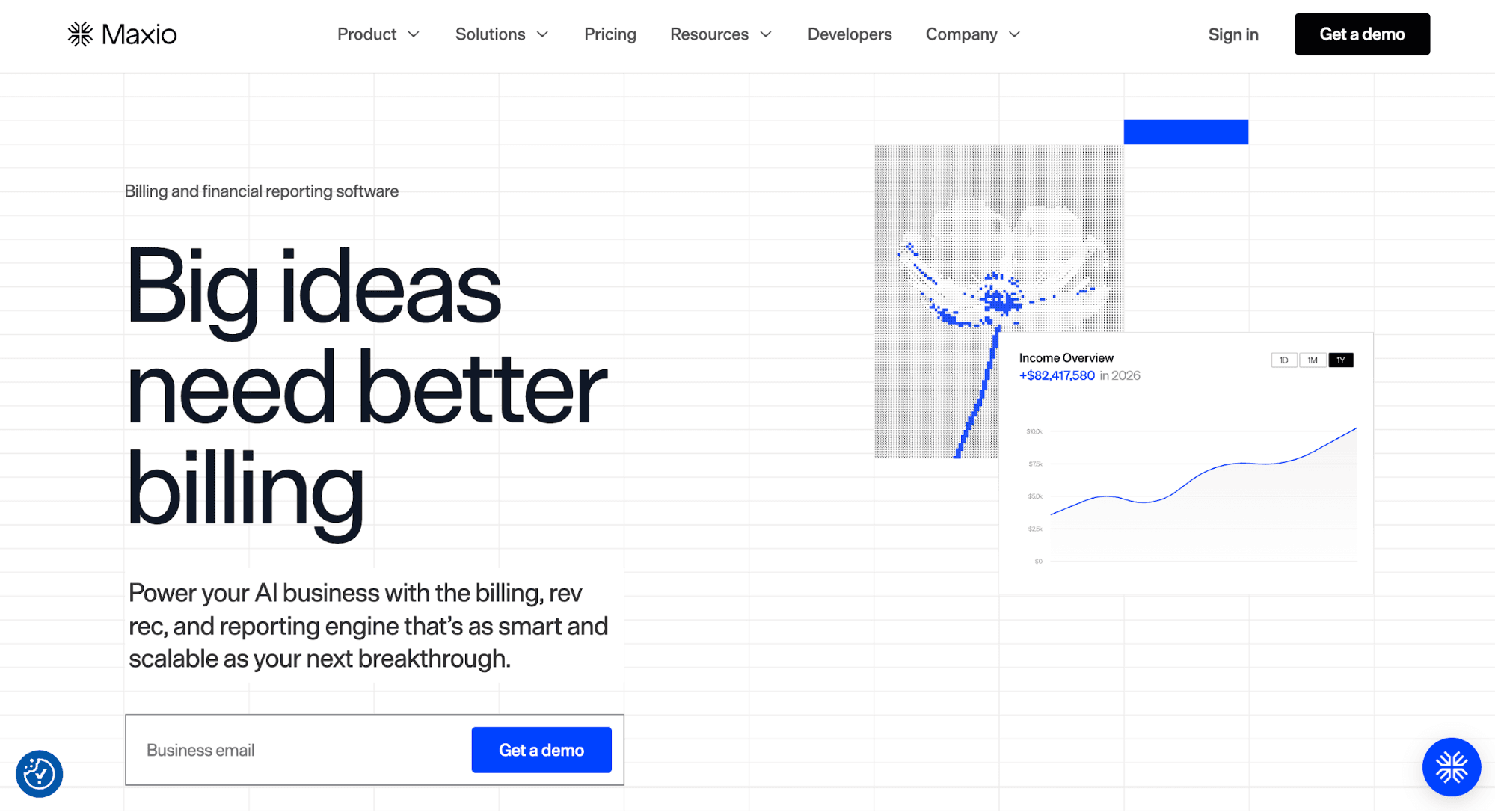
Maxio is a subscription billing platform with finance-grade reporting and revenue recognition tools for B2B SaaS teams.
It is often evaluated as a Chargebee alternative when finance needs tighter control over billing accuracy, reporting, and compliance without stitching together separate tools.
Maxio focuses on subscription and usage billing, invoicing, and automated revenue recognition, then ties that data directly into financial workflows.
It suits finance-led SaaS organizations managing complex contracts, audits, and compliance requirements, where billing data must stay aligned with accounting outcomes, unlike traditional accounting systems that operate after the fact.
Key Features
- Subscription and usage-based billing with support for complex pricing models
- Revenue recognition and reporting for ASC 606 and IFRS 15 compliance
- Invoicing, payment collection, multi-currency support, and contract billing controls
- Support for hybrid self-serve and sales-led motions
- Integrations with ERP, payment processors, accounting software, and more
Pricing Plans
- Grow ($599 per month): Covers core billing, invoicing, subscription management, and standard reporting.
- Scale (Custom pricing): Includes advanced revenue management, project billing, and enterprise reporting features.
6. Paddle
Source: Paddle.com
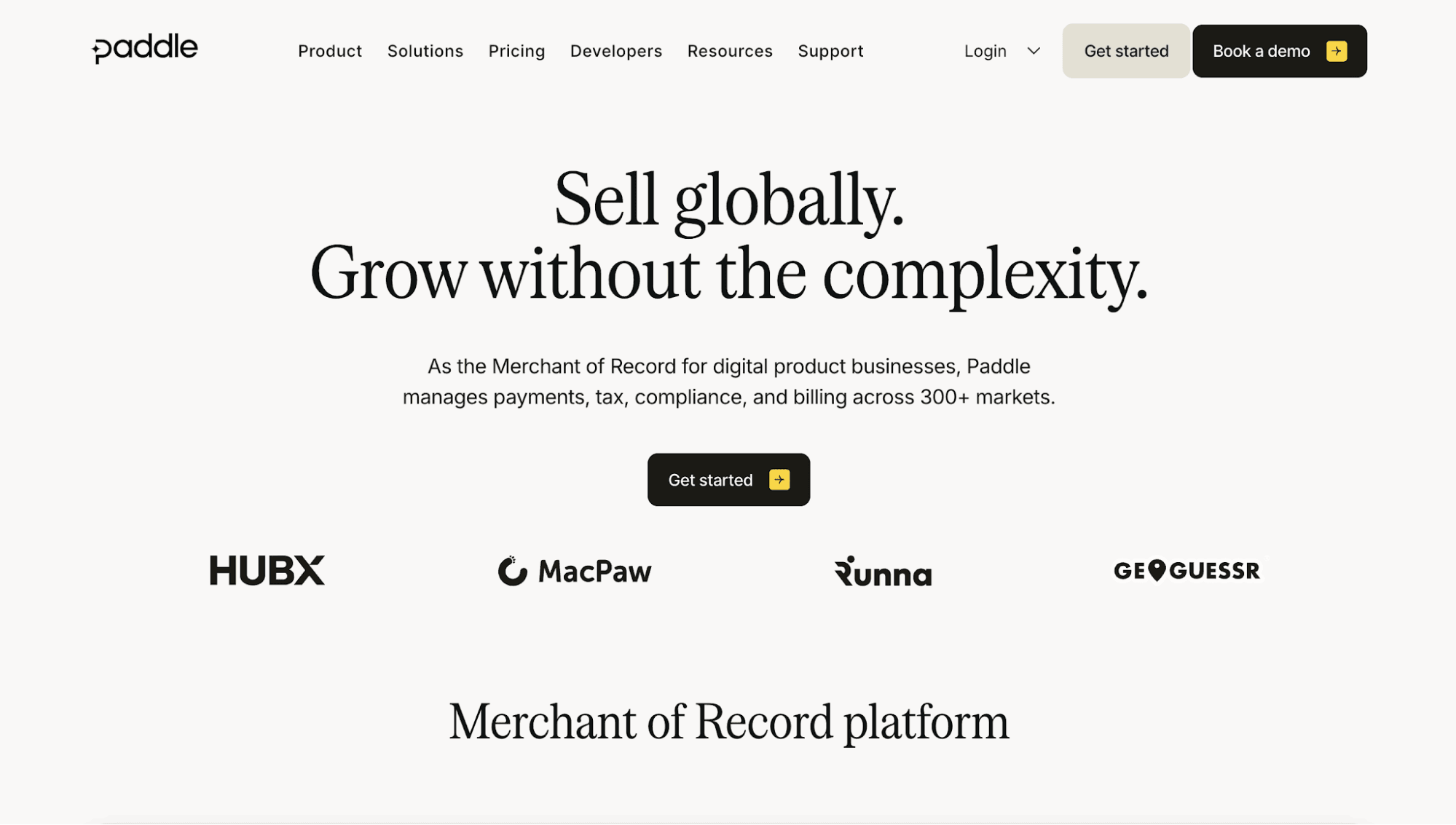
Paddle operates as a merchant of record for SaaS and digital product companies that want to offload payments, tax, compliance, and global billing.
Teams often consider Paddle as a Chargebee alternative when global expansion increases tax exposure, compliance risk, and operational overhead.
Unlike traditional accounting systems that rely on downstream reconciliation, Paddle takes responsibility for payment processing, fraud, refunds, payment failure recovery, and sales tax remittance. This simplifies complex billing operations.
It fits self-serve SaaS businesses where checkout, global tax compliance, and payment reliability matter more than deep in-product pricing control.
Key Features
- Merchant of record that manages subscriptions, payments, tax, and compliance
- Subscription billing and localized checkout experiences
- Global payments with fraud, refunds, and chargeback handling
- Revenue and transaction reporting
- Built-in customer retention and dunning tools to recover failed payments
Pricing Plans
- Pay-as-you-go (5% + $0.50 per transaction): Includes billing, payments, global tax compliance, and fraud protection.
- Custom pricing (Quote-based): Designed to fit different business models with premium support and migration services.
7. Lago
Source: getLago.com
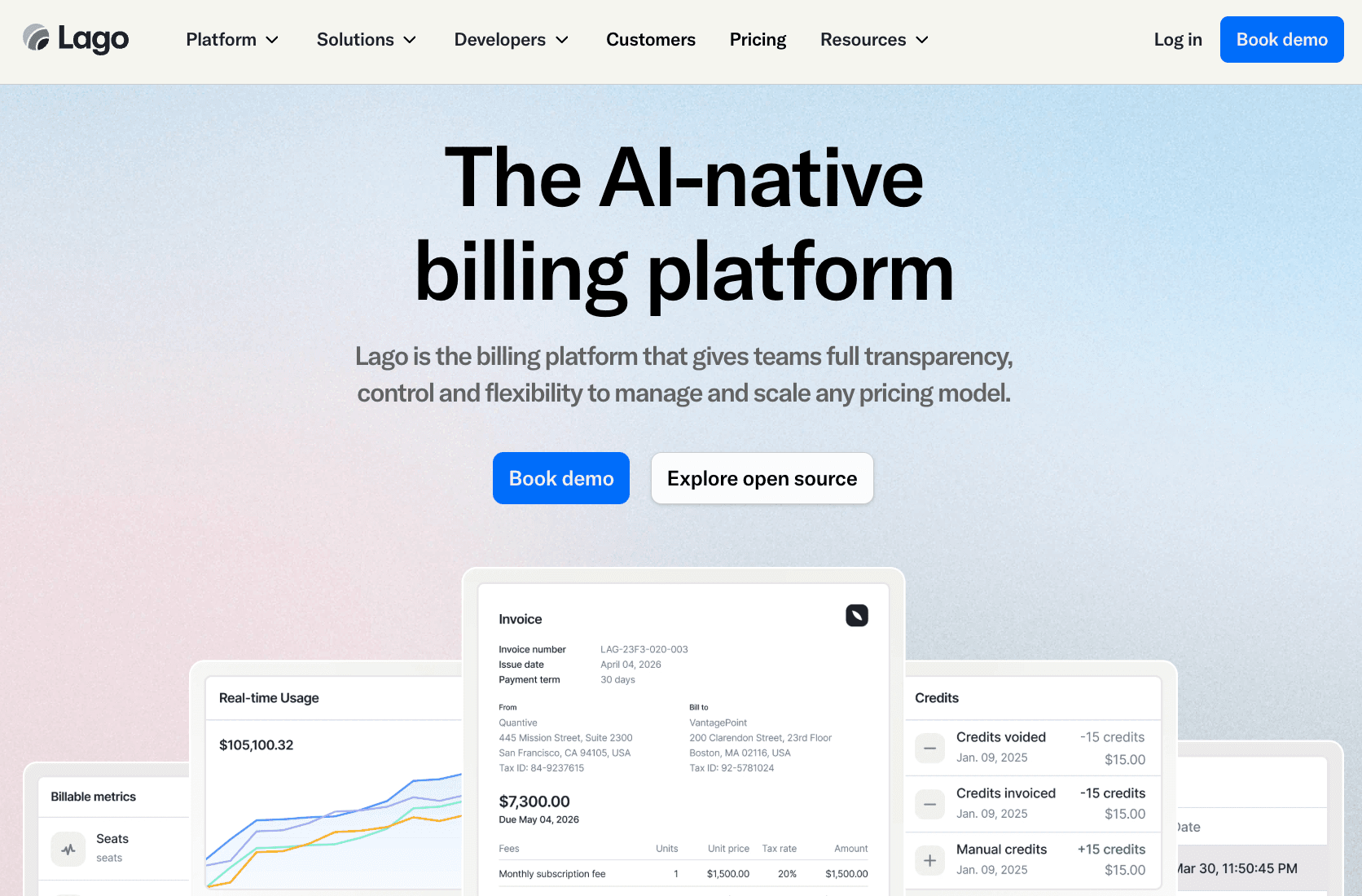
Lago is an open-source billing platform built for SaaS and AI teams that need flexible usage-based and hybrid billing.
Teams often evaluate Lago as a Chargebee alternative when pricing logic changes frequently, usage drives recurring revenue, or engineering wants direct control over billing behavior.
Lago meters events in real time, applies pricing rules to subscriptions and usage, and generates invoice-ready charges through APIs and a visual dashboard.
It fits engineering-led teams billing APIs, AI tokens, credits, or IoT usage, where billing logic must stay transparent and extensible.
Compared to Chargebee, Lago focuses on flexible billing execution and dynamic pricing, while leaving accounting, reconciliation, and finance operations to external systems.
Key Features
- Real-time usage metering for usage-based and hybrid pricing
- Billing and invoicing for usage, credits, and subscription-based models
- Entitlements managed directly in billing logic
- Support for custom contracts and enterprise plans
- Open-source and self-hosted deployment options
Pricing Plans
- Business (Custom pricing): Includes the core platform, usage metering, data pipeline integrations, and business-hours support.
- Enterprise (Custom pricing): Comes with premium support, dedicated solutions engineering, and self-hosted deployment options.
How to Pick the Right Chargebee Alternative Based on Your Pricing Motion
The right Chargebee alternative depends on how you sell your SaaS product and how often you change pricing.
If you run a self-serve motion with global customers, you need support for recurring payments, localized payment providers, multi-currency billing, and multiple payment gateways.
A billing-first subscription management platform can cover this when plans stay simple and pricing rarely changes.
Sales-led SaaS with negotiated contracts leans toward Chargebee alternatives built for contract billing, billing cycles, and strict revenue recognition requirements.
Finance teams care about clean revenue schedules, deferred revenue, and accurate billing data that feeds revenue reporting and revenue management.
Usage-heavy and AI products introduce different pressure. Metered billing and high event volume demand reliable usage ingestion and pricing that scales with complex billing needs and dynamic pricing models. Billing alone does not solve enforcement.
A hybrid GTM strategy creates the hardest case. You need flexible pricing models, trials, overrides, and in-product enforcement tied to subscription data.
Most SaaS businesses end up with a split stack where billing infrastructure handles invoices and billing, while a monetization layer controls access inside the product.
Schematic Manages Pricing and Entitlements Without Hard-Coded Logic
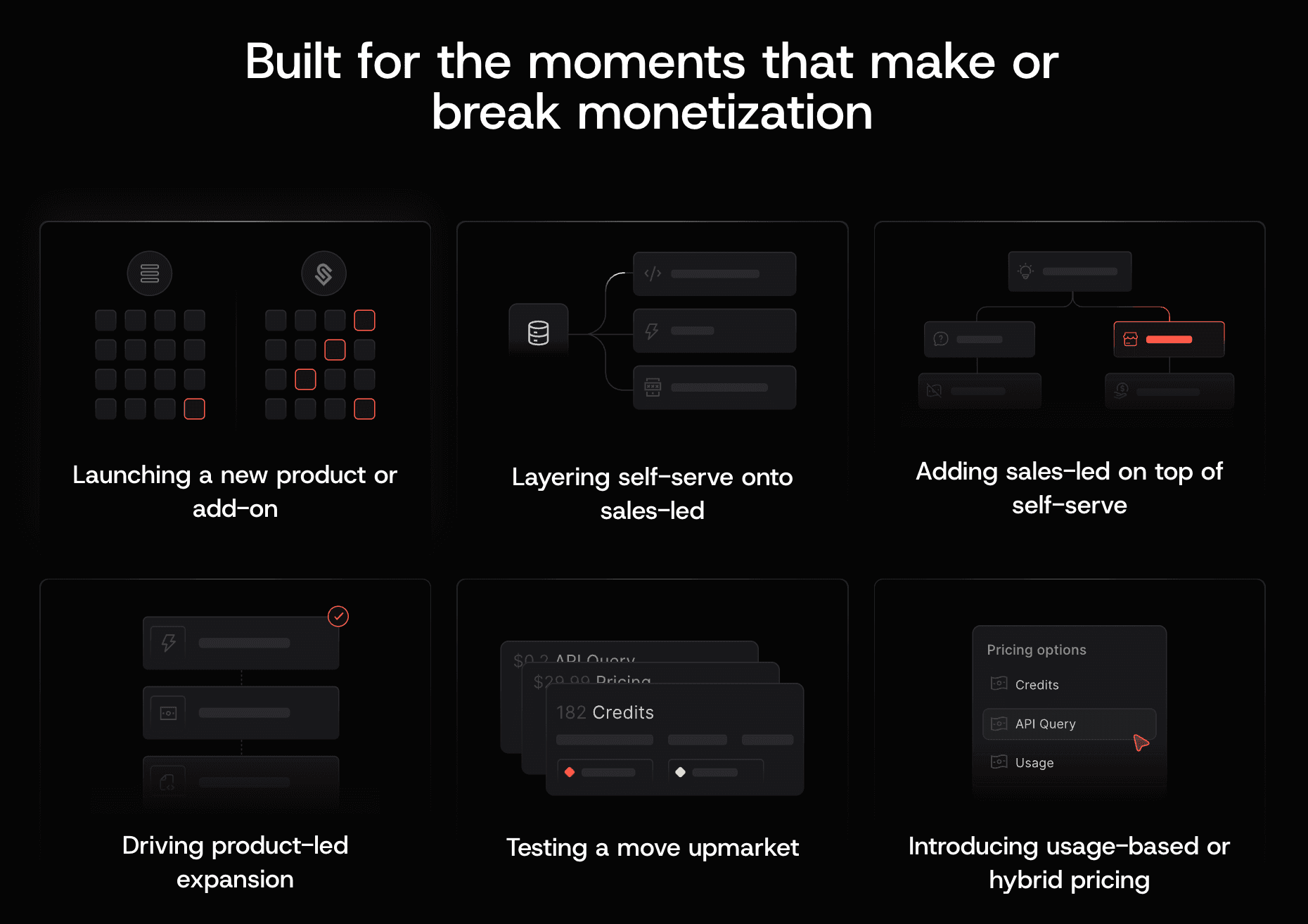
Chargebee works when billing stays at the center of your workflow. Pricing gets harder once the product must enforce access based on entitlements, usage, trials, credits, and contract exceptions.
Most teams end up using different platforms. Billing remains the source of invoices. A monetization layer becomes the source of truth for what customers can use in the app.
Schematic fits that monetization role. You model plans, entitlements, limits, trials, credits, add-ons, and overrides in one place, without code changes.
Schematic enforces access inside the product at runtime, while Stripe billing handles invoices and payments.
Engineering only needs to implement monetization once. The people closest to the customer relationship (e.g., sales, product, and GTM teams) can continuously iterate on pricing and packaging.
FAQs About Chargebee Alternatives
What is the best alternative to Chargebee?
The best alternative to Chargebee depends on how your SaaS business handles billing, pricing, and monetization. Top competitors include Schematic, Recurly, Maxio, Paddle, Orb, Metronome, Stigg, Lago, Zoho Billing, and more. Schematic stands out when pricing and access control need to run inside the product, not just on invoices.
Is Chargebee a unicorn?
Yes, Chargebee is considered a unicorn. It reached a valuation of over $1 billion in 2021 following a Series G funding round and has since been reported at valuations of up to $3.5 billion. The company serves thousands of SaaS businesses globally with subscription billing and revenue management software.
What is the difference between Chargebee and Adyen?
Chargebee is a subscription billing and revenue management platform. Adyen is a fintech and payment service provider. Chargebee manages plans, subscriptions, invoicing, and revenue workflows on top of payment gateways like Adyen. Adyen focuses on payments, fraud detection, and settlements rather than handling subscription operations.
What is the difference between Chargebee and Maxio?
Chargebee helps SaaS companies handle subscriptions, usage-based pricing, payment collection, and recurring billing in one platform. Maxio, on the other hand, provides billing and financial reporting tools designed for B2B SaaS teams. It suits organizations that need billing data to align with accounting outcomes.