Top 7 Hybrid Billing Software Options Compared (2026)
Top 7 Hybrid Billing Software Options Compared (2026): 1. Schematic 2. Metronome 3. Orb 4. Zuora 5. Chargebee 6. Lago 7. Alguna dashboard prompt
 Ryan Echternacht
On this page
- Overview
- TL;DR
- 7 Best Hybrid Billing Software in 2026
- 1. Schematic
- 2. Metronome
- 3. Orb
- 4. Zuora
- 5. Chargebee
- 6. Lago
- 7. Alguna
- Key Features to Look for in Hybrid Billing Systems
- Flexible Pricing and Packaging
- Usage Metering and Rating
- Entitlement Enforcement
- Usage Governance Controls
- Revenue Recognition Workflows
- Payment Gateway Connectors
- Schematic Can Model Hybrid Pricing and Enforce Entitlements at Runtime
- FAQs About Hybrid Billing Software
- What is hybrid billing?
- How does hybrid billing work?
- What are the top hybrid billing platforms?
- Why do SaaS and AI companies use hybrid billing?
Software monetization is no longer limited to flat-fee subscription billing or seat-based pricing. Many teams now combine fixed charges with variable usage-based pricing, prepaid credits, or outcome-based fees.
According to Bain & Company, around 65% of vendors have adopted a hybrid pricing approach, such as layering metered billing on top of per-seat pricing.
However, hybrid pricing models can make billing more complex. Teams need to closely track product usage, manage credit balances, and calculate charges on top of recurring subscription fees. They should also handle overages, billing changes, and custom pricing rules for enterprise customers.
The right hybrid billing software helps businesses manage subscriptions, meter usage events, generate invoices, collect payments, and accurately report on usage revenue for compliant revenue recognition.
This article reviews the best hybrid billing solutions, their advantages, and their pricing plans.
TL;DR
Below are the best hybrid pricing platforms that support multiple billing models in a single plan:
Metronome
Orb
Zuora
Chargebee
Lago
Alguna
7 Best Hybrid Billing Software in 2026
Here is a detailed review of the top 7 hybrid billing solutions for AI and SaaS companies:
1. Schematic
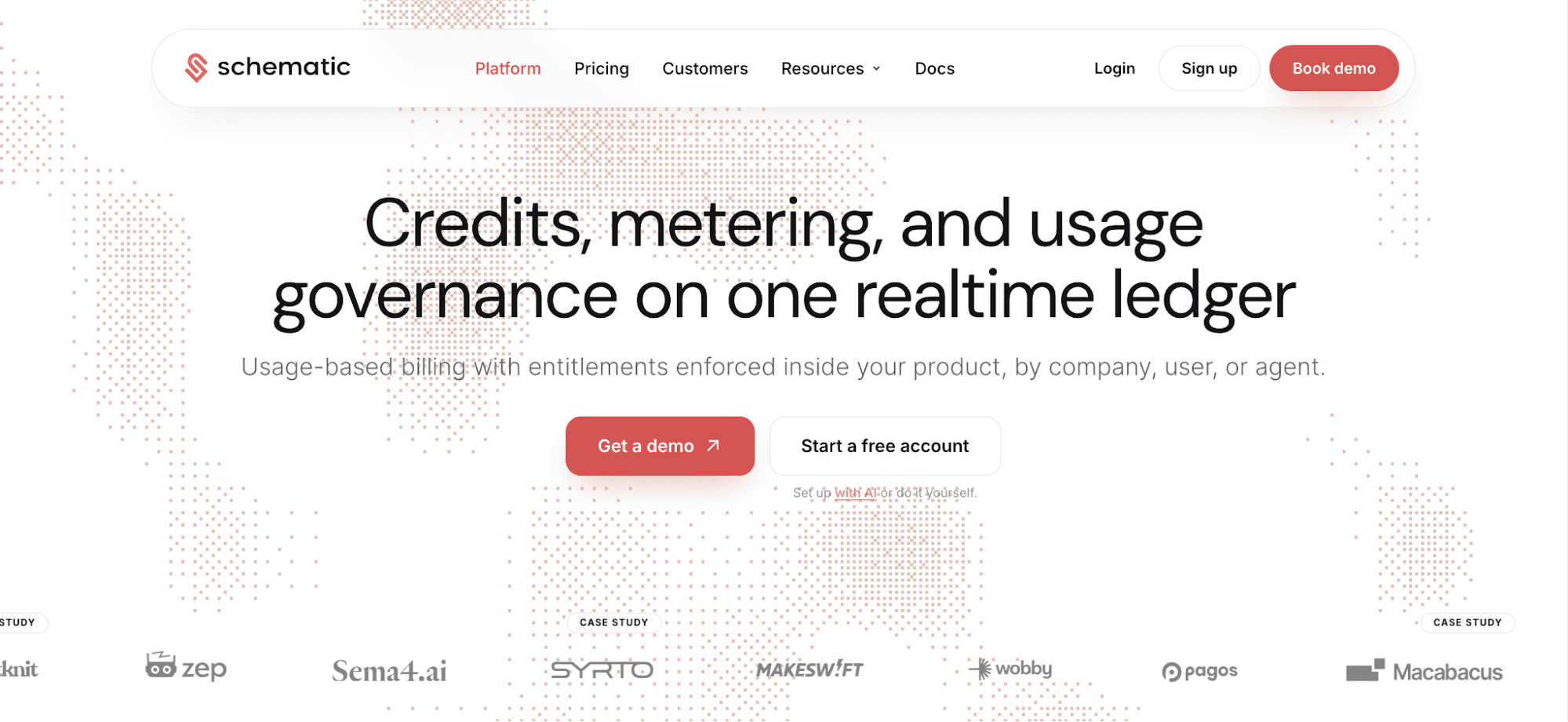
Schematic is the best hybrid billing platform for software and AI companies selling to enterprises. It lets teams combine flat subscription fees, seat-based charges, usage-based billing, and credit burndown pricing within a single plan.
Schematic makes it easy to set up hybrid models. You define base subscription fees at the plan level and configure usage-based charges for individual entitlements. For example, you can charge a fixed monthly fee, add per-seat charges, and bill customers for extra AI usage.
Pricing lives as data on a real-time ledger. That means you can change each pricing component through configuration, not a code deployment.
Other standout features include enterprise credit wallets and a runtime entitlement engine. These tools track credit activity, show remaining balances, and enforce feature access and usage limits in real time.
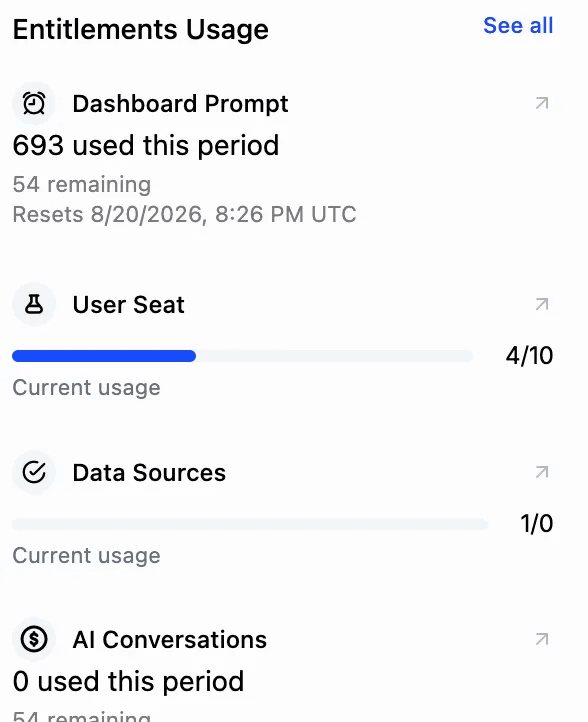
Schematic also gives enterprise customers real-time visibility and control over their usage to prevent runaway bills and unexpected access throttling.
Sales teams, on the other hand, can grant overrides with a set expiration date. They can also create custom plans, get payment links, meter usage, and renew subscriptions with receipts.
Max Ade from Pickleheads says, "The ability to give customers overrides and exceptions to their plan limits is a must-have feature for any billing platform."
Pros
Combine multiple pricing models (flat subscriptions, pay-as-you-go, credit-based pricing, etc.) in one plan
Change pricing and packaging through configuration
Native credit wallets track every credit activity and show customers exactly what they use
Self-service controls let buyers set limits, manage auto top-ups, and define what happens at the cap
Meter usage events once to power software entitlements, invoices, and analytics
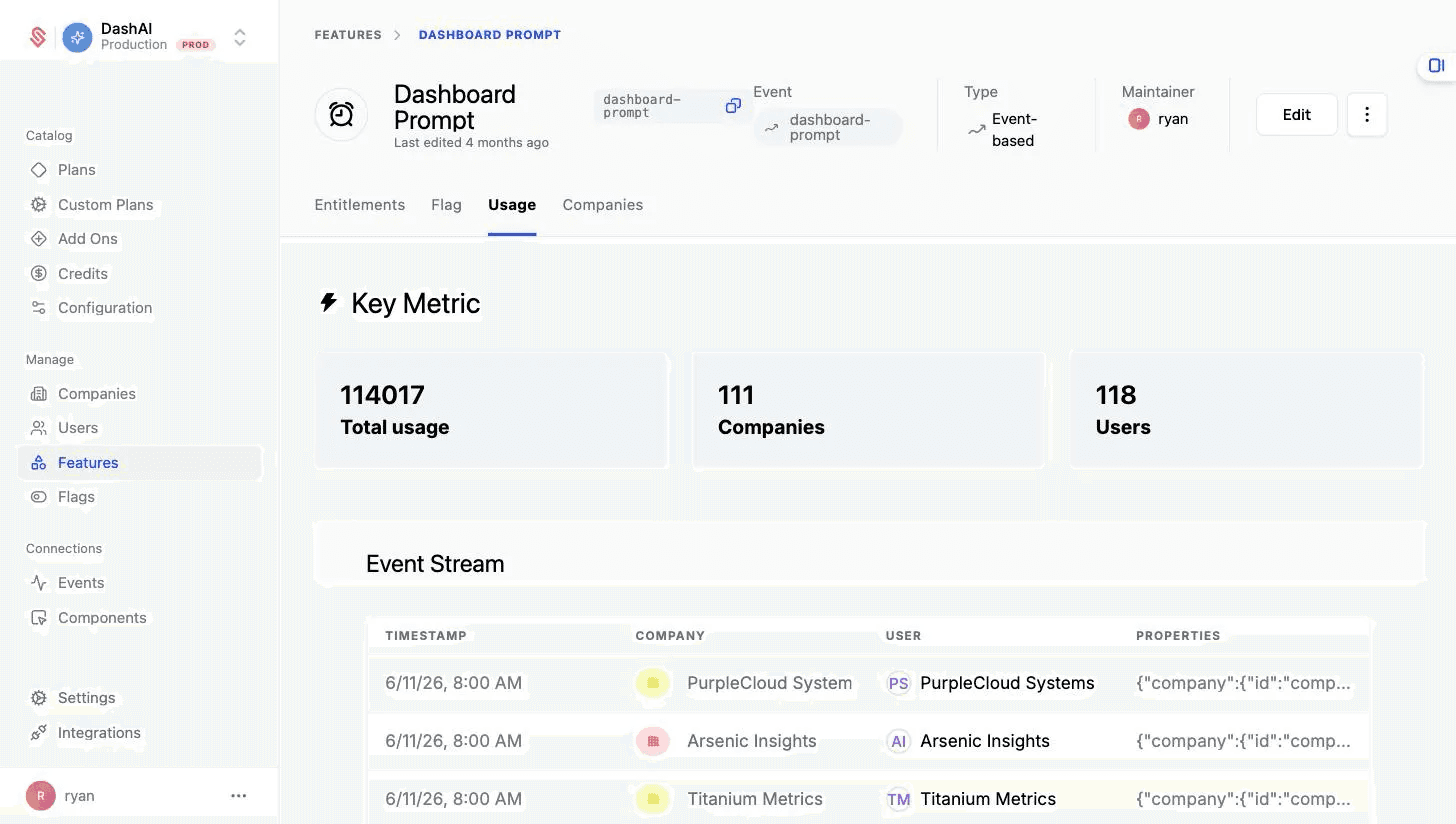
Support for sales-led, self-serve, or hybrid go-to-market strategies
Version plans, migrate customers, and keep legacy subscriptions
Track credit-based revenue on an append-only ledger for ASC 606 compliance
Record every grant, deduction, and check live in an event log for faster debugging
Connect AI assistants to Schematic's model context protocol (MCP) server to automate complex billing tasks
Pricing Plans
Schematic offers three plans designed for software and AI companies at different growth stages:
Starter (Free): Suits startups that expect 500k events per month and need 2 company overrides, 10 subscriptions, unlimited flags, unlimited companies, usage components, and features.
Growth ($400/month or $3,840/year): Caters to growing businesses by providing 10m events per month, 20 overrides, unlimited subscriptions, more integration options, and a 30-day audit log retention.
Enterprise (Custom pricing): Ideal for large companies that require premium support, unlimited overrides, monthly events, role-based access control, and other advanced features.
2. Metronome
Source: Metronome.com
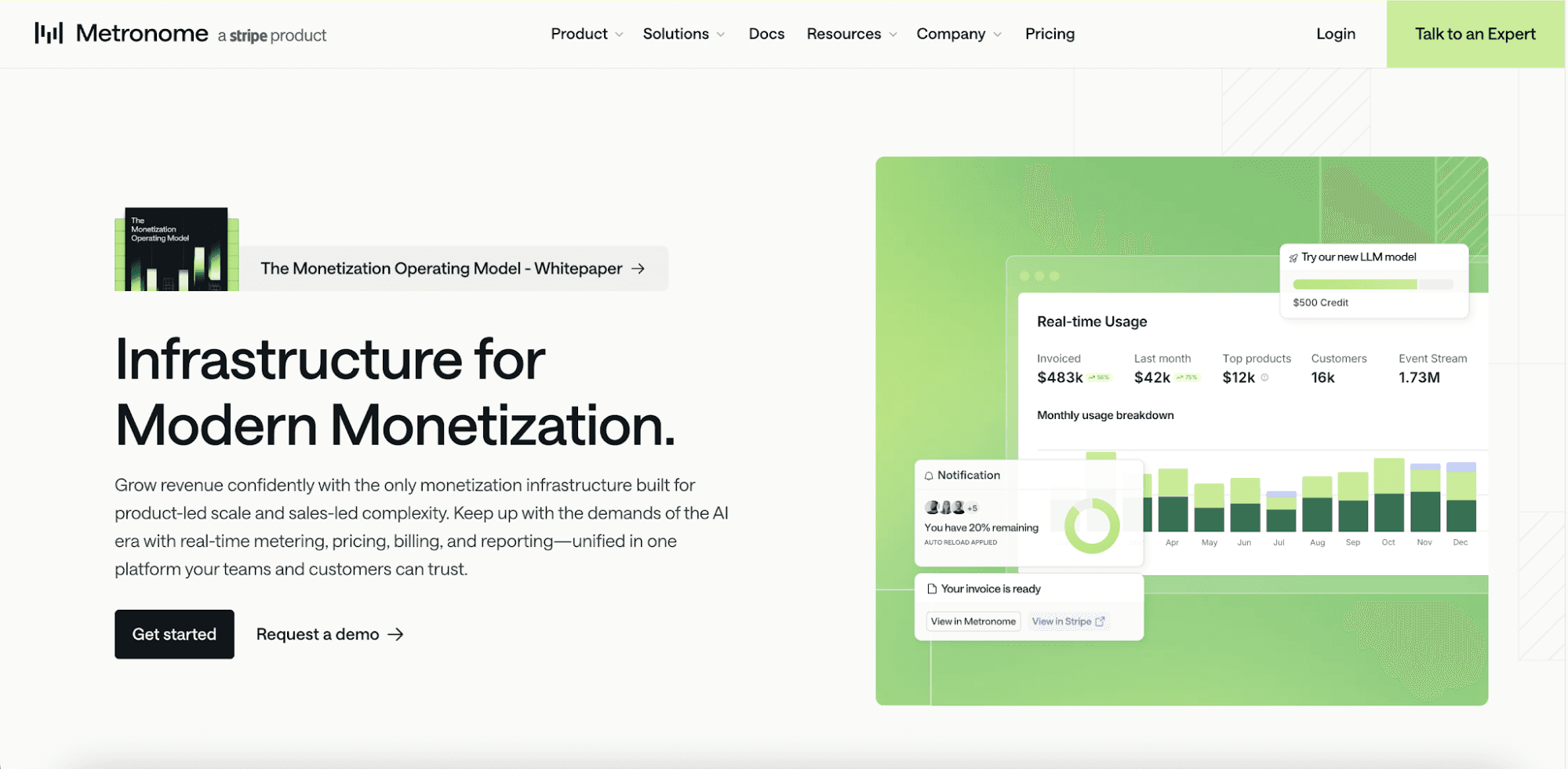
Metronome is a modern billing platform with pricing levers for hybrid models. It supports subscriptions, usage-based charges, seat-based pricing, and other complex pricing models under one structure.
Metronome's billing setup uses centralized rate cards, spending commitments, and credit models to define pricing rules and contract terms. Businesses can configure these components based on their go-to-market motions and sales needs.
For complex contract structures, Metronome supports custom discounts, pricing overrides, and contract amendments. Teams can update standard prices while keeping existing customer agreements intact. This reduces manual changes and potential billing errors.
The platform even sends real-time usage and spending data to customer dashboards, data warehouses, and internal business systems through APIs and webhooks.
That data gives customers a clearer view of their spending while helping internal teams forecast revenue, monitor consumption, and analyze profit margins.
Pros
Built-in pricing levers for any go-to-market motion
Support dynamic pricing with flexible discounts, overrides, and amendments
Improve customer trust through in-product billing dashboards and configurable alerts
Access usage and spending data for financial reporting, margin analysis, and revenue tracking
Integrate with Stripe for payment processing and faster quote-to-cash processes
Cons
Lacks entitlement controls and limit enforcement
Plan changes require engineering resources
Pricing Plans
Metronome's pricing page shows two options to help companies see what they need at a glance:
Startup: It charges 0.8% of billing volume, while events are billed at $0.04/1k ingest events. This plan offers usage metering, real-time alerts, billing dashboards, self-serve and custom enterprise contracts, and native Stripe integration.
Custom: Scaling businesses prefer this option because of enhanced service-level agreements (SLAs), invoicing integrations, data exports, priority support, and access to a dedicated account manager.
3. Orb
Source: withOrb.com
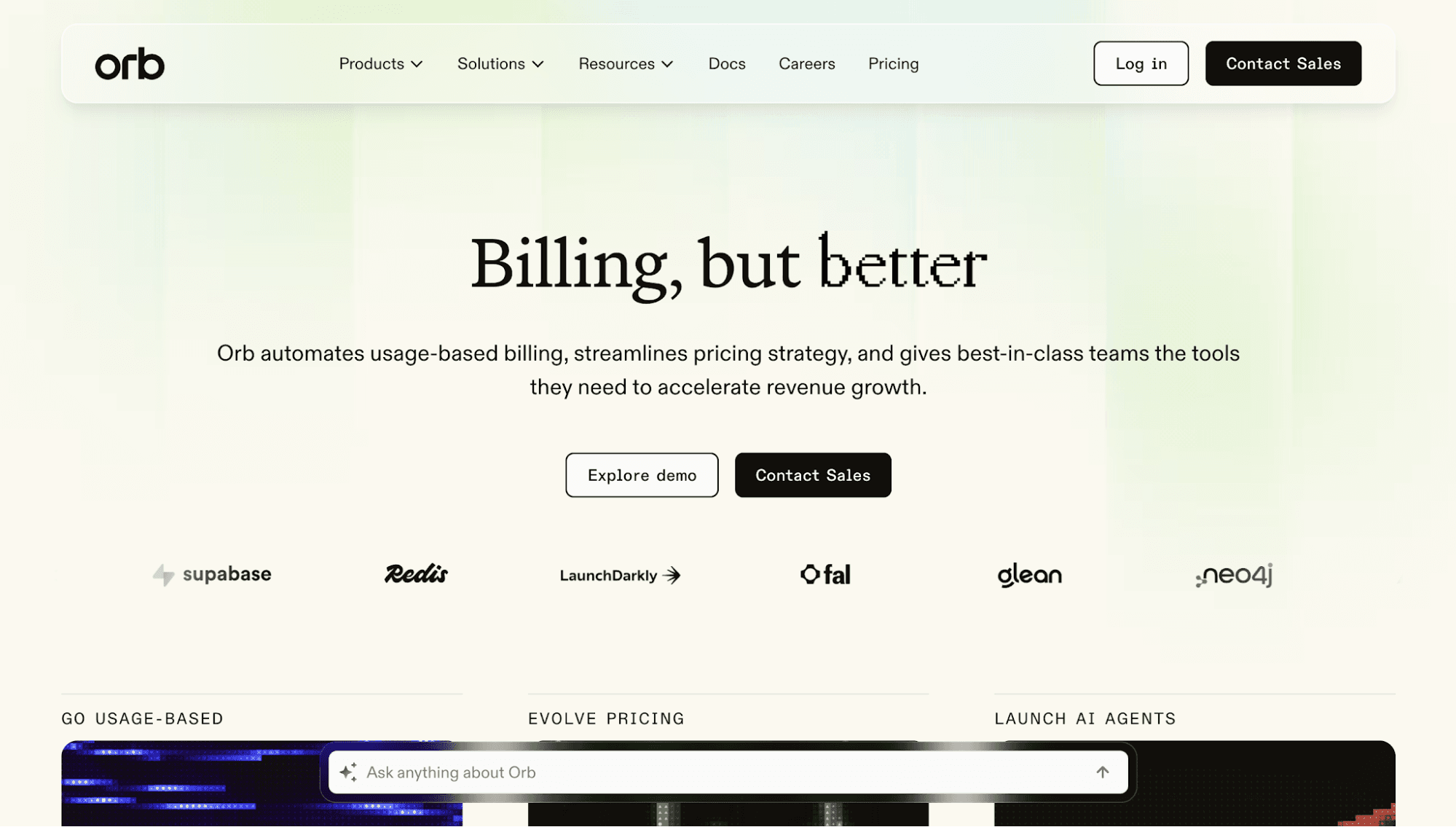
Orb is a hybrid billing software solution that helps SaaS and AI companies handle metering, invoicing, and usage-based billing operations.
Its billing engine uses Revenue Graph, an event store that keeps detailed usage records. Teams can generate accurate invoices, track billing changes, and correct past charges when contracts or billing data change.
Orb also meters large volumes of usage and helps teams automate manual processes. Businesses can manage customer accounts, pricing, and contracts from one system, even when usage data arrives late or service outages occur.
The platform also supports pricing flexibility by allowing teams to simulate pricing changes using actual usage data. This helps estimate impact on revenue before introducing new hybrid billing models.
Plus, customer-facing dashboards, pricing tables, and checkout flows help users understand their spending and plan future activity.
Pros
Reliable usage metering and billing infrastructure for accurate invoices
Auditable records for pricing adjustments, changes, and corrections
Pricing simulations to test hybrid billing strategies before shipping
Invoicing, payment processing, and billing automation to reduce the workload of finance teams
A built-in experience kit improves trust through real-time usage visibility
Cons
Customer-facing components still require developers to write code for limit enforcement
Only supports generic entitlements tied to a subscription plan
Pricing Plans
Orb offers two pricing plans designed for startups and enterprises:
Business: It charges $6 per credit and includes real-time event ingestion, usage alerts, hybrid billing, automated price changes, and integrations with Adyen or Stripe.
Enterprise: Adds automated collections, customer hierarchies, divisional billing, data exports, role-based access controls, audit logs, and integrations with NetSuite and Salesforce.
4. Zuora
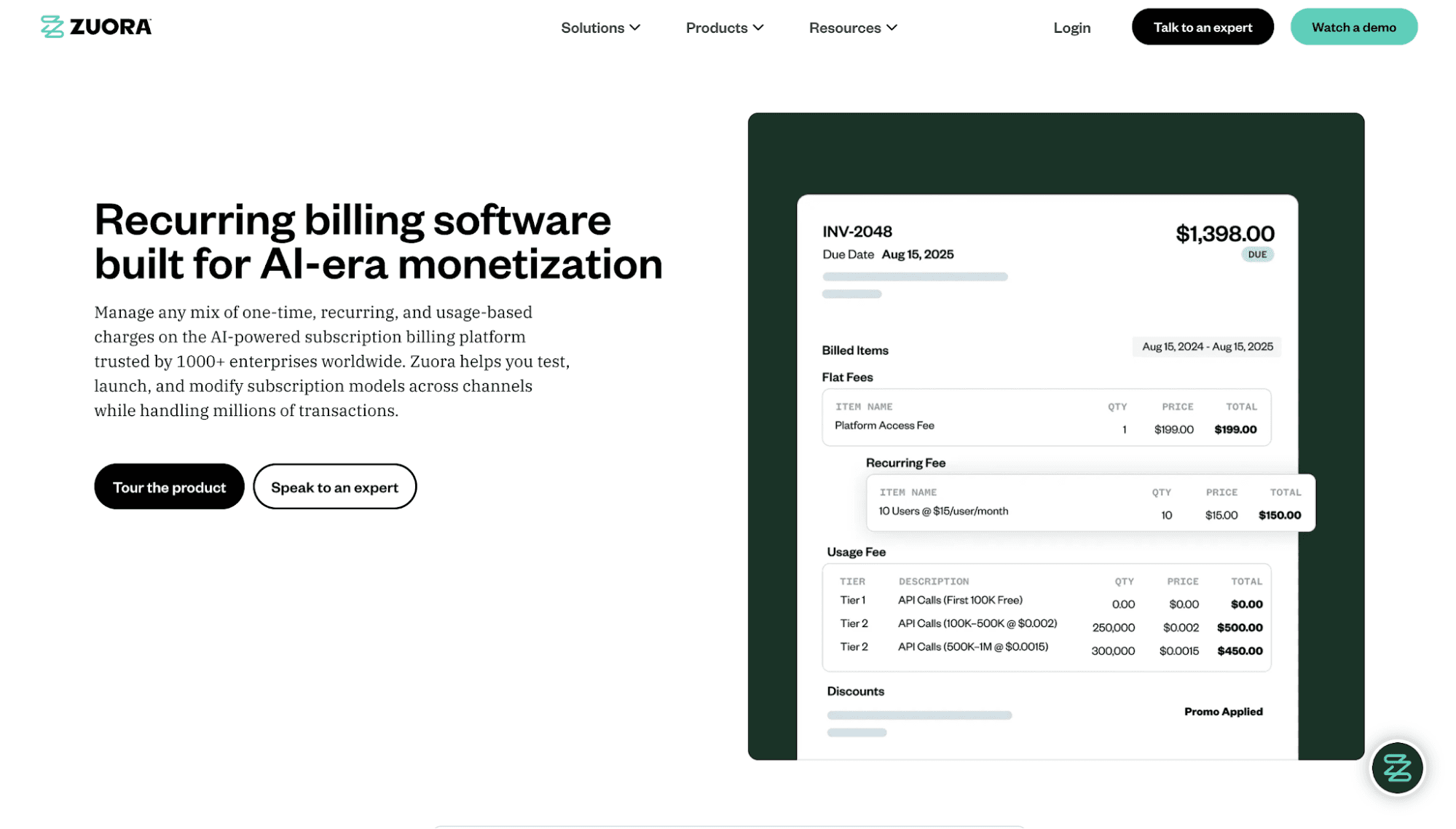
Source: Zuora.com
Zuora is a recurring subscription billing solution designed for AI monetization. It supports one-time fees, recurring subscriptions, hybrid usage-based pricing, and professional services billing in one platform.
The platform can also combine subscription or tiered pricing with pay-as-you-go charges, prepaid credits, and minimum commitments. Teams can easily adjust prices and terms in the middle of the billing period without disrupting finance workflows.
For multi-year deals, sales teams can quote planned price increases or changes in subscription quantities upfront to prevent billing surprises.
Zuora also supports global payments orchestration through multiple payment gateway connectors. It accepts different payment methods and multiple currencies with built-in payment fraud protection.
Zuora can even prevent involuntary churn and revenue leakage by retrying failed payments automatically. This retry logic meets compliance and auditability requirements.
Pros
Support for different monetization models and pricing strategies
Built-in mediation and rating for hybrid usage-based plans
Global payments orchestration with payment fraud protection and smart payment retries
Integrated configure, price, quote (CPQ) software for creating custom deals
API-first architecture to connect to custom solutions and adapt to your technical requirements
Cons
Complex setup leads to longer implementation timelines
No self-service controls that allow customers to see their balances and set spending limits
Pricing Plans
Zuora does not publicly disclose pricing information for its products. This can slow down the decision-making process and may force other companies to look for hybrid billing solutions with transparent pricing pages.
5. Chargebee
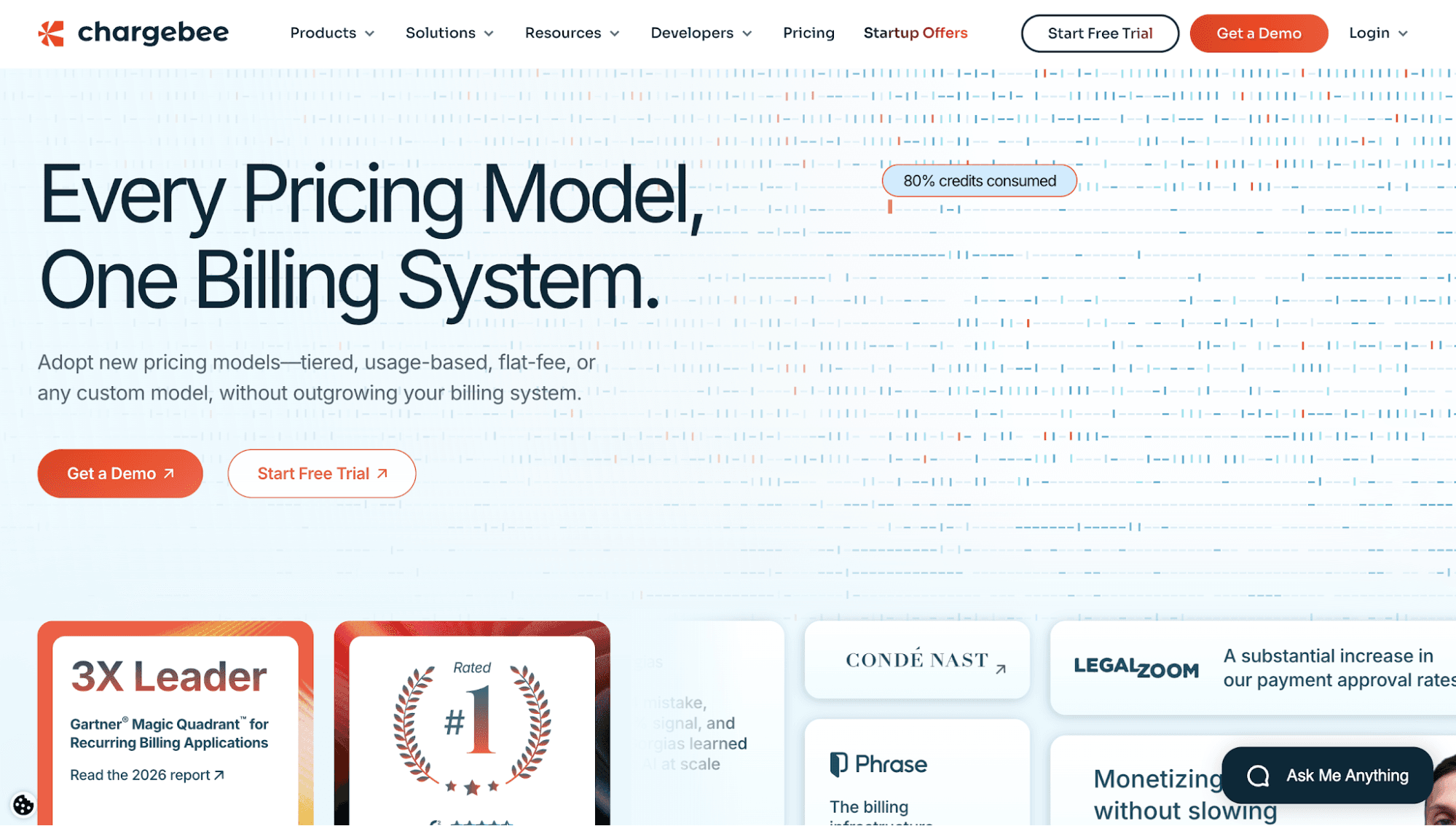
Source: Chargebee.com
Chargebee is subscription billing software and AI monetization infrastructure in one. It can model any pricing, including flat-fee subscriptions, usage-based pricing, tiered pricing, and hybrid models.
In addition to flexible pricing models, Chargebee supports different currencies, tax rules, invoice details, and accounting fields without creating duplicate plans.
The built-in product catalog organizes plans into product families, with options to set trial periods and billing periods. Teams can choose whether hybrid plans appear on checkout pages or a self-serve portal.
For AI products, Chargebee lets teams configure credit allowances, rollover rules, and usage-based fees when customers exceed their included usage. The platform automatically tracks consumption against limits using SaaS entitlements.
Chargebee even handles revenue recognition for recurring billing and consumption charges. It automates recognition schedules, reconciliation, and journal posting while providing revenue forecasts and deferred revenue reports.
Pros
A centralized price book stores plans, price points, add-ons, usage-based charges, and limits to keep billing unified
AI-native pricing models with native support for hybrid billing models
Localized offers and customizable finance fields to support flexible pricing
Entitlements control feature access and bill overages
Automated revenue recognition workflow to eliminate manual reconciliation
Cons
The cost of Chargebee's billing platform scales with monthly invoicing volume
Entitlement enforcement logic needs to be written and maintained by engineers inside the application's codebase
Pricing Plans
Chargebee's pricing page shows two options for its billing software:
Flow: This plan bills 0.80% for less than 65k monthly invoicing volume. Meanwhile, it charges a recurring fee of $99 + 0.65% for companies with more than 65k invoicing volume. It suits growing companies that need the price book, invoicing tools, ingestion, usage billing, limits, analytics, and pricing tables.
Enterprise: Custom pricing is available for global businesses that require multi-entity support, account hierarchy, on-demand discounts, and contract terms.
6. Lago
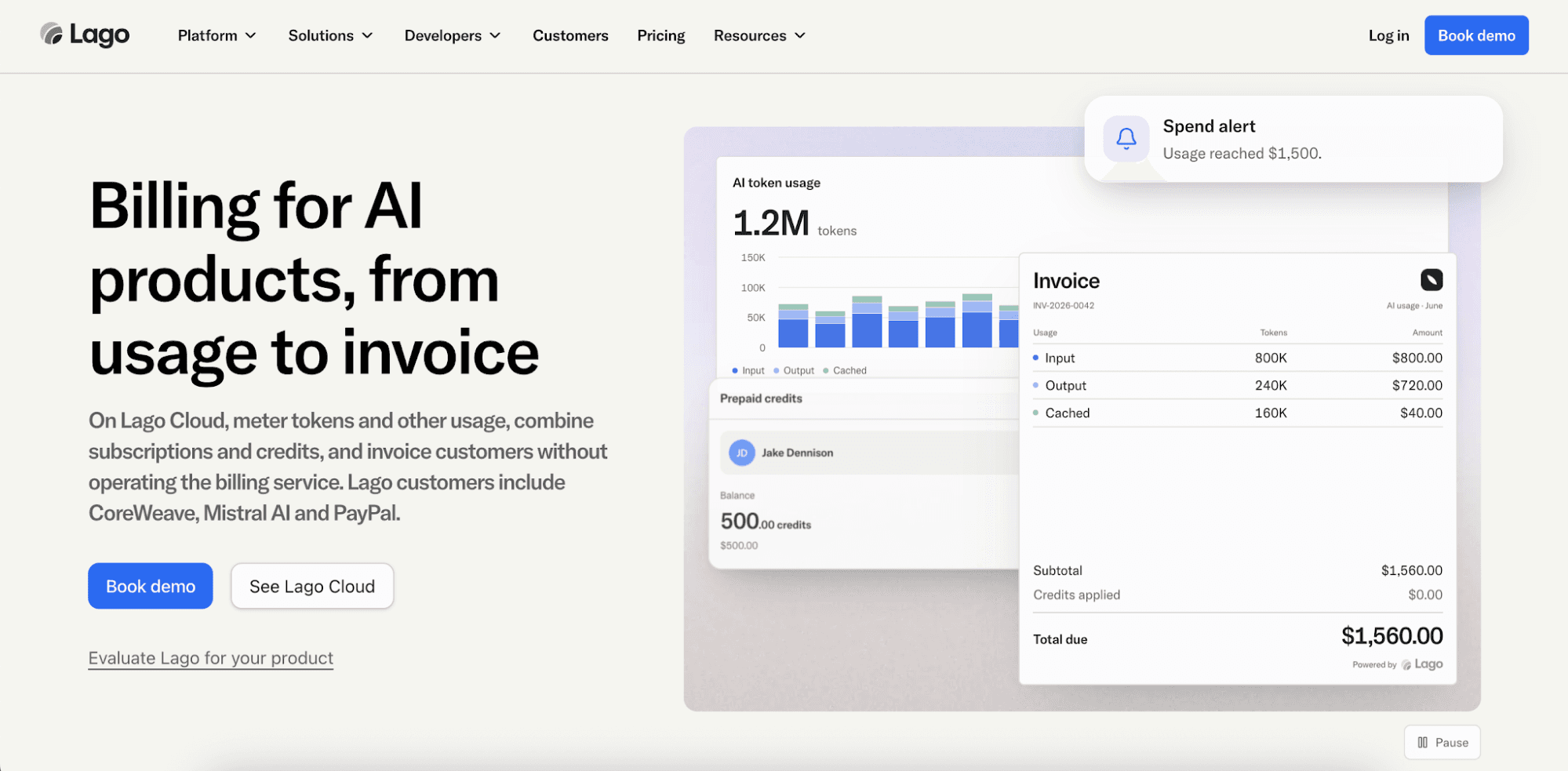
Source: getLago.com
Lago combines billing, metering, subscription management, invoicing, and revenue recognition in one platform.
Lago provides a managed billing service over the cloud, while the self-hosting option gives companies more control over deployment and revenue data.
Teams can implement subscription-based pricing, usage-based pricing, prepaid credits, and hybrid plans. Lago automatically connects usage data and commercial terms to invoices.
Speaking of invoices, Lago calculates customer charges based on billable metrics and pricing rules. It then generates itemized invoices with the right taxes and connects with payment providers to collect cash.
The platform even has an AI dunning agent that helps recover failed payments through automated retries and personalized reminders.
Pros
Flexible deployment and open-source code that allows teams to run Lago on their own infrastructure
One app for all pricing strategies, from seat-based fees to hybrid pricing
Automated invoicing and tax management to reduce manual errors
AI-powered assistants to handle basic billing tasks
Built-in financial reports create one set of books for revenue recognition
Cons
Software entitlements only send alerts or webhooks instead of runtime enforcement inside the product
Customer-facing systems need to be built from scratch
Pricing Plans
Lago's self-hosted version is free to use. Companies can self-host the platform under the AGPLv3 license.
Lago Premium gives teams full transparency, control, and flexibility over hybrid pricing models. However, pricing details are hidden, making it difficult to compare costs.
7. Alguna
Source: Alguna.com
Alguna hybrid billing software for AI, SaaS, and FinTech companies. Its monetization engine supports self-serve subscription plans and custom enterprise contracts in one platform.
Teams can test different pricing models, including subscriptions, usage-based pricing, and hybrid plans. They can also add contract ramps, volume discounts, platform fees, and minimum spending commitments.
Alguna's visual interface lets teams attach usage components to subscription plans, configure overage rules, and update pricing without writing billing logic inside the application.
The platform tracks billable activity in real time, from API calls to feature access. It applies pricing rules to calculate charges, discounts, and overages, then generates invoices automatically.
Plus, Alguna includes embedded contract management tools and e-signature. Customers can review quotes, accept terms, and sign contracts without leaving the platform.
Pros
Configurable pricing, packaging, and custom deals
Real-time metering and invoice calculations
No-code billing automations that work with existing finance, engineering, and sales platforms
Built-in contract management and CPQ software
Centralized accounts receivable dashboard and automated payment collection
Cons
Lack of credit wallets and ledgers for credit-based pricing
Missing entitlements service
Pricing Plans
Alguna offers three pricing tiers that cater to different customer segments:
Starter (Free): Suits small teams that manage only up to 10 invoices per month. Other features include fixed subscription plans, usage-based metering, self-serve customer portal, Stripe payments, and revenue reporting.
Growth ($699/month): Designed for growing companies with $1M annual recurring revenue that need up to 50 contracts, CPQ software, contract management, mid-cycle changes, advanced integrations, and Slack support.
Enterprise Scale (Custom pricing): Large businesses choose this plan to access custom Salesforce and HubSpot workflows, multi-entity billing, automated revenue recognition, advanced analytics, custom dashboards, priority support, white-glove migration, and engineering-led onboarding.
Key Features to Look for in Hybrid Billing Systems
Here's what you need to consider when evaluating different hybrid billing systems:
Flexible Pricing and Packaging
Choose hybrid billing software that combines fixed subscriptions, per-seat fees, prepaid credits, and metered charges in one plan.
Check whether you can set different prices for each feature, add-on, or usage metric without hardcoding pricing logic into the application.
You may also need customer-specific contracts, mid-cycle amendments, and future price changes.
Plan versioning is another must-have feature because it preserves existing customer terms when a new price list goes live. This lets you introduce updated offers without affecting legacy subscription plans.
Usage Metering and Rating
Hybrid pricing usually involves combining subscription fees with variable usage-based charges.
It's important to look for a billing system that can meter raw usage events and generate itemized invoices.
You should also evaluate how the software handles duplicate records, processes delayed events, or corrects usage data.
Rating rules should convert raw activity into billable units, apply included allowances, and calculate the correct price for each usage tier.
Entitlement Enforcement
Entitlements control which features customers can access based on their subscriptions, purchased credits, or usage allowances. It connects billing rules directly to product access.
Look for real-time entitlement checks that update when customers change plans, purchase additional credits, or reach usage limits.
The platform also needs to block further activity or allow continued usage based on the rules set by your team or your customers.
Usage Governance Controls
Usage governance helps software and AI companies control consumption and prevent surprise bills. This is particularly important when selling AI products because token usage and computing costs can spike without warning.
Look for self-serve controls, configurable limits, usage alerts, and spending forecasts based on current consumption.
Commercial teams or customers themselves should be able to set budgets per company, per seat, or per agent.
This gives both buyers and sellers confidence that usage will stay within budget and that customers will only be charged for what they expect.
Revenue Recognition Workflows
Hybrid pricing creates different revenue recognition requirements for subscription fees, prepaid credits, setup charges, and variable usage.
Your billing platform should help finance teams track when revenue is earned rather than simply when payments arrive.
Native revenue recognition tools can create revenue schedules and journal entries. These also support deferred revenue tracking, contract adjustments, and accounting reconciliation.
Check if the hybrid pricing software supports ASC 606 and IFRS 15 reporting requirements to maintain compliance.
Payment Gateway Connectors
Hybrid billing software should connect to payment solutions like Stripe, Adyen, and GoCardless.
Make sure it accepts different payment methods and multiple currencies for global billing. You should verify the platform's compliance with PCI DSS if you offer card payments.
Bonus features to look for include smart payment retries, automated dunning workflows, and fraud protection.
Schematic Can Model Hybrid Pricing and Enforce Entitlements at Runtime
Schematic provides the complete billing platform for software and AI companies selling to enterprises. It can support any pricing model, including hybrid plans, flat-fee subscriptions, usage-based pricing, and credit burndown.
Unlike most billing platforms, Schematic gives enterprise customers full visibility and control over their usage. Native credit wallets show exactly what they owe to prevent surprise bills. Configurable spending limits let them set thresholds per company, per seat, or per agent.
Schematic also stands out for its runtime entitlement engine. It can enforce limits and gate features from the same ledger that bills.
This ledger even stores pricing as data. That means a plan change becomes a config change instead of an engineering sprint.
The people closest to the customer relationship can configure billing models, set payment terms, create custom plans, and decide when plans activate.
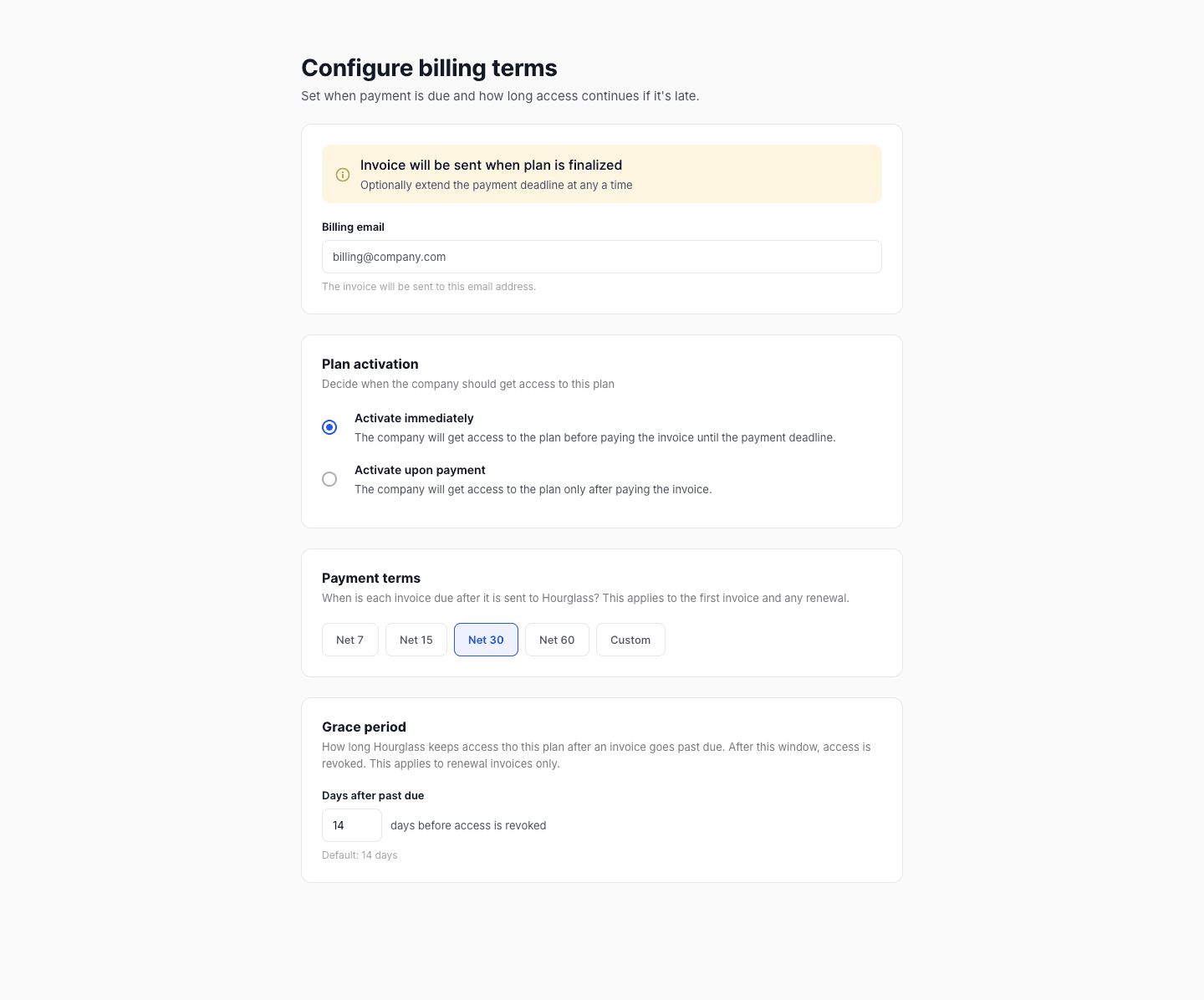
Zach Hawtof from Titanet shares, "Schematic lets me walk into a customer meeting and instantly grant them features or customize their plan in real time, which creates an amazing customer experience."
FAQs About Hybrid Billing Software
What is hybrid billing?
Hybrid billing uses two or more pricing models within a single customer plan. Businesses can charge fixed subscription fees alongside usage-based charges, seat-based pricing, or prepaid credits.
How does hybrid billing work?
Hybrid billing works by combining fixed fees with variable charges. The billing platform tracks customer usage, applies pricing rules, deducts credits, and calculates overages. It then generates an invoice that includes recurring fees and any additional charges.
What are the top hybrid billing platforms?
The best hybrid billing platforms include Schematic, Metronome, Orb, Zuora, Chargebee, Lago, and Alguna. Each offers different features for usage metering, credit management, invoicing, and pricing. The best choice depends on your billing needs and business model.
Why do SaaS and AI companies use hybrid billing?
SaaS and AI companies use hybrid billing to combine predictable subscription revenue with variable charges based on customer consumption. It helps businesses recover variable infrastructure costs, protect gross margins, and capture potential revenue upside when customer usage grows.