 Ryan Echternacht
Setting the right price for a SaaS product is difficult. Many teams rely on basic methods, like adding a markup to operational costs or copying competitors' pricing strategies.
That may work at first. But as the product matures and the customer base grows, monetizing SaaS becomes more complex.
Pricing optimization tools help you understand what customers are willing to pay, which plans drive the most revenue, and when pricing needs to increase or change. Some platforms also let you test different pricing models and review performance to make data-driven decisions.
This article lists the top six pricing optimization tools designed to help SaaS teams improve pricing and maximize revenue.
TL;DR
Here are the best pricing optimization tools for SaaS companies:
- Metronome
- Orb
- Conga
- Zuora
- ChartMogul
Top 6 Pricing Optimization Tools in 2026
These six pricing tools provide the necessary features to optimize SaaS pricing strategies.
1. Schematic + Stripe
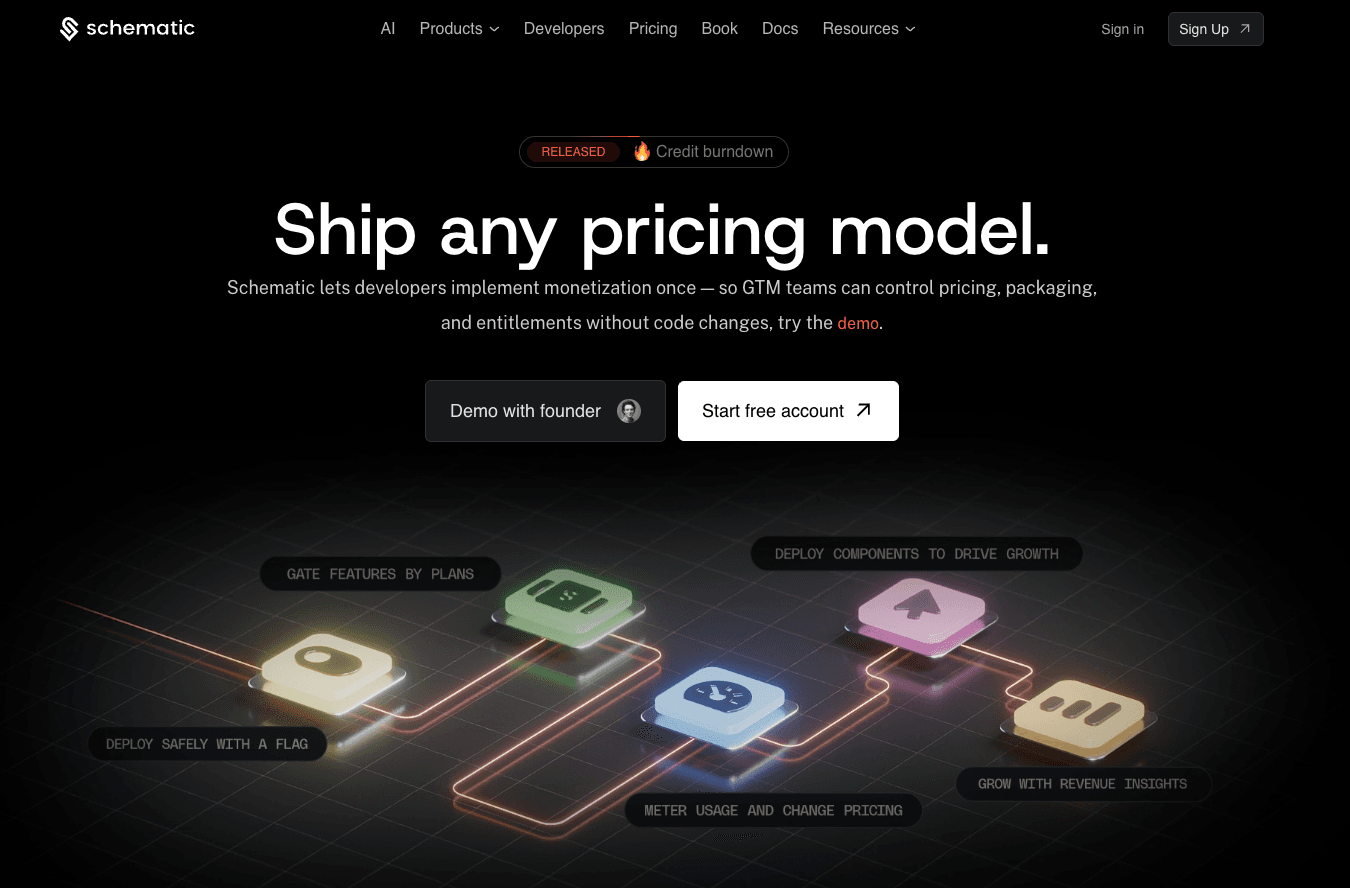
Schematic is the monetization operating system that helps modern SaaS companies continuously iterate and optimize their pricing strategies.
Pricing teams can control plans, software entitlements, trials, credits, add-ons, and exceptions from a centralized layer.
Schematic decouples pricing logic from the application. This makes the platform useful for SaaS businesses that want to ship new pricing models and pricing rules faster.
You can customize what each plan includes, meter usage, set product limits, enable overage pricing, or enforce paywalls without code changes.
Schematic also provides revenue insights that reveal upgrade opportunities and churn risks. Learn how customers use the product, which accounts are overusing or underusing, and what product features drive value.
The platform is built on Stripe, so SaaS companies can keep Stripe as the billing infrastructure. Schematic turns Stripe billing state into application behavior, enforces in-product access, and manages customer lifecycles.
2. Metronome
Source: Metronome.com
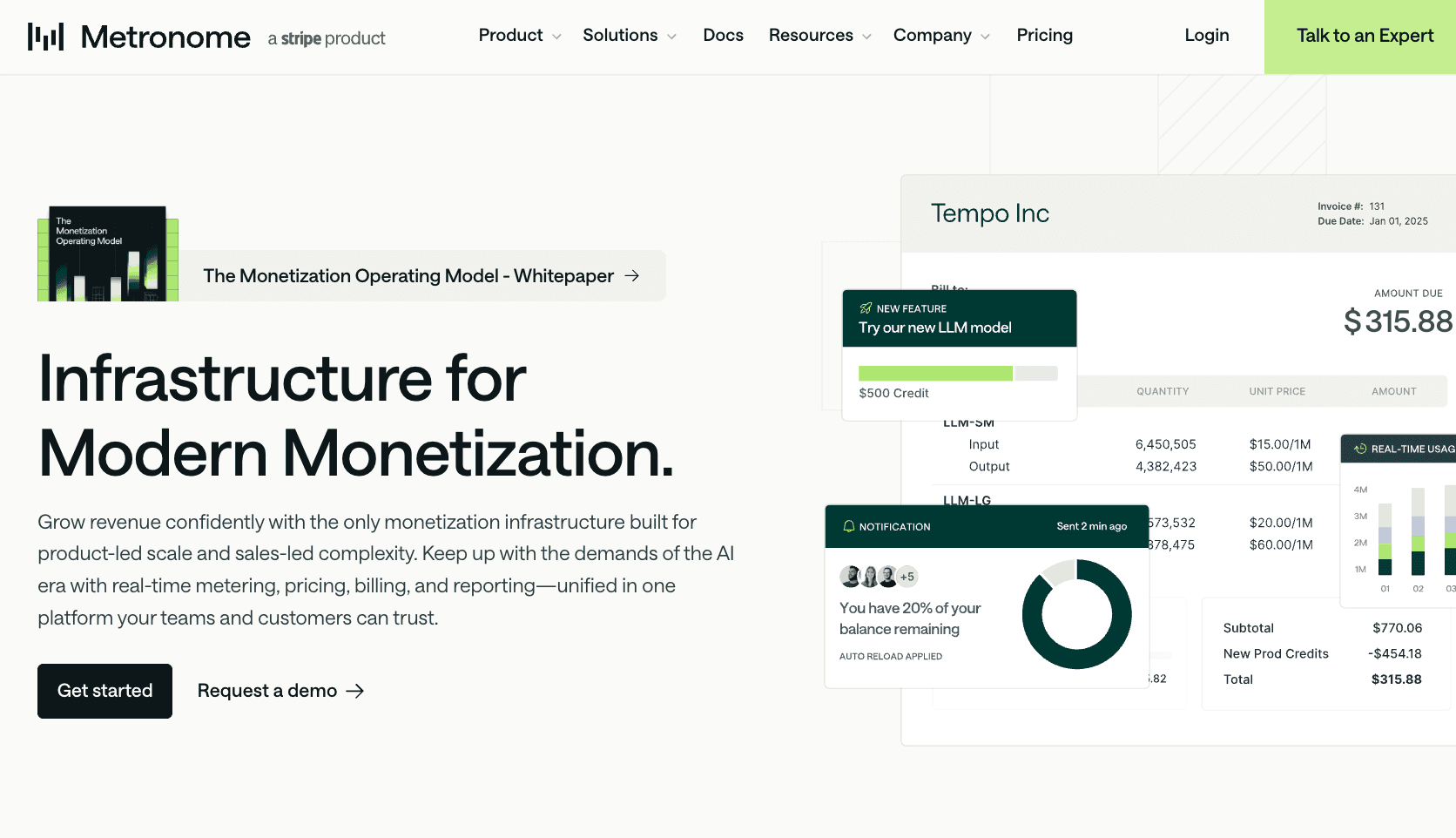
Metronome provides a flexible monetization infrastructure for SaaS and AI businesses. Product and go-to-market (GTM) teams can quickly ship pricing, run experiments, and roll out changes without making billing a blocker.
The tool acts as a shared source of truth for pricing models across product-led growth, sales-led motions, marketplaces, and other GTM strategies.
Metronome includes usage metering, rating, invoicing, and customer spend controls. These help align pricing with how customers use the product and the value they receive.
Metronome also provides real-time data on usage and revenue to support better-informed pricing decisions. Teams can monitor business performance, track key financial metrics, and explore customer-level details from in-app dashboards.
3. Orb
Source: withOrb.com
Orb helps SaaS companies manage usage-based billing and pricing changes from one system.
The platform gives teams the right tools to simulate, test, and optimize pricing before they roll out changes. This makes it easier to compare pricing models, review revenue impact, and make pricing updates backed by market data.
Orb can also tailor pricing to individual customers by considering user expectations and account-sensitive relationships.
Built-in simulations help teams ship new pricing with lower risks. Orb uses revenue data to find the right pricing model for a new product and improve forecasting accuracy.
Orb even deploys pricing changes to customer-facing systems, such as cost calculators, pricing pages, and checkout flows. Customers receive up-to-date information, which can boost loyalty and prevent churn.
4. Conga
Source: Conga.com
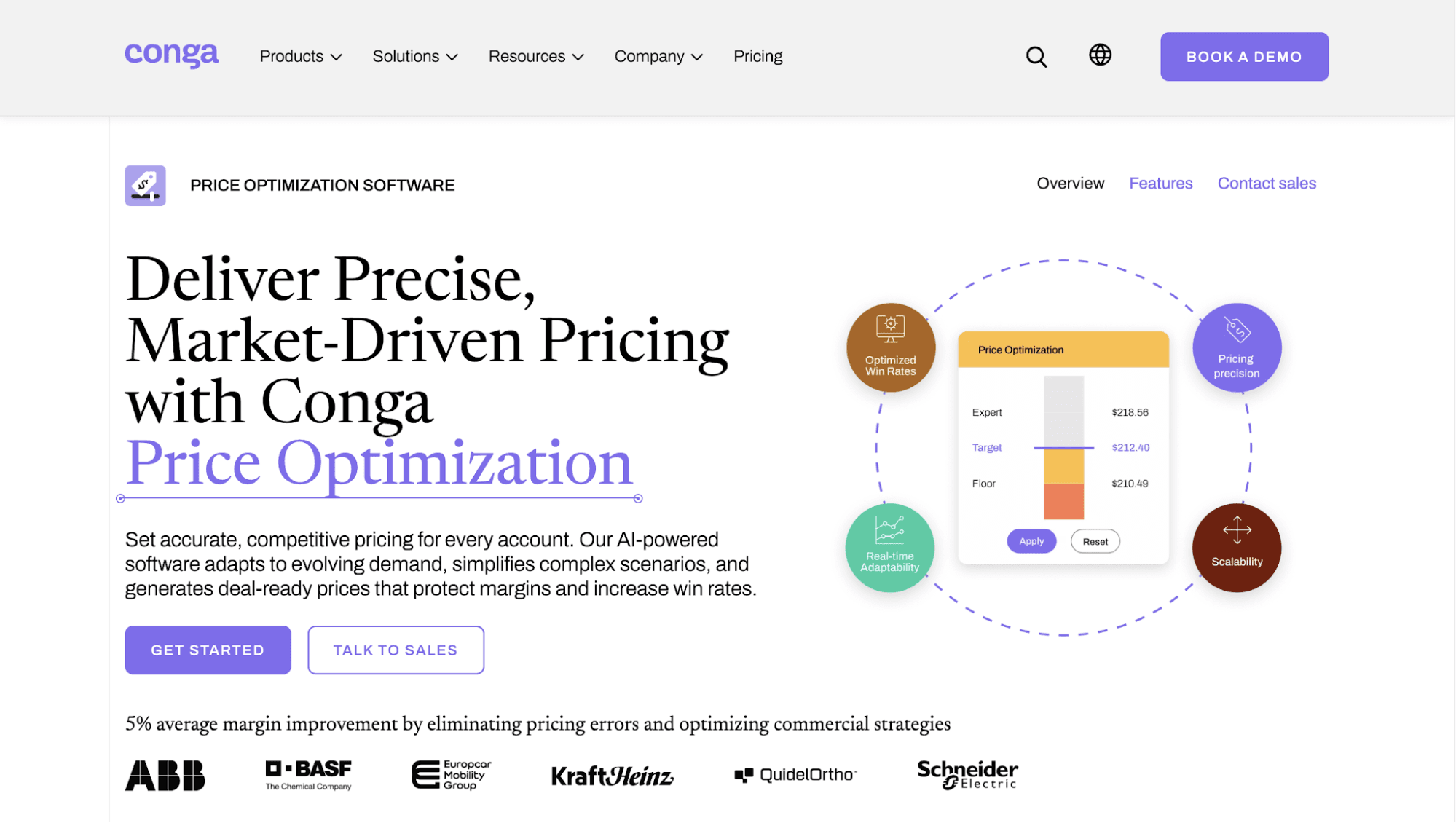
Conga offers an AI-powered price optimization software solution for companies with complex pricing needs. It helps teams set optimal price points to protect margins and increase win rates.
The pricing software uses artificial intelligence, dynamic pricing strategies, and pricing analytics to support better-informed pricing decisions.
Conga can also optimize deals and quotes to reflect broader business goals. It gives sales teams account-specific price guidance, win-rate insights, and price elasticity modeling.
Plus, Conga adjusts prices automatically based on market trends, customer behavior, demand shifts, competition, and seasonality. It can drive growth and prevent margin leakage.
5. Zuora
Source: Zuora.com
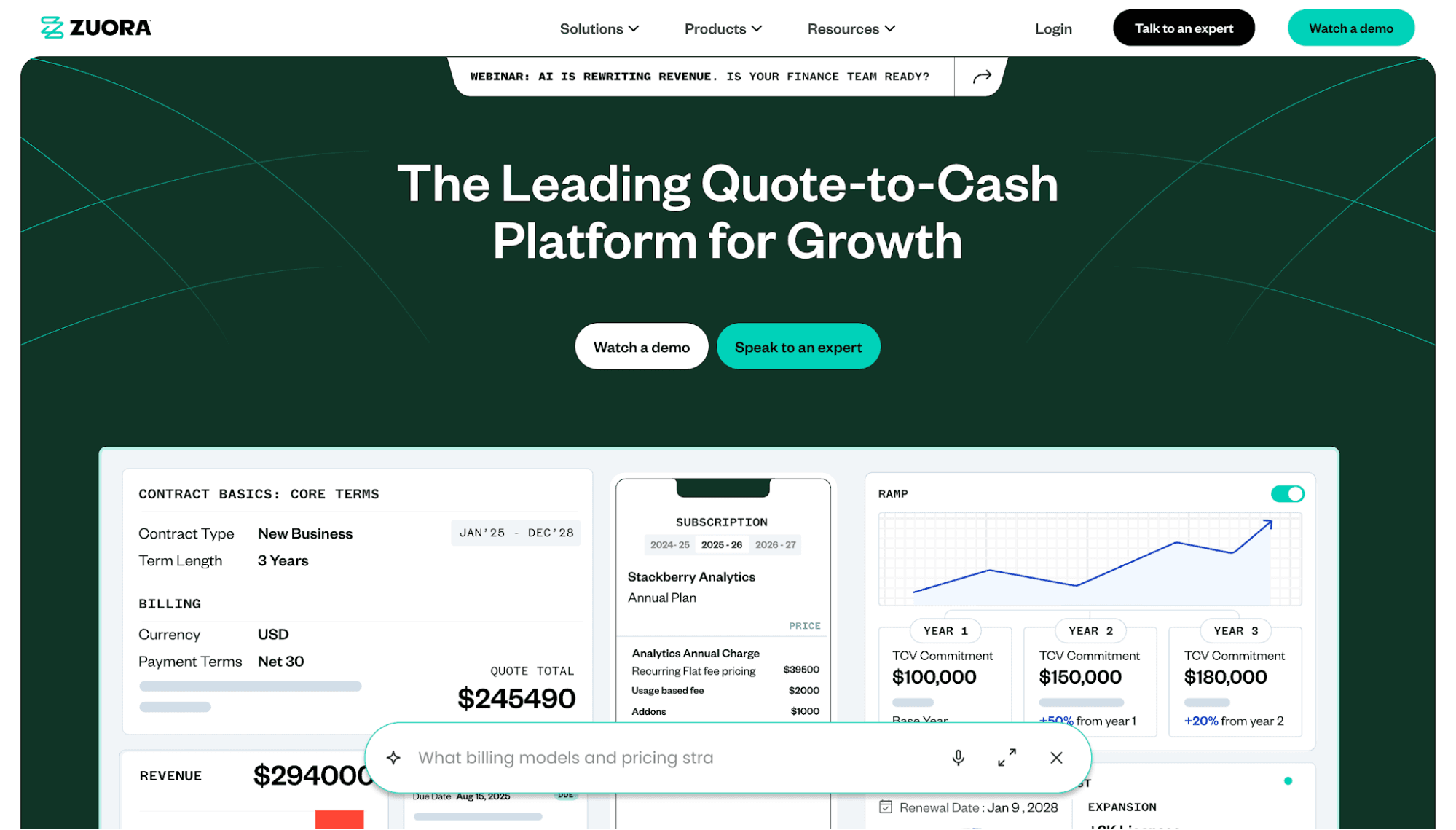
Zuora is a recurring billing platform that helps SaaS companies optimize pricing through continuous model and packaging iteration.
Zuora supports one-time charges, subscriptions, consumption-based billing, and hybrid monetization. Teams can build and deploy tiered, pay-as-you-go, overage, prepaid credits, and other pricing models.
Its intelligent pricing engine can manage pricing rules, discounts, bundles, entitlements, and global price lists in one place. This makes it easier to adjust plans as customer needs change.
Zuora also delivers pricing automation through billing, usage rating, invoicing, revenue recognition, and subscription changes. This can reduce manual work and streamline the pricing process.
6. ChartMogul
Source: ChartMogul.com
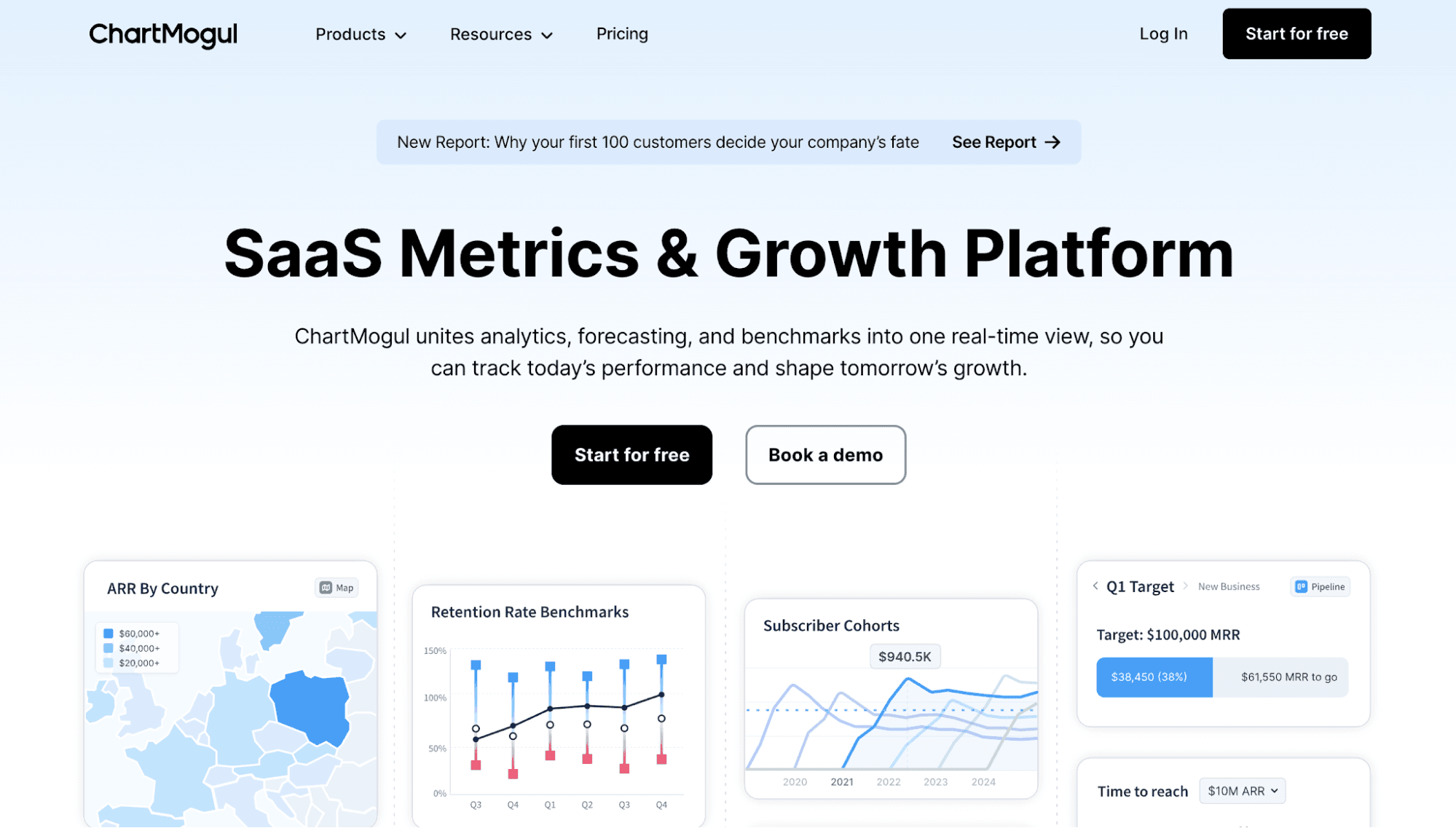
ChartMogul supports pricing optimization through predictive analytics, revenue forecasting, and competitor benchmarking.
The platform can track recurring revenue, churn rate, customer lifetime value, net cash flow, average revenue per account, and more. These SaaS metrics help teams see how pricing affects growth, retention, and expansion.
ChartMogul also brings together lead, trial, opportunity, and subscription data in one place. It provides a holistic view of historical data and every customer interaction.
Intuitive analytics can uncover insights that empower businesses to make more informed pricing decisions.
Plus, ChartMogul offers seamless integrations with modern SaaS stacks. It can connect to most software, including usage billing platforms, data warehouses, and customer relationship management (CRM) tools.
Benefits of Pricing Optimization Software
Pricing optimization tools help SaaS teams price with more clarity, speed, and control. Let's break down the benefits below:
Increase Revenue and Profit Margins
Pricing optimization software helps you find where pricing does not match product value.
An account may have users who get high value from a plan but pay too little. It may also have plans that include too much at a low price.
Pricing solutions can show these gaps by tracking usage, upgrades, downgrades, and revenue by segment.
This helps you adjust SaaS pricing and packaging with confidence. You can raise prices for high-value plans, use paywalls to drive upgrades, or move some features into higher plans.
The result is better revenue growth without necessarily adding more customers. You can also protect margins by tying prices more closely to product value, usage, and costs.
Make Smarter Pricing Decisions
Many SaaS teams make pricing decisions based on opinions, pressure from sales teams, or competitive data.
Pricing optimization tools give you better insights before you apply pricing changes. These platforms surface pricing data, customer usage, plan performance, churn, expansion, and subscription history. They help you see what works and what needs to change.
For example, you may find that one plan has high sign-ups but low retention. Another plan may have fewer customers but stronger expansion. That insight can shape better pricing and packaging decisions.
Some pricing tools also help you test different pricing strategies before a full rollout. You can model pricing changes, review risks, and predict impact on revenue.
Respond Faster to Market Changes
Pricing optimization tools help you react to current market dynamics faster.
Instead of manually reviewing data across different tools, you can immediately see signals in usage, revenue, churn, and other metrics in one place.
Real-time insights are especially useful if you have usage-based pricing, hybrid models, or multi-product offerings. Pricing strategies that worked six months ago may no longer fit your current customer base or product.
With the right tool, you can quickly create new tiers, adjust limits, update packages, and implement pricing actions. Pricing stays aligned with customers' needs and the perceived value of your product.
Gain a Competitive Advantage
Pricing optimization software uses competitor price tracking to see how the local competition packages plans, sets limits, and charges for add-ons. But the real value comes from backing up those competitor moves with customer and revenue insights.
You can use those insights to find where you can charge more and where a lower entry price may help win more users.
Pricing optimization tools are valuable in competitive environments where buyers compare plans closely. Better pricing can help you maintain a competitive edge, protect market share, and improve win rates.
Improve Customer Segmentation
Not every SaaS customer needs the same retail pricing, plan, or package.
Pricing optimization tools group customers by traits, like company size, usage, feature needs, contract value, or growth stage. This makes it easier to see which customer segments bring the most revenue and which ones may need a different offer.
For example, a startup may need a simple entry-level tier. Meanwhile, a large account may require custom plans, more seats, and stronger admin controls.
Effective customer segmentation helps you create plans that match actual consumer needs. It can also improve upsells, reduce plan mismatch, and make pricing feel fairer.
Common Pricing Strategies Supported by Pricing Optimization Tools
Most pricing tools help SaaS businesses optimize pricing strategies and stay competitive as customer needs change. Below are the key approaches that the platform can support.
Dynamic Pricing
Dynamic pricing adjusts prices depending on usage, demand, customer type, contract size, or product costs.
For SaaS companies, this can work well when customers receive value at different levels. An AI-powered software, developer tool, or data platform may charge based on AI credits, seats, events, requests, storage, or compute use.
Pricing optimization tools help teams set rules for these changes. For example, a company can raise prices after a usage limit, offer volume discounts, or create add-on charges when a customer needs more capacity.
Dynamic pricing software is also useful for testing changes before launch. This can reduce risk and help customers understand why pricing changes over time.
Value-Based Pricing
Value-based pricing sets prices based on the value customers get from the product, not just the cost to build it.
This strategy fits many SaaS companies because customers often buy software to save time, reduce manual work, increase revenue, or lower risk.
Pricing optimization software can find which features, limits, and outcomes matter the most to each customer segment.
For example, enterprise customers may place a higher value on compliance support, advanced security features, and role-based access control than smaller teams.
Cost-Plus Pricing
Cost-plus pricing adds a markup to the total costs of delivering a software product. These may include cloud infrastructure fees, AI model costs, support costs, payment fees, and data storage.
According to Simon-Kucher's Global Pricing Study, 16% of companies used price adjustments to offset cost increases. This shows that cost-plus pricing still makes sense for SaaS teams with rising operational costs.
Pricing optimization tools can track cost changes and suggest when pricing needs to be adjusted to protect margins. They are important for SaaS and AI companies with usage-based costs that increase as customers use more of the product.
Competitive Pricing
Competitive pricing uses competitor prices as the primary input when setting price points. It enables SaaS companies to understand how buyers compare plans, limits, add-ons, and contract terms.
Pricing optimization software can collect competitor data, suggest a baseline, and help teams identify gaps in their own pricing model.
Penetration Pricing
Penetration pricing uses a lower entry price to win new users, grow adoption, or enter a crowded market.
This pricing strategy can work for SaaS companies with product-led growth, freemium plans, or low-cost starter plans. It gives users a simple way to try the product before moving into higher plans.
Pricing optimization tools effectively track whether this strategy leads to long-term revenue. Setting a low price only works if users convert, upgrade, or expand over time.
The platform can review trial-to-paid rates, plan upgrades, usage growth, and churn by segment. If the entry plan brings poor-fit users, you may need to adjust limits, feature bundles, or upgrade paths.
Bundle Pricing
Bundle pricing groups products, features, seats, credits, and add-ons into one plan. It can make pricing easier to understand.
It can also help SaaS businesses sell more value through higher-tier plans. A bundle may include core features, advanced controls, support, analytics, or usage credits.
By using pricing optimization software, teams can see which bundles drive upgrades and which features customers use the most. They can use that data to improve tiered pricing and avoid giving away high-value features too early.
Bundle pricing works across many industries, but SaaS teams need to keep plans clear. Offering too many bundles can overwhelm buyers and hurt conversions.
Continuously Iterate and Optimize SaaS Pricing With Schematic
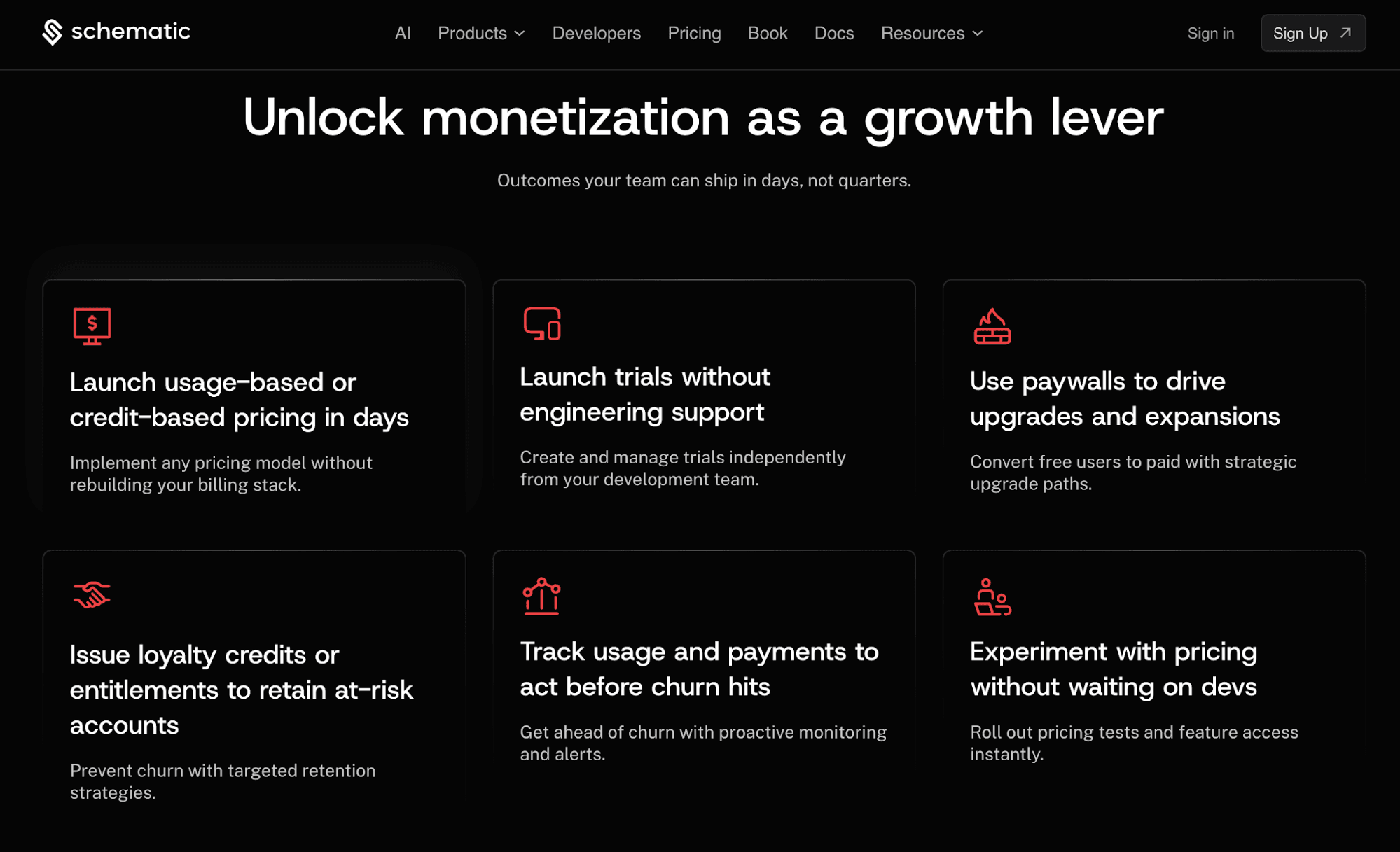
Schematic helps SaaS and AI companies launch any pricing model and iterate on monetization without code changes.
Adjust plans, SaaS entitlements, limits, trials, credits, add-ons, and custom rules from a centralized product catalog.
Engineering stops writing and maintaining pricing logic inside the application. Business teams get a control plane they can use to optimize pricing, gate features, and drive growth.
Schematic syncs bi-directionally with Stripe. The platform makes sure that access in the product lines up with Stripe billing and subscription status.
Schematic can also generate revenue insights to know who's overusing, underpaying, and ready to expand. These insights help teams adjust packaging, prevent churn, and improve pricing consistency.
FAQs About Pricing Optimization Tools
What are pricing optimization tools?
Pricing optimization tools help businesses evaluate, test, and improve their pricing strategies. SaaS companies often use them to understand how pricing affects revenue, customer retention, upgrades, and overall product adoption.
Who can benefit from pricing optimization software?
SaaS founders, product teams, sales teams, and pricing managers can benefit from pricing optimization software. They use such platforms to make pricing decisions based on actual data.
What is the difference between price optimization and price management?
Price optimization focuses on finding the best prices based on value, demand, usage, and revenue goals. Price management helps maintain prices across plans, channels, quotes, contracts, and billing systems after those pricing decisions are made.