 Ryan Echternacht
Dynamic pricing software manages how product prices adjust based on usage, credits, plan limits, or contract terms. SaaS and artificial intelligence (AI) companies rely on these systems when pricing moves beyond simple subscriptions.
Growth introduces new pricing complexity. Usage-based billing, credit systems, and enterprise agreements often require pricing rules to connect product behavior with billing platforms.
Without the right infrastructure, pricing logic spreads through application code and internal tools, and requires frequent manual adjustments in billing systems.
Dynamic pricing platforms centralize pricing rules, usage tracking, and billing integrations.
This article reviews six dynamic pricing tools used by SaaS companies to manage plans and entitlements.
TL;DR
Here are the best dynamic pricing software tools for SaaS in 2026:
- Schematic
- Stripe Billing
- Orb
- Lago
- Chargebee
- Stigg
What Is Dynamic Pricing in SaaS?
Dynamic pricing in SaaS refers to pricing models where product costs adjust based on usage, plan limits, credits, or contract terms. Instead of fixed subscription tiers, pricing rules respond to product activity and customer consumption.
A dynamic pricing solution connects product usage data, pricing logic, and billing systems so that pricing can adapt automatically as usage changes.
SaaS teams use these systems to manage hybrid monetization models that combine subscriptions, usage-based billing, and credit systems.
Modern pricing infrastructure acts as a complete solution for defining pricing rules, enforcing usage limits, and synchronizing product access with billing systems.
For companies operating usage-based products or AI workloads, dynamic pricing becomes a powerful tool for aligning revenue with product value.
How Dynamic Pricing Works in Modern SaaS Products
Dynamic pricing systems operate inside the product layer, where pricing decisions occur in real time. Product events such as API calls, storage usage, or AI tokens generate usage data that feeds pricing rules.
Pricing systems perform real-time data analysis on product usage to calculate consumption and update billing metrics. These checks allow pricing rules to run in a real-time environment where limits, credits, and entitlements update immediately.
Pricing structures can still be adjusted through configuration interfaces rather than engineering changes, especially during high-demand periods when product usage spikes.
This reduces reliance on manual input inside billing systems and allows product teams to fine-tune pricing rules when product usage or infrastructure costs change.
Some teams also review external signals, such as competitor rates or infrastructure costs, when adjusting pricing structures for new plans or contract terms.
Top 6 Dynamic Pricing Software for SaaS
Modern SaaS pricing requires choosing the right tool to manage usage metering, pricing logic, entitlements, and billing integrations.
These six tools provide the essential features needed to support dynamic pricing strategies.
1. Schematic + Stripe
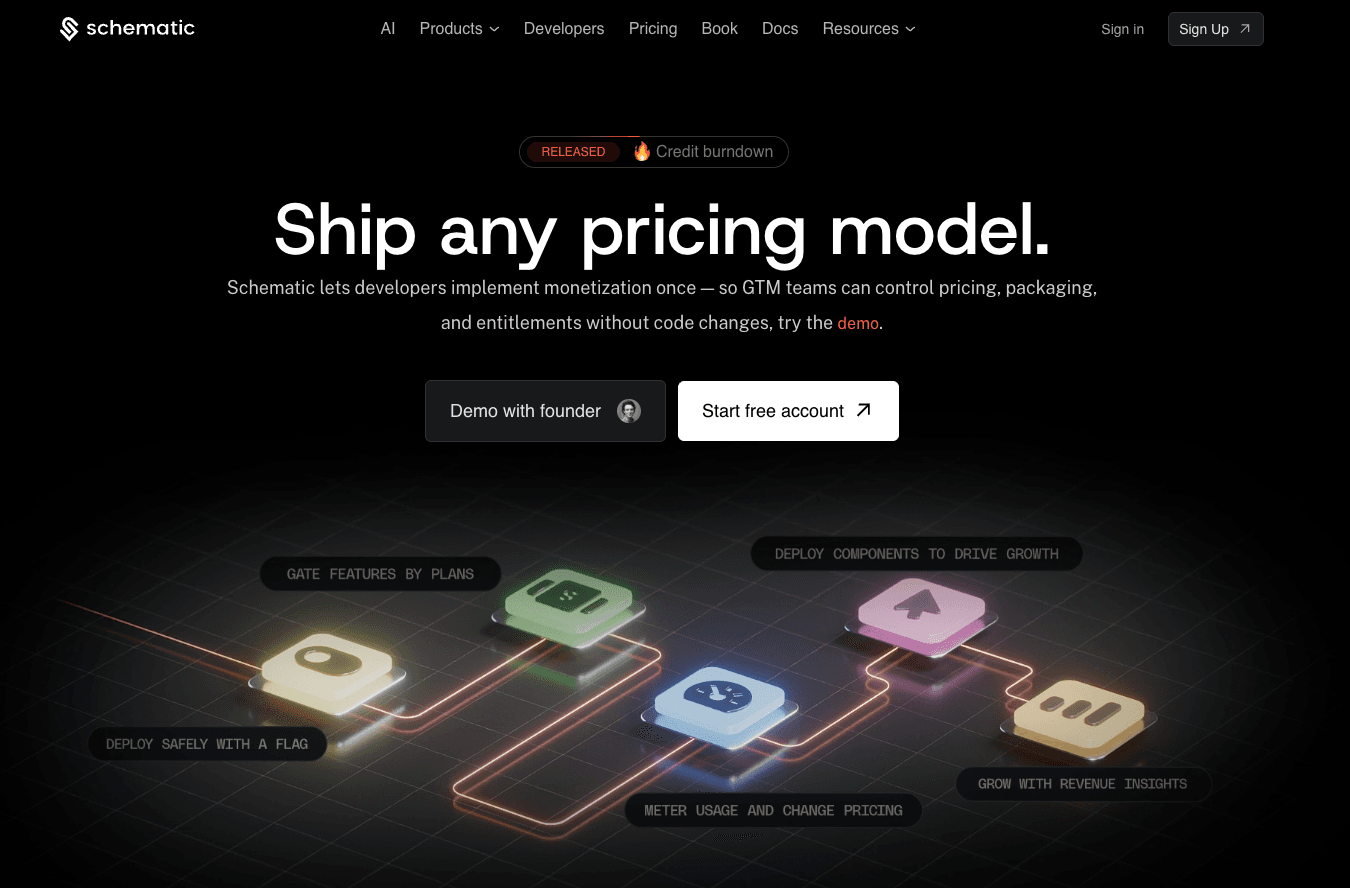
Schematic provides monetization infrastructure for SaaS and AI companies with hybrid pricing models. Built on Stripe, Schematic acts as the system of record for plans, entitlements, limits, credits, add-ons, and pricing rules while Stripe handles billing and payments.
Engineering teams connect Schematic to product events so usage, pricing logic, and feature access stay aligned. Product and GTM teams can then update plans, limits, trials, and pricing rules without code changes.
Dynamic pricing requires more than billing. Product actions must trigger usage events, limits must be enforced at runtime, and customer access must reflect subscription state. Schematic handles that coordination in the product layer while staying synchronized with Stripe.
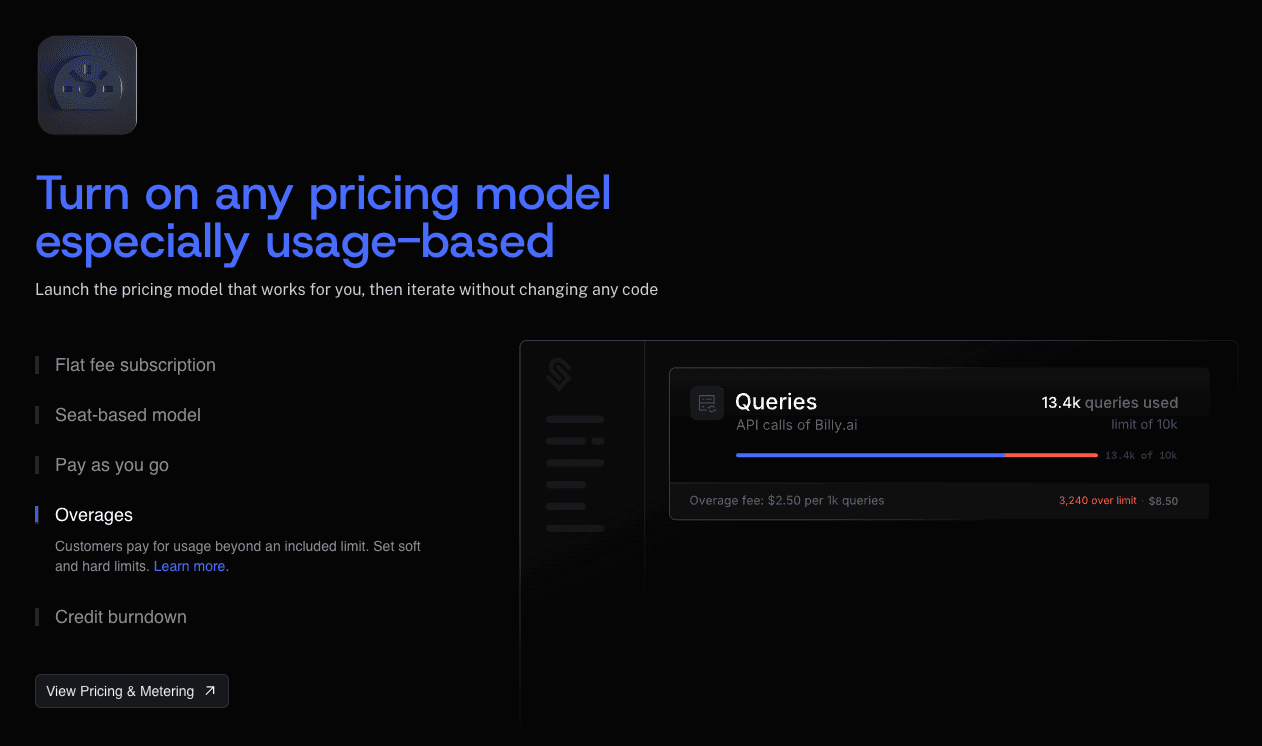
Teams use Schematic to launch and evolve pricing models such as seat-based pricing, usage-based billing, overages, pay-as-you-go, and credit systems. It also supports enterprise overrides, trials, and custom contract terms without rebuilding billing logic.
Because pricing rules run inside the product, teams can enforce limits, trigger paywalls, and meter usage in real time. This prevents revenue leakage when customers exceed plan limits while allowing pricing experiments without engineering overhead.
SaaS companies use Schematic when pricing moves beyond simple subscriptions and requires dynamic rules tied to product usage.
Key Features
- Metering and pricing infrastructure – Track product events such as API calls, tokens, or compute usage that drive pricing decisions
- Plans and entitlements – Define plans, limits, feature access, credits, add-ons, and usage allowances in one system of record
- Runtime access enforcement – Enforce product access and limits based on subscription and usage state
- Stripe synchronization – Sync plans, subscriptions, and billing data with Stripe so billing and product access stay aligned
- Embedded billing components – Add pricing tables, upgrade flows, usage dashboards, and customer portals directly inside the product
2. Stripe Billing
Source: stripe.com
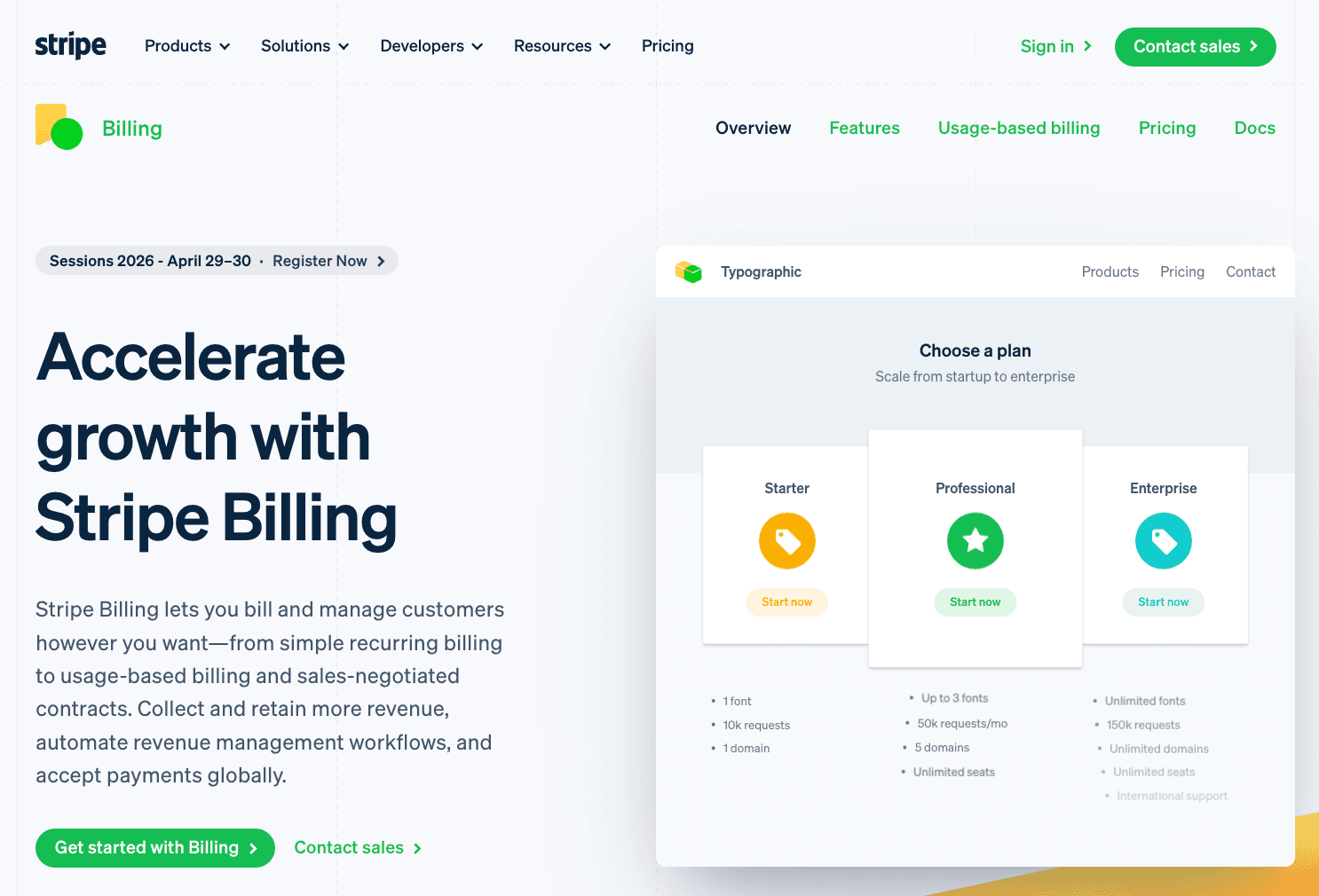
Stripe Billing is a subscription and recurring billing platform for SaaS companies that need to charge for flat-rate plans, seat-based pricing, usage-based billing, and sales-negotiated contracts.
It helps teams manage invoices, trials, prorations, customer self-service, and global payments in a single billing system.
For dynamic pricing workflows, Stripe supports usage meters, rate cards, tiered pricing, and flat-fee plus overage models. Teams can configure customizable pricing rules and manage subscriptions through a hosted customer portal.
Stripe functions primarily as the billing layer for revenue management, while other product-layer systems enforce entitlements and usage rules inside the application.
Key Features
- Subscription billing – Manage recurring plans, trials, coupons, prorations, and contract schedules
- Usage-based billing – Bill from tracked product usage with meters, tiers, and overages
- Customer portal – Let customers update payment methods, manage plans, and review invoices
- Global payments – Accept 100+ payment methods and 135+ currencies
- Revenue recovery – Use Smart Retries and recovery workflows for failed payments
3. Orb
Source: withorb.com
Orb is a usage-based billing platform designed for SaaS and AI companies that need to convert product usage into billable revenue.
Product events such as API calls or compute activity are sent to Orb, where the platform processes the data, applies pricing logic, and generates invoices based on consumption.
The platform focuses on metering infrastructure, billing automation, and finance workflows that connect product usage to contracts stored in CRM or finance systems, while integrating with other software solutions that manage pricing and monetization infrastructure.
Orb also supports pricing simulations that allow teams to test dynamic pricing changes before releasing them to customers. Teams analyze historical data, competitor pricing, and revenue trends to generate pricing recommendations and evaluate how pricing adjustments affect monetization and profit margins.
These capabilities support data-driven pricing decisions tied to consumption data, contract terms, and usage patterns.
Key Features
- Usage metering – Capture granular product events that feed usage-based billing models
- Billing engine – Process consumption data and generate invoices tied to pricing logic
- Price modeling – Configure pricing structures and simulate pricing scenarios before deployment
- Finance workflows – Connect usage data with contracts, invoicing, and revenue recognition systems
- Pricing simulations – Test price adjustments and forecast revenue impact before rollout
4. Lago
Source: getlago.com
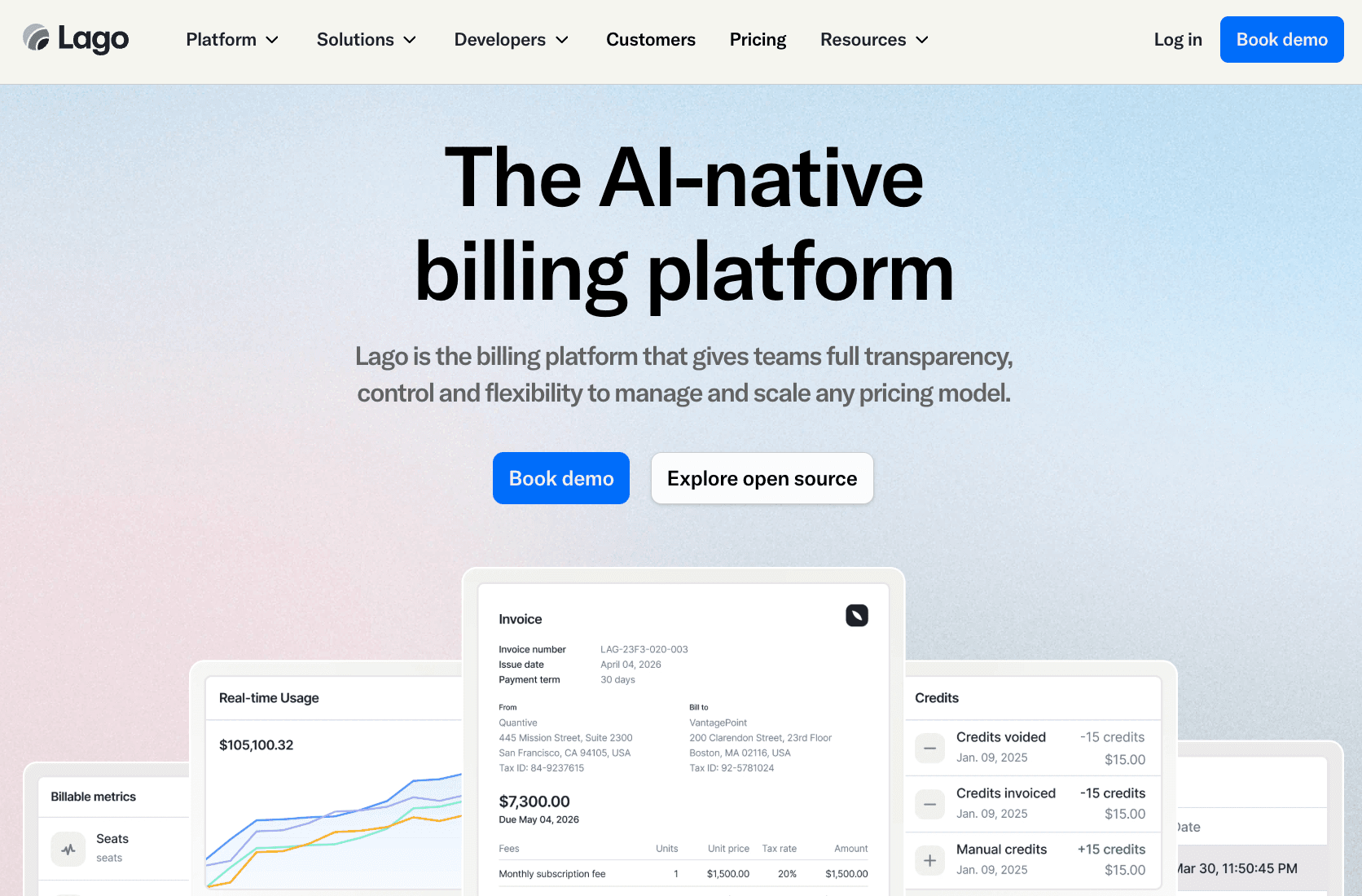
Lago is an open-source billing platform used by SaaS and AI companies running usage-based or hybrid pricing models. Engineering teams send product events such as API calls, compute usage, or token consumption to Lago, which converts those events into billable metrics.
Teams configure pricing structures, subscriptions, and billing business rules through APIs or a user-friendly interface that supports dynamic pricing models. Lago also offers strong integration capabilities with payment providers, CRMs, accounting tools, and data systems.
Product and finance teams use billing dashboards and analytics to monitor revenue trends and support data-driven decisions about pricing updates or packaging changes.
These insights help teams adjust monetization models when market changes affect customer activity or infrastructure costs.
Lago focuses primarily on metering, billing calculations, and invoice generation. Runtime enforcement of product limits typically happens in a separate product-layer system.
Key Features
- Usage metering – Capture usage events such as API calls, tokens, or compute usage
- Hybrid billing models – Combine subscriptions, usage-based pricing, and prepaid credits
- Entitlements management – Define feature access and limits through billing business rules
- Billing automation – Generate invoices and manage subscriptions from usage data
- Revenue analytics – Monitor billing metrics, performance analytics, and revenue trends
5. Chargebee
Source: chargebee.com
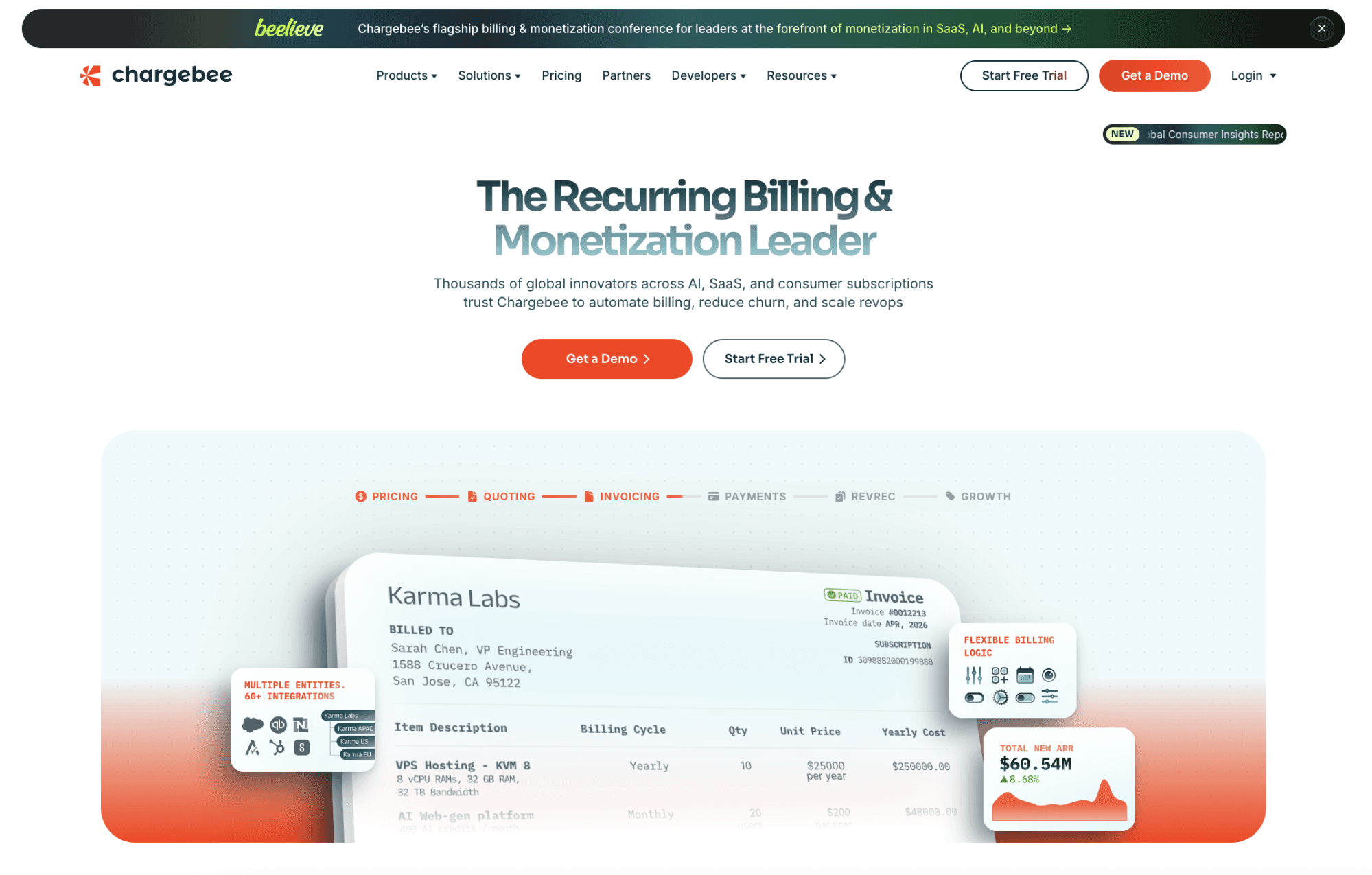
Chargebee is a subscription billing and revenue management platform used by SaaS companies running subscription, usage-based, or hybrid pricing models.
RevOps and finance teams manage pricing structures, add-ons, and contracts through a centralized product catalog. The platform manages invoicing, tax compliance, subscription lifecycles, and payment retries for recurring revenue businesses.
Chargebee also provides reporting dashboards that help teams monitor customer behavior, track market trends, and evaluate how pricing changes affect revenue potential in dynamic pricing environments.
These insights support data-driven decisions when teams experiment with packaging or respond to market demand shifts.
Chargebee focuses primarily on billing automation and financial workflows. Product applications typically enforce runtime limits and feature entitlements through a separate product-layer system.
Key Features
- Subscription management – Configure plans, add-ons, trials, and recurring billing cycles
- Usage-based billing – Track metered product usage and apply tiered pricing models
- CPQ tools – Generate custom quotes and contract terms for sales-led deals
- Revenue recognition – Automate ASC 606-compliant revenue reporting
- Billing automation – Handle invoicing, tax calculations, and payment retries
6. Stigg
Source: stigg.io
Stigg is a monetization infrastructure platform used by SaaS and AI companies to manage pricing models, packaging, and entitlements inside the product. Engineering teams integrate Stigg through APIs or SDKs to enforce feature access, usage limits, and credit balances in real time.
It serves as a central catalog for plans, pricing tiers, and packaging rules. Product teams configure hybrid monetization models with customization options that combine subscriptions, usage-based pricing, and credits.
Stigg focuses on runtime entitlement enforcement and pricing configuration. Teams use usage data and analytics to monitor customer behavior, evaluate market conditions, and support informed decisions about packaging or pricing updates.
These capabilities help companies maintain full control over feature access and monetization rules while adapting pricing structures when market changes affect product usage.
Key Features
- Entitlements management – Enforce feature access and usage limits tied to subscription plans
- Usage metering – Track API calls, tokens, and other consumption metrics
- Pricing catalog – Manage plans, tiers, add-ons, and hybrid pricing models
- Embedded UI components – Display pricing tables and upgrade flows in product interfaces
- Plan versioning – Launch and migrate pricing changes without product redeployments
Start Managing Dynamic Pricing With Schematic
Dynamic pricing becomes difficult when pricing rules, usage tracking, and billing logic live in separate systems. Billing platforms calculate charges. Product applications control access and usage. Pricing changes then require engineering work and manual coordination.
SaaS companies greatly benefit from infrastructure that connects pricing configuration, product behavior, and billing systems.
Schematic provides the product-layer system that keeps pricing rules, product usage, and billing aligned. You can define plans, entitlements, limits, credits, and add-ons in one system while Stripe manages billing and payments. Runtime checks enforce usage limits and access directly inside the product.
This architecture keeps pricing logic aligned with product behavior. Product, engineering, and RevOps teams can update plans, trials, limits, and pricing rules without rewriting application code.
FAQs About Best Dynamic Pricing Software
What features should dynamic pricing software include?
Dynamic pricing platforms typically include usage tracking, pricing rules, billing integrations, and analytics dashboards. Many platforms also include other features such as pricing simulations, contract management, and product usage reporting that help teams evaluate pricing changes before deploying them.
How do companies identify pricing trends or usage changes?
Dynamic pricing tools analyze product activity and historical usage data to detect trends. Teams can review usage history, revenue metrics, and customer booking patterns to understand how pricing models affect product adoption and expansion revenue.
Can dynamic pricing software become a game-changer for SaaS monetization?
Yes. Dynamic pricing infrastructure can be a game-changer for SaaS companies running usage-based or hybrid pricing models. Instead of hardcoding pricing logic into the product, teams can manage pricing rules, usage limits, and entitlements through a centralized system that stays aligned with billing workflows.
Does dynamic pricing software connect to checkout or billing systems?
Many dynamic pricing platforms integrate directly with billing systems, checkout flows, or internal monetization services. In some cases, pricing logic connects to infrastructure similar to a checkout flow or booking engine, where product usage triggers pricing rules and billing events in real time.