 Ryan Echternacht
An entitlement is the rule that defines what a customer can access and how much they can use based on their plan or contract. For example, a Pro plan might include 10 seats, 100,000 API calls per month, and access to advanced features. Those limits and feature rights are entitlements.
Most teams don’t lose control of entitlements all at once. It happens gradually as usage shifts mid-cycle, trials extend, and sales exceptions accumulate.
Over time, product behavior drifts away from pricing intent, and access decisions become harder to manage.
Entitlement management software closes that gap. It turns plans, limits, trials, credits, and usage into rules enforced directly inside the product, instead of relying on billing cycles or custom logic.
In this guide, we review the best entitlement management tools teams use in 2026 to control access, support hybrid pricing, and enforce entitlements at runtime without shipping new code.
TL;DR
These are the best entitlement management software options in 2026:
- Stigg
- Lago
- Chargebee
What Is Entitlement Management?
Entitlement management is a product-layer capability that decides what users can access at runtime. It governs features, usage limits, trials, credits, add-ons, and customer-specific terms based on plan state and real usage.
An entitlement system translates pricing and contracts into enforceable rules inside the product, not after a billing cycle closes. That logic connects limits, overrides, and exceptions to live behavior, even when you do not change your billing setup.
Entitlements are not the same as permissions.
User entitlements define what a customer or account can use based on commercial terms. User permissions and role-based access control define who can perform actions inside an application.
Permissions answer who. Entitlements answer what and how much.
Clear access control depends on accurate entitlement data and explicit entitlement logic. That separation lets you control access at runtime while allowing consistent enforcement and preventing unauthorized access without hardcoded rules.
4 Best Entitlement Management Software Options in 2026
The majority of entitlement problems don’t start in billing. They start when the product needs to decide, in real time, what a customer can use.
The tools below take different approaches to that decision:
1. Schematic + Stripe
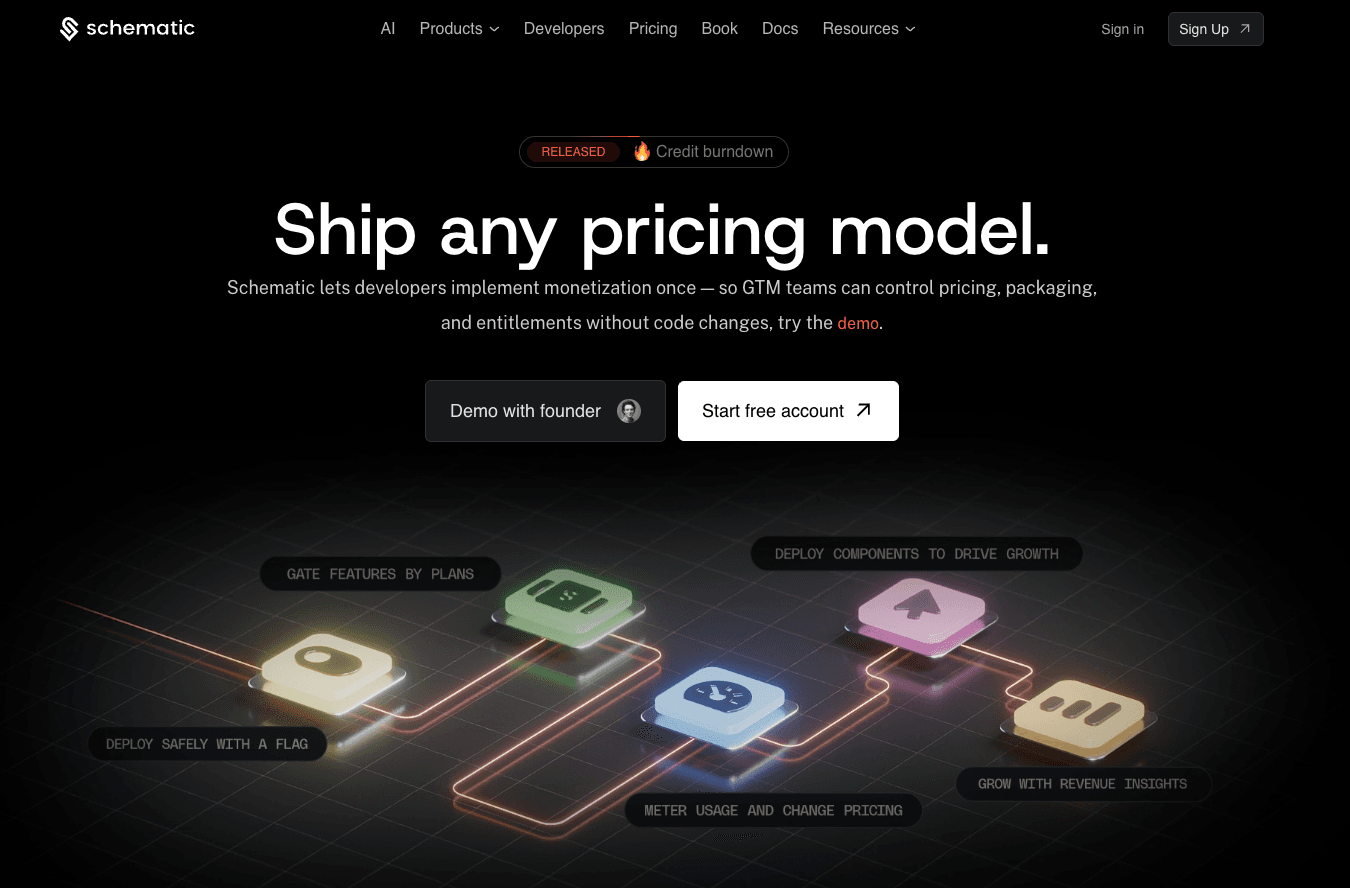
Schematic is an entitlement management platform built on Stripe. It acts as the system of record for plans and SaaS entitlements, then enforces those entitlements inside your product at runtime.
You model features, limits, trials, credits, add-ons, and exceptions in one catalog. Your app checks entitlements in real time, so access reflects plan state and current usage, not last night’s billing sync.
Schematic fits SaaS and AI companies with hybrid pricing and hybrid selling. Self-serve and sales-led deals run through the same entitlement logic. Sales can negotiate overrides and expirations without asking engineering to ship new code.
Stripe remains the billing layer, and Schematic controls what customers can use mid-cycle, including upgrades, downgrades, trials, and overrides.
The key features include:
- Central catalog for plans, add-ons, entitlements, limits, trials, credits, and exceptions
- Runtime entitlement checks that evaluate plan state plus usage in under 50ms
- Usage enforcement for seats, API calls, tokens, credits, events, and other meters
- Overrides and expirations for sales terms, trials, temporary access, and legacy plans
- Company and user scopes so entitlements work for accounts and individual users
- Audit trail and environments so you can test changes and track who changed what
- Bi-directional Stripe sync without webhook glue or billing rewrites
Teams use Schematic to run trials of advanced features, enforce hard and soft limits, and trigger upgrades when customers hit thresholds. RevOps can adjust packaging without deployments. Engineers implement entitlements once and stop maintaining one-off entitlement code.
2. Stigg
Source: stigg.io
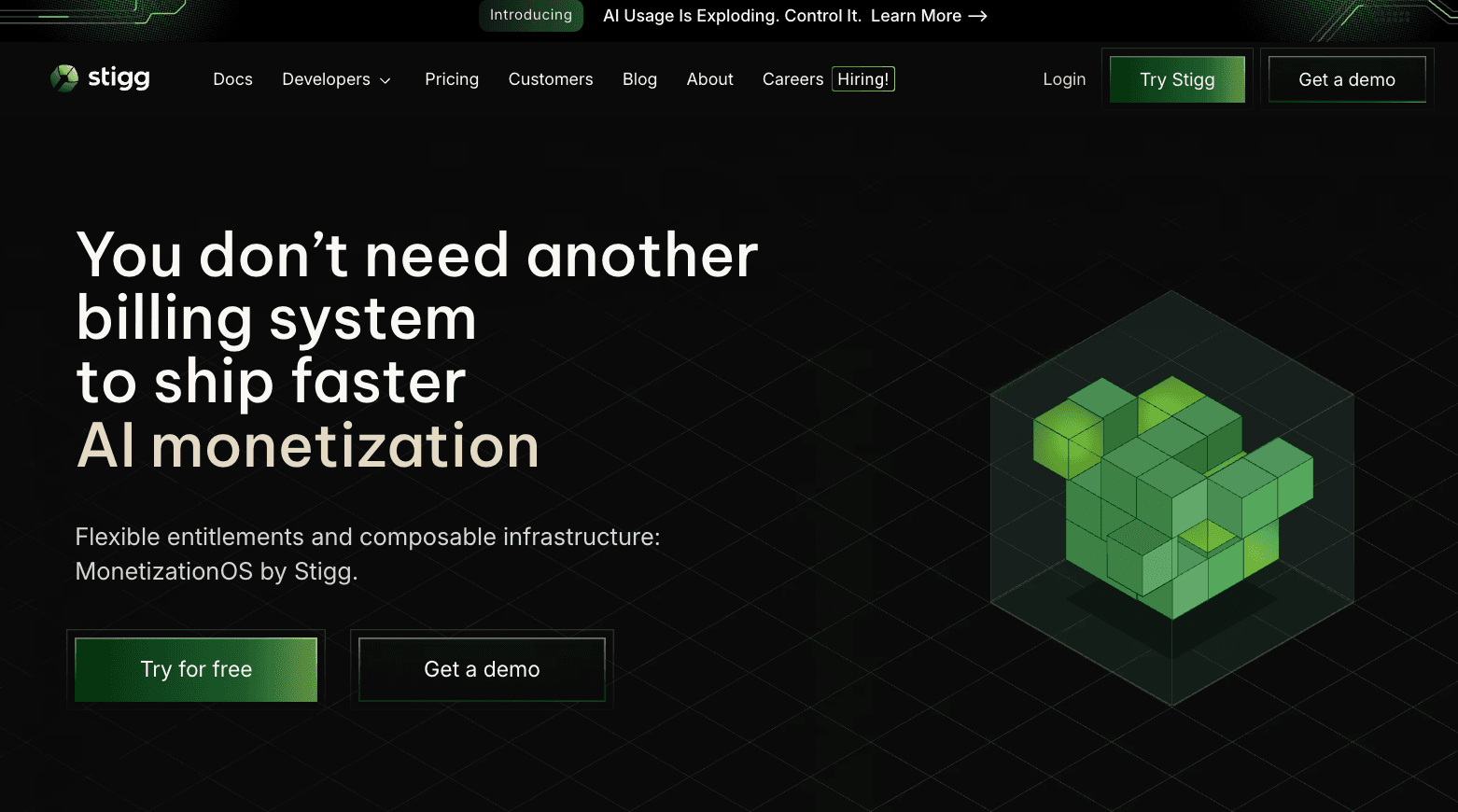
Stigg focuses on entitlements as key components of pricing and packaging.
You define access policies for features, limits, and credits, then enforce user access at runtime based on plan state and entitlement usage. This helps when usage changes mid-cycle, and you need the product to respond without new releases.
Stigg includes automation capabilities for plan versioning and migrations, so you can support existing customers while you change packaging.
It can integrate entitlement management with existing systems such as billing and CRM tools to keep pricing data and product enforcement aligned.
Teams often use it to standardize the entire process for entitlements, from changes that Product and RevOps submit requests for to runtime checks that gate access. It can also support audit needs tied to industry regulations.
3. Lago
Source: getlago.com
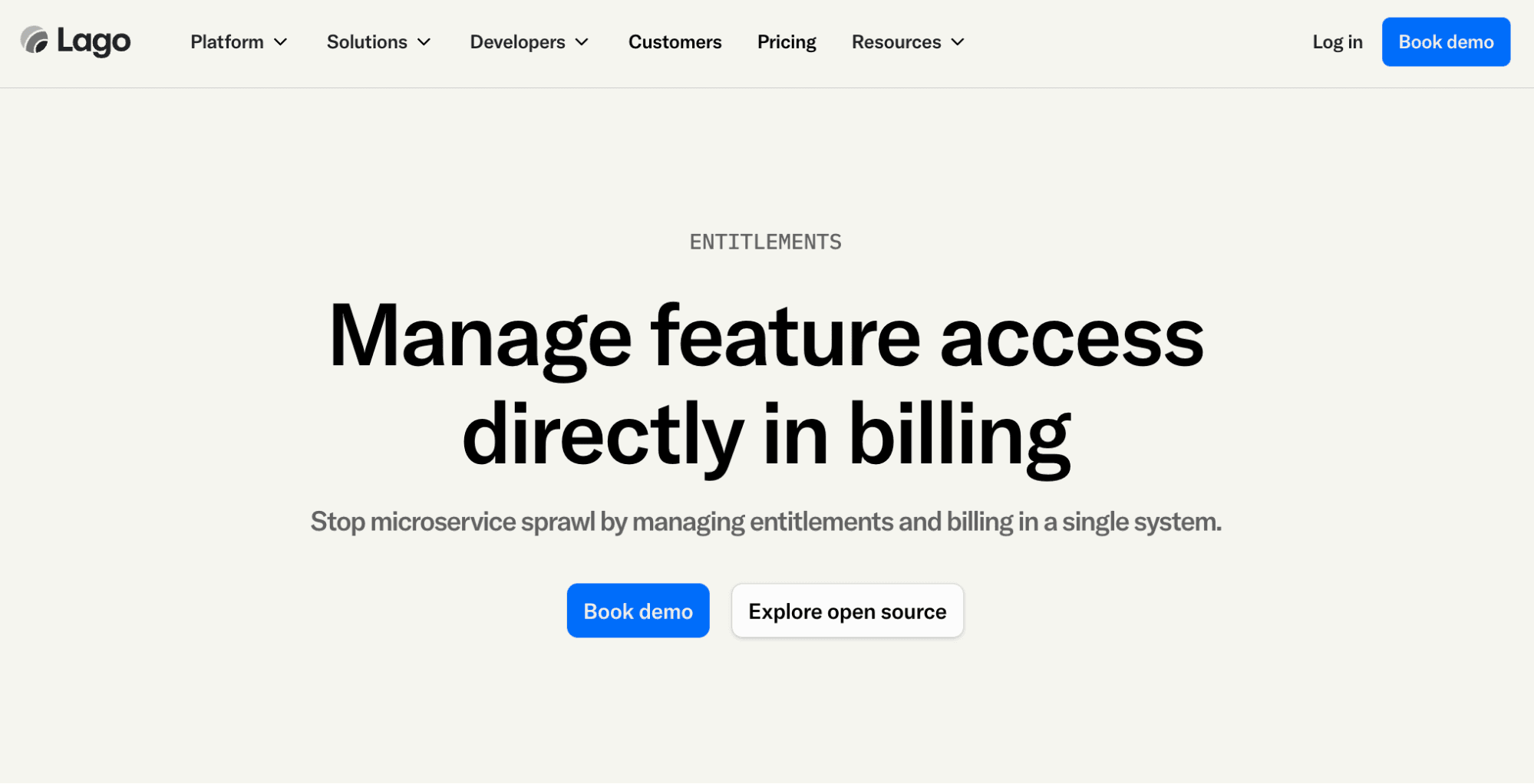
Lago is a billing platform where entitlements live directly inside the billing system. Teams define feature access, seat limits, usage allowances, and overrides alongside plans and contracts.
Entitlements attach to subscriptions and update when billing state changes, which helps keep access aligned with pricing for both self-serve and sales-led accounts.
Lago supports setups where usage-based pricing and hybrid pricing drive access decisions. You can gate features based on payment status, usage thresholds, or custom contract terms, then fetch current entitlements through APIs.
This approach suits teams that want billing and access logic managed together, without introducing a separate product-side enforcement layer.
Lago is commonly used when accuracy, transparency, and auditability of entitlements matter more than real-time, in-product evaluation.
4. Chargebee
Source: chargebee.com
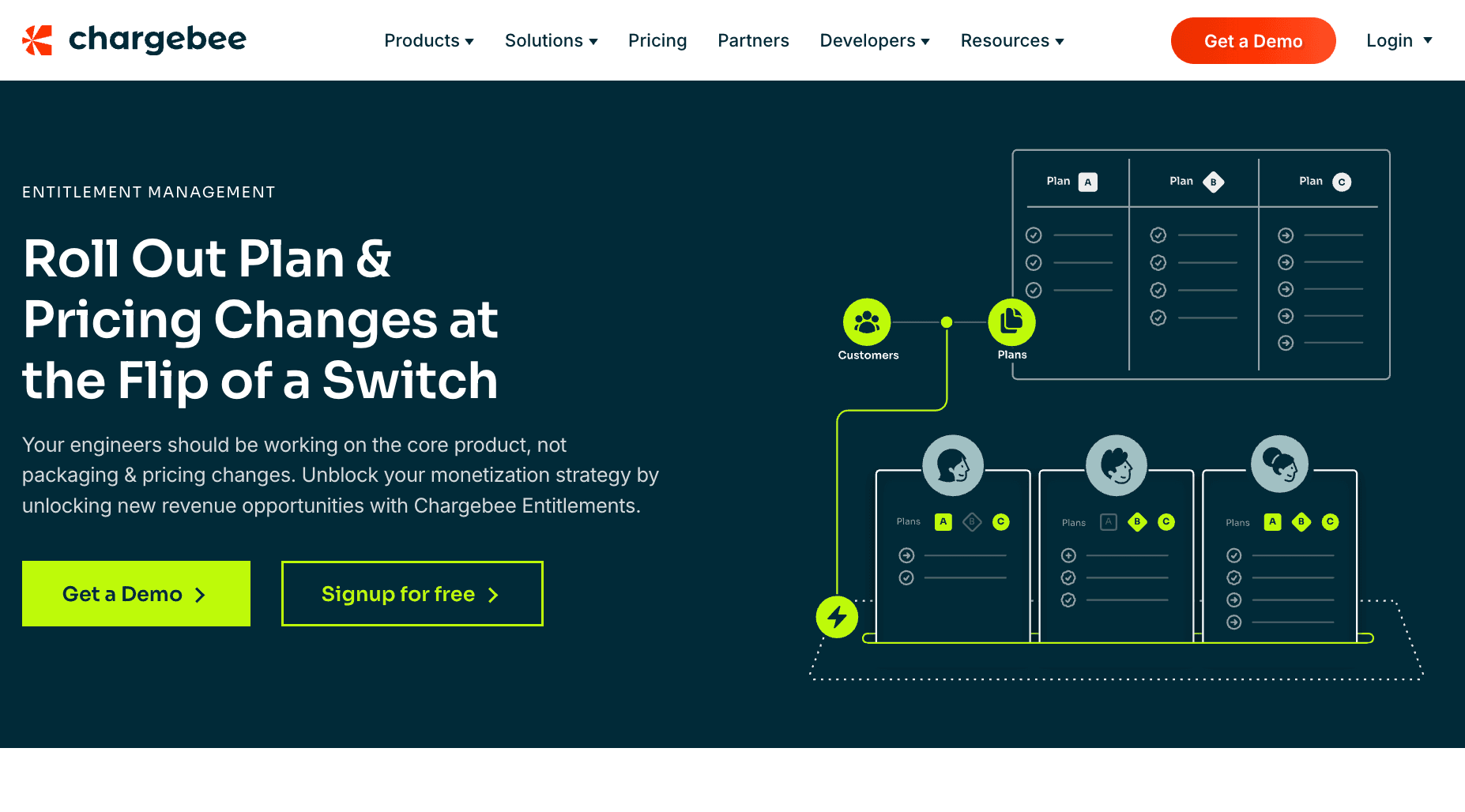
Chargebee is a billing and subscription management platform that includes an entitlements module for mapping plan items to feature access and usage limits.
You define what a customer gets in the Chargebee catalog, then your app uses Chargebee’s data to decide what a user can see or do. This fits teams that already run billing in Chargebee and want plan-to-feature mapping in the same place.
Chargebee’s entitlements support feature and limit mapping at the plan and subscription level, plus account-level overrides for exceptions.
You can provision or revoke user access when subscriptions change, run trials, or adjust add-ons, then keep existing customers on older packaging when you ship new plans.
In practice, you still implement the runtime checks in your product, but Chargebee can stay in the system where you manage the rules.
Reasons SaaS Teams Adopt Entitlement Management Software
Once teams see how different tools handle access, usage, and limits, the reasons for adopting entitlement management become clearer.
The most common reason SaaS teams adopt software entitlement management is to keep product behavior tied to pricing without shipping custom logic each time plans change.
That pressure increases as products add AI-driven features and automation.
Gartner predicts that 40% of enterprise applications will include task-specific AI agents by the end of 2026, up from less than 5% in 2025, which expands usage beyond human users and increases pressure on how access, limits, and consumption are enforced.
You need one place to manage user entitlements for features, limits, trials, credits, and add-ons. That structure helps you efficiently manage access for self-serve users and sales-led accounts inside the same product.
An entitlement system simplifies access management when usage grows, and contracts include exceptions. You can grant, update, or revoke access rights during the full lifecycle management of a customer.
Automation reduces human error during upgrades, downgrades, and renewals. It also protects sensitive data when limits trigger paywalls or denials.
You can use entitlement management to support modern software monetization, enforce access at runtime, and strengthen the overall security posture without rebuilding logic in application code.
How Teams Implement an Entitlement System
Implementing entitlement management now focuses on control, speed, and safety. Many teams want a comprehensive solution that enforces access inside the product, supports hybrid pricing, and reduces potential security risks.
These approaches show how teams manage entitlements without slowing engineering or breaking Stripe-based billing flows.
Runtime Enforcement Inside the Product
Teams enforce entitlements directly inside software applications. The product evaluates access in real time based on plans, limits, usage trends, trials, credits, and overrides.
This approach ensures access stays accurate during the billing period. The product can deny access the moment a limit is crossed. It can unlock advanced features instantly after an upgrade.
Runtime checks protect digital assets and reduce data breaches. Teams combine entitlements with role-based access control RBAC and multi-factor authentication to support user roles and individual users.
Billing and Commercial Systems Stay Informational
Billing systems confirm payment status. They do not manage entitlements.
Stripe, customer relationship management, and enterprise resource planning systems provide context for pricing and contracts. The product still decides what users can access.
This split supports hybrid selling. Self-serve plans update automatically. Sales-led exceptions apply without waiting for invoices. Usage tracking stays accurate mid-cycle.
Configuration Without Code Changes
Teams separate pricing configuration from deployments. Product and RevOps submit requests through a user-friendly interface. Changes take effect in just a few clicks.
Access packages group features, limits, and usage rules. Teams assign access rights based on plan or contract terms. Temporary extensions expire automatically.
This setup supports self-service access requests and access request workflows without engineering involvement.
Automation as the Default Control Layer
Automating entitlement management reduces manual work and errors. Automated provisioning assigns entitlements when the customer state changes.
Integration capabilities keep multiple systems aligned. That includes CRM, ERP, billing, and internal tools. This model supports business partners and other business partners with shared access needs.
Make Entitlements a First-Class Product Layer with Schematic
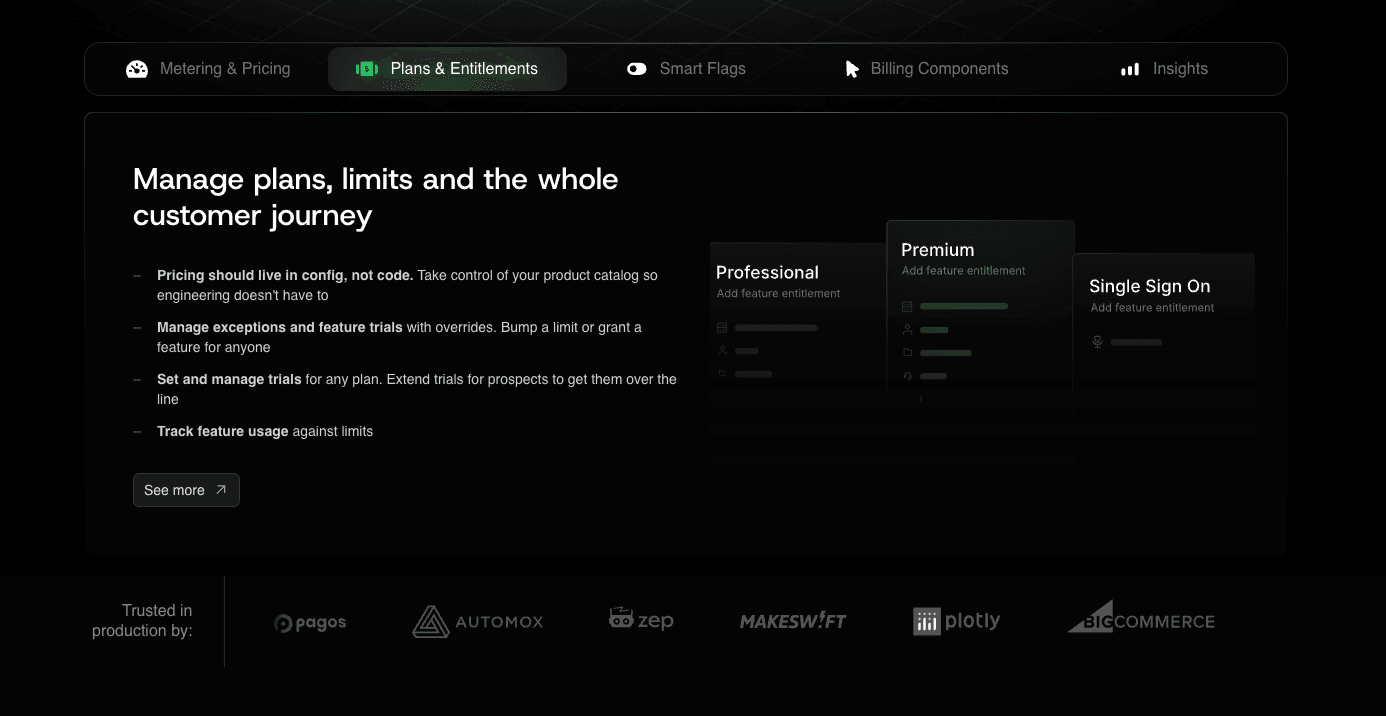
Entitlement management becomes unavoidable once pricing controls what customers can actually do inside your product. Plans, limits, trials, credits, and exceptions stop living in billing systems and start driving real product behavior at runtime.
If you need access decisions to reflect usage, upgrades, and overrides as they happen, entitlements must be enforced inside the product.
Schematic, built on Stripe, does exactly that. It gives teams a single source of truth for plans and entitlements and enforces them in real time without hardcoded logic.
FAQs About Entitlement Management Software
What is an entitlement management system?
An entitlement management system is software that determines what users or accounts can access inside a product based on plans, contracts, usage, and customer state. It enforces feature access, limits, trials, credits, and add-ons at runtime so product behavior stays aligned with pricing and agreements.
What is an entitlement in software?
An entitlement in software is the right to use a specific feature, resource, or amount of usage based on a plan or contract. Entitlements define what a customer can use and how much they can consume, such as seats, API calls, storage, credits, or premium features.
What is SAP EMS?
SAP EMS, or SAP Entitlement Management Service, is an enterprise entitlement system used to manage access rights for licensed products and services. It focuses on contract-based entitlements, compliance, and lifecycle management, and is commonly used in large organizations with complex licensing and ERP-driven workflows.