 Ryan Echternacht
Modern SaaS companies rarely rely on one pricing model to generate revenue. Subscription models, seat-based pricing, usage-based billing, credits, and add-ons often work together to support different customers, workloads, and sales motions.
The structure behind those choices shapes how products charge for access, package features, and expand revenue over time.
This guide explains eight common SaaS monetization strategies and how SaaS products implement them.
TL;DR
This guide covers eight SaaS monetization strategies:
- Subscription-based pricing
- Seat-based pricing
- Usage-based pricing
- Credit-based pricing
- Tiered pricing
- Freemium
- Hybrid monetization
- Overage pricing
Schematic is the complete monetization platform that helps software and AI companies model any pricing, meter usage, and enforce limits at runtime. Meanwhile, credit wallets give customers real-time visibility and control over consumption.
What Is SaaS Monetization?
SaaS monetization refers to the pricing models and product rules that convert software usage into revenue. Teams design monetization through pricing, packaging, and access rules that connect product value to how customers pay.
Pricing determines how customers are charged, including subscriptions, per-seat pricing, or usage-based billing.
Packaging organizes product features, limits, and capabilities into plans. Software entitlements then enforce these rules inside the product by controlling what each account can access.
A monetization strategy typically combines multiple pricing models with packaging rules, usage limits, and expansion paths.
Core components include:
- Plans with different features and price points
- Entitlements that control feature access
- Usage limits based on actual consumption
- Credits as prepaid consumption units
- Expansion revenue from upgrades or higher plans
These components connect product value to how customers pay for the software.
Common SaaS Monetization Strategies
SaaS companies rely on several monetization models to generate revenue and match pricing to real product usage. Below are the most common SaaS monetization strategies used:
1. Subscription-Based Pricing
Subscription-based pricing charges customers a recurring fee for ongoing access to a SaaS product. Customers typically pay monthly or annually for features included in subscription plans.
Each plan offers a defined set of capabilities, limits, and value-added features. Many SaaS companies structure these plans into multiple pricing tiers to serve different customer segments. Higher tiers introduce additional functionality or advanced features.
SaaS companies use subscription pricing to generate a predictable revenue stream and maintain stable cash flow. Those recurring contracts contribute to annual recurring revenue.
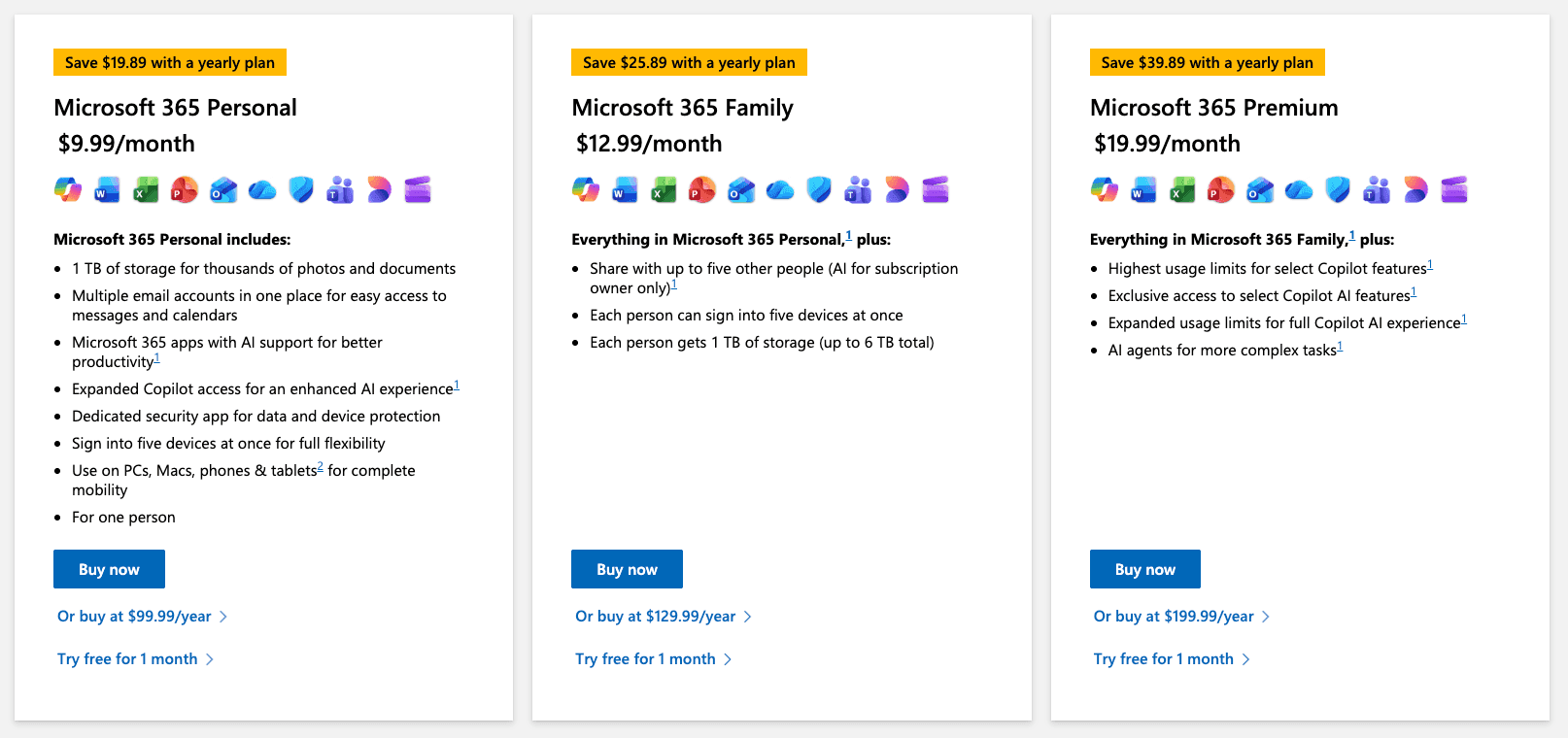
Source: microsoft.com
Example: Microsoft 365 sells subscription plans that give customers ongoing access to productivity tools like Word, Excel, and Teams for a monthly or annual fee.
2. Seat-Based Pricing
Seat-based pricing charges customers based on the number of users who can access a product. Each seat represents one licensed user within an account.
Organizations pay based on the number of team members who need access to the software. Costs increase when additional users join the account, which allows companies to increase revenue with product adoption.
Collaboration and productivity platforms often use seat-based pricing because the product becomes more valuable when more team members participate.
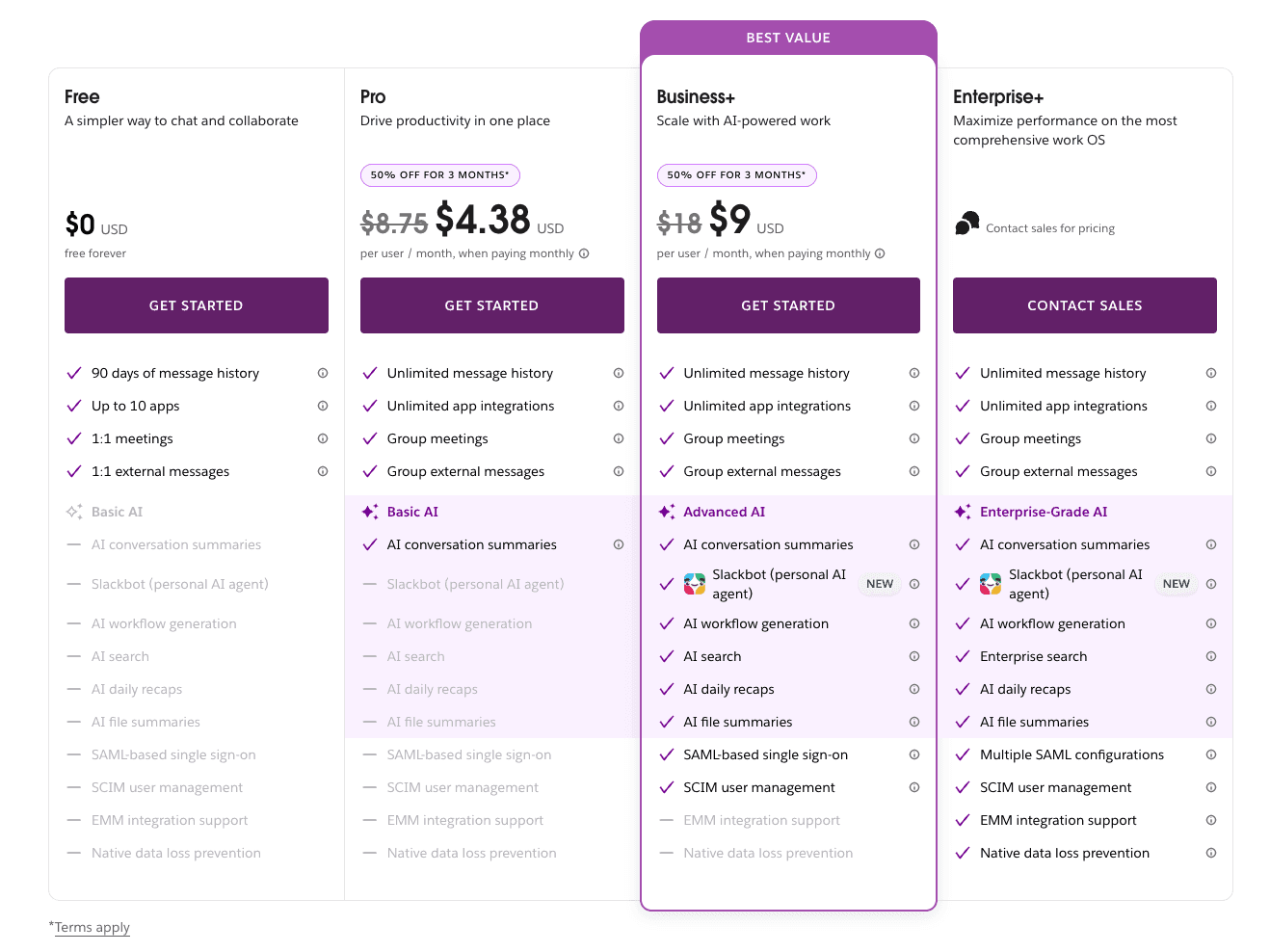
Source: slack.com
Example: Slack charges companies per active user, so the total cost increases as additional active users join the workspace.
3. Usage-Based Pricing
Usage-based pricing ties cost to measurable product activity. Customers pay according to actual usage.
Common usage metrics include API requests, storage consumption, compute time, or processed transactions.
This approach aligns pricing with customer behavior because charges increase when usage grows. It allows SaaS providers to match costs to the value customers receive from the product.
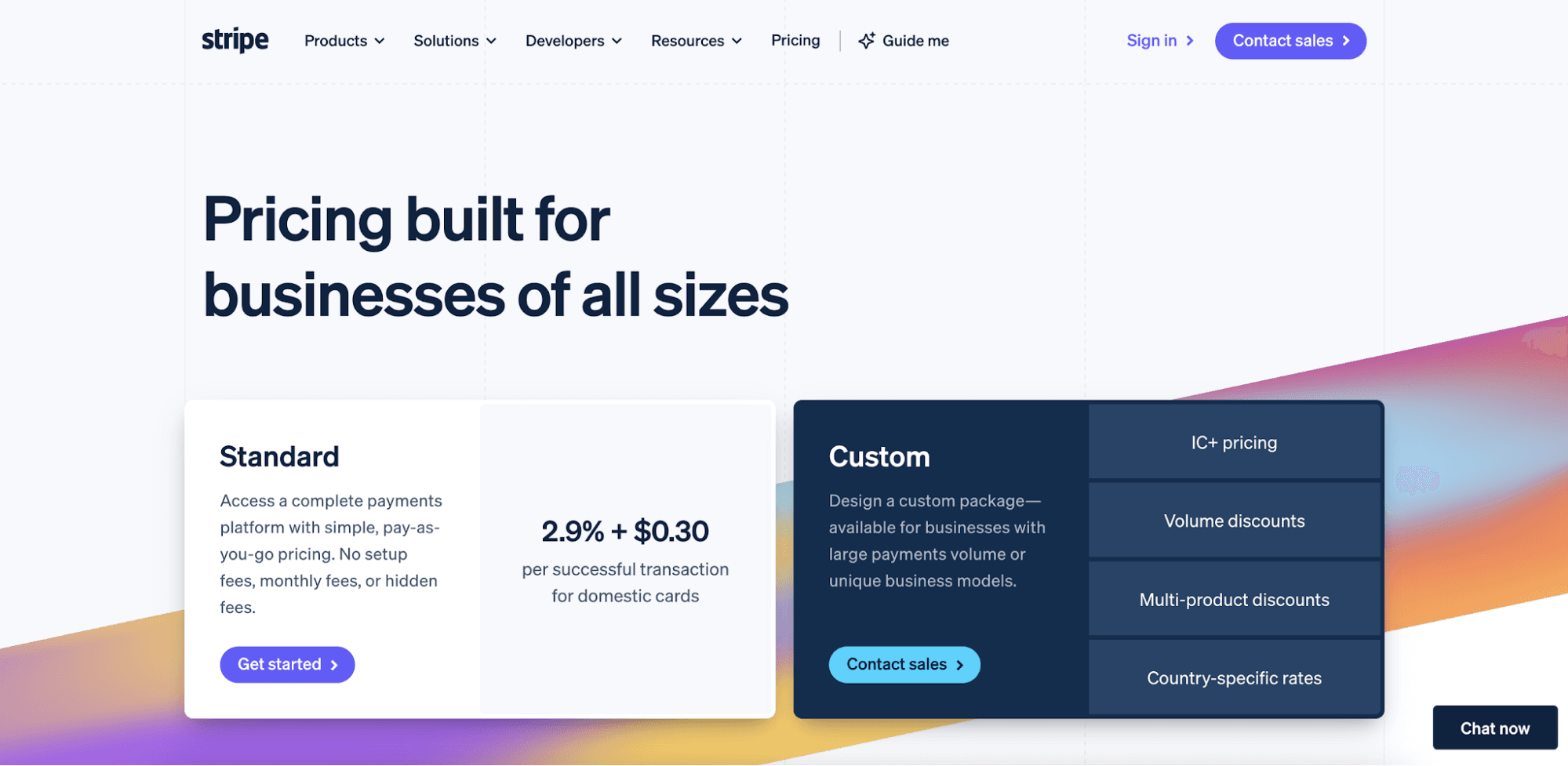
Source: stripe.com
Example: Stripe charges businesses based on the number of payment transactions processed through its APIs.
4. Credit-Based Pricing
Credit-based pricing uses prepaid units purchased before customers consume product resources. Product actions deduct credits from the account balance.
Credits simplify pricing for products with variable workloads. They let SaaS providers assign different credit costs to product actions while customers spend from one balance.
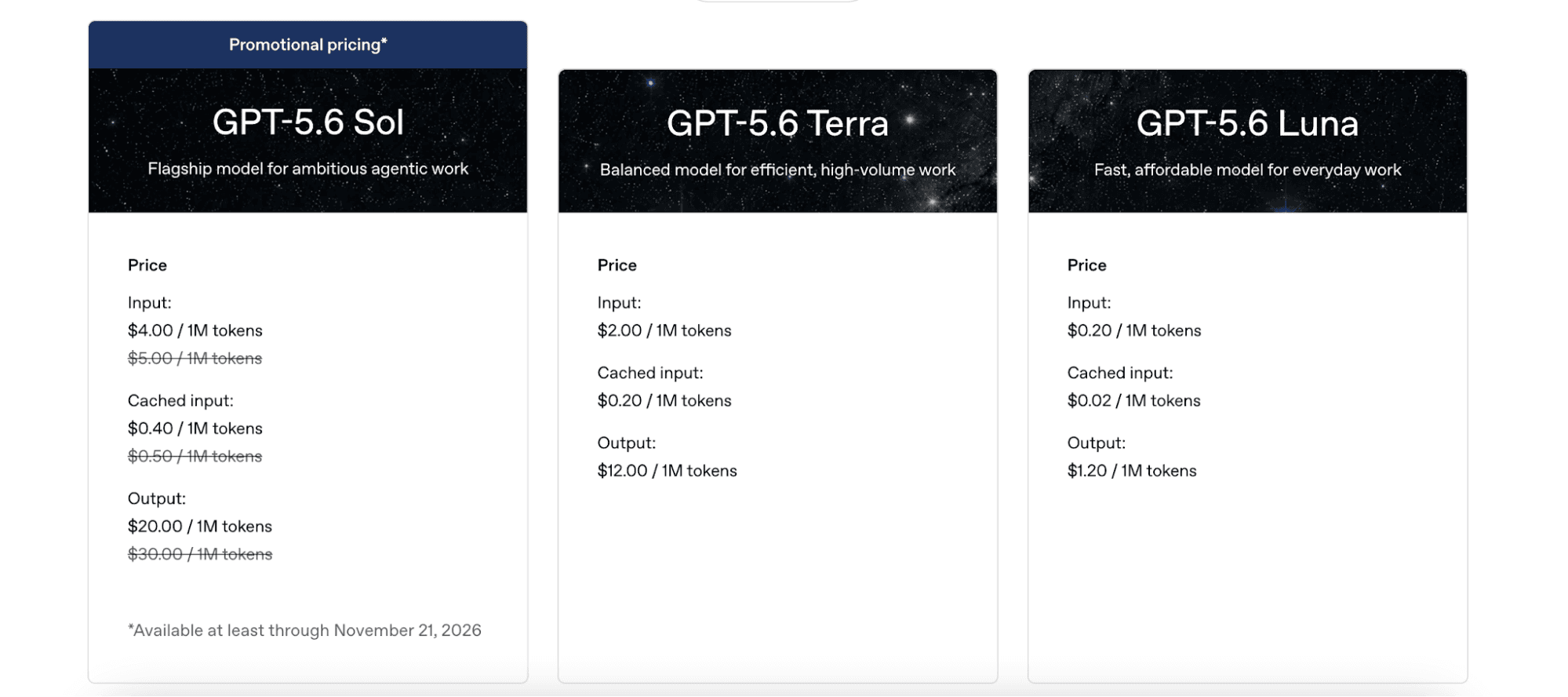
Source: openai.com
Example: OpenAI lets API customers prepay for usage through credits, which are deducted as API usage accrues.
5. Tiered Pricing
Tiered pricing organizes a SaaS product into multiple plans with different limits, features, and various price points designed for each target market segment. Customers select the plan matching their usage and pay accordingly.
Lower tiers offer basic access for individuals. Higher tiers provide expanded capacity and advanced features at greater cost. SaaS companies use tiered pricing to align payments with customer value.
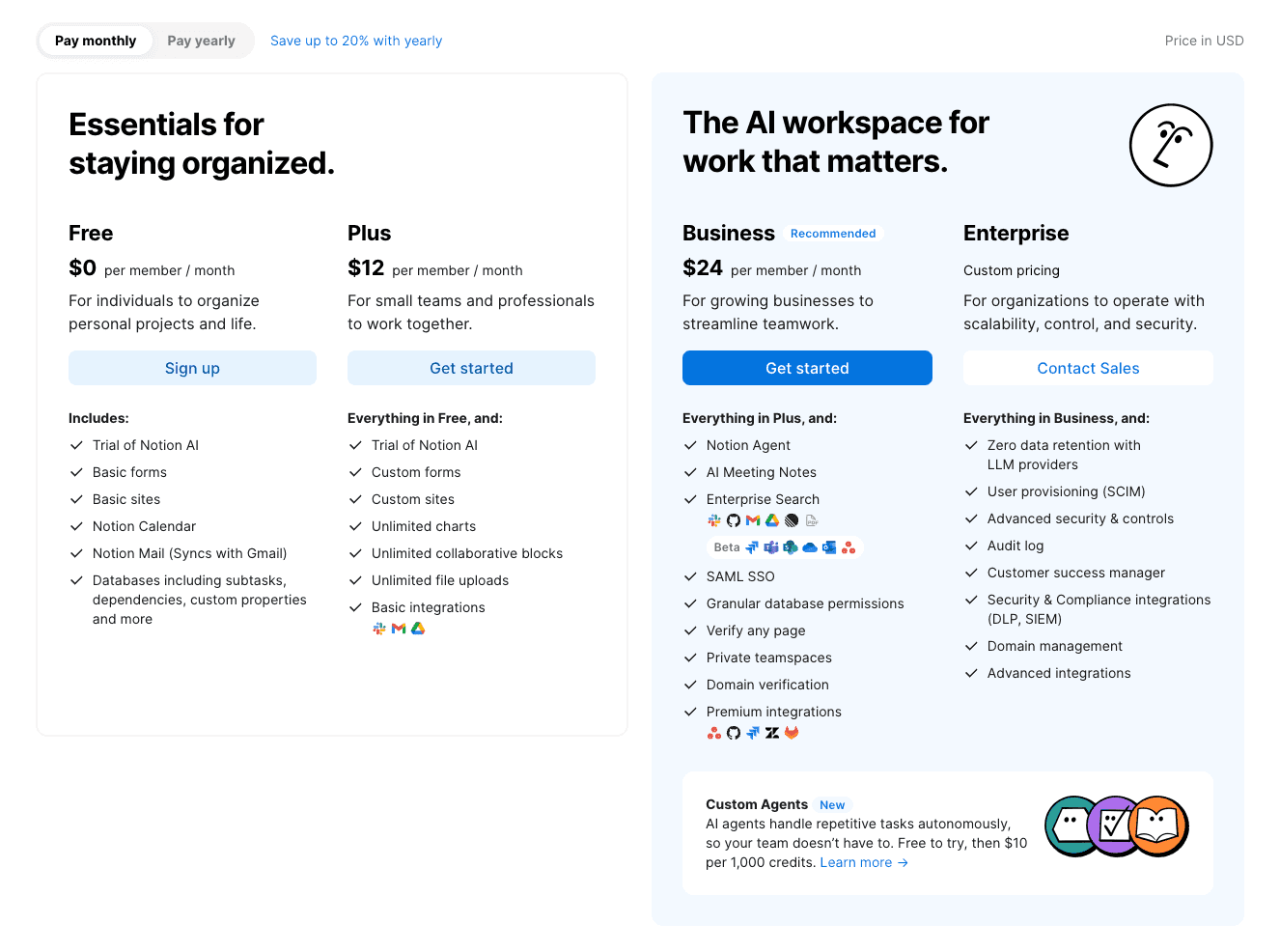
Source: notion.com
Example: Notion offers several paid plans with different collaboration features and workspace limits.
6. Freemium
Freemium pricing offers a free version with access to core SaaS product features. Customers can use the product without paying and upgrade to paid plans when they need higher limits, additional features, or expanded usage.
Many SaaS companies use the freemium model as a product-led entry point so users can experience the product before purchasing a subscription.
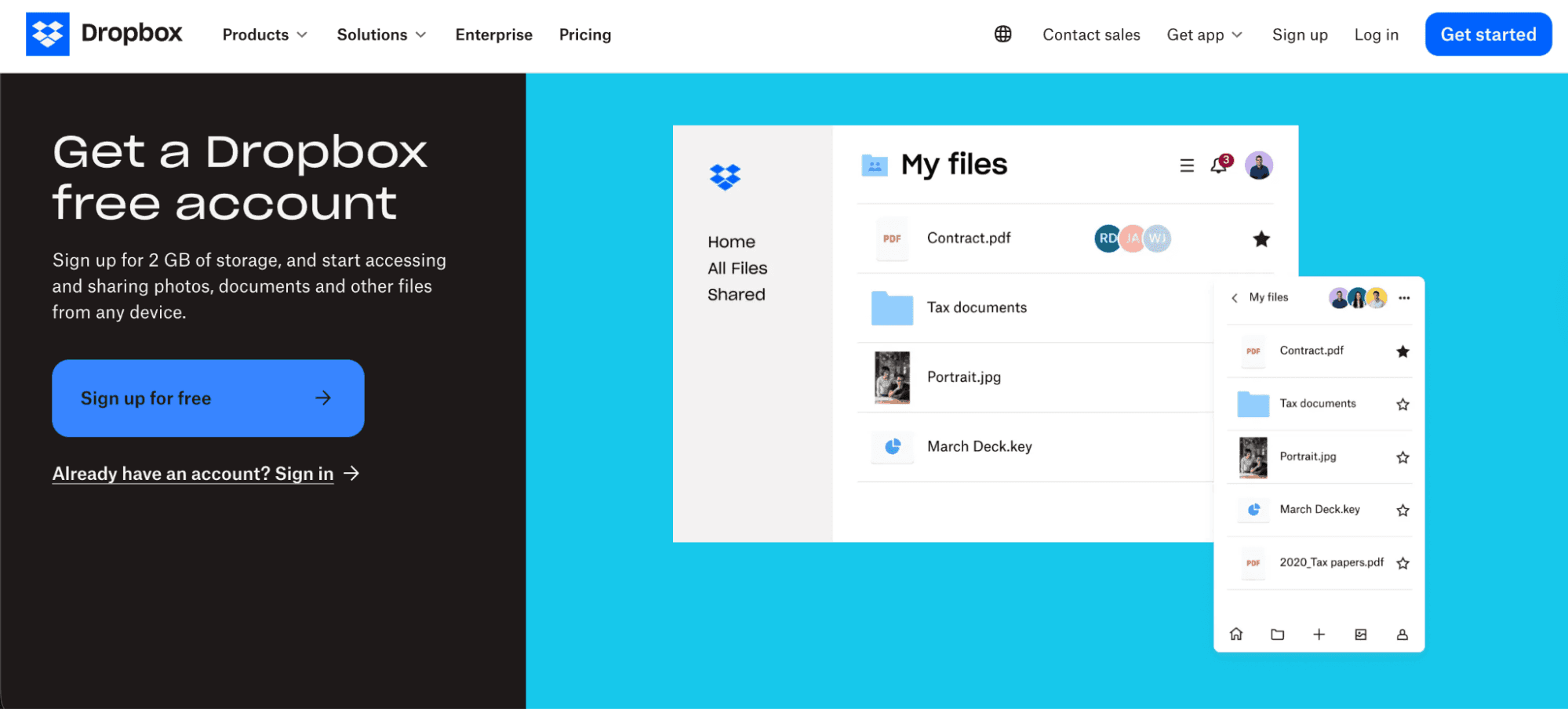
Source: dropbox.com
Example: Dropbox provides free storage with the option to upgrade to paid plans for more capacity.
7. Hybrid Monetization
Hybrid monetization combines multiple pricing models within the same pricing structure. Products may include subscriptions, seats, usage-based pricing, credits, or add-ons.
The combination often depends on the product’s business model and how customers consume it. Customers may pay a base subscription plus additional charges based on usage, seats, or optional features.
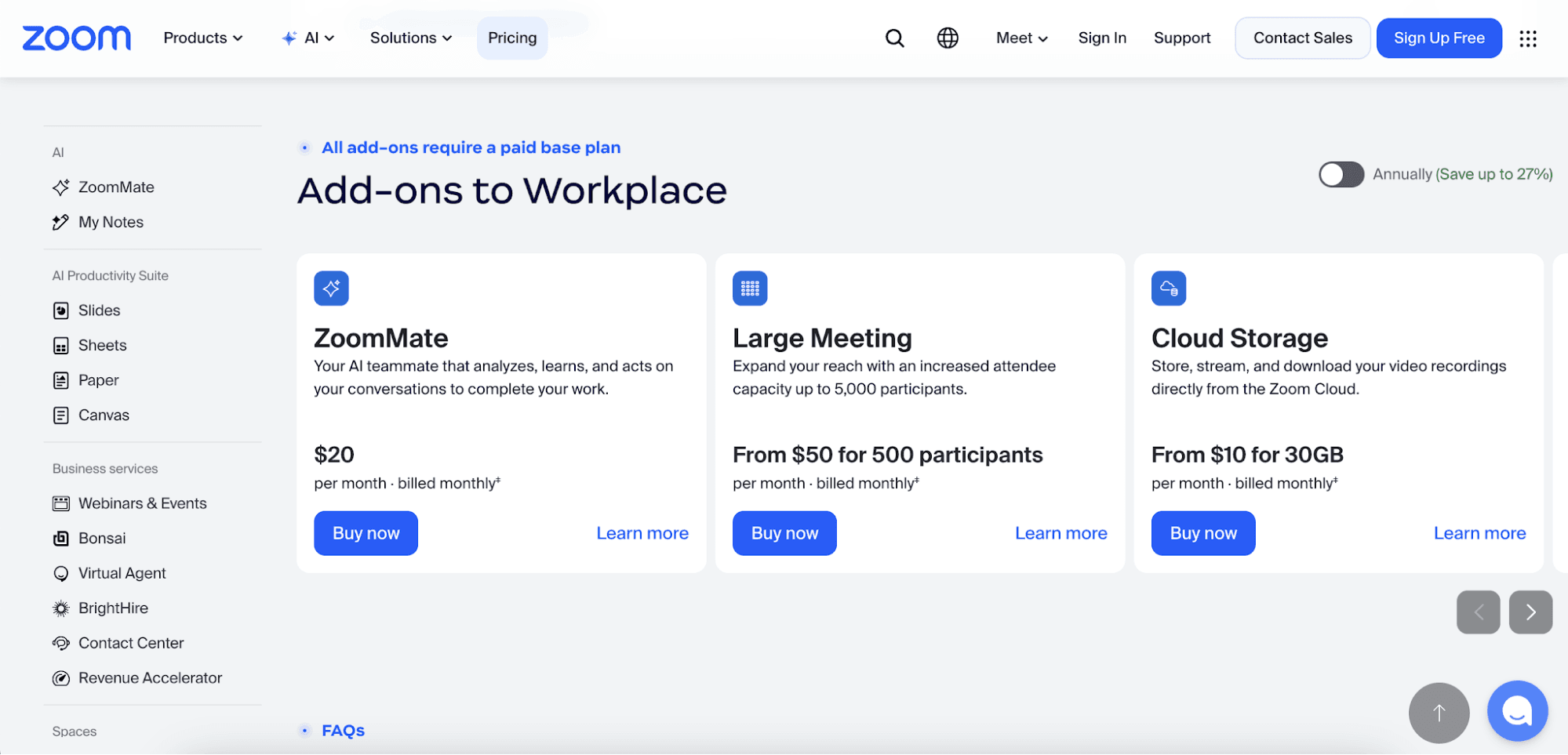
Source: zoom.us
Example: Zoom combines subscription tiers for core access with paid add-ons for capabilities such as larger meeting capacity and additional cloud storage.
8. Overage Pricing
Overage pricing allows customers to exceed included plan limits and pay for the additional usage. A subscription plan typically includes a set amount of product usage, and charges apply when customers surpass those limits during a billing period.
This lets customers continue using the product without interruption while SaaS providers capture additional revenue when usage increases. Overage pricing also creates expansion revenue from existing customers and maintains fair pricing.
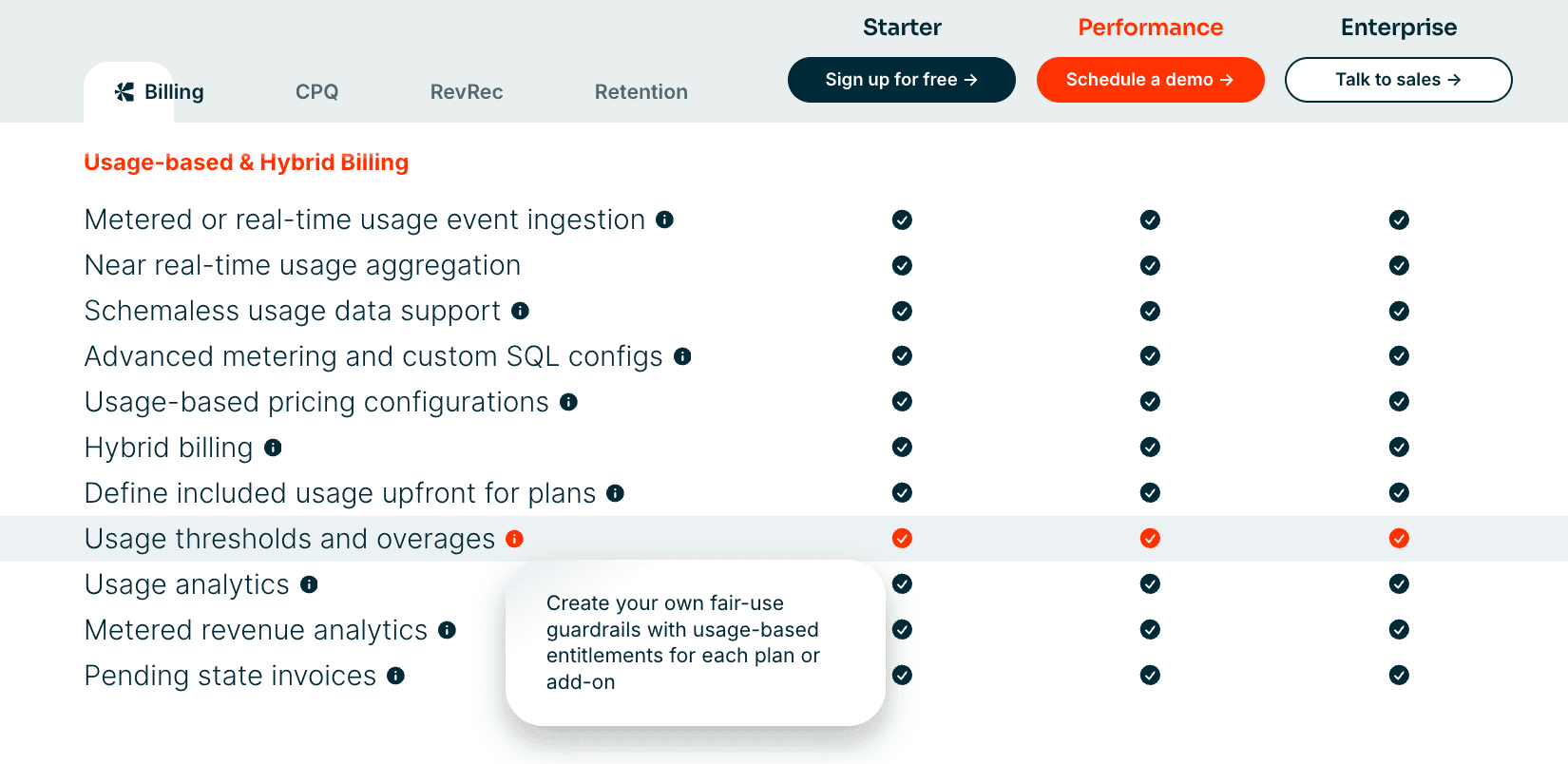
Source: chargebee.com
Example: Chargebee allows SaaS companies to define included usage in a plan and apply overage charges when customers exceed that amount.
How to Choose the Right SaaS Monetization Strategy
Selecting the right monetization model depends on how your product delivers value and how customers adopt it. Most SaaS companies evaluate several factors before deciding how pricing and packaging should work.
Identify the Core Value Metric
The value metric is the unit that best reflects the benefit customers receive from the product. Pricing should scale with that metric.
Common examples include:
- Number of users
- API requests
- Processed transactions
- Storage usage
- Compute consumption
- AI tokens or credits
Ask:
- What outcome does the product create for customers?
- What activity increases when customers get more value?
- What usage pattern grows when adoption expands?
Effective monetization models connect pricing to a value metric customers can understand and measure. For usage-based models, that metric also determines what the product meters and bills.
Understand Customer Segments
Different customers often use the same product in different ways. Pricing and packaging should reflect those differences.
For example:
- Individual users may prefer simple plans with clear limits
- Growing teams often need higher usage tiers or additional seats
- Enterprise buyers may require negotiated contracts, security features, or custom limits
Segmenting customers helps companies structure plans at different price points around distinct usage patterns and requirements.
Align Pricing With the Go-to-Market Motion
The monetization model should support how customers discover and purchase the product.
Common patterns include:
- Product-led growth - Freemium, trials, or usage-based expansion
- Sales-led growth - Tiered plans, enterprise contracts, and negotiated pricing
- Hybrid motion - Base subscriptions combined with usage, credits, or add-ons
Pricing that matches the buying motion gives customers a coherent path from initial purchase to account expansion.
Confirm the Product Can Enforce the Model
Pricing decisions eventually affect how the product behaves during runtime. Plans, usage limits, credits, and add-ons need corresponding rules that the product can enforce.
Before finalizing a monetization model, teams should confirm:
- The product can track usage events
- Limits can be enforced inside the application
- Billing state stays synchronized with product access
Without enforcement inside the product, pricing and customer access quickly drift out of sync.
How SaaS Monetization Expands Revenue
Revenue growth in SaaS often comes from existing customers. Monetization systems capture expansion through pricing models, packaging, and a clear pricing strategy when product adoption increases.
Modern SaaS products rely on several key monetization strategies that capture additional revenue as product usage increases.
Usage Expansion
Expansion often occurs when customer usage exceeds plan limits. Plans typically include defined limits such as API calls, storage, or processing capacity.
Once customers exceed those limits, the product records additional consumption and applies usage-based pricing or overage charges.
Usage expansion connects revenue directly to product adoption and supports value-based pricing, where customers pay in proportion to the value they receive.
Add-Ons
Add-ons introduce optional capabilities that customers can purchase without changing their core subscription plan. These offerings often include advanced workflows, integrations, or specialized functionality.
Optional add-ons expand revenue while giving customers flexibility to adopt only the capabilities they need. This approach also helps products serve more customers with different requirements.
Plan Upgrades
Customers upgrade when they require additional features, larger usage limits, or stronger governance capabilities.
Higher tiers often include expanded functionality for larger teams or more complex use cases. These upgrades move customers to a higher-priced plan that reflects the additional value the product delivers.
Enterprise Contracts
Enterprise customers often require custom pricing, negotiated limits, and additional services like dedicated account assistance or specific security requirements.
They may also require integrations across multiple systems or custom product access rules. Custom agreements accommodate these deployments while maintaining flexible packaging and monetization structures.
Together, these expansion paths increase customer lifetime value and generate more revenue from existing accounts without relying solely on new customer acquisition.
Why SaaS Monetization Depends on Runtime Enforcement
Modern SaaS products evaluate monetization rules during runtime. Pricing does not appear only on a pricing page. It directly affects how the product behaves when customers perform actions such as running workflows, calling APIs, or processing data.
Product architecture connects plans, limits, and packaging rules to runtime decisions. For gated features or metered actions, the product can check entitlements before executing the operation.
These checks confirm whether the account has access to a feature, remaining usage capacity, or permissions tied to the active plan.
Usage checks often occur before the product processes an action. If limits remain available, the operation continues. If limits are reached, the product can block the request, prompt an upgrade, or allow additional usage while recording overage events.
Entitlement management systems coordinate these decisions. They evaluate plan rules, feature access, usage limits, and account state in real time.
When monetization rules run inside the product, pricing and product behavior stay aligned even as market dynamics change.
This alignment prevents poor customer experience, supports customer retention, and keeps packaging decisions consistent while products adapt to market trends and changing SaaS business needs.
How Schematic Supports SaaS Monetization
SaaS companies often implement pricing rules in product code, billing systems, and internal tools. As software suppliers add plans, credits, and usage-based pricing, this logic can spread through services and become difficult to maintain.
Product teams struggle to adjust packaging, while engineering teams maintain billing and entitlement logic that slows product development.
Schematic is a complete usage-based billing platform for SaaS and AI companies. Teams can model pricing, meter usage, grant credits, manage SaaS entitlements, and enforce product access from one system.
Here’s how Schematic supports modern monetization.
Plans, Pricing, and Entitlements
Schematic manages the product catalog that defines plans, add-ons, limits, and feature access. Product teams configure entitlements that determine what each account can access inside the product.
These rules can include feature availability, seat limits, usage quotas, credit balances, or temporary overrides for specific customers. Teams can version and update plans, pricing, and packaging without modifying application code.
Metering and Pricing
Schematic tracks usage events and applies pricing logic tied to those events. Engineering teams instrument product events like API calls, AI queries, compute workloads, or processed documents.
Usage events update credit balances and consumption totals in real time. Grants and deductions also feed an auditable ledger, giving finance and product teams a record of how credits were added and consumed.
Product teams can launch usage-based pricing, overages, or credit models without rebuilding billing infrastructure.
Access Control Based on Billing and Usage
Schematic applies plan rules to gated or metered product actions in real time. Access checks consider the account’s plan, usage state, and applicable limits.
Teams can set hard or soft limits, warn customers before they reach a cap, and apply customer-specific usage policies. The product can then grant access, stop a request, or apply billable overage according to the configured pricing rules.
Billing and Payments
Schematic manages billing activity alongside the plans, usage, and product rules configured in the platform. Teams can use its checkout and customer-facing components to purchase plans or add-ons, manage subscriptions, view invoices, and check current usage.
For companies using Stripe, Schematic’s bi-directional integration synchronizes customers, subscriptions, and plan changes with Stripe. Stripe then handles the underlying payment processing while Schematic keeps billing, usage, and product access coordinated.
Self-Service Controls and Configurable Spending Limits
Schematic stands out for its enterprise credit wallets that give customers complete visibility and control over their consumption.
Buyers can set usage limits per seat or per agent, change automatic credit top-up rules, and decide what happens at the cap. They can enforce hard caps, which block further access and product requests. Alternatively, they can enable soft limits that allow continued usage and bill it in arrears.
Self-service controls make it easier to trust usage-based pricing because they give customers confidence that usage will stay within budget.
FAQs About SaaS Monetization
What monetization models do SaaS companies use?
SaaS companies use several monetization models, including subscriptions, seat-based pricing, usage-based billing, credits, freemium plans, and tiered pricing.
Many companies combine these approaches to build the right monetization strategy for different customer segments such as startups, enterprise teams, and small businesses.
How does SaaS monetization improve revenue growth?
Effective SaaS monetization increases revenue by expanding value within existing accounts. Companies grow revenue through usage expansion, plan upgrades, add-ons, and cross-selling additional capabilities.
These strategies increase lifetime value while helping teams control customer acquisition costs.
How do SaaS companies determine the right pricing structure?
SaaS companies often refine pricing using product data and customer feedback. Product teams analyze how customers use the product, which features deliver the most perceived value, and how different plans affect growth.
Many SaaS founders experiment with pricing tiers until they identify the right monetization strategy for their market.
How do SaaS products monetize AI features?
AI products often use usage-based pricing or credit-based models where customers pay for tokens, API requests, or compute consumption. Companies may also offer plan tiers with usage limits and upgrade paths to the highest-tiered plan.
Billing systems and payment providers record charges while entitlement systems enforce limits within the product, which helps maintain customer satisfaction.