Usage-Based Pricing for SaaS: How to Price Your Product
Learn how usage-based pricing for SaaS companies works and how to price your product. Discover how Schematic can help launch usage-based pricing.
 Ryan Echternacht
On this page
- Overview
- TL;DR
- What Does Usage-Based Pricing Mean for SaaS Businesses?
- How Does Usage-Based Pricing Work?
- Common Usage-Based Pricing Models for SaaS
- Pay-as-You-Go Pricing
- Per-Unit Pricing
- Tiered Usage Pricing
- Volume-Based Pricing
- Prepaid Credit-Based Pricing
- Hybrid Pricing
- Usage-Based Pricing vs. Subscription Pricing
- Benefits of Usage-Based Pricing for SaaS
- Align Pricing With Customer Usage
- Lower the Cost of Getting Started
- Generate More Revenue as Customers Grow
- Support Flexible Pricing for Different Customers
- Match Revenue With AI and Infrastructure Costs
- What Are the Challenges of Usage-Based Pricing?
- How to Choose the Right Usage-Based Pricing Model for Your SaaS
- 1. Identify the Right Usage Metric
- 2. Understand Your Costs and Profit Margins
- 3. Decide Between Pure Usage and Hybrid Pricing
- 4. Set Usage Limits, Credits, and Overage Rules
- 5. Make Pricing Easy for Customers to Understand
- Launch Usage-Based Billing Your Enterprise Customers Can Trust With Schematic
- FAQs About Usage-Based Pricing for SaaS
- Is usage-based pricing better than subscription pricing?
- What is the best usage-based pricing model for SaaS?
- How do SaaS companies track and bill customer usage?
- How can SaaS companies prevent unexpected usage charges?
Should a customer making a few hundred API calls pay the same monthly fee as someone making millions?
Traditional SaaS pricing often treats them similarly. Customers choose a subscription plan, pay a fixed amount, and get access to the software. But when usage varies significantly between customers, that structure can become quite difficult to justify.
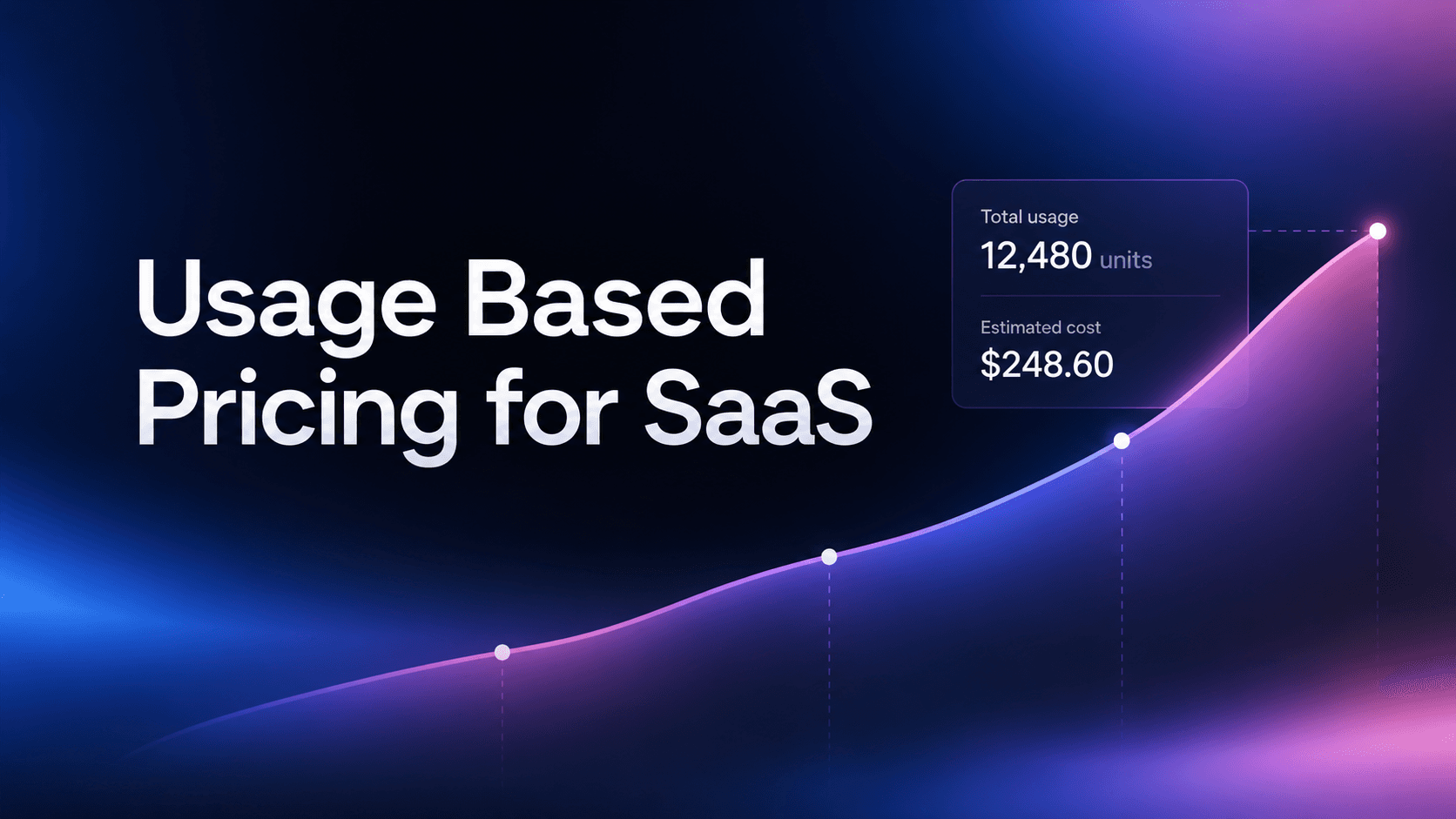
Usage-based pricing for SaaS offers another option. Customers pay according to how much they consume, which gives software companies an opportunity to connect revenue with product usage.
The model is gaining attention as more SaaS businesses introduce AI features and face higher infrastructure costs.
However, variable billing also raises questions about spending predictability and customer trust.
In this guide, we'll explain how usage-based pricing works, explore six common models, and help you decide which pricing structure makes sense for your SaaS business.
TL;DR
Usage-based pricing for SaaS charges customers based on their actual product consumption, such as API calls, AI tokens, or data storage.
Common pricing models include pay-as-you-go, per-unit, tiered, volume-based, prepaid credits, and hybrid pricing.
Usage-based pricing can lower upfront costs for customers and help SaaS companies generate more revenue as consumption grows.
Choosing the right model involves selecting relevant usage metrics, understanding operating costs, and setting clear spending limits to prevent unexpected bills.
Schematic helps SaaS and AI companies manage usage-based billing while giving enterprise customers real-time spending visibility and control.
What Does Usage-Based Pricing Mean for SaaS Businesses?
Usage-based pricing is a SaaS pricing model that charges customers according to how much of a software product or service they consume.
Instead of paying a fixed fee for access, customers are billed according to measurable activity within the product.
The specific usage metrics depend on what the software does. Examples include:
API calls: The number of requests sent to an application's API.
Data storage: The amount of information a customer stores.
AI tokens: The volume of tokens processed when using AI models.
Data processed: The amount of information analyzed or transferred.
Credits consumed: A predefined unit representing the cost of using certain features.
For instance, a data analytics platform might charge customers based on the amount of data processed during a billing period.
Usage-based pricing is also called consumption-based pricing because charges reflect actual consumption. SaaS companies can offer the model independently or combine it with subscriptions, depending on their pricing strategy.
How Does Usage-Based Pricing Work?
Under a usage-based pricing model, your software records billable activity and calculates charges using predefined pricing rules.
Here's a simple example:
Let’s say your SaaS company charges $0.01 per API request. One customer makes 2,000 requests during the month, while another makes 10,000. Their monthly charges would be $20 and $100, respectively.
Although the calculation looks straightforward, usage-based billing requires several processes to work together.
First, your application needs to capture usage events accurately. Every billable activity must be associated with the correct customer.
Next, your billing system applies the relevant pricing rules. Depending on the model, charges may vary according to volume discounts or included allowances.
Finally, customers receive an invoice reflecting their consumption during the billing period.
You also need a way to handle usage limits and display spending information before customers receive their bills.
For enterprise customers, visibility is particularly important. Finance teams want to know how much they're spending and how quickly they're consuming their available budget.
Common Usage-Based Pricing Models for SaaS
Not every SaaS company needs to charge for consumption in the same way. Your pricing structure will depend on the product you're selling and how customers use it.
Here are six popular options you can consider:
Pay-as-You-Go Pricing
Pay-as-you-go pricing allows customers to use your software and pay for the amount they consume, typically after the billing period ends. There's generally no fixed subscription fee or minimum usage commitment.
For example, a cloud infrastructure provider might charge customers according to the computing resources they consume each month.
A customer running occasional workloads pays relatively little, while a company operating resource-intensive applications receives a higher bill.
The arrangement can appeal to businesses that have unpredictable usage patterns or only need certain services occasionally.
From your perspective, pay-as-you-go pricing can make the software easier to purchase because customers don't have to commit to a large subscription upfront.
However, revenue predictability becomes more difficult. A customer who spends $1,000 one month could spend considerably less the following month if their usage declines.
Plus, pay-as-you-go pricing requires accurate metering and clear usage reporting. Customers need a reliable way to understand their accumulating charges.
Per-Unit Pricing
Per-unit pricing charges a predetermined amount for every unit of product usage. You choose a measurable activity, assign a price to it, and multiply that amount by the number of units consumed.
For example, imagine you sell document processing software. If your company charges $0.05 per processed document, a customer processing 4,000 documents would pay $200.
The calculation is relatively easy to explain on your pricing page, which can make the model appealing to customers who want to estimate their costs.
Per-unit pricing also creates a direct relationship between consumption and revenue generation.
One important distinction is that per-unit pricing describes how charges are calculated. You can use it within pay-as-you-go plans or subscriptions.
The main challenge is choosing the correct unit. Customers should understand what they're being charged for and how that activity relates to the software's value.
For instance, charging for processed documents may be easier to understand than charging for an internal technical operation customers never see.
Tiered Usage Pricing
A tiered pricing model divides customer usage into different pricing bands. Each band has its own rate, which allows your SaaS business to charge different amounts as consumption increases.
For example, your pricing rules might look like this:
First 1,000 API calls: $0.10 per call.
Next 4,000 API calls: $0.08 per call.
Additional API calls: $0.06 per call.
Under graduated tiered pricing, customers pay the applicable rate for the units consumed within each band.
A customer making 2,000 API calls would pay $100 for the first 1,000 calls and $80 for the next 1,000, resulting in a $180 bill.
Tiered pricing can reward higher consumption while maintaining higher rates for smaller workloads. So, it works well for SaaS companies serving customer segments with substantially different usage volumes.
One caveat is that you'll need to explain the calculations clearly. If customers struggle to understand how pricing tiers affect their bills, they may find it difficult to estimate future expenses.
Volume-Based Pricing
Volume-based pricing also offers lower rates as customers consume more, but the calculation differs from graduated tiered pricing.
Under a volume-based model, the customer's total consumption determines the per-unit rate applied to all eligible units.
For instance, your SaaS company might charge $0.10 per API call for customers making fewer than 10,000 calls monthly. Once a customer reaches 10,000 calls, the rate could decrease to $0.08 for every call during that period.
The discount would apply to the customer's entire eligible usage, not only the calls above the threshold.
Volume-based pricing can encourage customers to consolidate their usage with your software. Enterprise companies with substantial consumption may also appreciate the opportunity to negotiate lower unit costs.
But keep in mind that pricing boundaries need careful consideration. Large discounts at certain thresholds can create situations where consuming slightly more costs less overall.
Test your pricing calculations before publishing them, and check how different usage volumes affect your revenue.
Prepaid Credit-Based Pricing
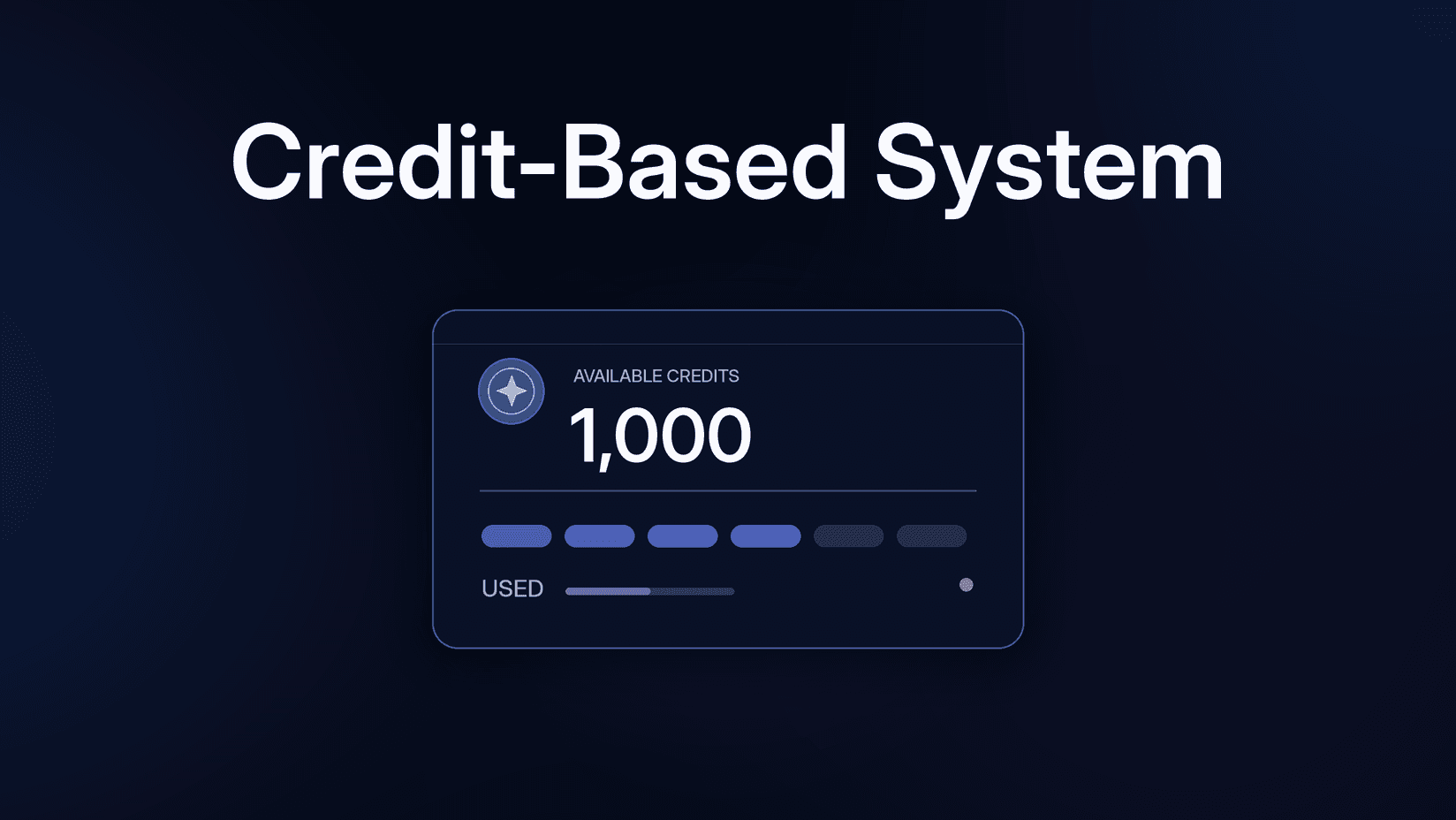
Prepaid credit-based pricing lets customers purchase a certain number of credits before using your software. Each credit represents a predefined amount of usage or purchasing power.
For example, an AI SaaS business might sell a package containing 10,000 credits. Customers then spend those credits when using features such as document analysis or AI-generated reports.
Different activities can consume different amounts of credits depending on their resource requirements.
The model is useful when your software offers multiple features with varying infrastructure costs. Prepaid credits also provide revenue upfront and give customers a clearer initial spending commitment.
However, customers need to understand how quickly their credits are being consumed. You'll also need rules for credit expiration, unused balances, and additional purchases.
For enterprise customers, credit wallets with real-time usage visibility can make the model more manageable. They can monitor their remaining balance and decide when to purchase more credits before access becomes restricted.
Hybrid Pricing
Hybrid pricing combines a recurring subscription fee with usage-based charges.
For example, a SaaS company might charge customers $300 per month for access to its platform. The subscription could include 10,000 API calls. Customers who exceed the allowance would pay an additional amount for each request.
A hybrid pricing model gives your business a predictable revenue component while allowing revenue to increase as consumption grows. On the flip side, customers benefit from knowing their minimum monthly commitment.
Hybrid pricing models are increasingly common among SaaS and AI companies. According to the 2026 State of B2B Monetization survey, 37% of the more than 230 participating software companies used hybrid pricing.
The arrangement can work well for products with recurring platform costs and variable usage expenses.
Combining subscription pricing with consumption charges does introduce some complexity, though. Customers need to understand what their base subscription fee covers and when additional charges apply.
Usage-Based Pricing vs. Subscription Pricing
Usage-based pricing and subscription pricing can be easy to confuse because both involve recurring bills. Subscription plans may even include usage allowances, making the difference less obvious. The main distinction comes down to how customers are charged.
Subscription pricing involves paying a fixed fee for software access during a billing period. For example, a $99 monthly plan might include certain features and usage limits. The bill stays the same as long as customers remain within those limits.
Usage-based pricing calculates charges according to actual consumption. Customers pay more when they use additional resources and less when their usage declines.
Both approaches have advantages. Subscription pricing makes budgeting easier and provides more predictable revenue. Usage-based pricing allows revenue to grow alongside consumption, although monthly income can fluctuate.
You can also combine both approaches through hybrid pricing.
If you're considering usage-based or hybrid pricing, Schematic helps you meter consumption, manage billing, and give enterprise customers real-time visibility into their spending and usage limits.
Benefits of Usage-Based Pricing for SaaS
The usage-based model can create opportunities for revenue growth while giving customers more flexibility. You can expect benefits like:
Align Pricing With Customer Usage
A customer using your software occasionally may have very different needs from someone relying on it every day. Under flat-rate or seat-based pricing, both customers might pay the same amount even though their consumption varies significantly.
Usage-based pricing creates a more proportional relationship between usage and cost.
For example, a company using an AI platform to analyze 100 documents monthly consumes fewer resources than an enterprise processing 100,000. Charging according to document volume means customers pay based on how much they use the software.
The key is choosing usage metrics that reflect the value customers receive from your product.
You can start by examining customer behavior to identify which activities are most closely connected to meaningful outcomes.
For example, an AI document processing platform might find that customers care more about completed documents than the number of API calls required to process them. Using a recognizable billing metric can make your pricing easier to understand and justify.
Lower the Cost of Getting Started
Convincing a new customer to commit to an expensive annual subscription can be difficult, particularly when they haven't used your software before.
Usage-based pricing makes it easier for customers to get started with a smaller financial commitment. They can try your product, see how it performs, and then gradually increase their consumption as they become more comfortable.
For example, a developer testing your API may prefer spending a few dollars on initial requests instead of committing to a $200 monthly subscription.
The lower entry cost can support customer acquisition by attracting people who aren't ready to purchase a full subscription.
You can also offer limited usage allowances to free users, so they can experience your software before paying. As customers find more uses for your product, they have a natural reason to increase their spending.
Your team can then focus its customer acquisition efforts on converting engaged users into paying customers.
Generate More Revenue as Customers Grow
Traditional subscription models typically rely on plan upgrades to increase revenue from existing customers. On the other hand, usage-based pricing gives you another opportunity to grow revenue as customers increase their consumption.
For instance, an ecommerce analytics company might initially process a few thousand transactions monthly. As the business attracts more shoppers and generates additional transactions, its software usage increases.
Under consumption-based pricing, the SaaS provider earns additional revenue from the growing transaction volume.
You can also monitor key metrics, such as usage frequency and consumption trends, to identify opportunities for expansion.
For example, an account approaching its monthly allowance may be ready for a larger usage commitment or a plan with better rates for higher consumption. Your customer success team can use these insights to upsell customers when their needs grow.
As customers expand their operations and rely more heavily on your software, your revenue scales alongside their consumption.
Support Flexible Pricing for Different Customers
Your smallest customers probably don't need the same pricing arrangement as your largest enterprise accounts.
Usage-based pricing gives you the flexibility to serve different customer segments according to their consumption needs and purchasing preferences.
For example, individual developers may prefer pay-as-you-go billing because they only need occasional access to your software.
Larger businesses might benefit from a tiered pricing model that offers lower unit rates as their usage increases. Enterprise customers may prefer prepaid credits with negotiated rates and spending limits that align with their budgets.
You can offer these pricing options while keeping consumption as the underlying billing metric.
The flexibility also makes it easier to accommodate customers as their needs change. Someone who started with a small pay-as-you-go plan could eventually move to a larger usage commitment with custom pricing.
Your SaaS company can support different stages of customer growth through pricing arrangements that reflect their requirements.
Match Revenue With AI and Infrastructure Costs
AI products often have operating costs that increase with customer consumption.
For example, every request to an AI model consumes computing resources, which creates additional expenses for your SaaS business.
Charging a fixed subscription fee regardless of usage means customers with very different workloads contribute the same amount of revenue. Usage-based pricing allows you to connect charges with the resources customers consume.
An AI application might charge according to the number of tokens processed, so customers generating more requests contribute additional revenue.
The approach can support cost optimization by helping your team monitor how infrastructure expenses compare with usage revenue. Additionally, it gives you more flexibility when introducing resource-intensive features.
For instance, if you're adding AI capabilities to an existing SaaS product, you could use hybrid pricing. Customers would continue paying their regular subscription fee for platform access, with additional charges based on AI consumption.
As a result, your business can then generate revenue from growing usage while maintaining its existing subscription revenue stream.
What Are the Challenges of Usage-Based Pricing?
Usage-based pricing gives customers more flexibility, but managing variable charges can be challenging. Before implementing usage-based pricing, consider how it could affect your revenue and customers' billing experience.
Here are some common challenges to prepare for:
Unpredictable revenue: Unlike flat-rate pricing, your monthly income depends on actual usage. When consumption drops, your revenue may decline, which can then make financial planning more difficult.
Unexpected customer bills: If customers suddenly increase their usage, they could receive a much higher bill than expected. You risk frustrating customers who have limited budgets.
Complex billing calculations: Managing different pricing tiers and customer-specific rules can become time-consuming, particularly as your customer base grows.
Usage tracking errors: Inaccurate metering can lead to incorrect invoices and billing disputes, which may damage customer trust.
Rising infrastructure costs: As usage scales, your operating expenses can increase, particularly for AI products that require substantial computing resources.
Enterprise purchasing concerns: Large companies may hesitate to commit if they can't predict or control their spending.
Luckily, you can address many of these challenges with things like accurate usage metering, real-time spending visibility, and automated alerts. Giving customers control over their consumption can also make usage-based billing easier to trust.
How to Choose the Right Usage-Based Pricing Model for Your SaaS
Choosing a pricing model requires more than estimating how much customers might spend. Your pricing structure needs to make sense for the people buying your software and the business supporting it.
Take these tips into account:
1. Identify the Right Usage Metric
Start by identifying what customers actually do with your software. Which activities represent meaningful product consumption? More importantly, can you measure those activities reliably?
For example, an API company could charge according to the number of successful requests.
An AI writing application might use generated words, although tokens processed could be a more accurate reflection of infrastructure consumption.
Neither metric is automatically the better choice. The right option depends on your product's value proposition and how customers understand its pricing.
Consider the following questions:
Can customers predict how much of the metric they'll consume?
Does increased usage generally reflect greater customer value?
Can your software track the metric accurately?
Will customers understand the charges on their invoices?
Avoid choosing a metric solely because it's easy for your engineering team to track! Customers should be able to connect their bills with recognizable activity in the product. Otherwise, even accurate usage-based billing may feel confusing.
2. Understand Your Costs and Profit Margins
Before setting prices, work out how much it costs to serve each unit of consumption. Your calculation should account for direct operating expenses associated with delivering the service.
For example, an AI application may incur model inference costs every time a customer generates a response. A cloud storage business will have different cost drivers, such as storage capacity and data transfer.
Estimate the cost per billable unit, then compare it with the price you're considering. You should also examine how your costs change as customers scale.
Volume discounts may encourage higher consumption, but generous discounts can reduce profit margins if infrastructure expenses remain relatively constant. So, review your actual customer usage patterns when developing the model.
If a small percentage of customers consume most of your resources, fixed pricing may leave you exposed to unusually high operating costs.
Pro tip: Run billing simulations using historical usage data before launching new pricing rules. You'll get a clearer idea of potential revenue and the risk of losing money on high-consumption accounts.
3. Decide Between Pure Usage and Hybrid Pricing
Pure usage-based pricing can work well if your customers have unpredictable consumption patterns and prefer paying only for what they use. The downside is that your monthly revenue may fluctuate as their usage changes.
If you're looking for more predictable revenue, hybrid pricing may be a better fit. You can charge a base subscription fee for platform access while allowing customers to pay for additional consumption.
For example, your SaaS business might offer a $100 monthly subscription that includes a certain amount of data processing. Once customers exceed that allowance, they'll pay additional usage fees.
The subscription gives your business a steady source of recurring revenue, while usage charges create opportunities for expansion as customers grow.
Your customer segments can help you decide which model makes the most sense. Smaller businesses with irregular usage may prefer having no minimum commitment, while enterprise customers often want predictable spending for budgeting purposes.
Hybrid pricing can also be a practical option if you're introducing usage-based billing to existing customers. You can keep their familiar subscription structure while charging separately for new capabilities, such as AI features.
4. Set Usage Limits, Credits, and Overage Rules
What happens when a customer reaches their monthly usage allowance? It's worth deciding early, as customers need to know if their service will stop or if they'll be charged for additional consumption.
The right setup depends on how your customers use the product. For example, a smaller business may prefer a fixed spending cap to stay within budget. An enterprise customer running important operations might want uninterrupted access, even if it means paying overage fees.
You can accommodate these preferences through different usage controls:
Hard limits: Stop additional usage when customers reach a predefined threshold.
Soft limits: Allow customers to exceed their allowance and pay for additional consumption.
Prepaid credits: Let customers purchase usage in advance and monitor their remaining balance.
Automated alerts: Notify customers when they're approaching their spending or usage limits.
Credit top-ups: Give customers the option to purchase more credits before their balance runs out.
For larger accounts, you can also introduce spending limits for individual teams or users.
Clear pricing rules and timely notifications help customers manage their budgets and avoid unexpected charges.
5. Make Pricing Easy for Customers to Understand
Nobody wants to spend hours figuring out how much a software product will cost. If you're implementing usage-based pricing, make it easy for customers to understand how their consumption affects their bills.
Start with your pricing page. Explain what counts as a billable unit and how charges are calculated. If you're using tiered pricing, show how rates change as usage increases.
For example, you could show what a customer would pay for 10,000 API calls in a month. Once customers sign up, give them the same level of transparency inside your product.
Consider offering:
Real-time usage dashboards: Let customers see how much they've consumed during the current billing period.
Spending forecasts: Show estimated charges based on their current usage patterns.
Automated alerts: Notify customers when they're approaching their spending limits.
Self-service controls: Allow customers to adjust their spending caps and manage usage preferences.
Launch Usage-Based Billing Your Enterprise Customers Can Trust With Schematic
Usage-based pricing can create new revenue opportunities, but enterprise buyers need confidence that their spending will remain under control.
Schematic is a complete usage-based billing platform built for software and AI companies selling to enterprises.
It helps you manage consumption-based pricing while giving customers real-time visibility into how much they're using and spending.
With Schematic, you can:
Meter usage: Track billable activity and connect consumption with accurate billing.
Manage enterprise credit wallets: Give customers visibility into their credit balances and consumption.
Enforce spending limits: Apply usage controls in real time to help prevent unexpected charges.
Provide spending forecasts: Help enterprise buyers anticipate costs before their billing period ends.
Support flexible pricing: Manage usage-based plans, prepaid credits, and hybrid pricing structures.
As Rahul Gill, Customer Experience Lead at Macabacus, shared:
“Schematic's ability to offer usage caps, bundles, and top-ups gave our customers the cost predictability they need.”
FAQs About Usage-Based Pricing for SaaS
Is usage-based pricing better than subscription pricing?
Usage-based pricing can work better when customer consumption varies significantly, and your costs increase with usage. Subscription pricing offers greater revenue predictability and simpler customer budgeting. Many SaaS companies use hybrid pricing to combine recurring subscription revenue with additional charges based on consumption.
What is the best usage-based pricing model for SaaS?
The best model depends on your product and customers. Pay-as-you-go pricing works well for variable consumption, while prepaid credits can help customers manage spending commitments. Hybrid pricing is often suitable for SaaS companies that want predictable base revenue alongside usage-driven growth.
How do SaaS companies track and bill customer usage?
SaaS companies use usage metering to record billable events, such as API requests or data processing activity. A billing system then applies the relevant pricing rules to calculate customer charges. Accurate event tracking helps prevent billing errors and supports transparent invoicing.
How can SaaS companies prevent unexpected usage charges?
SaaS companies can provide real-time usage dashboards and spending forecasts so customers understand their consumption. Automated alerts can warn users when they approach their limits. Spending caps, prepaid credits, and customer-controlled usage settings can also help prevent unexpected charges.