How to Price a Subscription Service: A Complete 2026 Guide
Learn how to price a subscription service in seven easy steps. Discover how Schematic can help with its complete usage-based billing platform.
 Ryan Echternacht
On this page
- Overview
- TL;DR
- What Should Shape Your Subscription Prices?
- How to Price a Subscription Service in 7 Steps
- 1. Identify Your Target Customers and Their Willingness to Pay
- 2. Choose a Pricing Metric That Reflects Customer Value
- 3. Calculate Your Costs and Target Profit Margins
- 4. Select the Right Subscription Pricing Model
- 5. Structure Your Pricing Tiers and Usage Limits
- 6. Account for Enterprise Contracts and Custom Pricing
- 7. Test Your Pricing and Adjust Based on Customer Data
- Subscription Pricing Models and Where They Fit
- Flat-Rate Pricing
- Tiered Pricing
- Per-User Pricing
- Usage-Based Pricing
- Credit-Based Pricing
- Hybrid Pricing
- How to Calculate Subscription Prices
- Determine Your Minimum Profitable Subscription Price
- Estimate Customer Lifetime Value and Acquisition Costs
- Model Revenue Under Different Usage Scenarios
- How to Structure Subscription Pricing for Enterprise Customers
- Offer Annual Commitments and Volume Discounts
- Build Usage Allowances and Overage Charges Into Plans
- Give Customers Visibility Into Usage and Spending
- Support Custom Pricing and Contract Terms
- Give Your Subscription Pricing Room to Grow With Schematic
- FAQs About How to Price a Subscription Service
- How do I charge a subscription?
- How to sell a subscription service?
- What is a subscription pricing strategy?
- How do you know when to change your subscription pricing?
Pricing a subscription service becomes harder as your product grows. A simple monthly fee may work for your first customers, but larger accounts often want negotiated terms, predictable budgets, and room to expand (and then some).
Meanwhile, your own costs may change with consumption. An AI feature that gets used ten times more frequently can be expensive to deliver, even if the customer pays the same subscription price.
So how do you price a subscription service without limiting growth or making bills difficult to explain?
Start with the value customers receive, check delivery costs, and choose a pricing strategy that can adapt as demand changes. The steps below cover those decisions, including different subscription models and the trade-offs behind usage-based pricing for enterprise customers.
TL;DR
To price a subscription service, start by understanding customer needs, calculating your costs, and choosing a pricing model that supports profitable growth.
Common subscription pricing models include flat-rate, tiered, per-user, usage-based, credit-based, and hybrid pricing. Your best option depends on how customers use your product.
Calculate your target profit margins and customer lifetime value, then test different price points using actual customer data.
Enterprise subscription pricing often requires greater flexibility, including custom contracts, usage allowances, and spending controls to help buyers manage costs.
Schematic helps SaaS and AI companies manage usage-based billing, customize subscription plans, and give enterprise customers visibility and control over their spending.
What Should Shape Your Subscription Prices?
Before choosing a number, look at the economics of your subscription business model. Customers pay regularly because they expect ongoing value, while your company needs enough revenue to keep delivering the product or service profitably.
Several factors should influence your subscription pricing, including:
Customer segments: Potential customers have different budgets and purchasing requirements. Study how each segment uses your product and what they're willing to spend.
Value delivered: Identify the outcomes paying customers receive, such as reduced operating costs or faster processes. Feature counts alone rarely capture the full picture.
Cost to serve: Include fixed and variable costs. AI inference expenses, for example, can rise sharply as customer usage grows.
Revenue predictability: Decide how much revenue should come from a recurring fee and how much can vary with consumption.
Pricing flexibility: Your pricing structure should support new plans and custom agreements as your customer base expands.
Remember that subscription companies also need to consider customer retention. A price that generates strong initial sales may still hurt long-term growth if customers struggle to justify renewals.
How to Price a Subscription Service in 7 Steps
You don't have to get your subscription pricing right on the first try, but you definitely need a solid starting point. Here are seven steps to help you set prices that work for your customers and support profitable growth:
1. Identify Your Target Customers and Their Willingness to Pay
Start with your best-fit customers rather than trying to find one price everyone will accept.
Interview buyers from different customer segments and ask how they evaluate the product's business impact. For example, a finance leader approving an enterprise AI platform may care about measurable savings, while a product manager might focus on adoption.
Look at actual buying behavior, too. Which customers accept your quotes quickly? Where do negotiations stall? What prompts existing customers to upgrade?
Willingness-to-pay research works best when you test specific packages rather than asking people what they would ideally spend. Present realistic options at multiple price points and observe the trade-offs buyers make.
Remember: Your target isn't the highest theoretical price. It's a price customers can defend internally, and that supports sustainable revenue.
2. Choose a Pricing Metric That Reflects Customer Value
Your pricing metric determines what makes a bill increase. For software-as-a-service products, common choices include the number of users or a measurable unit of consumption.
The right metric should grow as customers get more use from your product. For an AI document platform, processed documents may be easier to connect to value than login counts. For an API service, requests could be a better starting point.
A useful test: Can a buyer estimate their costs before signing, and can your team measure the metric accurately?
Avoid metrics customers have little control over. If the bill rises for reasons they can't understand, the customer relationship may suffer even when your pricing is technically correct.
Your business may eventually need its own pricing model that combines multiple metrics. A base subscription can cover access while usage-based charges reflect additional consumption.
3. Calculate Your Costs and Target Profit Margins
Don't set prices entirely from competitor pages. Two products with similar features can have very different delivery costs.
First, separate fixed and variable costs. Fixed expenses include ongoing product development. Variable expenses may include compute usage or third-party API fees that rise with customer activity.
For each customer segment, estimate the cost of serving a typical account and a heavy user. Averages can hide expensive usage patterns, especially in AI products where resource demands can exceed initial estimates.
Next, set a gross-margin target. If a subscription costs $40 per customer per month to deliver and you want an 80% gross margin, the implied price is $200 monthly.
The calculation gives you a margin-based starting point, not the final selling price.
You still need to account for customer acquisition costs and the value buyers receive. The most profitable pricing strategies balance those factors rather than focusing entirely on the cheapest way to deliver the service.
4. Select the Right Subscription Pricing Model
Several types of subscription pricing are available, and each handles revenue and customer growth differently.
Flat rate pricing offers simplicity, but the same fixed price can become awkward when enterprise accounts consume far more resources than smaller customers.
A tiered pricing model allows you to offer different packages at multiple price points. Usage-based pricing ties charges to consumption. Hybrid arrangements combine a recurring fee with metered charges.
A freemium model can also support customer acquisition by giving users limited access before they become paying customers. You'll still need a clear way to monetize upgrades.
The best pricing model depends on your product economics and customer expectations. Don't assume one approach should serve every buyer. Self-service customers might buy standard tiers, while larger accounts sign agreements built around commitments and allowances.
5. Structure Your Pricing Tiers and Usage Limits
Pricing tiers should give customers a clear reason to move up. Adding arbitrary feature restrictions can make upgrades feel punitive rather than worthwhile.
Consider what changes as an account grows. Higher tiers might offer larger usage allowances, while premium offerings may include advanced administrative controls. Enterprise plans could require custom entitlements based on negotiated contracts.
Be explicit about what happens at the limit. Does usage stop? Can customers buy more credits? Are overages billed automatically?
These details influence customer satisfaction as much as the headline price. An unexpected service interruption can damage an otherwise healthy account.
Before launch, check that your product can enforce the promised limits. Sales documents and access permissions should agree on what customers have purchased.
6. Account for Enterprise Contracts and Custom Pricing
Enterprise subscription pricing rarely fits neatly into a public pricing page. Larger customers often negotiate commitments in exchange for volume discounts. They may also request different payment terms, dedicated usage budgets, or exceptions to standard limits.
Treat those requests as part of your subscription pricing strategy rather than one-off arrangements that someone must remember to implement later.
For example, a customer committing to substantial annual AI usage might receive prepaid credits and an agreed overage rate. Your billing system needs to track the credit balance and apply the contract terms correctly.
Your subscription management software should also support the custom agreements negotiated during the sales process.
7. Test Your Pricing and Adjust Based on Customer Data
Even careful research won't tell you exactly how customers will behave after a pricing change. So, run controlled experiments with new customers or a defined segment. Compare conversion, expansion, customer retention, and gross margin rather than looking only at initial sales.
Use customer relationship management (CRM) records alongside product usage data to understand which accounts generate the most revenue and which pricing objections appear during sales conversations.
Pricing tests should include operational checks, too. Can your system handle a new allowance or move existing customers to another plan without disrupting access?
A 2026 Wynter study of 50 B2B SaaS leaders found that only 22% conducted rigorous pricing research, such as willingness-to-pay studies or A/B tests.
Subscription Pricing Models and Where They Fit
There are several types of subscription models, but the right choice depends on how customers use your service and how your costs change.
Flat-Rate Pricing
Flat-rate pricing means customers pay one fixed price for a defined subscription, usually monthly or annually.
The appeal is obvious. Buyers know the cost upfront, and your company gets predictable monthly recurring revenue (MRR).
Streaming services are familiar examples of subscription-based pricing, although many now offer multiple plans instead of a single flat rate.
A straightforward productivity tool could use the same approach, charging one monthly fee for access to its core features. But flat-rate subscription pricing has limits. If one customer uses far more resources than another, revenue may stay constant while delivery costs climb.
Flat-rate pricing generally works better for products with reasonably stable costs. For AI-heavy software or enterprise services with uneven consumption, consider usage caps or another pricing structure.
Tiered Pricing
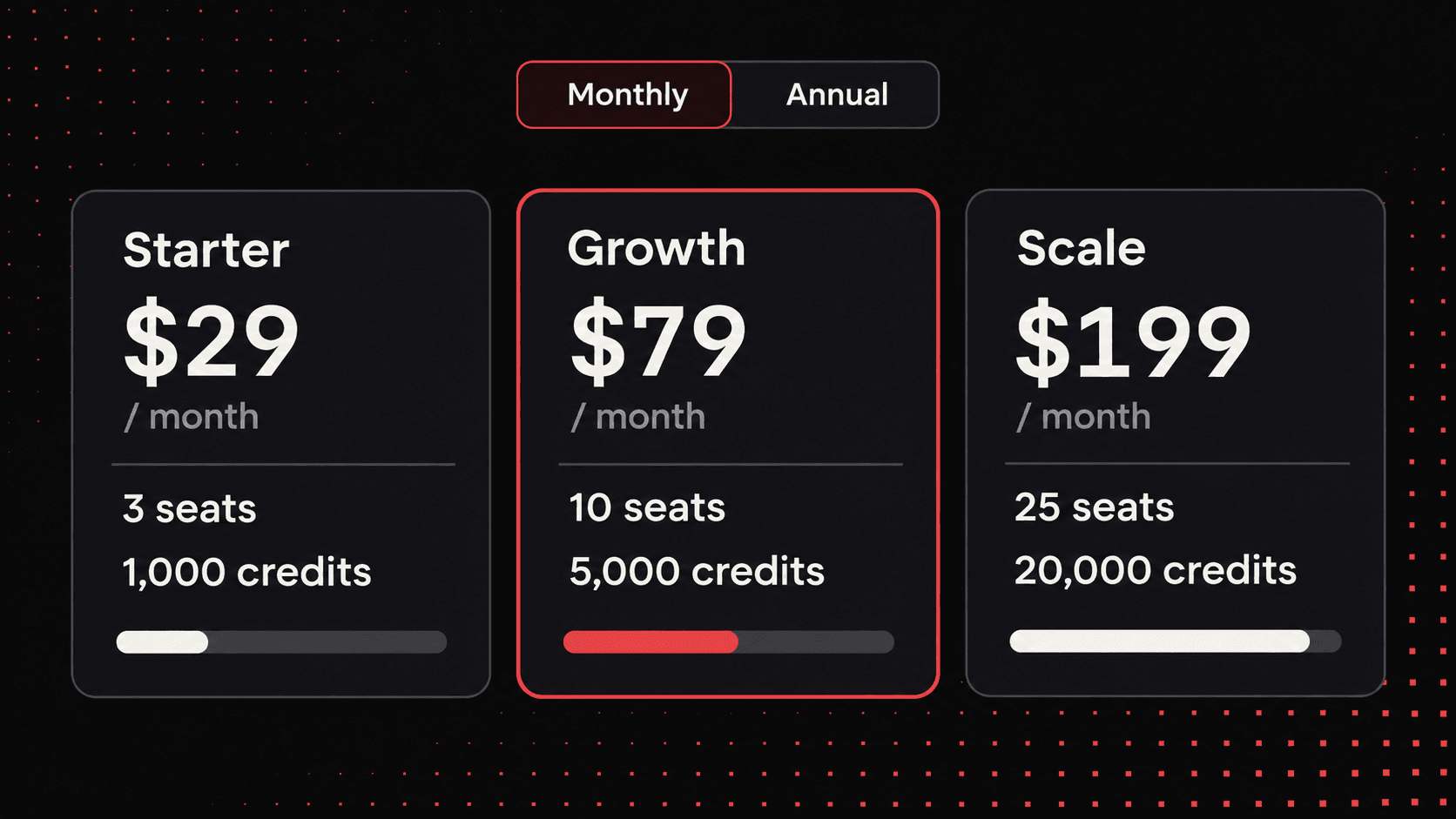
Tiered pricing packages your product into plans aimed at different customer needs. A basic plan might cover essential capabilities, while higher pricing tiers offer larger allowances or advanced features.
Usually, the advantage is choice. Customers can select a starting point, and expansion provides a natural reason to upgrade.
It's also useful for subscription companies serving different customer segments. Smaller businesses can purchase a lower-cost package, while enterprise buyers have access to premium offerings.
Still, a tiered pricing scheme needs clear boundaries. If buyers can't tell which plan fits, your sales process becomes harder. Too many pricing tiers can also slow decisions.
Design each tier around a distinct buyer profile or use case. Then test how customers move between plans as their requirements grow.
Per-User Pricing
Per-user pricing charges based on the number of people with access to the software. It's familiar to buyers and simple to forecast when team sizes are stable.
For collaboration software, per-user pricing can make commercial sense because each additional user gets direct access and benefits.
The problem appears when value stops tracking headcount. An AI agent may complete work for a whole department while only one employee oversees it. Charging per seat could understate the value delivered.
Alternatively, seat costs may discourage wider adoption and limit expansion revenue.
Consider per-user charges if access closely reflects the customer benefit. Otherwise, a different metric or hybrid pricing structure may fit the product better.
Usage-Based Pricing
Usage-based pricing charges customers for the amount of a service they consume. A software company might bill per API request or based on compute used to deliver an AI workflow.
The main appeal is alignment. Heavy users generate more revenue, while lighter users can start with smaller commitments.
A usage-based model may be particularly attractive for products where consumption varies significantly between customers.
For some, the risk is uncertainty. Customers may struggle to predict their next invoice, especially when resource demands fluctuate.
So, you could say that a usage-based pricing model works better when buyers can see consumption in real time. Spending limits, forecasts, and alerts also help them manage budgets.
For enterprise customers, that visibility can make the difference between an acceptable commercial arrangement and a purchase that stalls in procurement.
Credit-Based Pricing
Credit-based pricing lets customers purchase a balance that they spend as they use your product. Each action consumes an agreed number of credits.
For example, an AI platform could charge different credit amounts for a basic task and a compute-intensive workflow. Customers can commit to a credit package rather than receive a separate charge for every operation.
However, the rules need to be understandable. Buyers should know how credits translate to actual usage and what happens when their balance runs low.
Consider offering top-ups, defined expiration rules, or spending controls. Enterprise customers may also want separate budgets for individual users.
Credit-based pricing can support complex AI products, provided consumption remains transparent and paying customers have enough control over their spending.
Hybrid Pricing
For many growing SaaS companies, hybrid pricing offers a practical compromise.
Customers pay a recurring fee for a baseline package, then pay more when usage exceeds their allowance. The fee helps stabilize monthly recurring revenue, while variable charges account for additional resource consumption.
Imagine a subscription with a $500 monthly platform fee and an included usage allocation. Customers who stay within the allowance have predictable bills. Larger accounts pay for additional usage under published or negotiated terms.
Hybrid pricing works particularly well when customers expect subscription-style purchasing, but your product has meaningful variable costs.
Keep the pricing structure easy to explain. If a quote requires a spreadsheet and several meetings to understand, you may have introduced too much pricing complexity.
How to Calculate Subscription Prices
The calculations below can help you estimate a starting price, but keep in mind that no formula can tell you exactly what customers are willing to pay. You'll still need to test your assumptions against actual customer data and adjust your pricing as your business grows.
Determine Your Minimum Profitable Subscription Price
A workable price starts with unit economics, but don't confuse the cost-based floor with what you should actually charge.
Estimate the direct monthly cost of serving a customer, then divide it by one minus your target gross margin.
If delivery costs $60 monthly and you target a 75% margin, the margin-based price is $240.
Now stress-test the figure.
What happens if the account uses twice its expected allocation? Does the pricing structure recover the extra cost, or does your margin shrink?
Add relevant fixed overhead and acquisition economics to your business planning. Those costs may not belong in a gross-margin calculation, but they still influence profitability. The final price also needs to reflect customer value.
Profitable pricing strategies account for both the economics of delivering your service and the amount customers are willing to pay.
Estimate Customer Lifetime Value and Acquisition Costs
A healthy subscription business needs to recover what it spends acquiring new customers and generate enough gross profit over the relationship. Customer lifetime value (LTV) helps assess that return.
For a simplified monthly churn model, estimated gross-profit LTV equals average monthly revenue per customer multiplied by gross margin, divided by monthly customer churn.
Suppose average revenue is $300 per month, gross margin is 75%, and monthly churn is 2%.
The resulting estimate is $11,250 in gross-profit LTV. Treat it as a directional figure, not a guaranteed customer lifetime outcome.
Compare that estimate with customer acquisition costs and calculate CAC payback.
Customer retention plays a significant role here. Even small improvements in retention can change how much revenue an account generates over time.
Segment-level analysis is especially important because enterprise accounts may have much longer sales cycles and different retention patterns than self-service customers.
Model Revenue Under Different Usage Scenarios
A subscription pricing strategy can look profitable in a spreadsheet and perform poorly once customers begin using the product heavily.
You can use historical customer data to model how pricing behaves under different consumption levels.
For a usage-based AI service, examine accounts with unusually high inference costs, then compare their projected bills with delivery expenses.
Also study the customer side. Would a sudden increase create an invoice so large that an otherwise satisfied account questions renewal?
Run the simulation before introducing new pricing to your existing customers. You may find that a larger included allowance improves retention, or that prepaid credits make spending easier to control.
How to Structure Subscription Pricing for Enterprise Customers
Enterprise customers often need more flexibility than standard subscription plans can offer, especially when dealing with larger commitments and variable usage.
Let's shift to how to structure custom pricing agreements, manage usage limits, and give buyers better control over their spending.
Offer Annual Commitments and Volume Discounts
An annual commitment can give you more predictable revenue and give the customer a clearer budget. Yet the discount should reflect something meaningful, such as committed spending or lower commercial risk.
Look beyond the headline annual price. A customer with a large contractual commitment may still consume resources unevenly, creating periods of higher costs.
Consider minimum commitments paired with agreed usage rates. Enterprise buyers get an established spending framework, and your company retains a way to charge for expansion.
Finally, keep renewal terms explicit, especially if consumption grows during the contract. Otherwise, an attractive first-year deal can turn into a difficult pricing conversation later.
Build Usage Allowances and Overage Charges Into Plans
A usage allowance makes subscription-based pricing easier to budget. Customers know what the recurring fee covers and how additional consumption will be handled.
But don't leave overage behavior to interpretation. Say exactly which events are counted, how charges accumulate, and when the billing period resets.
For high-cost operations, you may prefer a hard cap that pauses usage rather than producing an unexpected bill. Other customers may want uninterrupted service with an agreed overage rate. Those preferences can vary between departments within the same enterprise.
A shared credit wallet with individual spending controls can help prevent one heavy user or agent from exhausting the full company allowance.
Give Customers Visibility Into Usage and Spending
A buyer may be comfortable with usage-based pricing but hesitate to sign a contract if they can't predict monthly spend.
You can address these concerns by giving customers real-time access to their usage data, including their remaining allowances, credit balances, and projected spending.
Instead of waiting for an invoice, they can monitor consumption and make adjustments before costs exceed their budgets.
It's also helpful to offer spending controls. For example, customers might want alerts when they're approaching their usage limits or the option to automatically purchase additional credits within an approved budget.
Your internal teams can benefit from the same visibility. Account managers can identify customers approaching their limits and discuss expansion opportunities before usage becomes an issue.
For enterprise buyers, having greater control over consumption can make it easier to approve usage-based contracts and manage ongoing costs.
Support Custom Pricing and Contract Terms
Standard pricing pages won't cover every enterprise deal, and they don't need to.
A large customer may need a customized mix of features and limits. The challenge is usually making sure those negotiated terms behave correctly inside the product after the contract is signed.
Don't rely on manual workarounds that require an engineer to change access rules each time sales approves an exception. Instead, use subscription management software that can manage subscription-based pricing alongside product entitlements and custom agreements.
Plan versions help when you launch new pricing without immediately changing agreements for existing customers.
For sales-led or hybrid businesses, operational flexibility makes custom enterprise pricing easier to offer consistently.
You can negotiate commercial terms without creating a separate implementation project for every account.
Give Your Subscription Pricing Room to Grow With Schematic
Your subscription pricing strategy will probably change as your business adds customers and introduces new product capabilities. More often than not, the big challenge is making those changes without constantly involving your engineering team.
Schematic is a complete usage-based billing platform for software and AI companies selling to enterprises.
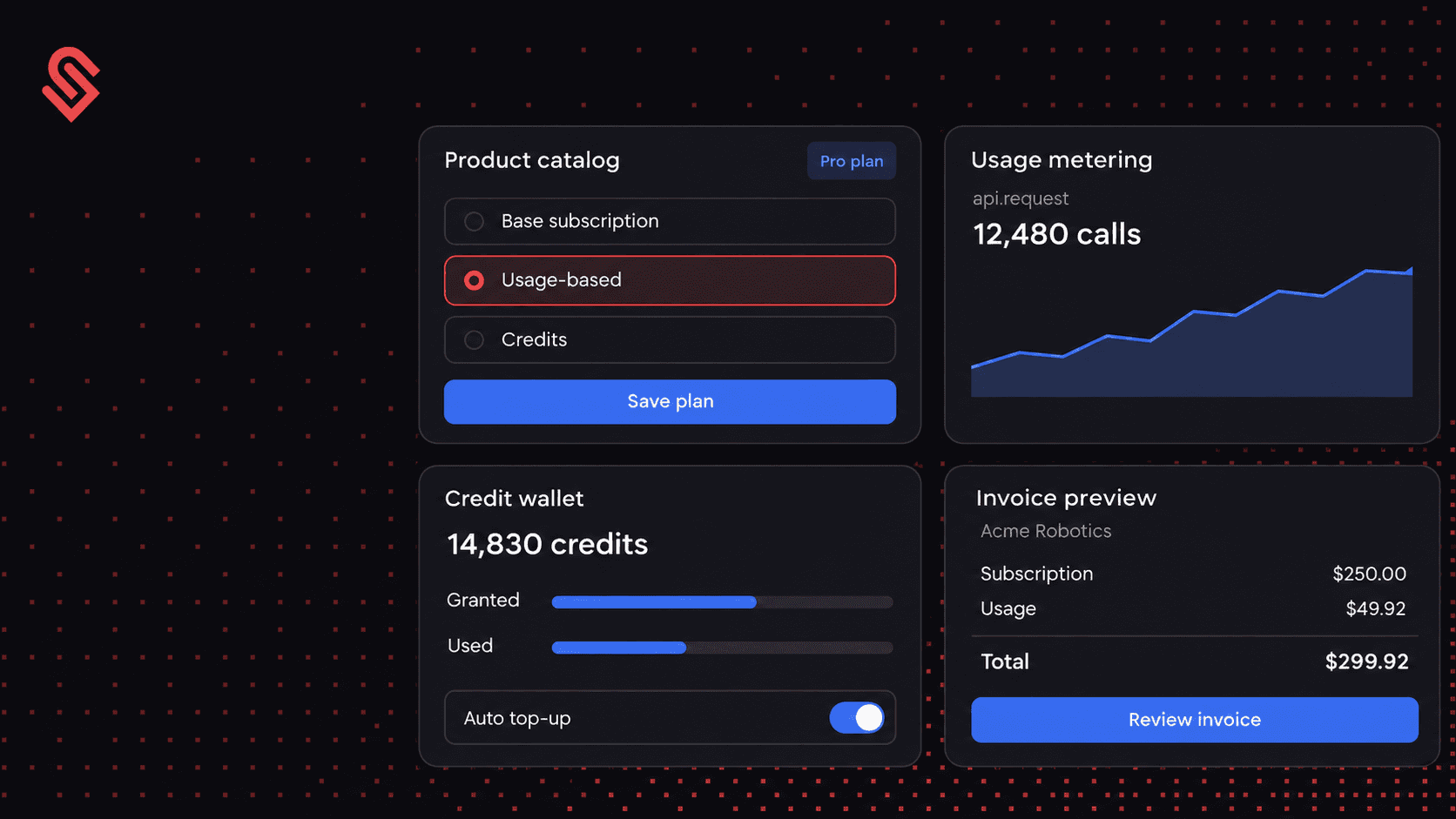
You can manage subscription plans, meter usage, and enforce limits in real time. Enterprise credit wallets also give customers visibility into their consumption and greater control over spending.
Schematic supports custom plans and plan versioning, which makes it easier to update pricing or migrate existing customers without rebuilding your product's pricing logic.
As Zach Hawtof, CEO and Co-Founder of Titanet, explains:
“Schematic gives us the ability to reconfigure plans without having to reconfigure the product itself, which is huge when we need to iterate quickly.”
If you're introducing AI features or moving beyond fixed subscriptions, Schematic can help you offer flexible pricing while giving enterprise buyers the spending visibility they expect.
Book a demo to see how Schematic can support your subscription and usage-based pricing strategy.
FAQs About How to Price a Subscription Service
How do I charge a subscription?
Choose what customers are buying, set the billing frequency, and define the rules for renewal or cancellation. In a subscription business model, customers pay regularly for continued access or consumption. Your subscription management software should record purchases and apply the correct billing terms.
How to sell a subscription service?
Show potential customers the ongoing value they'll receive, then offer a buying path suited to their needs. Self-service buyers may prefer published pricing tiers or a freemium model, while enterprise customers often expect negotiated contracts. Make renewal terms and potential overages clear before the agreement is signed.
What is a subscription pricing strategy?
A subscription pricing strategy defines how your company charges customers repeatedly for continued access or consumption. It covers the pricing model, payment frequency, upgrade options, and renewal terms. Different types of subscription businesses may use fixed fees, usage-based charges, or a combination of both.
How do you know when to change your subscription pricing?
Review your pricing when customer needs change, your delivery costs increase, or your current plans limit expansion opportunities. You can also monitor customer retention, upgrade rates, and usage patterns to identify potential issues. Test proposed changes with a small customer segment before introducing them to your broader customer base.