Top 5 Usage-Based Billing Automation Software Tools in 2026
Top 5 Usage-Based Billing Automation Software Tools in 2026: 1. Schematic 2. Metronome 3. Orb 4. Lago 5. Chargebee. Learn why Schematic stands out.
 Ryan Echternacht
On this page
- Overview
- TL;DR
- What Is Usage-Based Billing Automation?
- What Is a Usage-Based Billing Automation Tool?
- 5 Best Usage-Based Billing Automation Software Options in 2026
- 1. Schematic
- 2. Metronome
- 3. Orb
- 4. Lago
- 5. Chargebee
- Give Enterprise Customers More Control Over Their Usage With Schematic
- FAQs About Usage-Based Billing Automation Software
- How does usage-based billing automation work?
- What should I look for in usage-based billing software?
- Can usage-based billing software support subscriptions and prepaid credits?
- How can usage-based billing automation reduce revenue leakage and billing disputes?
How do you bill customers accurately when their software usage changes every day?
For SaaS and AI companies, usage-based pricing offers a flexible way to charge customers based on what they consume. Tracking thousands of usage events, applying different pricing rules, and calculating charges for each customer can become difficult as your business grows.
If you're still relying on manual processes, billing mistakes can lead to lost revenue and frustrated customers.
Usage-based billing automation software helps you manage these activities automatically, so your team can spend less time calculating charges and more time improving your product.
In this guide, we'll compare the top five usage-based billing automation platforms, explore their key features, and help you find the right fit for your business.
TL;DR
The five best usage-based billing automation tools are:
Metronome
Orb
Lago
Chargebee
What Is Usage-Based Billing Automation?
Usage-based billing automation is the process of automatically tracking how much of a product or service a customer consumes and calculating their charges based on that consumption.
Instead of relying entirely on fixed pricing, businesses can adopt a usage model where customers pay for what they actually consume.
For example, an AI software company might charge customers based on the number of API calls they make. A cloud storage provider could calculate charges based on the data volume each customer uses.
In either case, someone needs to record usage, apply the agreed pricing rules, and generate accurate invoices.
Usage-based billing automation handles these activities through software.
A typical process looks something like this:
Collect usage data: The billing system receives usage events as customers interact with the product.
Calculate billable usage: The software aggregates usage data according to the relevant metrics.
Apply pricing rules: The system calculates charges using the customer's pricing tiers, volume discounts, or negotiated rates.
Generate invoices: At the end of the billing cycle, customers receive invoices reflecting their actual consumption.
For usage-based billing to work reliably, each step needs accurate data. Automation is helpful for companies handling large volumes of usage events or supporting complex pricing arrangements.
What Is a Usage-Based Billing Automation Tool?
A usage-based billing automation tool is software that helps companies manage the technical and financial processes involved in charging customers for product consumption.
These platforms connect product usage data with billing logic, allowing your team to calculate charges without manually reviewing individual transactions.
For instance, imagine your software includes 10,000 API calls in each customer's monthly plan. Additional requests are billed according to usage volume.
A usage-based billing system can track those requests, identify when a customer reaches their allowance, and calculate any additional charges.
More advanced platforms also support flexible pricing models, such as prepaid credits and hybrid pricing that combines recurring and usage charges. Some provide customer-facing dashboards and usage alerts, which give buyers better visibility into their spending.
Features vary by provider, though. Certain platforms focus primarily on metering and invoicing, while others also handle feature access and real-time usage limits.
If you're selling to enterprise customers, pay particular attention to how well a tool handles negotiated contracts and spending controls. Billing accuracy is important, but buyers also want confidence in what they'll eventually pay.
5 Best Usage-Based Billing Automation Software Options in 2026
There are several usage-based billing platforms available, but they don't all approach billing automation the same way.
Your ideal choice depends on your pricing model, the volume of usage data you process, and how much control customers need over their spending (just to name a few).
Here are five options you should consider:
1. Schematic
Schematic is a complete usage-based billing platform designed for software and AI companies selling to enterprise customers.
One of the biggest concerns with usage-based pricing is that customers don't always know how much they'll end up paying. Schematic addresses this problem by giving buyers real-time visibility into their consumption and greater control over their spending.
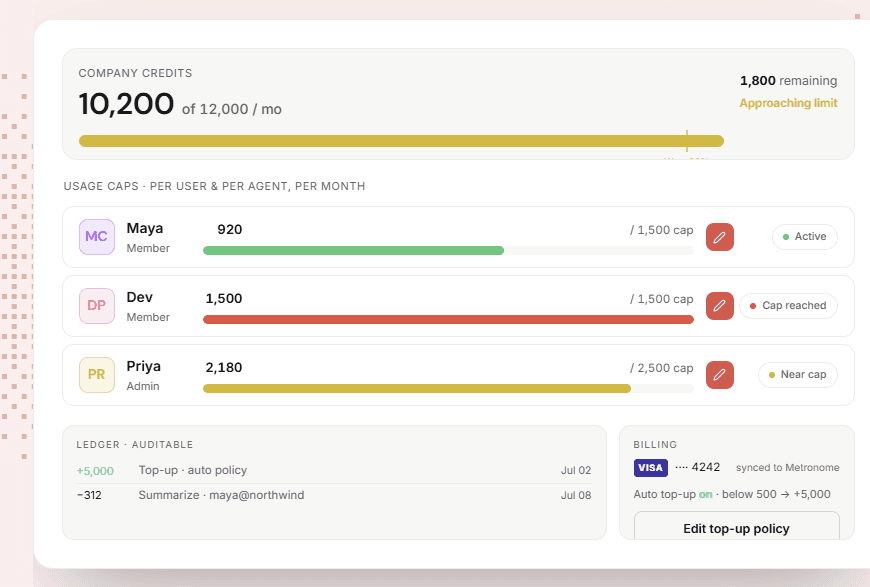
Its enterprise credit wallets let customers track their remaining balances, forecast usage costs, and set spending limits. Meanwhile, the platform automatically meters consumption and enforces usage restrictions according to each customer's plan.
Schematic also makes it easier to manage complex pricing arrangements. Your finance and product teams can configure custom plans, update pricing rules, and handle negotiated enterprise contracts without constantly relying on engineering.
For companies selling AI products with variable usage, these capabilities can help build customer trust and support larger enterprise deals.
Best Features
Enterprise credit wallets: Give customers a live view of their available credits and spending, helping them understand how much they've consumed and what remains.
Usage metering: Automatically track billable usage, including metrics such as API requests and AI token consumption, for accurate billing calculations.
Runtime entitlements: Control which features customers can access and enforce their usage limits in real time based on their purchased plans.
Self-service controls: Let customers monitor consumption, set spending caps, and manage their usage preferences without contacting your support team.
Flexible pricing: Configure different pricing models, including pay-as-you-go, prepaid credits, tiered pricing, and hybrid arrangements for enterprise customers.
Credit management: Set up credit rollovers, expiration windows, automatic top-ups, and consumption priority rules to support different customer agreements.
No-code pricing updates: Allow nontechnical teams to modify pricing configurations and customer entitlements without requesting new code deployments.
Plan versioning: Introduce updated pricing plans while managing migrations for existing customers, including those with negotiated terms.
Auditable ledger: Maintain a detailed record of usage events and credit transactions, which makes it easier to review billing activity and investigate discrepancies.
Schematic MCP: Access supported plan and billing management capabilities through AI tools, helping your team work with billing information through existing workflows.
If you're planning to introduce usage-based pricing or improve an existing billing system, Schematic can help you give enterprise customers the visibility and control they expect.
Book a demo to see how Schematic can support your usage-based billing strategy.
2. Metronome
Metronome is a usage-based billing platform designed for software companies with demanding monetization requirements.
Source: G2
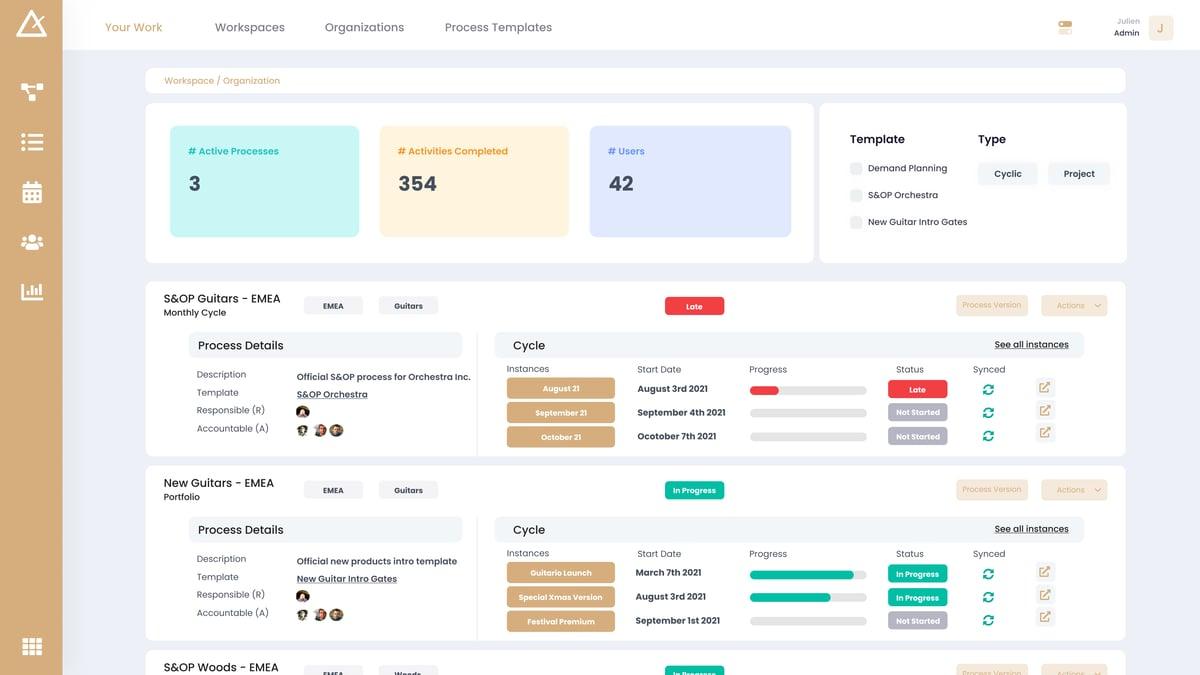
One of Metronome's strengths is its support for different pricing arrangements. Businesses can manage pay-as-you-go plans alongside custom enterprise agreements and experiment with pricing changes as their products develop.
The platform also offers customer-facing billing dashboards, helping users understand their spending before their invoices arrive.
For businesses with relatively simple subscription plans, Metronome's extensive pricing capabilities may require more initial configuration than necessary.
Still, it's a suitable option for companies that need detailed billing data and flexibility in how they charge customers.
Best Features
Real-time metering: Process product usage events for billing calculations.
Flexible pricing models: Support consumption-based pricing and custom enterprise agreements.
Credit management: Track customer credit balances and usage against commitments.
Pricing experimentation: Test pricing changes and manage updates for different customer groups.
Customer dashboards: Display usage charges and spending information.
Revenue reporting: Analyze usage revenue and recurring revenue trends.
Spend controls: Configure customer alerts and spending limits.
3. Orb
Orb offers usage-based billing software for businesses that want greater flexibility in how they calculate charges and manage pricing.
The platform collects raw usage events and converts them into billable metrics. Companies can then apply different pricing rules depending on their products or customer agreements.
Source: WithOrb.com
Orb is useful if you're experimenting with complex pricing models or need to adjust your billing logic as your business grows. Its pricing simulation tools also help finance and product teams evaluate potential changes before introducing them to customers.
In addition, Orb supports invoicing and connects billing information with financial workflows.
The platform's broader capabilities may be unnecessary if your company only needs basic recurring billing. You'll also want to check how its integration requirements fit your existing billing stack, particularly if you use several financial systems.
Best Features
Usage tracking: Collect high-volume usage events through APIs or supported data sources.
Usage rating: Calculate billable amounts using configured metrics and pricing rules.
Pricing simulations: Evaluate potential revenue effects before launching pricing changes.
Hybrid billing: Combine subscription fees with usage-based charges.
Automated invoicing: Generate invoices based on recorded consumption.
Usage alerts: Trigger notifications or workflows when spending reaches configured thresholds.
Finance integrations: Connect billing operations with accounting and other financial systems.
4. Lago
Lago is an open-source billing platform that helps companies automate usage metering and invoicing. Its open-source approach makes it an interesting option for businesses that want greater control over their billing infrastructure.
You can use Lago Cloud or deploy the software within your own environment, depending on your operational requirements.
Source: GetLago.com
Lago supports several pricing arrangements, including usage-based billing, prepaid credits, and hybrid subscriptions.
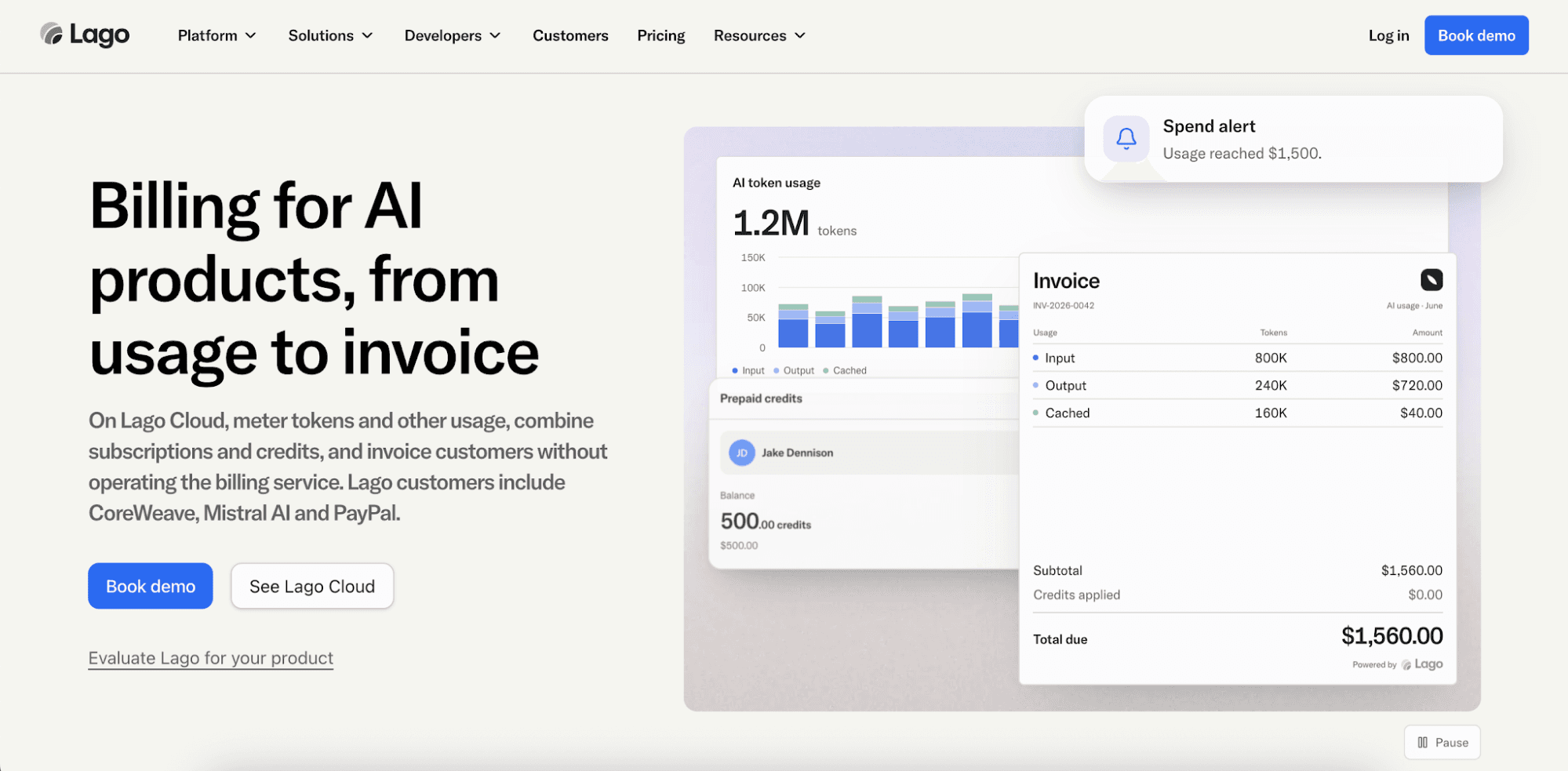
For example, an AI company could track token consumption, apply customer-specific rates, and automatically calculate charges for each billing cycle.
The platform can also aggregate usage data into configurable billable metrics, which helps businesses turn raw consumption events into invoiceable amounts.
One consideration is that self-hosting introduces infrastructure and maintenance responsibilities. Businesses without dedicated technical resources may prefer its managed cloud offering.
Best Features
Usage metering: Capture product usage events and aggregate usage data.
Flexible pricing: Configure pay-as-you-go, graduated pricing, and volume discounts.
Prepaid credits: Manage customer balances and automatic wallet top-ups.
Automated invoicing: Calculate usage charges and create customer invoices.
Open-source deployment: Run Lago on your infrastructure or use its managed cloud service.
Custom agreements: Apply customer-specific pricing and billing configurations.
Integrations: Connect billing information with supported payment and accounting systems.
5. Chargebee
Chargebee is a subscription billing platform that also supports usage-based pricing models. It's relevant for SaaS companies that already rely on recurring subscriptions and want to introduce usage-based charges.
For instance, you could continue charging existing customers a fixed monthly subscription fee while billing them separately for consumption beyond their included allowance.
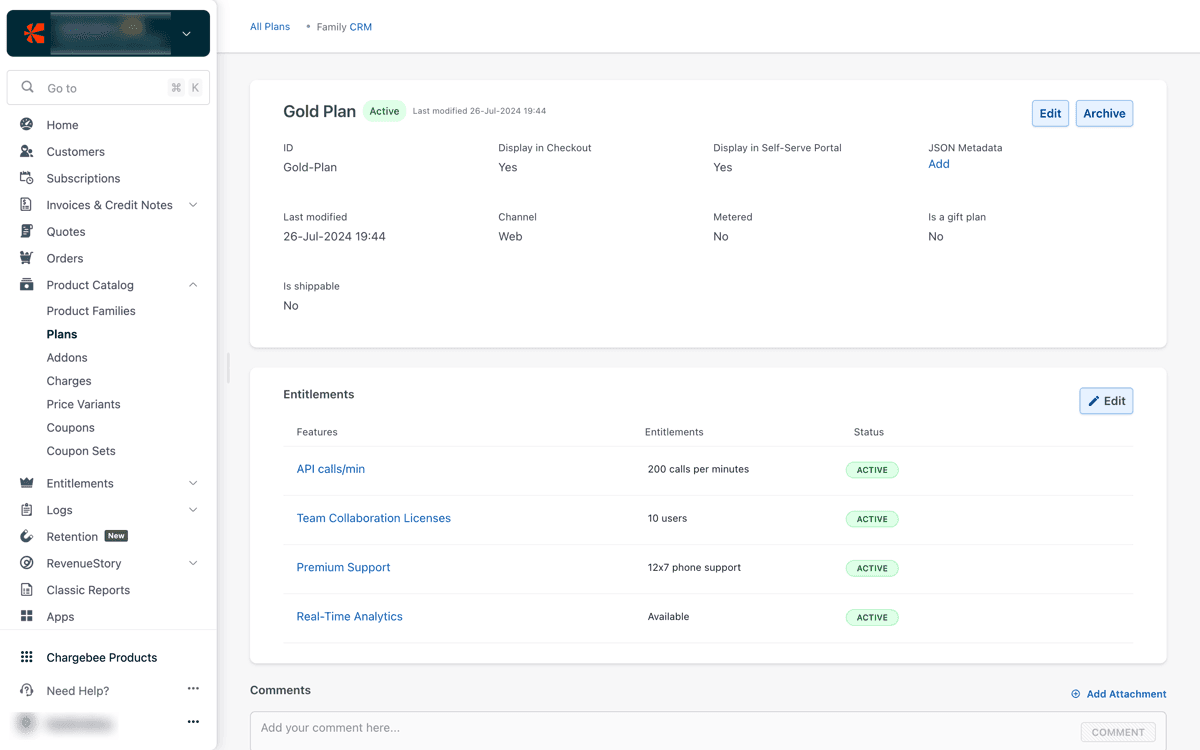
Chargebee can collect usage data, apply configured pricing rules, and incorporate the resulting charges into customer invoices.
Source: G2
It also offers subscription lifecycle management and related revenue operations products, including a separate revenue recognition solution.
However, companies primarily focused on real-time credit spending controls and deeply customized enterprise usage experiences should evaluate how Chargebee's features match their requirements.
Best Features
Usage-based billing: Calculate charges based on recorded product consumption.
Subscription management: Manage recurring billing and subscription changes.
Hybrid pricing: Combine recurring fees with metered usage charges.
Prepaid credits: Grant customer credits and track their consumption.
Usage analytics: Monitor usage patterns and customer consumption.
Billing alerts: Notify customers when usage or spending reaches defined thresholds.
Revenue recognition: Support automated revenue recognition through Chargebee RevRec.
Contract customization: Configure usage allowances and customer-specific overrides.
Give Enterprise Customers More Control Over Their Usage With Schematic
Your billing software might calculate every charge correctly, but can your customers see what they're spending before their next invoice arrives?
For companies selling usage-based software to enterprises, that visibility can make a meaningful difference during procurement. Buyers often need to understand how consumption affects their budget, particularly when variable usage makes future costs harder to predict.
Schematic addresses those concerns with enterprise credit wallets that show customers their consumption in real time.
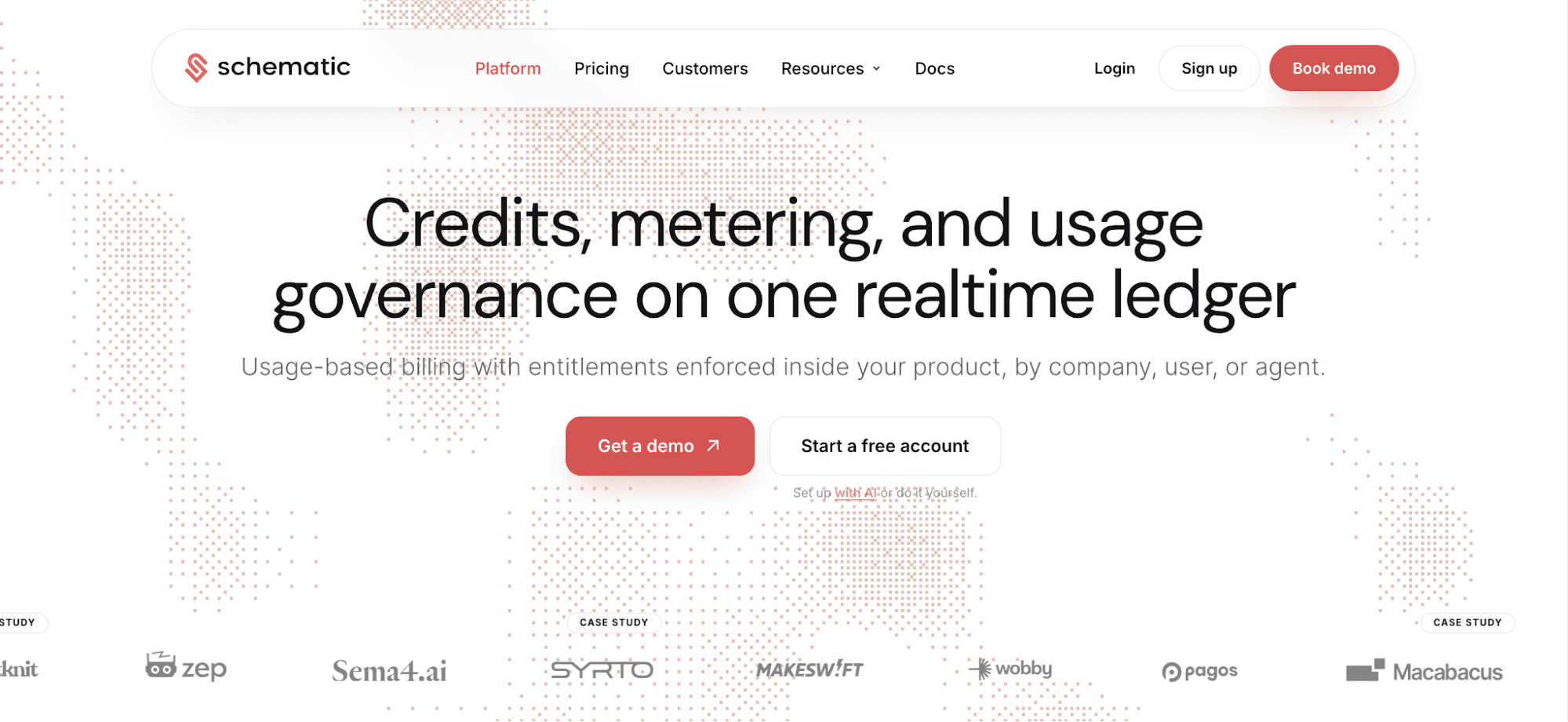
Customers can monitor remaining balances and set spending controls, while your team can manage usage limits and custom contracts through the same platform.
As Rahul Gill, Customer Experience Lead at Macabacus, explains:
“Schematic's ability to offer usage caps, bundles, and top-ups gave our customers the cost predictability they need.”
Greater spending visibility helps customers connect their bills to the value they receive. For your business, it can also create more opportunities to expand enterprise accounts as customer demand grows.
FAQs About Usage-Based Billing Automation Software
How does usage-based billing automation work?
Usage-based billing automation tracks customer consumption, applies configured pricing rules, and calculates charges automatically. The software records usage events, aggregates the data, and converts consumption into billable amounts. It can also generate invoices at the end of each billing cycle.
What should I look for in usage-based billing software?
Look for accurate usage metering, flexible pricing models, and automated invoicing. If you sell to enterprises, prioritize platforms with real-time spending controls and support for custom contracts. Your usage-based billing system should also make pricing changes manageable as your business grows.
Can usage-based billing software support subscriptions and prepaid credits?
Yes. Many usage-based billing platforms support hybrid pricing, allowing businesses to combine fixed subscription fees with usage charges. Some also offer prepaid credit wallets, automatic top-ups, and real-time balance tracking to help customers manage their spending.
How can usage-based billing automation reduce revenue leakage and billing disputes?
Automated usage tracking helps capture billable consumption and apply pricing rules consistently, reducing missed charges and calculation errors. Giving customers access to the same usage data used for billing can also improve transparency and help prevent disputes over unexpected invoices.