 Ryan Echternacht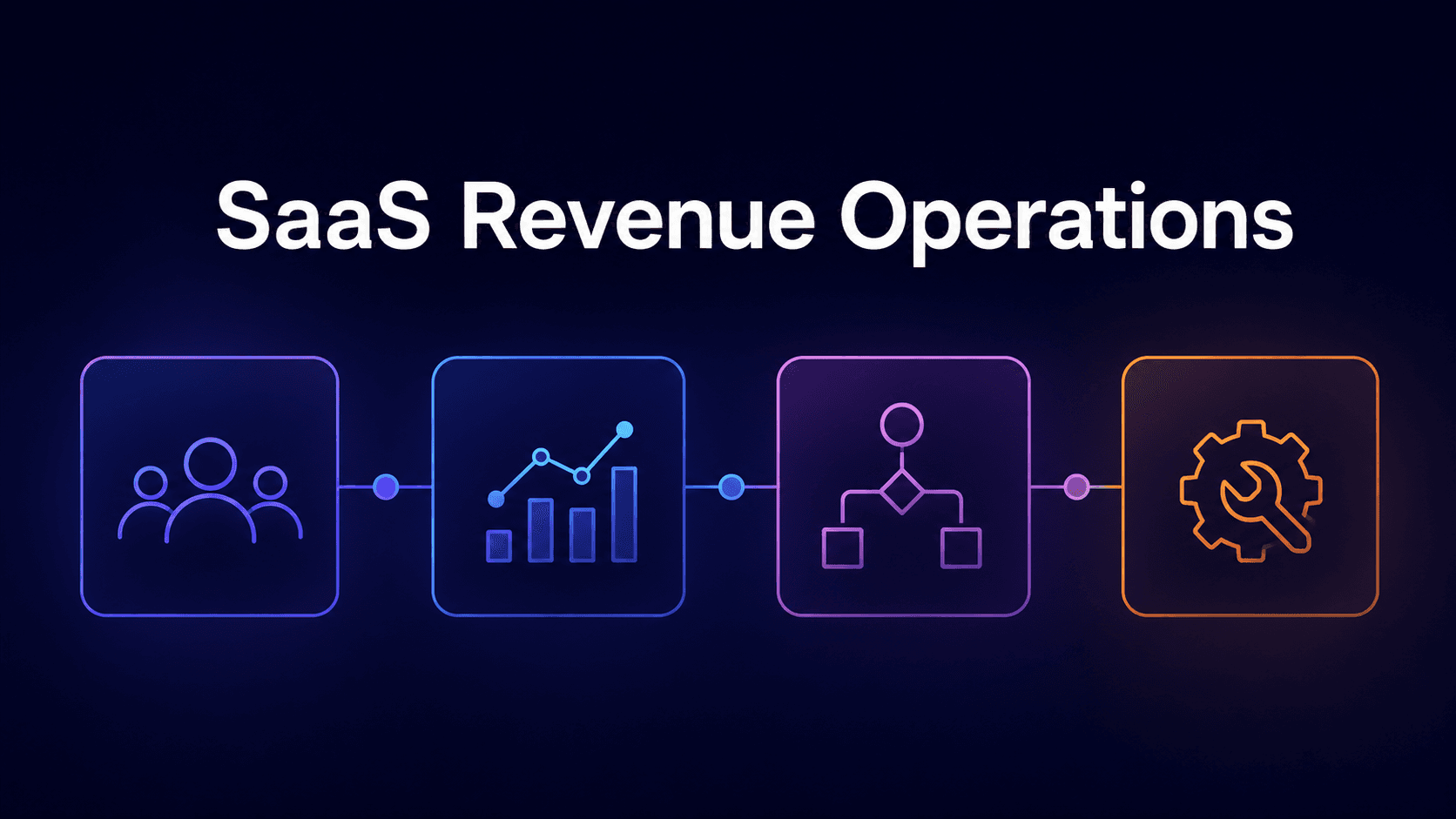
SaaS companies rely on more than sales operations to increase profits. Marketing, finance, product, and customer success teams all shape revenue. When these departments operate in silos, growth slows down.
Revenue operations (RevOps) can bring these teams together. It connects people, processes, data, and technology to improve internal workflows and drive revenue growth.
This guide breaks down everything you need to learn about SaaS revenue operations. We'll discuss its definition, importance, role, and the core pillars of a successful RevOps strategy.
TL;DR
- SaaS revenue operations align different teams around the same goals, data, and workflows.
- RevOps helps SaaS companies increase revenue, make better decisions, improve forecasting accuracy, shorten sales cycles, and give customers a smoother experience.
- The four core pillars of a strong RevOps strategy are people, process, revenue data, and technology.
- To implement RevOps successfully, you should review current workflows, collect data, integrate tools, automate routine tasks, and track key metrics.
- Schematic helps RevOps teams control monetization without hardcoding logic or building integration glue.
What Is SaaS Revenue Operations?
SaaS revenue operations is a unified business function that connects the teams, systems, data, and processes involved in generating recurring revenue for a software subscription company.
It aligns finance, marketing, sales, and customer success teams around the same goals.
RevOps also covers the entire revenue lifecycle, from lead management to recurring billing and revenue recognition.
The goal is to create clear ownership, consistent workflows, and reliable reporting that support sustained revenue growth.
Why Do SaaS Companies Need Revenue Operations?
RevOps plays a key role in SaaS businesses. Below are the reasons why it's important.
Increase Revenue
Revenue operations can help SaaS companies find gaps that slow down revenue growth. It connects lead generation, sales activity, onboarding, renewals, and account growth into one system.
Teams can see where prospects drop off, why deals stall, and when existing customers are ready to upgrade.
Business leaders or the chief revenue officer (CRO) can then redirect resources to the strategies most likely to achieve sustainable growth. For example, creating better marketing campaigns can increase engagement throughout the entire customer journey.
By driving engagement, RevOps can reduce churn and maximize revenue potential from both new and existing customers.
Enhance Decision-Making
SaaS leaders need accurate information before they can make sound business choices.
Revenue operations consolidate information from different departments, making it easier to analyze data, customer behavior, and financial health.
Teams can compare channels, customer segments, plans, and go-to-market strategies without switching between different platforms. They can also see which ones drive conversions, renewals, and predictable growth.
These valuable insights help them decide where to spend, which processes need changes, and which customer groups deserve more attention. Decisions become based on clear signals rather than guesses, personal views, or outdated spreadsheets.
Improve Forecasting Accuracy
RevOps increases forecasting accuracy by providing a clear and unified view of revenue data.
A reliable revenue operating system offers insights into pipeline activity, marketing results, renewals, billing records, and customer health in real-time dashboards.
These give teams current information instead of separate reports that may contain old or conflicting numbers. They can build stronger forecasts and financial models.
Marketing leaders can plan campaign budgets, sales reps can set realistic targets, and customer success teams can prepare for subscription renewals and account risks.
Shorten the Sales and Revenue Cycles
Revenue operations removes delays that keep prospects and customers waiting. It sets clear rules for lead routing, qualification, pricing approval, contract review, onboarding, billing, and plan changes.
Each department knows who owns the next step and what information is needed.
Automated alerts and integrated tools also reduce manual data entry. These changes help sales reps respond faster and move qualified buyers through the sales cycle with fewer pauses.
SaaS RevOps also speeds up the rest of the revenue cycle after closing a deal. Product access, invoices, renewals, and upgrades can happen sooner because the right data moves between teams and systems without slow internal handoffs.
Ensure Positive Customer Experiences
Customers expect each department to understand their account, plan, limits, and contract terms.
Revenue operations can provide a shared customer record and eliminate data silos.
Sales, marketing, customer success, product, and finance teams can give consistent answers. They can also respond faster to billing questions, renewal requests, and product access issues, since they can quickly pull up the account details.
RevOps can also reveal useful insights about customer preferences and usage patterns. Teams can use that information to offer timely support and relevant plan options.
Plus, clear handoffs prevent customers from repeating the same details to several departments.
All these practices improve customer satisfaction and build strong relationships with users.
What Does the RevOps Team Do Within SaaS Companies?
The revenue operations team owns the systems, data, processes, and key metrics that connect different departments into a unified revenue engine.
Below are their key responsibilities.
- Data management: RevOps teams centralize data, remove outdated information, and keep records organized.
- Process optimization: They also identify workflow inefficiencies that may affect business growth, set expectations for cross-functional collaboration, and standardize every stage of the revenue process.
- Revenue monitoring: Revenue operations focus on tracking key performance indicators and ensuring everyone works towards the same goals.
- Technology ownership: RevOps teams manage the entire tech stack and oversee successful integration into the SaaS business.
RevOps vs. Sales vs. Marketing Teams
Now that you've learned the role of RevOps, you might be curious to know how it differs from sales and marketing functions.
Function | Main Focus | Common Responsibilities |
Revenue operations | Entire revenue cycle | Team alignment, data management, forecasting, technology setup, and process optimization |
Sales ops | Sales processes and customer relationship management (CRM) | Prospecting, calls, product demos, proposals, and negotiations |
Marketing ops | Campaigns and attribution | Market research, lead generation, brand management, content creation for every stage of the sales funnel, and performance tracking |
RevOps can connect sales and marketing efforts to results, renewals, and revenue growth. It does not replace sales or marketing. Instead, it helps both teams work toward the same goals.
4 Core Pillars of a Successful SaaS Revenue Operations Strategy
The pillars below form the foundation of successful revenue operations and guide how SaaS teams can grow revenue.
1. People
People are the starting point of any RevOps strategy. Clear roles, shared goals, and strong communication help revenue-driving teams understand how their work affects revenue.
Align sales, marketing, and customer success teams around the same data, targets, rules, and systems.
You should also organize regular meetings to review results, solve gaps, and agree on next steps.
Training is just as important because new systems and processes only work when people know how to use them.
2. Process
The process defines how work moves from one team to another.
SaaS companies need clear steps for lead routing, qualification, sales approval, onboarding, billing, and revenue expansion.
RevOps teams review each workflow to find delays, weak handoffs, and manual tasks that slow down revenue growth.
Then, they optimize processes by removing extra steps, setting clear rules, and automating where it makes sense. Doing so keeps the revenue engine running smoothly.
3. Revenue Data and Insights
Accurate data and insights are important to building a strong SaaS revenue operations strategy.
Unified dashboards bring pipeline records, campaign results, subscription details, product usage, billing activity, renewals, and customer data in one place.
Each metric should have a clear definition to simplify data analysis and prevent teams from reporting different figures.
Meanwhile, reports need to focus on actions, not just numbers. Valuable insights help SaaS leaders set realistic targets, compare performance, plan budgets, and adjust team priorities based on current business activity.
4. Technology Stack
The tech stack supports the people, processes, and data behind RevOps.
It typically includes the CRM software, data warehouses, marketing automation tools, billing solutions, revenue analytics platforms, and subscription management systems.
These systems should share accurate information so teams do not rely on manual data entry or spreadsheets. They must also improve communication and support seamless workflows.
Common Challenges in Implementing SaaS RevOps
SaaS RevOps can fail when teams lack shared data, clear ownership, standardized processes, or support. Here are the challenges to expect:
- Data silos: PwC reports that more than half (around 55%) of businesses have data silos. These often lead to conflicting reports, weak forecasts, inefficiencies, and poor decision-making.
- Resistance to change: Product, marketing, sales, customer success, and finance teams may reject new tools or workflows when they do not understand the reason for the change. Poor training and weak leadership support can slow adoption.
- Unclear roles: RevOps work can overlap with other departments. Without clear ownership, tasks are missed, decisions take longer, and teams may blame one another.
- Inconsistent processes: It becomes difficult to manage the entire customer lifecycle and revenue processes when teams follow different rules and handoff methods. Inconsistency increases the risk of delays and errors.
Step-by-Step Guide to Launching a SaaS Revenue Operations Strategy
Implementing SaaS RevOps requires a strategic approach. Below are five steps you can follow to keep your people, processes, systems, and tools aligned.
Step 1: Review Existing Processes
Analyze your current revenue workflows, from lead generation to invoice generation and payment processing.
Document each stage, the team responsible, the tools used, and the data passed to the next team.
Then, look for inefficiencies, missing details, visibility gaps, and steps that depend on manual updates. Ask team members where work often slows down or gets lost.
Use those findings to rank problems based on their impact on revenue, staff time, and customers. Fix the largest gaps first instead of trying to optimize all processes at once.
Step 2: Consolidate Data
Gather information from sales, marketing, product, customer success, and finance teams. Here are the most important data you can collect:
- Customer data: Includes company name, business size, role, and other personal details.
- Product data: Refers to the services and products sold (also known as SKUs or plans) and their associated features.
- Quotes: Outline the costs the potential customer has to pay.
- Orders: Break down the plans, add-ons, or services the user has purchased.
- Contracts: Refer to a legally binding agreement between a SaaS vendor and a customer.
- Invoices: Describe a bill issued to the customer for access to the product.
- Payments: Record cash received from customers.
Choose one main source for each data type and set clear rules for updates. For example, the CRM software may own account and deal records, while the billing system stores invoices and payments.
Step 3: Integrate All Your Tools
After collecting relevant data, you can integrate core systems into a single platform.
Seamless integrations provide a unified view of all revenue-related information. These also reduce manual data entry and human errors.
Make sure to test every connection with common and edge cases. For instance, a closed deal should trigger the correct contract, product access, billing plan, and onboarding tasks. An upgrade or cancellation should also update each related system.
Assign an owner to monitor integrations, review errors, and fix failed data transfers before they affect customer experience and financial reporting.
Step 4: Automate Routine Tasks
Look for repetitive tasks that take time away from higher-value work. And automate them when needed.
Good starting points include lead scoring, invoice generation, renewal alerts, payment notices, follow-up sequences, and dunning management.
Define the trigger, action, owner, and expected result for each automation. For example, a signed contract can create an onboarding task, update the customer's account status, and alert finance teams.
Automation does not mean removing human oversight. Team members should still review custom plans, contract changes, large discounts, unusual billing cases, and other high-risk actions.
Step 5: Track Key Metrics and Optimize Your Strategy
The final step involves tracking metrics tied to your SaaS company’s revenue goals. Doing so will help you understand current performance and identify areas for improvement.
Below are the key metrics to monitor:
- Annual or monthly recurring revenue: ARR or MRR measures predictable subscription revenue over a year or a month. They show whether recurring revenue is growing, flat, or falling.
- Customer acquisition cost: CAC shows how much the company spends to gain one new customer. It includes sales and marketing costs tied to acquisition.
- Churn rate: It's the percentage of customers lost during a set period. A high churn rate may point to weak onboarding, poor product fit, or billing issues.
- Net revenue retention: NRR reveals whether you're growing revenue from existing customers through upselling and cross-selling.
- Customer lifetime value: LTV estimates the total revenue or profit a user may bring during the entire customer relationship.
- LTV to CAC ratio: It compares customer value with acquisition cost to calculate return on investment.
- Pipeline velocity: It measures how quickly sales teams move qualified leads through the funnel and create revenue for the company.
Use these key performance indicators to understand customer behavior, predict users' needs, and improve your RevOps strategy.
Schematic Provides a Monetization Control Plane for SaaS RevOps Teams
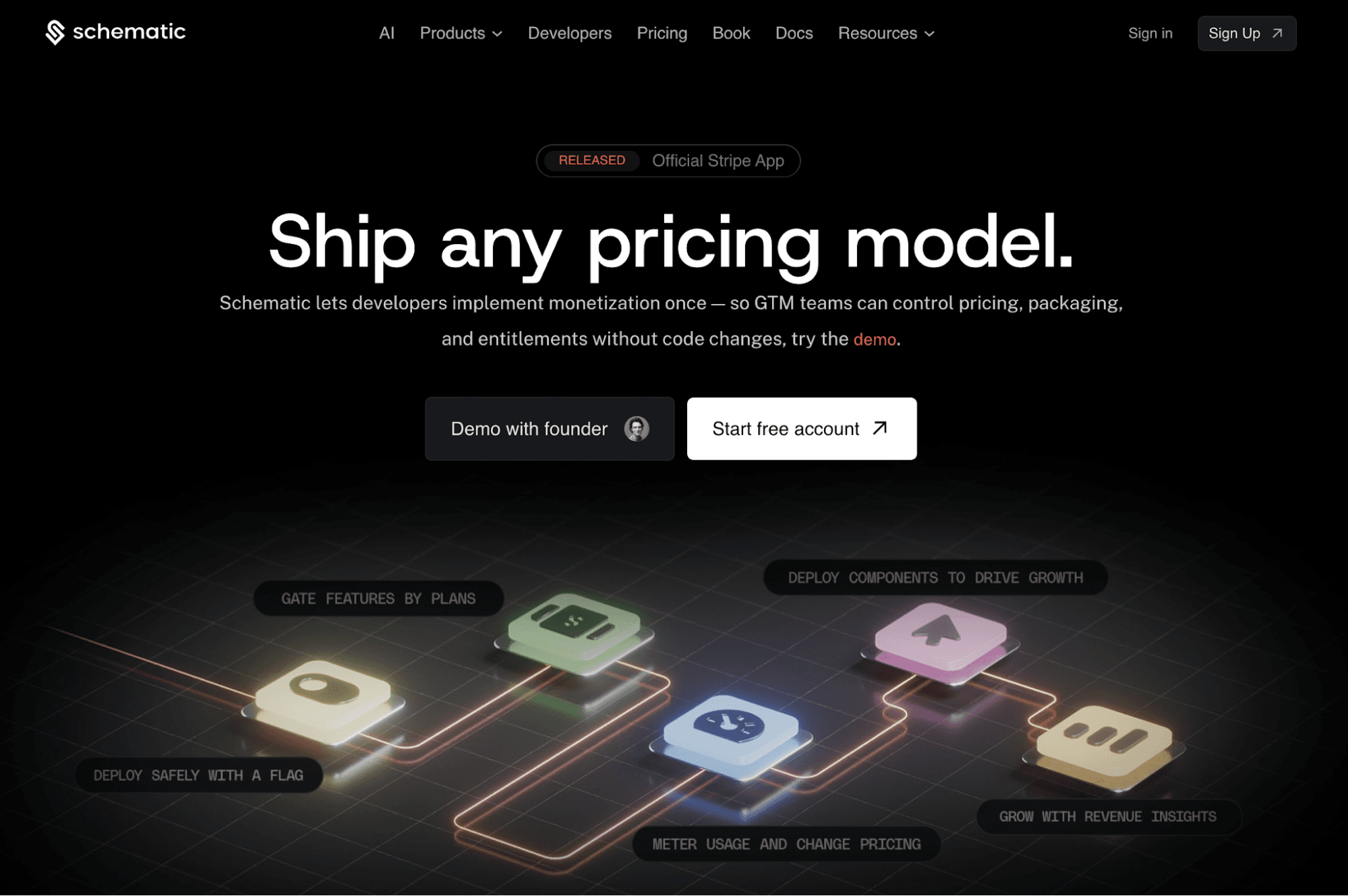
Schematic is the monetization operating system for modern SaaS and AI companies. It serves as the system of record for plans, software entitlements, credits, usage limits, trials, add-ons, and exceptions.
Built on Stripe, Schematic decouples pricing and billing logic from the application. It gives RevOps teams a control plane that they can use to continuously iterate on SaaS monetization.
Product managers can update packaging, usage limits, and in-product enforcement without waiting for developers.
Account executives can grant an overage exception for a strategic customer who is close to hitting their usage threshold without filing a ticket.
Meanwhile, engineering stops writing billing code and maintaining complex entitlement management systems.
FAQs About SaaS Revenue Operations
What are revenue operations in SaaS?
Revenue operations in SaaS is a shared business function that connects sales, marketing, customer success, finance, and product teams. It manages the full revenue cycle, from lead generation to revenue recognition.
What are the four pillars of revenue operations?
The four pillars of revenue operations are people, process, revenue data, and technology. They align teams around the same goals, standardize workflows, manage data, and integrate systems into one.
Should customer success be included in RevOps?
Yes. Customer success should be part of RevOps because retention, renewals, and expansion can impact revenue. Including customer success teams gives the business a clearer view of customer health, churn risk, and account growth.