 Ryan Echternacht
Financial modeling shows a company's current financial health and demonstrates future performance to stakeholders.
But this tool is only as useful as the assumptions behind it. SaaS companies have a unique business model built on recurring subscriptions, not one-time sales. They also have distinct expenses, such as hosting, support, and product development.
A robust SaaS financial model considers these industry-specific factors for cash flow projections, revenue forecasting, risk management, and decision-making.
In this guide, we'll discuss the main components of a SaaS financial model, the benefits, and the key metrics every SaaS business should track.
TL;DR
- SaaS financial modeling is the process of forecasting a software company’s revenue, expenses, and growth.
- The key components include revenue forecasting, operating expenses, income statements, balance sheets, cash flow statements, unit economics, and hiring plans.
- A SaaS financial model helps businesses reduce risks, make smarter decisions, allocate budget more effectively, and build stronger relationships with investors.
- Teams should track recurring revenue, net revenue retention, average revenue per user, gross margin, customer churn, acquisition costs, and lifetime value.
- Schematic is the complete monetization platform that helps software and AI companies validate financial assumptions. It provides valuable data through usage visibility tools, consumption signals, and a credit ledger that records every grant, burn-down, and expiry.
What Is SaaS Financial Modeling?
SaaS financial modeling is the process of building a financial forecasting tool for a Software-as-a-Service business. It shows how a company expects to earn revenue, spend money, manage cash flow, and hit growth targets over time.
Traditional financial models often focus on revenue projection for a single product. On the other hand, SaaS financial plans should account for recurring revenue that comes from subscriptions. They also consider cancellations, renewals, and the effect of customer churn on future revenue.
The goal is to turn business assumptions into clear financial projections. For example, a SaaS company can estimate how many new customers it may acquire, how much subscription revenue those customers may bring in, and how much it will cost to support that growth.
A SaaS financial model is a powerful tool that provides insights into your company's profitability, stability, and growth potential. These help you make better-informed decisions as you scale.
Core Components of a SaaS Financial Model
Most SaaS companies include these key components when building a financial and revenue model.
1. Revenue Forecasting
Revenue forecasting estimates a subscription business's revenue over time. It considers both annual recurring revenue (ARR) and monthly recurring revenue (MRR).
However, revenue forecasting is not just about adding up sales from subscriptions. It should also reflect how customers move through the SaaS business. For example, some users may start on a lower plan and upgrade to a higher tier later. Others may cancel or reduce seats.
Effective revenue forecasting calculates plan renewals, upgrades, downgrades, cancellations, and expansion revenue. It may also consider automatic top-ups, optional add-ons, and overage fees for software usage beyond set limits.
2. Operating Expenses
Operating expenses are the costs required to run a SaaS business. These often grow as the company scales and the product evolves.
Examples include infrastructure costs, sales expenses, marketing expenses, salaries, research costs, and administrative expenses.
According to a SaaS Capital survey, B2B SaaS companies spend 22% of their annual recurring revenue on research and development. That means the cost of creating, testing, and improving software is often one of the largest expense lines.
A strong SaaS financial model separates fixed costs from variable expenses. Fixed costs usually remain stable every month. Variable expenses increase or decrease with growth, hiring, or customer activity.
By including operating expenses in financial modeling, you can estimate how much cash your SaaS company needs to support future growth. You'll also have a better idea where to spend, where to cut, and when to add new resources.
3. Income Statement
The income statement breaks down the SaaS company’s revenue, gains, and losses over a period of time. It helps you understand whether your business is moving toward profit or still relying on outside capital.
It's structured with revenue at the top. Next, it subtracts the cost of goods sold (COGS), such as support salaries, payment processing fees, and hosting costs. The result is gross profit.
The SaaS financial model also deducts operating expenses. These may include sales, marketing, product, engineering, and administrative costs. That leads to net income or loss.
The income statement provides a high-level view of your company's financial performance. It shows how revenue growth, profit margins, and expense control work together.
4. Balance Sheet
The balance sheet helps teams understand the company's cash position at a specific point in time. It tracks assets, liabilities, and equity, which makes it a key part of the company’s financial statements.
Balance sheet items often include cash, accounts receivable, accounts payable, deferred revenue, debt, and shareholder equity. These show whether the business has enough resources to meet short-term and long-term goals.
Monitoring deferred revenue is especially important when you bill customers upfront.
For example, if a customer pays for an annual plan in advance, your SaaS business receives the cash. But you earn that revenue over the service period.
The balance sheet tracks the gap between cash received and revenue recognition. It also helps you understand current financial obligations and stability.
5. Cash Flow Statement
The cash flow statement shows how cash enters and leaves your SaaS business. This is important because profit and cash are not always the same.
You may collect advance payments from annual subscribers, but still face cash pressure if other collections are slow or expenses increase too fast.
With cash flow analysis, you can better understand runway, burn rate, and future funding needs. You'll know when you need to slow down spending or raise more capital.
6. Unit Economics
Unit economics measure the value and cost of acquiring and serving a single customer. These reveal whether growth is healthy or not.
Common unit economics include customer acquisition cost (CAC), customer lifetime value (LTV), and the LTV to CAC ratio. These SaaS metrics help explain if each new customer adds long-term value.
For example, you may grow revenue fast but spend too much to win each customer. In that case, growth can create cash strain instead of strength.
7. Hiring Plan
A hiring plan helps you predict the cost of team growth before making hiring choices. For example, expanding your sales team may increase revenue, but it also raises payroll and commission costs.
When developing a hiring plan, determine which roles your SaaS business needs, when those roles should be filled, and how each new hire will affect total operating costs.
Include salaries, benefits, payroll taxes, commissions, recruitment fees, and, if applicable, contractor costs.
Benefits of SaaS Financial Modeling
Financial modeling can benefit your SaaS business in several ways.
Mitigate Financial Risks
A SaaS financial model helps you identify and mitigate financial risks before they become larger problems. It reveals how revenue streams, costs, churn, and cash flow may change over time based on current assumptions.
For example, financial modeling may show that expenses are growing faster than income or that customer churn is reducing total recurring revenue.
You can also see what would happen if customers downgrade or if operating costs increase. This gives you enough time to change pricing and packaging, adjust spending, or delay hiring.
Without a clear financial model, many risks stay hidden until they affect cash flow. With one, you can predict challenges ahead of time and plan your course of action.
Support Strategic Planning
SaaS financial modeling turns company goals into a clear financial plan. It connects growth targets to revenue, hiring, and expenses.
For example, a SaaS business may want to enter a new market, launch a new product, or grow its sales team.
A SaaS financial model shows how much those business plans may cost and how long they may take to pay off. This helps you evaluate risks before making large commitments. You can see which plans support revenue growth and which ones may put too much pressure on cash flow.
Financial modeling also serves as a benchmarking tool, so you can easily compare forecasts and SaaS financial metrics. These enable you to make decisions backed by data and projections.
Allocate Budget and Resources Properly
A SaaS financial model helps you decide where money and resources should go.
Instead of spreading your budget across different areas without a clear reason, you can use the model to focus on those that support sustainable growth.
In a SaaS financial model template, you can enter how much you plan to spend on sales, marketing channels, product development, and professional services.
Then, the model shows whether those investments are likely to deliver predictable revenue over time.
For example, if paid ads have a high customer acquisition cost, your company may shift budget toward a better channel.
You can spend money with more purpose and avoid waste.
Build Trust With Investors
SaaS financial modeling can build trust with investors. It shows that your business understands current market position, valuation, and the exact numbers needed to support future growth.
It provides a structured view of how you plan to use capital and what results you expect.
The financial model also makes it easier for investors to review a company’s financial health and growth potential. Once they can see a clear business case, they are more likely to invest money.
Key Performance Indicators to Track in Your SaaS Financial Model
Below are the key performance indicators to include in your SaaS financial model.
Annual or Monthly Recurring Revenue
Annual recurring revenue is the total revenue you predict to earn over one year.
Monthly recurring revenue, on the other hand, is how much you expect to receive every month.
For example, if you have 100 customers paying $200 per month, your MRR is $20,000. Multiply that figure by 12 to get your ARR, which is $240,000.
ARR and MRR are two of the most important SaaS metrics to track for any SaaS business, whether they're an early-stage company or an established leader in the field. These can measure predictable income, forecast future growth, and provide a clear picture of financial health.
Net Revenue Retention (NRR)
Net revenue retention measures how much revenue you keep from existing customers after upgrades, downgrades, and churn.
A strong NRR means expansion revenue from upgrades or add-ons is greater than the revenue lost from churn or downgrades.
Let's say your SaaS company starts the month with $100,000 in recurring revenue from existing customers. You eventually lose $5,000 due to contract expirations, but gain $15,000 from upgrades. You get $110,000 at the end of the month.
To calculate the net revenue retention, divide $110,000 by the starting revenue ($100,000). Then, multiply the quotient by 100. In this case, your NRR is 110%.
Anywhere above 100% is considered a good net revenue retention rate in the SaaS industry. It shows that you're growing from your existing customer base, even without new sales.
Average Revenue Per User (ARPU)
Average revenue per user tells you the median revenue each customer or account brings to your company over a specific period.
You calculate ARPU by dividing total recurring revenue by the number of active customers. For example, if you earn $50,000 MRR from 500 customers, your ARPU is $100 per month.
This SaaS financial metric helps you understand customer value and evaluate different pricing strategies.
Gross Margin
Gross margin is how much revenue remains after the direct costs of delivering a SaaS product. These may include hosting, customer support, payment processing, third-party tools, and service delivery fees.
Gross margin measures your company's profitability after subtracting expenses.
For example, if you earn $100,000 in revenue and spend $20,000 on direct costs, your gross profit is $80,000. The gross margin is 80%.
Customer Churn Rate
Customer churn rate refers to the percentage of customers who cancel during a specific period.
Churn tells you if customers are staying, leaving, or failing to see enough value in the product. A high churn rate can slow down growth because you need to replace lost customers before revenue can increase.
To calculate the churn rate, divide the number of customers churned by the total number of customers at the beginning of the period. Then, multiply that figure by 100 to get the percentage.
Let's say you have 1,000 customers at the start of the month and lose 50 customers by the end of the month. Your monthly customer churn rate is 5%.
In any SaaS business model, customer churn affects future revenue and growth projections.
Customer Acquisition Cost
Customer acquisition cost is the amount of money you spend to gain a new customer. It usually includes sales, marketing, and ad spending. You divide total expenses by the number of new customers acquired.
For example, if you spend $30,000 to acquire 100 new customers, your CAC is $300.
CAC tells you whether your go-to-market strategy is cost-efficient. If CAC is too high, you're spending too much money to bring in every customer. Keep customer acquisition costs under control to avoid burning through valuable cash.
Customer Lifetime Value
Customer lifetime value estimates how much revenue a customer brings during their time with your SaaS company.
For example, if customers pay $200 per month and stay for 24 months, they generate $4,800 in revenue before direct costs.
If you want a more accurate calculation, you also need to consider the average purchase value, purchase frequency, and churn rate.
LTV tells you how valuable a customer is over the long term. This SaaS metric is best compared against customer acquisition costs to know if your business can grow sustainably.
Tips for Effective SaaS Financial Modeling
A strong SaaS financial model should be clear, flexible, and regularly updated as the business changes. Below are some tips for successful financial modeling.
Keep the Model Flexible
Build a modular SaaS financial model that lets you easily change key inputs. These inputs may include pricing, customer churn rates, CAC payback period, headcount, and gross margin.
You should also be able to add individual forecasts without rebuilding the entire model every time.
By creating a flexible model, you can easily adjust to changing market conditions, customer behavior, and internal business strategies.
Add Scenario Planning
Scenario planning helps SaaS companies see how different outcomes may affect revenue, costs, and cash flow.
Instead of relying on a single optimistic forecast, you can test three different scenarios.
- Base case: This includes realistic and achievable projections based on current data.
- Worst case: It simulates higher churn, slower market adoption, and longer fundraising cycles.
- Best case: It assumes stronger sales or better customer retention when all market factors align favorably.
These scenario-based forecasts help you prepare for different business results without guessing.
Gather Input from Different Teams
A SaaS financial model should not be built by the finance department alone. Sales, marketing, product, and customer success teams can also provide useful inputs.
For example, sales can share pipeline and close-rate trends. Marketing can provide lead volume and channel costs. Product can flag costs tied to hosting, tools, or new features. Customer success can explain churn risks and expansion revenue opportunities.
When different teams share feedback, the financial model becomes more grounded in how the SaaS business works. It also helps every department trust the final forecast.
Update Your SaaS Financial Model Regularly
SaaS financial modeling is not a one-time task. It's an ongoing process.
Make sure to update your financial model with new data, metrics, and insights.
Compare actual results against the initial forecast. Review key performance indicators and SaaS metrics. Then, adjust financial assumptions based on what has changed.
Regular updates make the model more useful over time. They also help teams catch issues earlier, such as higher churn rates, poor cash flow management, or higher customer acquisition costs.
Schematic Validates Your SaaS Financial Model Through Usage Visibility and Signals
Many SaaS companies build financial models around untested assumptions, which can make revenue forecasts less accurate and dependable.
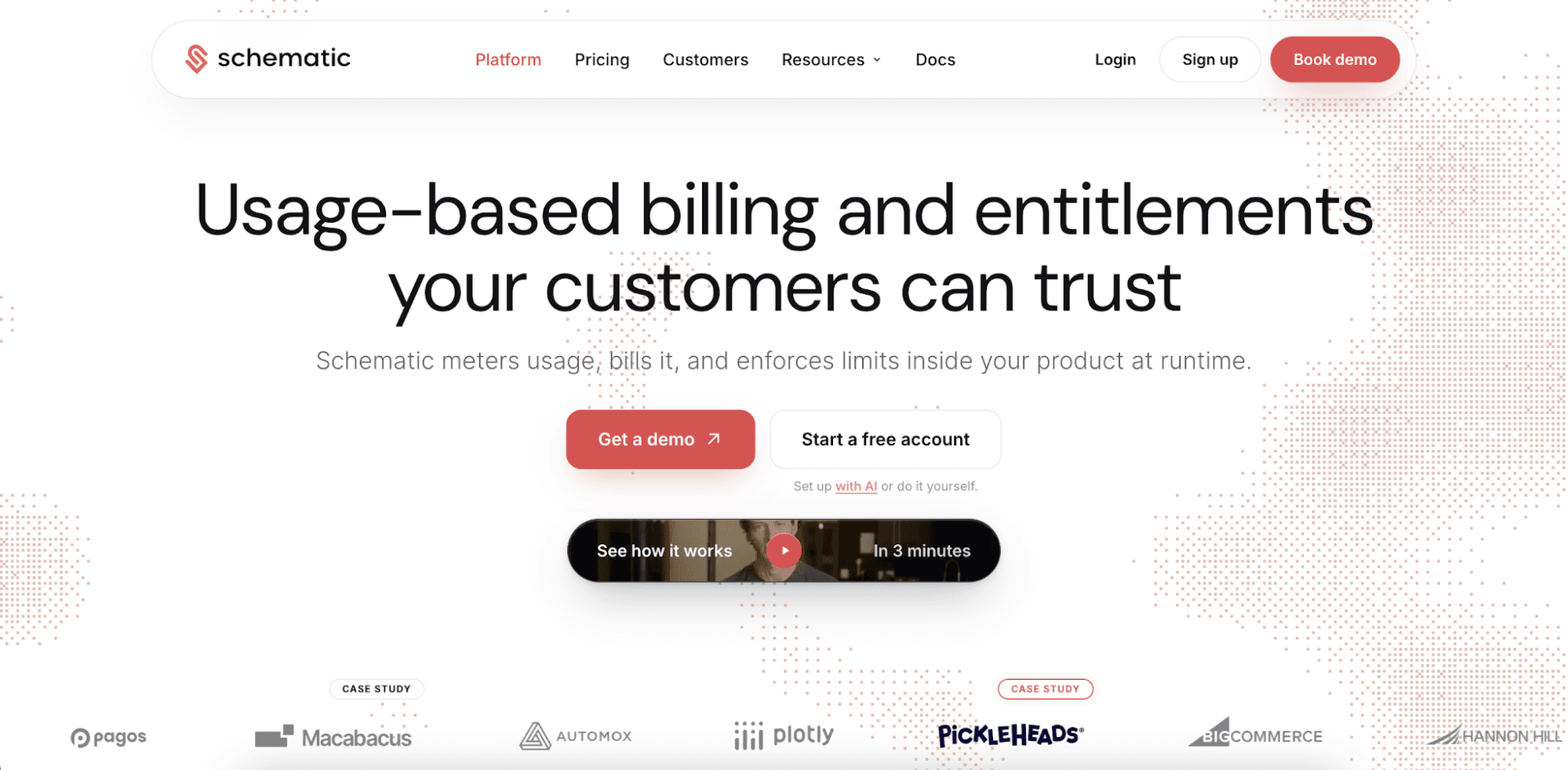
Schematic helps you validate assumptions before implementing them into your financial model. It's the complete monetization platform that provides the data and visibility needed for revenue forecasting and financial planning.
Schematic tracks each company's usage against its entitlements in one place. This gives teams a clear view of who is underusing (a churn risk) and who is nearing their limits (an expansion opportunity).
Max Ade from Pickleheads says, "Schematic is our single source of truth for all plan information and customer entitlements across our entire product."
Schematic also includes a credit ledger that tracks credit grants, rollovers, auto top-ups, expiry dates, and burn-down that your finance team can reconcile. It provides visibility into what has been delivered to customers to ensure accurate revenue forecasting.
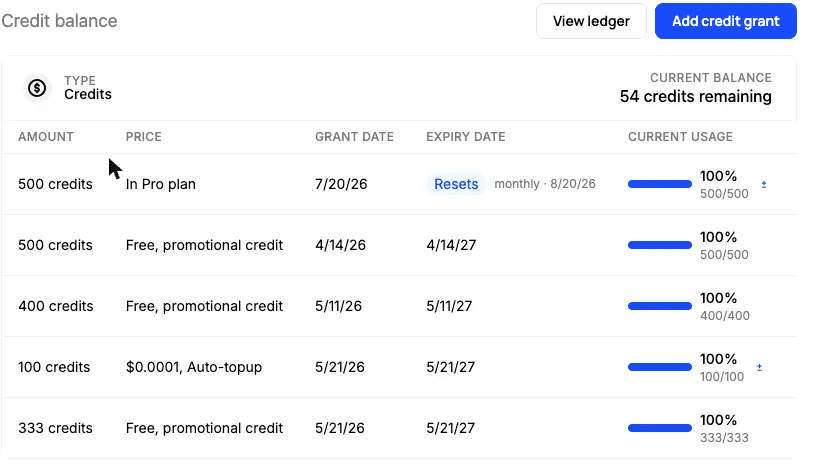
Other standout features include the native credit wallets and runtime entitlement engine. The former gives customers self-service controls and spend forecasts, while the latter enforces limits inside the product in real time.
Buyers and sellers gain confidence that usage will stay within budget and that customers will only be charged for what they expect.
FAQs About SaaS Financial Modeling
What is a SaaS financial model?
A SaaS financial model is an operational tool that SaaS companies use to forecast revenue, manage costs, and predict future growth.
What tools can you use for SaaS financial modeling?
SaaS businesses can use spreadsheets, finance planning tools, accounting software, and monetization operating systems. Many teams start with a Microsoft Excel template, then move to more advanced tools as revenue, headcount, and reporting needs grow.
Why is SaaS financial modeling important?
SaaS financial modeling is important because it connects business decisions to long-term financial results. It helps teams understand how pricing, hiring, and expenses can affect future revenue, cash flow, and business growth.