All posts
What Is a Revenue Operating System and Why Do You Need It?
Blog· Ryan Echternacht·Jun 23, 2026
Ryan Echternacht·Jun 23, 2026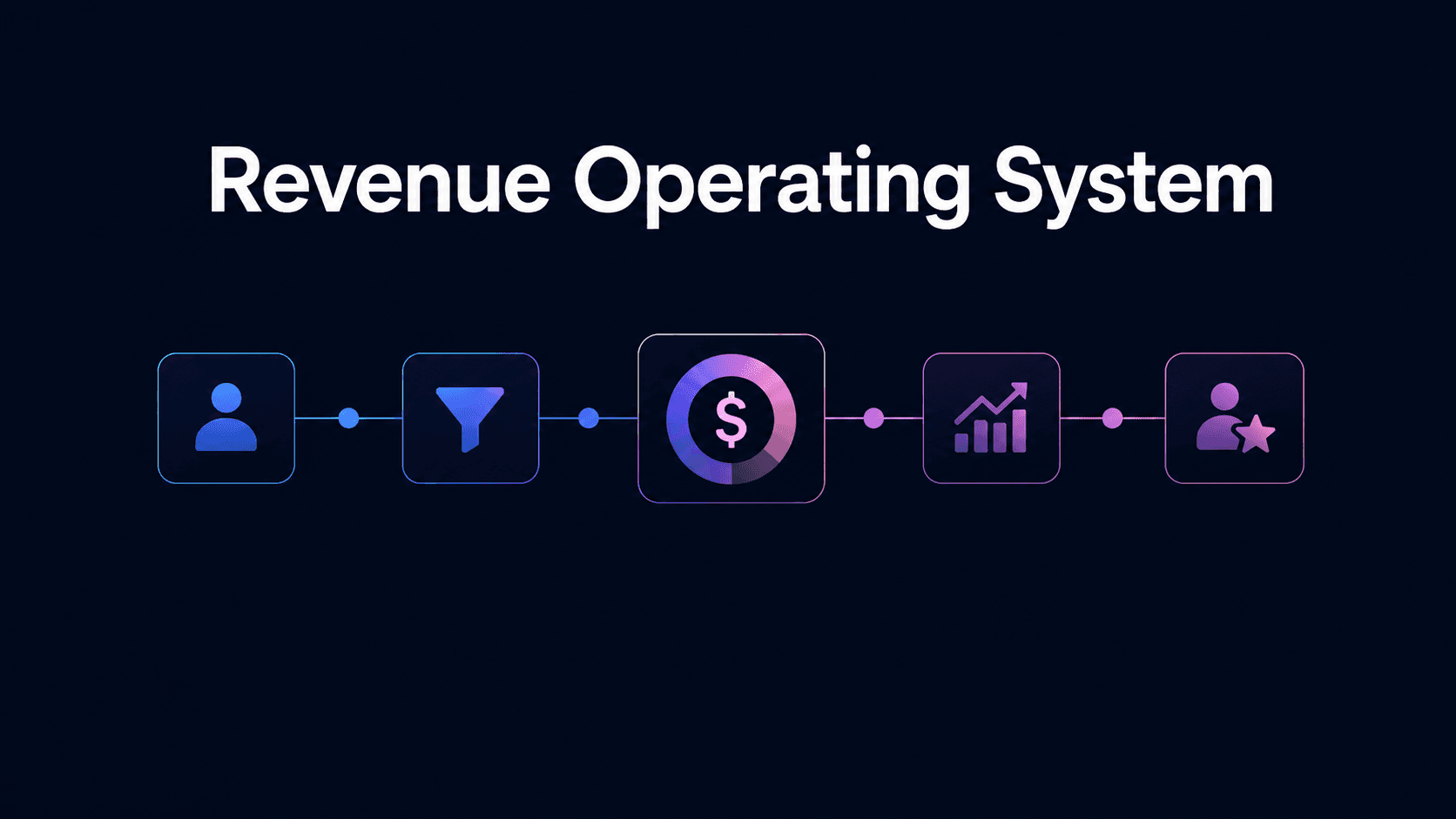
As SaaS companies grow, managing revenue becomes more complex. Teams often use separate tools to do their jobs.
Sales reps rely on the customer relationship management (CRM) software. Marketing has its own reports. Customer success teams track renewals and churn risks in another system. The finance department is trying to make sense of the numbers from usage billing software and revenue reports.
Each department may have the tools it needs, but the business still struggles to understand how to manage, expand, and retain revenue.
A revenue operating system solves this issue by aligning sales, marketing, customer success, and finance. It helps SaaS teams manage revenue growth with more clarity and control.
In this article, we'll explain what a revenue operating system means and why SaaS businesses need to adopt it.
TL;DR
- A revenue operating system is the set of tools, data, and processes a company uses to connect the entire revenue stack and drive sustainable growth.
- SaaS companies adopt this system to eliminate data silos, enhance team collaboration, guide decisions, improve forecast accuracy, optimize resource use, increase customer satisfaction, and grow revenue.
- It works by centralizing revenue operations, turning raw data into useful signals, enforcing actions, and integrating human review.
- The system solves several problems, such as fragmented tools, misaligned teams, poor forecasts, manual work, and inconsistent customer experiences.
- A revenue operating system helps SaaS companies connect the people, data, tools, and rules behind revenue growth. Schematic supports it by acting as the system of record for plans, entitlements, limits, and exceptions.
What Is a Revenue Operating System?
A revenue operating system (OS) is the set of business processes, tools, and data that a SaaS company uses to manage and generate recurring revenue.
It gives the business one way to track the entire revenue cycle. Sales teams can see deal progress. Marketing can evaluate lead quality. Customer success managers quickly identify churn risks. Product teams see current usage and plan data. Finance can understand the numbers driving sustainable revenue growth.
A revenue operating system brings all these parts together, so your company avoids relying on disconnected point solutions.
Think of a revenue OS as a shared command center for your revenue teams. It helps everyone work from the same data, follow the same rules, and make better calls about what should happen next.
The goal is to replace scattered, one-off revenue activities with a central system that supports steady business growth.
Revenue Operating System vs. Existing Tools
A revenue operating system is not the same as the tools you already use, such as CRM software, analytics platforms, and billing software. Here's a table explaining the differences.
Tool | Role | What It Does | How It Differs From Revenue OS |
CRM software | System of record | Stores customer data, accounts, deals, and sales activity | A CRM mainly tracks the sales process. A revenue OS brings sales, marketing, customer success, finance, and activity data together. |
Analytics and business intelligence (BI) tools | System of explanation | Shows reports, dashboards, and trends from business data | Analytics and BI tools help teams understand what happened. A revenue OS links that explanation to actions, rules, and revenue workflows. |
Billing software | System of payment record | Manages invoices, payments, subscriptions, and billing records | Billing software tracks how customers pay. A revenue OS connects billing data to plans, usage, renewals, expansion, and business decisions. |
Why Do SaaS Companies Need a Revenue Operating System?
Below are the main reasons why SaaS companies adopt a revenue operating system.
Eliminate Data Silos
As your SaaS company grows, revenue data often ends up scattered in too many places. Sales reps track the customer journey in the CRM. Marketing teams manage campaigns in their own tools. Customer success monitors renewals, churn risks, and account health in another system.
This creates siloed operations, where each team can only see a small part of a larger story.
A revenue operating system helps bring that data together. It provides a unified platform for account details, marketing operations, billing data, and sales pipeline health.
Revenue teams spend less time switching between multiple tools and consolidating key information. This makes it easier to spot risks, identify expansion opportunities, and understand what is driving revenue.
Support Cross-Functional Collaboration
Revenue growth is not owned by one department. Sales reps bring in new customers. Product teams shape what customers use and buy. Engineering is responsible for monetization implementation. Finance sets revenue targets in collaboration with the chief revenue officer.
A revenue operating system aligns different business functions under a unified operational framework. By providing a single platform for customer, product, usage, and revenue data, it gives every team access to the same context.
Sales can see which customers are ready to upgrade based on usage. Product teams can identify which plans and pricing models are driving revenue growth. The finance department can track overall business performance using the same data as the rest of the organization.
This shared framework helps different teams work together with less friction.
Enhance Decision-Making
A revenue operating system gives business leaders a clearer view of what is happening across the customer and revenue lifecycle.
They can see which audience segments are growing, which accounts are at risk, which deals are stuck, and which plans drive revenue growth.
This information allows leaders to make informed decisions about sales messaging, marketing spend, pricing strategies, and packaging.
Improve Forecast Accuracy
Revenue forecasting is difficult when the business relies on missing data, delayed updates, and manual reports.
A revenue operating system improves forecast accuracy by providing a single tech stack with centralized data recording. This means every team works from the same customer data, revenue pipeline, invoicing status, renewal dates, and financial records.
When there is one shared source of truth, there is less conflicting information. It also gives teams more reliable metrics to work with.
A Deloitte Digital study found that organizations with established revenue operations (RevOps) were 50% less likely to struggle when handling their sales pipeline and forecast.
A more accurate forecast helps revenue teams identify critical gaps earlier and make better spending choices.
Optimize Resource Allocation
SaaS companies have limited time, budget, and team capacity. They need to know where to allocate resources to prevent wasted spending.
Without a revenue operating system, business decisions can become reactive. Teams may chase low-fit deals, advertise on channels that do not bring strong customers, or give the same level of support to every account.
A dedicated revenue OS helps SaaS businesses see where resources can have the most impact. It shows which accounts are ready to expand, which customers may churn, which segments close faster, and which channels bring higher-value customers.
This enables different departments to focus efforts where they matter the most.
For example, customer success teams can give more attention to high-risk accounts. Marketing can put more budget into channels with lower customer acquisition costs (CAC).
Increase Customer Satisfaction
Customers notice when different teams are not aligned. They may get sold a plan that does not match their needs. They might hit a usage limit with no warning. Or they may receive mixed messages from sales, customer support, and other departments.
A revenue operating system creates a more consistent customer experience by giving teams shared data.
When teams can see account history, product usage, plan details, support needs, and renewal status, they can respond with more care and speed. This improves customer engagement because each touchpoint feels more connected.
It can also support stronger retention and expansion. Customers are more likely to stay when the business understands their needs, acts before issues grow, and makes buying or upgrading feel simple.
Support Scalable Growth
A revenue operating system supports scalable and sustainable growth by aligning teams and centralizing data.
Marketing, sales, customer success, and revenue ops can follow the same playbook and work from the same data model.
That consistency helps teams see what is working across the funnel. They can double down on the campaigns, segments, offers, and sales motions that generate higher revenue. They can also cut the work that wastes time or budget without strong results.
A revenue OS also reduces manual handoffs. Work can move from one stage to the next with less delay and fewer missed details. That means the entire business can act faster and focus on actions most likely to grow revenue.
How Does a Revenue Operating System Work?
A revenue operating system works by connecting business processes, revenue data, workflows, and human review into one unified model.
Below is a closer look at the key components of a revenue OS to help you understand how it functions.
Data Management
Data management is one of the most important foundations of a revenue operating system. Instead of isolating data, it pulls insights from different tools and stores them in a single platform.
The goal is to give teams one trusted record of what is happening in the revenue cycle. This helps sales, marketing, customer success, product, finance, and RevOps managers work with the same data.
Revenue Intelligence
Revenue intelligence turns raw data into useful signals. It helps SaaS companies see which accounts may churn, which customers are ready to expand, and which channels contribute to a stronger pipeline.
Teams are not only looking at past results. They are also reviewing current signals to predict what happens next and make data-driven decisions.
Orchestration
Orchestration is how a revenue operating system moves work between different teams and tools. It translates data into clear actions.
For example, a high-fit lead can be sent to the right sales rep. An account that is near the end of a trial can be flagged as a churn risk. A customer who hits a usage limit can automatically see an upgrade path.
Strong orchestration leverages data instead of letting it sit in reports.
Human Governance
Human governance keeps the revenue operating system aligned with company goals. Even with shared data and automated workflows, people still need to set rules, review results, and make judgment calls.
Business leaders decide how leads are scored, how accounts are routed, how forecasts are reviewed, and how revenue workflows should change over time.
This prevents the revenue engine from running on outdated data or wrong assumptions.
Human governance is what keeps the system useful as products, pricing, teams, and customer needs change. It gives the SaaS business greater control over how it manages revenue.
What Problems Does a Revenue Operating System Solve?
A revenue operating system helps SaaS teams fix the revenue issues that slow down growth, expansion, and renewals.
- Fragmented tools: Companies often waste time checking separate tools before they act. A revenue OS connects different systems and provides a clearer view of pipeline health and sales performance.
- Misaligned teams: Teams drift when they use different goals, reports, and customer profiles. A revenue operating system gives everyone the same data and objectives to work on.
- Poor revenue forecasting: Forecasts become less accurate when data is old or split between tools. With a revenue operating system, teams avoid conflicting information and make better predictions.
- Inefficient processes: Manual handoffs create more work for everyone. A revenue OS sets clear rules for lead routing, marketing analysis, expansion signals, and follow-ups.
- Inconsistent customer experiences: Users get mixed experiences when messaging, pricing, billing, and support rules are not aligned. A revenue operating system provides insights into account history, product usage, and customer behavior so teams respond correctly.
Schematic Connects Pricing, Entitlements, and Billing
A revenue operating system helps SaaS companies connect the people, data, tools, and rules behind revenue growth.
But for many teams, one of the hardest parts to manage is monetization. Pricing plans, usage limits, feature access, billing, and subscriptions often live in separate systems. That makes it difficult to launch new models, manage upgrades, and keep product access aligned with what customers pay for.
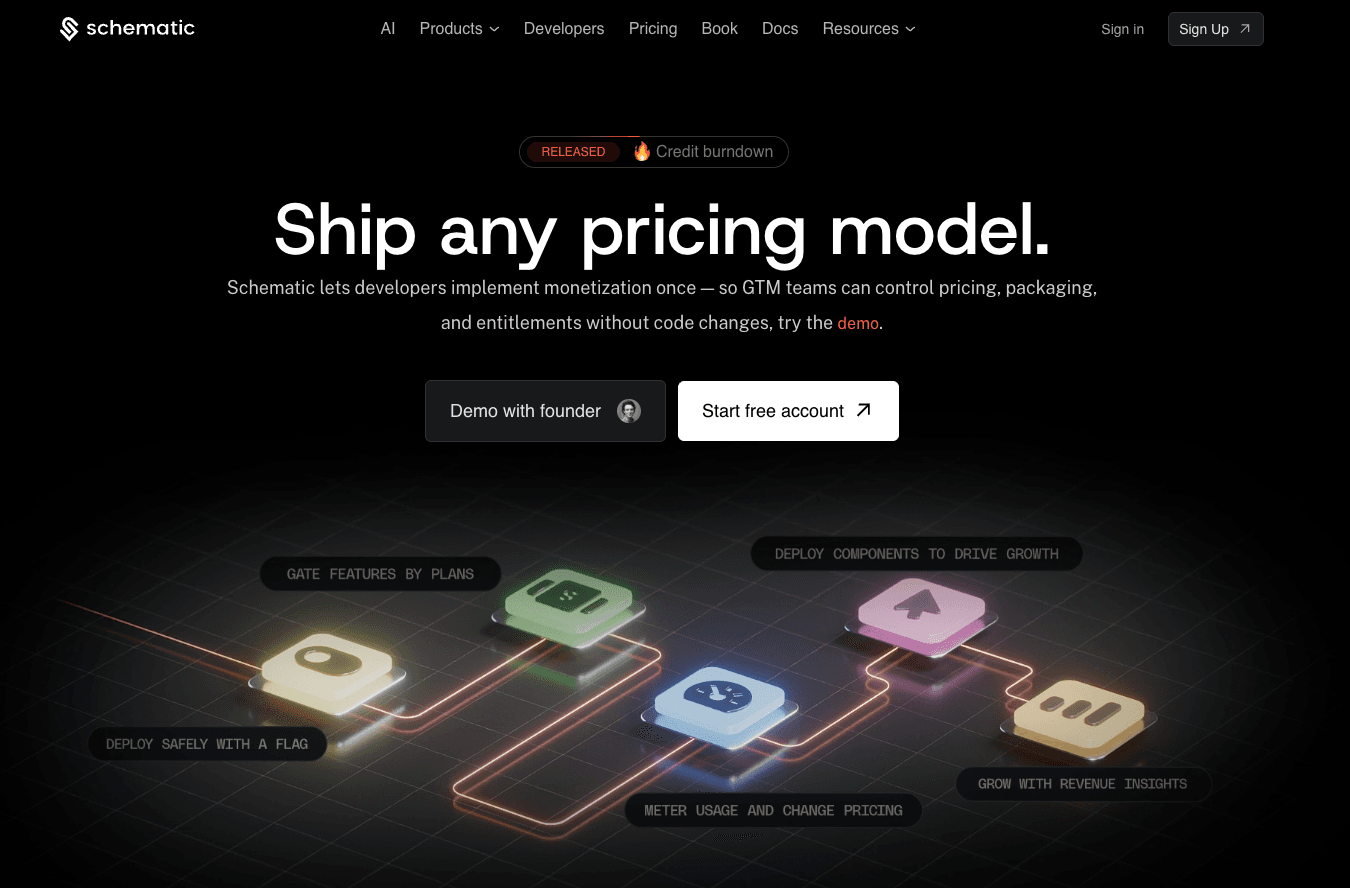
Schematic helps solve that. It is the monetization platform that lets SaaS and AI companies ship any pricing model and control software entitlements without hard-coding billing logic into the product.
Schematic, built on Stripe, also handles billing, payments, invoices, subscriptions, and dunning workflows in one place.
With Schematic, product and go-to-market teams can create custom plans, offer add-ons, launch trials, adjust limits, and apply overrides.
Engineering stops writing and maintaining billing code. They only implement monetization once, allowing them to focus on core product development.
FAQs About Revenue Operating System
Is a revenue operating system the same as traditional CRM software?
No. Traditional CRM software is mainly a system of record for customer accounts, contacts, deals, and pipeline. A revenue operating system goes further by connecting data, workflows, and rules. It decides when to take action and which actions to prioritize based on market changes.
What is the difference between sales operations and revenue operations?
Sales operations focus on supporting the sales team. It involves simplifying sales processes, optimizing pipelines, and providing advanced automation tools. On the other hand, revenue operations bring sales, marketing, customer success, and finance teams to drive predictable growth for the company.
Who typically leads revenue operations?
Implementing RevOps is the key responsibility of the chief revenue officer. The CRO sets the company’s revenue goals and makes sure sales, marketing, customer success, and RevOps work toward the same targets.