 Ryan Echternacht
SaaS monetization is how software companies turn their Software-as-a-Service product into predictable revenue. It's a process that considers pricing, product delivery, billing cycles, customer lifecycle management, user activity, and value creation.
When you implement a software monetization strategy the right way, everything works together. Your pricing reflects the value you offer. Your product guides users to upgrade at the right time. And your billing system runs without friction.
That leads to more stable revenue, faster product innovation, fewer billing disputes, and improved customer experience.
In this guide, we'll teach you how to approach monetization implementation step by step. We'll also discuss the pricing models, strategies, and best practices you can adopt.
TL;DR
- To implement SaaS monetization, define your product's value, understand target markets, choose a monetization model, and set pricing strategies.
- You should also build the monetization infrastructure, develop your go-to-market plan, apply monetization inside the product, track revenue metrics, and refine your approach.
- Common monetization strategies include subscription, tiered pricing, usage-based, hybrid, seat-based, freemium, and add-ons.
- Schematic is the complete monetization platform for software and AI companies. Define, manage, and change your pricing in one place through configuration instead of a code deployment. You can also give customers full visibility and control over their spending.
What Is SaaS Monetization?
SaaS monetization is the process of generating revenue from your software products and services.
It is not just about setting a price. It is about creating a system that drives revenue in a clear and repeatable way.
The process usually involves choosing a SaaS pricing model, setting product access rules, processing payments, and managing customer upgrades and renewals.
When done right, SaaS monetization can drive revenue growth by aligning what customers pay with the value they receive.
It also plays an important role in today's business environment. It can increase customer lifetime value and maximize revenue potential by encouraging users to upgrade their plans over time. It protects your intellectual property by controlling access to features and limiting unauthorized use.
A Step-by-Step Guide to Implementing SaaS Monetization
Follow these steps to turn your SaaS product into a structured and scalable revenue system.
1. Know Your Unique Value Proposition
You should know what makes your product worth paying for.
Ask yourself the following questions:
- What problem does your product solve?
- Why should customers choose you over others?
Perhaps your software can save time, reduce costs, and improve performance.
Once you've determined your unique value proposition, map that value to pricing. If your product drives strong results, your pricing should reflect that.
Many SaaS companies undercharge because they focus on covering costs instead of considering customer value.
You should also identify which features drive the most value. You can charge more for these premium features or package them into higher pricing tiers.
Without a clear value proposition, monetizing software becomes guesswork. With it, pricing decisions become much easier and more accurate.
2. Understand Your Target Audience
Not all customers are the same. You should consider diverse customer preferences, budgets, and willingness to pay.
Segment your audience into groups, such as:
- Small businesses vs. large enterprises
- Light users vs. heavy users
- New users vs. long-term customers
Each group may need a different monetization approach. For example, small businesses prefer simple subscription plans, while enterprise customers may want custom pricing.
Talk to customers when possible. Ask what they value and how much they would pay for a product. This helps align SaaS pricing with actual user feedback.
3. Choose the Right Monetization Model
The software monetization model defines how you will generate revenue from your product.
The right model depends on the target audience's willingness to pay, market competition, the nature of the product, and your business goals.
Here are the various monetization models you can implement:
- Flat-fee subscription billing: Users pay a fixed monthly or yearly subscription fee for access to your core software, regardless of the number of users or activity level. This model offers predictable revenue and simple pricing.
- Seat-based pricing: Customers pay based on the number of users. Per-seat pricing works well for collaborative digital platforms where value grows with team size.
- Pay-as-you-go: It charges customers based on usage to support token or API monetization. Pay-as-you-go aligns prices directly with value but can lead to unpredictable revenue due to varied customer usage patterns.
- Hybrid: This combines multiple pricing models, such as a base subscription plus usage fees. It offers flexible pricing while maintaining stable revenue generation.
The right model protects cash flow, supports company growth, offers a competitive advantage, and encourages widespread adoption.
4. Set Pricing and Packaging Strategies
After choosing an effective software monetization model, you can design SaaS pricing and packaging.
If you've selected a tiered pricing model, make sure that each tier offers clear value. Avoid too many options because they can confuse buyers.
Group features into packages. Advanced features should be in higher tiers. This creates a natural path for upgrades and helps you effectively monetize premium plans.
Depending on your monetization model, you can also define usage limits, maximum spending caps, add-ons, discounts, and overrides.
Don't forget to establish contract lengths and renewal terms in writing for subscription management.
5. Build Your Monetization and Entitlements Infrastructure
A vast majority of SaaS businesses rely only on a billing platform. They expect it to handle usage tracking, manage software entitlements, and enforce in-product access.
However, traditional billing solutions are often limited. They can collect payments, but they have limited control over the way your product delivers ongoing value and contributes to monetization success.
A complete revenue engine requires modern software monetization solutions working together.
You need usage tracking systems to measure how customers interact with your product. Use subscription management software to handle plans, renewals, and upgrades for existing customers.
Entitlement management solutions are also helpful for controlling access inside the product. They can enforce limits at runtime to prevent runaway bills and missed revenue opportunities.
Make sure to integrate these platforms with customer relationship management (CRM) and analytics software. Doing so gives you the valuable insights to make smarter pricing decisions and establish multiple revenue streams.
Connected systems also support flexible pricing. You can easily manage plans, packaging, entitlements, and the entire subscriber lifecycle without breaking your product.
6. Develop Your Go-to-Market Plan
A go-to-market (GTM) plan is a core business strategy that outlines how you sell your product.
To build your SaaS go-to-market strategy, you should know your ideal customer and how they prefer to buy. Decide on your sales motion, choose your distribution channels (e.g., social media platforms, digital marketing campaigns, or affiliate marketing), and develop a user acquisition funnel.
You should also align marketing, product, and sales teams behind your GTM strategy. Doing so makes sure that messaging and pricing remain consistent for every touchpoint.
Below are the most common types of SaaS go-to-market strategies you can adopt:
- Product-led growth: Users sign up, explore the product, and upgrade on their own. It is ideal for self-serve SaaS tools with free trials or freemium plans.
- Sales-led growth: A sales team guides customers through demos and closes deals. This is common for high-value or enterprise-level products.
- Hybrid model: This strategy combines self-serve and sales-led growth. Individual users can buy on their own, while larger accounts receive sales support.
7. Implement Monetization in Your SaaS Platform
This step is where your monetization strategy becomes part of the product itself. You need to embed SaaS pricing into the user experience, so customers clearly see value as they use your platform.
The process starts with a well-designed pricing page that clearly communicates plans, features, and upgrade paths.
Inside the product, you should guide users toward paid plans based on their behavior. For example, show upgrade prompts when users reach limits or try to access premium features.
You can also offer in-app purchases for add-ons or extra services to increase revenue without forcing a full plan upgrade. Consider loyalty programs to reward long-term users, enhance customer satisfaction, and encourage retention.
Customers also need visibility and control over monetization. Provide usage dashboards, alerts to notify users about their activity, and customer portals for billing and plan changes.
8. Track Revenue Performance
You should track business performance to gauge whether you have implemented successful monetization strategies or not. Focus on the following metrics:
- Annual/monthly recurring revenue (ARR/MRR): Measures predictable revenue each year or month.
- Average revenue per user (ARPU): Shows how much each customer pays on average.
- Customer lifetime value (LTV): Total revenue expected from a customer.
- Churn rate: Tracks how many customers cancel over time.
- Expansion revenue: Refers to profit earned from upgrades, add-ons, or increased usage.
These metrics provide valuable insights into how successful your monetization efforts are. You can see which pricing strategies drive growth and where customers drop off.
You can also connect this data to user engagement. For example, high engagement often leads to improved expansion revenue, while low usage may lead to churn.
Over time, tracking monetization performance helps you find new revenue opportunities and improve profits.
9. Adjust Your Monetization Strategy
To support long-term growth, SaaS companies need to regularly review and optimize pricing strategies.
After all, customer needs change, competitors increase pricing, and new features can deliver additional value. If your pricing stays the same, it can fall out of sync with market trends, customer expectations, and business objectives.
To adjust your strategy, you should carefully review monetization performance using valuable data from product analytics or customer feedback.
Look for signs, such as low conversions, high churn, or limited upgrades. These signals can point to gaps in your pricing or packaging.
Based on these insights, you can decide whether to update pricing tiers, introduce new monetization models, adjust limits, or create new revenue streams.
The key lies in making small, consistent changes that keep your pricing aligned with customer value.
SaaS Product Monetization Strategies You Can Implement
After setting up your software monetization platform, the next step is choosing the right strategy to drive revenue and growth. Below are the most common approaches.
Subscription Model
In a subscription model, users pay a fixed monthly or annual fee to access your SaaS product. It's a proven strategy that creates predictable revenue and makes it easier to forecast user growth.
A subscription model also supports long-term relationships. Customers stay active as long as they see ongoing value.
To make it work, you need clear pricing and a strong value proposition. Customers should understand what they get and why it is worth paying for.
Tiered Pricing
Tiered pricing offers multiple subscription plans with different levels of features or usage.
Each tier targets a specific customer group or a new business model. Lower tiers attract smaller users. Higher tiers serve enterprise customers who need advanced features or capacity.
Plans should show clear value and differences to encourage natural upgrades over time. Software vendors should only offer up to four tiers because too many options can confuse users.
Usage-Based Pricing
Usage-based pricing charges customers based on how much they use your SaaS product.
For example, users pay for the number of API requests or transactions processed.
This monetization strategy aligns price with value. Customers pay more as they use more, which makes pricing feel fair.
Usage-based pricing works well for products with variable usage. Real-world examples include Amazon Web Services (AWS), PostHog, and Twilio.
The downside is that it can make business revenue less predictable. It may also lead to billing disputes caused by unexpectedly high invoices and a lack of transparency.
Hybrid Pricing
Hybrid pricing combines multiple monetization models, such as a base subscription plus usage-based charges.
It balances predictability and flexibility. The subscription provides stable revenue, while usage fees capture extra value.
A hybrid approach is becoming more common, especially for modern SaaS and AI businesses. ICONIQ's State of AI report reveals that 38% of businesses use hybrid pricing models.
Seat-Based Pricing
Seat-based pricing charges customers based on the number of users. It is simple and easy to understand.
Revenue grows as customers add more users. This creates a natural expansion path without changing the pricing structure.
However, it may not reflect the actual product value. Some users may be active, while others are not.
Modern SaaS companies are moving away from seat-based pricing because the introduction of AI agents makes user headcount disconnected from the value delivered.
Outcome-Based Pricing
In outcome-based pricing, customers pay based on the results achieved, such as leads generated or time saved.
This model ties pricing directly to business outcomes. It can be very attractive to customers because they only pay for results.
However, it is hard to implement. You need a reliable way to measure outcomes and connect them to your product.
Revenue also becomes less stable with outcome-based pricing because income depends on the outcomes delivered.
Freemium Model
A freemium pricing model offers a free version of your SaaS product with limited features. Customers must subscribe to paid plans to unlock more advanced capabilities.
To convert free users into paying customers, you should provide a clear upgrade path. Free users should see value but also feel the need to upgrade.
If the free plan is too limited, users may leave. If it is too generous, they may never upgrade.
Add-Ons and Upsells
Add-ons allow customers to pay for extra features, usage, or services. This gives users flexibility without forcing them to upgrade plans.
In-app purchases make it easy to buy these add-ons directly inside the product. This reduces friction and increases average revenue per customer. It allows you to capture more value based on specific needs.
In-Product Advertising
In-product advertising is rarely used in B2B SaaS. Most business-focused tools avoid displaying targeted ads because they can disrupt workflows and affect trust.
Instead, this monetization strategy is more common in consumer-focused mobile apps with large user bases.
A well-known example is Duolingo. It offers a free version supported by ads, while paid users can remove them.
Revenue comes from selling ad space inside the product. Companies can track user behavior, which allows brands to run targeted advertising campaigns within the app.
For most SaaS companies, in-product advertising only works if the product has high user volume.
Challenges in SaaS Monetization Implementation
SaaS business leaders face several challenges that prevent them from capturing the full value of their product.
- Revenue leakage: It happens when usage is not tracked or billed correctly. This includes failed payments, unpaid usage, or users accessing features without proper authorization.
- Billing software limitations: Many billing systems only handle payment processing and subscription or customer management, not usage tracking or feature access. This creates gaps between what customers use and what they are charged. As a result, monetization becomes harder to manage at scale.
- Unpredictable costs: Building SaaS and AI products can be costly. Infrastructure, compute, and storage fees can quickly increase. If pricing does not match usage, expenses may increase faster than revenue. That can hurt profit margins.
- Poor value perception: If pricing doesn’t align with the value delivered, customers may hesitate to pay or upgrade. This often leads to low conversion rates and higher churn.
- Internal misalignment: Monetization requires tight coordination between product, engineering, finance, and sales teams. When these teams fail to communicate, pricing execution suffers. This can delay important revenue-generating activities and limit growth.
Best Practices for Implementing SaaS Monetization
Successful SaaS monetization depends on transparent pricing, reliable systems, and continuous iteration. Here are the best practices you can try when monetizing products:
Test Pricing Before Full Rollout
Before launching pricing changes, test them with a small group of users. This helps you see how customers respond without risk.
You can run A/B tests, pilot programs, or limited releases. Track conversion rates, upgrades, and churn during testing. This data shows whether your pricing works or needs further adjustments.
The best SaaS companies regularly change pricing to meet customers' needs and keep up with market demand in the global software industry.
Personalize Offers
Different customers value your product in various ways. Personalized offers allow you to align monetization strategies with each segment.
You can adjust pricing based on company size, usage level, or industry. For example, enterprise customers may need custom plans, while individual users prefer simple tiers.
Personalization enhances customer satisfaction and improves conversion. Users are more likely to pay when pricing matches their needs.
Automate Billing and Revenue Workflows
Manual billing processes can lead to errors, delays, and lost revenue. Billing automation helps you manage subscriptions, invoices, payments, and software licensing models at scale.
Modern billing platforms instantly handle renewals, upgrades, and usage-based tracking. They also reduce failed payments by supporting automatic dunning management.
Another benefit is time saved. Automation allows your team to focus on product development and other important business processes instead of routine billing tasks.
Benchmark Against Competitors
Understand how competitors in the same industry monetize products.
Study their pricing models, tiers, feature packages, and even marketing strategies. Look at how they position value and what customers expect to pay.
Benchmarking helps you stay competitive. If your pricing is too high or too low, it can affect growth and conversion rates.
However, do not copy competitors directly. Use their software monetization strategies as a reference, then adjust based on your own product value and internal data.
Provide Transparent Billing
Customers want clear and simple billing. If pricing is confusing, they may hesitate to buy or may cancel prematurely.
Make sure invoices are easy to understand. Explain how you calculate charges, especially for usage-based or outcome-based pricing.
Provide clear pricing pages and avoid hidden fees. Transparency builds trust and reduces billing disputes.
Decouple Pricing Logic from Application Code
Many SaaS companies build billing infrastructure directly into their product code. This makes changes slow and risky.
A better approach is to separate pricing logic from your application. Doing so lets you update pricing, test new models, and launch changes faster.
Decoupling also reduces reliance on engineering. GTM and sales teams can implement changes without waiting for developers.
Schematic Provides a Complete Monetization Platform
Schematic is the best monetization platform and usage billing software for software companies selling to enterprises.
Define, manage, and change your pricing in one place. Since pricing lives as data on a real-time ledger, a plan change becomes a config change.
Your sales and product teams own monetization decisions. Engineering can focus on product development instead of creating metering and billing infrastructure from scratch.
Rahul Gill from Macabacus says, "We didn't want to burden our engineering team with building and managing a metering system, and Schematic solved that for us."
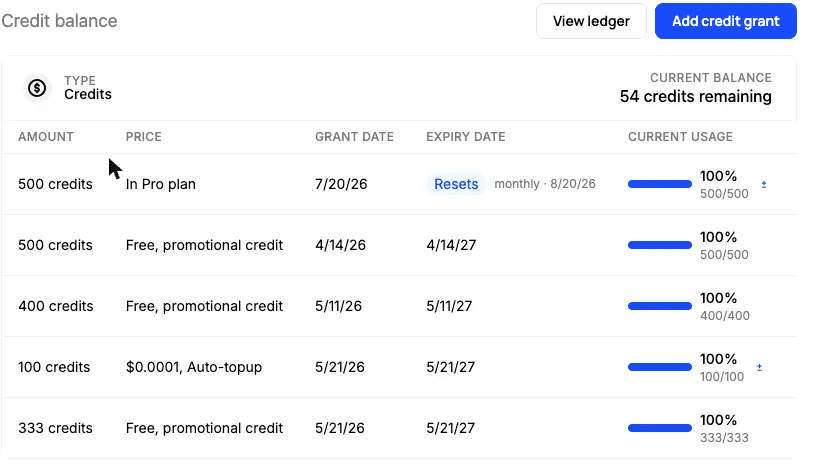
Schematic also features enterprise credit wallets and a runtime entitlement engine. Native wallets give customers full visibility and control over their usage so they never fear a surprise bill.
These wallets also record every grant, deduction, auto top-up, and rollover your finance team can reconcile.
The entitlement engine enforces policies from the same ledger used for billing. One flag check works in React, Node, Python, and Go to ensure the user interface and API always agree with each other.
FAQs About Monetization Implementation
What is the concept of monetization?
Monetization is the process of turning a product, service, or user activity into income. In SaaS, it means charging customers for access, usage, or features. The goal is to derive revenue from the value your product delivers.
What is an example of monetization?
A popular SaaS monetization example is a software company charging a monthly subscription fee for access to its platform. Another example is usage-based pricing, where customers pay based on actual usage, such as data stored.
What is a monetization strategy?
A monetization strategy is a plan that businesses follow to convert existing products or services into revenue. It typically includes revenue models, packaging strategies, billing methods, and an entitlements layer.
What is the meaning of monetizing?
In SaaS, monetizing means turning product usage into revenue through pricing, subscriptions, or add-ons. It is how software companies capture value from what they build.