 Ryan Echternacht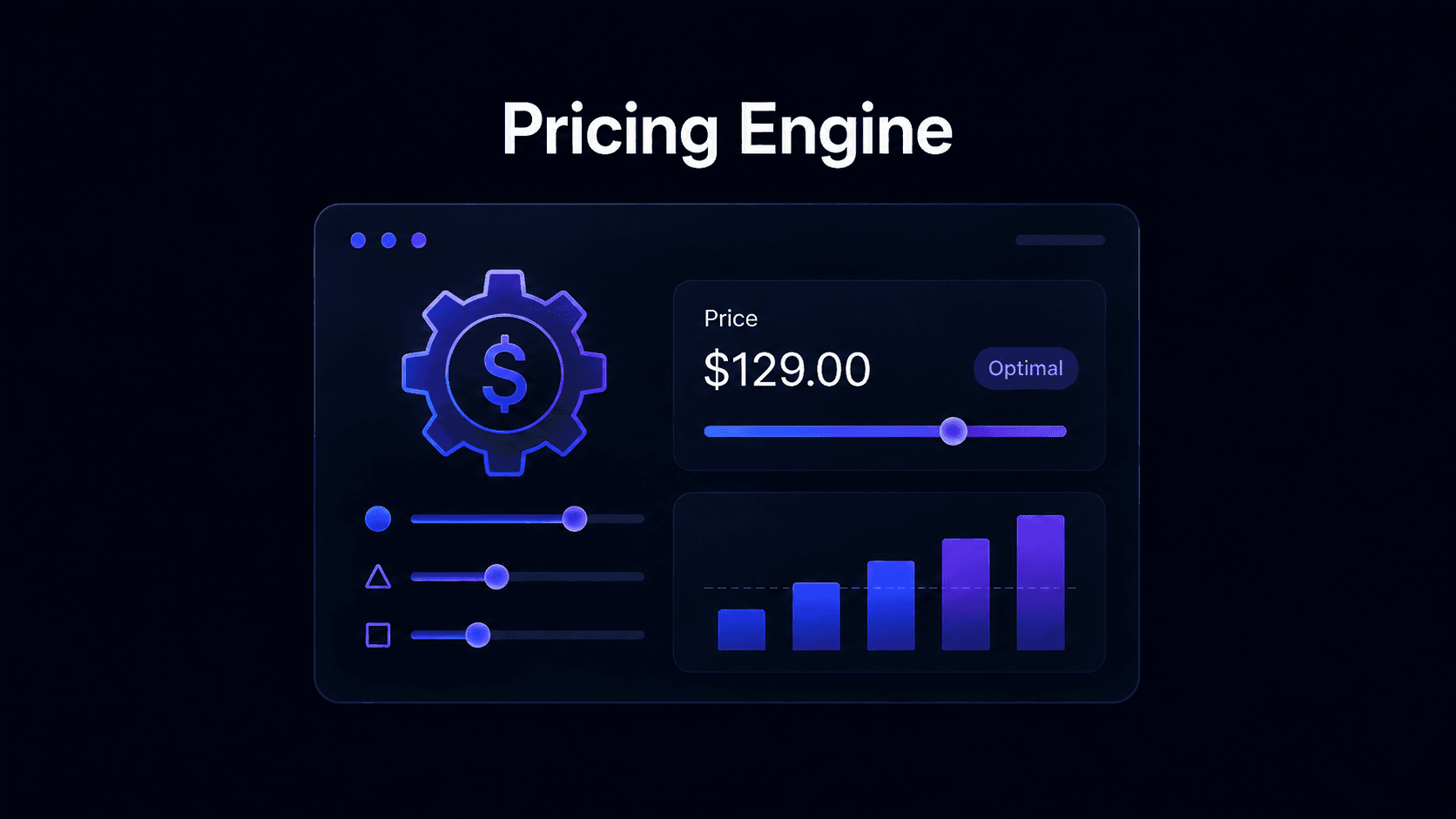
Pricing is a growth lever. The most successful software and AI companies iterate on pricing frequently. They test new strategies, adjust rates, and change packaging, as their product evolves and their customers' needs change.
However, many teams struggle to manage these pricing changes due to technical complexity, fragmented data, and manual processes.
A pricing engine solves this problem. It helps businesses automatically adjust prices based on predefined rules and changing conditions, such as market trends, customer behavior patterns, and competitor pricing. This allows companies to remain competitive and capitalize on new growth opportunities.
In this article, we'll discuss the definition, key benefits, and features to look for in a pricing engine.
TL;DR
- A pricing engine is software that applies predefined rules and configurations to determine the right price for a product.
- It uses artificial intelligence, data science, and machine learning algorithms to make continuous pricing adjustments as customer expectations and market conditions change.
- A pricing engine helps SaaS and AI companies enhance pricing accuracy, maximize profitability, improve customer experiences, respond faster to market shifts, support better-informed decisions, shorten sales cycles, and standardize pricing.
- Key features to consider include dynamic price optimization, centralized price lists, real-time data integration, advanced analytics, and rebate and incentive management.
- Schematic works alongside pricing engines by making usage-based billing something customers can trust. It provides full customization, control, and predictability over consumption.
What Is a Pricing Engine?
A pricing engine is specialized software that sets final prices based on business rules, data inputs, and configurations. It's also called a dynamic pricing engine or a real-time pricing engine.
It considers multiple variables, such as market shifts, competitive pricing, product demand fluctuations, operational costs, customer data, and personal preferences, to find the optimal price point for each product.
Think of it as the system that turns complex pricing strategies into accurate quotations.
SaaS and AI companies use pricing engines to automate complex calculations, launch usage-based pricing, manage discount policies, and streamline the entire pricing process.
How Does a Pricing Engine Work?
A dynamic pricing engine relies on artificial intelligence, data science, and machine learning algorithms to adjust pricing continuously. Here's a breakdown of how it usually works:
- Data collection: The pricing engine collects relevant information from various sources. It analyzes historical sales data, inventory levels, market trends, and competitor data to build a reliable base for pricing calculations.
- Rule configuration: Companies define pricing rules and approval workflows based on their specific pricing strategy. These rules can vary between product categories, customer segments, account size, locations, and promotional periods.
- Price calculation and optimization: The pricing engine evaluates price elasticity and customers' willingness to pay when calculating rates. AI and advanced algorithms can also help teams optimize pricing strategies.
- Automated enforcement: After calculating prices, the system automatically applies approved rates and discounts to quotes, orders, or subscription plans.
- Integration: Many pricing engines connect to other business tools to sync important pricing data. It integrates with customer relationship management (CRM) software, enterprise resource planning (ERP) systems, billing solutions, and accounting platforms.
- Reporting: Built-in reporting capabilities enable businesses to track pricing performance, identify trends, and make better-informed pricing decisions.
7 Key Benefits of Using a Dynamic Pricing Engine
A dynamic pricing engine gives SaaS and AI companies more control over how they set and manage prices. Below are the advantages that teams can expect.
1. Ensure Accurate Pricing
Some businesses still use spreadsheets, disconnected systems, and individual judgment when making pricing changes. That setup can lead to human errors, wrong rates, missed discounts, or inconsistent pricing, especially with complex monetization models.
A dynamic pricing engine automatically applies approved pricing rules to ensure accuracy and minimize errors.
It also automates pricing calculations while considering volume discounts, special rates, and customer segment adjustments. This ensures that every quote is consistent with predefined business logic. It can protect profit margins and prevent leakage.
2. Maximize Profitability
A real-time pricing engine helps software and AI companies maximize revenue growth by identifying the most profitable pricing strategies. According to the 2026 State of SaaS Pricing report, organizations that follow a deliberate pricing approach are 2.5 times more likely to surpass their growth targets.
The engine analyzes historical data, service costs, market conditions, usage patterns, product value, and customer segmentation before suggesting price points.
SaaS teams can charge different rates based on order volume, contract size, plan level, or commitment terms.
By linking prices more closely to costs and customer value, businesses can reduce unnecessary discounting and increase profitability.
3. Improve Customer Experiences
Pricing can directly impact customer satisfaction. Buyers expect prices to be clear, consistent, and closely aligned to how they actually use the product.
A pricing engine helps you meet these customer expectations by applying the correct rates, discounts, usage pricing tiers, and contract terms to each account.
The system can also set customer-specific pricing for enterprise accounts without relying on manual calculations for every quote. It may include negotiated rates, usage commitments, or custom packages.
Once customers see prices that match their requirements and product consumption, they are less likely to question charges.
4. Respond to Market Conditions Faster
Pricing conditions often change quickly. Competitors can lower or increase SaaS pricing. Product costs may also rise, customer demand might shift, or new usage patterns may appear.
A dynamic pricing engine can analyze both internal and external data so that you can adjust prices based on current market conditions.
For SaaS businesses, this may mean changing plan rates, usage limits, or feature bundles. AI companies may need to update prices when infrastructure fees, compute costs, or product usage change.
By promptly responding to different scenarios, you can remain competitive and convert new opportunities into revenue.
5. Enhance Decision-Making
Many businesses rely on outdated data or gut feeling when pricing their products or services. However, this approach often leads to poor results.
A real-time pricing engine uses historical data, customer behavior patterns, market conditions, and other relevant factors to help you make better pricing decisions.
Some systems also offer pricing recommendations and predictive analytics to estimate how pricing changes could affect future results.
You can then use these insights when reviewing custom plans, bundled offers, and discounts.
6. Speed Up Sales Cycles
A dynamic pricing engine helps sales reps create accurate quotes and respond to buyers' requests faster. This can shorten sales cycles and accelerate go-to-market.
Real-time pricing guidance gives sales reps approved rates, discount limits, and deal terms during negotiations. That reduces the need for manual checks or long approval workflows.
Sales teams can spend more time discussing product value and addressing customer needs.
7. Standardize Pricing Across Multiple Sales Channels
SaaS and AI companies sell products in multiple channels. They could use their own website, online marketplaces, partners, or other methods.
Without a central pricing system, each sales channel can end up using different rates, discounts, or pricing logic.
A dynamic pricing engine provides one source of truth for approved price lists and pricing policies. The same product can follow consistent pricing logic whether a customer buys through a website, speaks with an account executive, or purchases through a partner.
You can still set channel-specific rates or promotions when needed, but those differences remain controlled within the pricing system. This prevents conflicting quotes, outdated price lists, and billing gaps that may confuse customers.
Core Features of a Dynamic Pricing Engine
The features below help SaaS and AI companies manage complex pricing models with less manual work.
Dynamic Price Optimization
Dynamic price optimization allows the pricing engine to update rates based on current data and predefined rules. It can account for demand, customer segments, product behavior, costs, competitor pricing, and contract terms.
This feature makes it easier to adjust subscription fees, usage-based charges, or credit pricing when the market shifts.
Centralized Price Lists
Centralized price lists give teams one place to manage approved product rates, usage fees, discounts, and pricing tiers.
SaaS and AI companies can store pricing for different products, plans, customer groups, and regions without maintaining separate spreadsheets.
When pricing needs to change, they can implement new strategies and pricing models from one system.
Real-Time Data Integration
The pricing engine can connect to existing systems and sync pricing data automatically. This prevents the need for manual data entry and reduces the risk of human errors.
Real-time data sync can also help the pricing engine calculate accurate charges using the latest available information.
Advanced Analytics
Advanced analytics show how prices, discounts, usage rates, and customer segments affect revenue and profit margins.
Teams can monitor pricing performance, identify changes in buying behavior, and track competitor pricing. They can price products based on actual insights instead of guesswork.
Rebate and Incentive Management
The best pricing engine includes rebate and incentive management tools. These enable businesses to offer discounts, design incentive programs, and handle refunds.
Teams simply need to set conditions based on contract size, usage volume, commitments, customer segment, or partner agreements. The pricing engine can automatically apply the correct rules when those conditions are met.
Pricing Engines Set Optimal Rates, Schematic Makes Billing Transparent and Trustworthy
Pricing engines are useful for setting the right rates and rules. However, pricing logic alone does not solve a major issue with usage-based billing: trust.
Enterprise buyers want to know what they are using, how much they are spending, and how they can keep their costs under control.
Schematic helps SaaS and AI companies solve the trust problem in usage-based billing. It includes enterprise credit wallets that offer real-time visibility and control over product usage.
This transparency gives enterprise buyers more confidence in usage pricing. They can set per-seat and per-agent usage caps, decide what happens at the limit, and enable automatic top-ups when the credit balance falls below a set threshold.
Meanwhile, commercial teams use Schematic to grant credits, enforce software entitlements at runtime, and manage exceptions in one place. They can quickly answer who gets access to what in real time.
This leads to lower friction during procurement, faster sales cycles, more predictable expansion, and higher long-term revenue.
FAQs About Pricing Engine
What is a pricing engine used for?
A pricing engine sets prices by evaluating predefined rules, configurations, and pricing logic. SaaS and AI companies use the system to optimize pricing strategies for specific customer segments, product lines, or sales channels.
What are the four types of pricing?
Four common pricing types are cost-plus pricing, value-based pricing, competition-based pricing, and dynamic pricing. Each method uses a different basis for setting prices, such as operational costs, product value, competitor pricing, or changing market conditions.
Is there a difference between a pricing engine and a billing engine?
Yes. A pricing engine determines what rates, discounts, and limits should apply based on pricing logic. A billing engine uses that logic to calculate how much a customer owes and collect payment by integrating with payment gateways.