7 Best Payment Orchestration Platforms in 2026
Explore the seven best payment orchestration platform options. Learn how Schematic can manage usage-based billing alongside payment orchestration.
 Ryan Echternacht
On this page
- Overview
- TL;DR
- What Is a Payment Orchestration Platform?
- When Do You Need a Payment Orchestration Platform?
- 7 Best Payment Orchestration Platforms in 2026
- 1. Primer
- 2. Spreedly
- 3. Gr4vy
- 4. Yuno
- 5. IXOPAY
- 6. Payrails
- 7. BR-DGE
- Payment Orchestration vs. Usage-Based Billing
- Manage Usage-Based Billing Alongside Payment Orchestration
- FAQs About Payment Orchestration Platform
- What is the difference between payment orchestration and payment processing?
- What is the best payment orchestration platform?
- Do SaaS companies need payment orchestration?
- Can payment orchestration improve payment success rates?
Getting a customer to complete a payment sounds straightforward until the transaction fails for reasons outside your control.
A payment processor might experience an outage, decline a legitimate transaction, or charge higher fees than another provider. If your business accepts payments internationally, different customer preferences add another layer of complexity.
A payment orchestration platform helps you manage situations like these by connecting multiple payment providers and controlling how transactions move between them.
But payment routing is only one part of managing revenue, especially for SaaS and AI companies using usage-based pricing.
In this guide, we'll compare seven payment orchestration platforms and explain how usage-based billing software like Schematic fits into the broader payment and revenue process.
You'll learn what each platform offers, where it works best, and which limitations to consider.
TL;DR
The best payment orchestration platforms of 2026 are:
Primer
Spreedly
Gr4vy
Yuno
IXOPAY
Payrails
BR-DGE
What Is a Payment Orchestration Platform?
A payment orchestration platform is software that connects businesses with multiple payment service providers (PSPs) through a single integration.
Instead of building separate connections to different payment gateways, you can manage payment routing through one central system.
For example, suppose your business accepts credit or debit card payments from customers in several countries.
Your orchestration platform can evaluate each transaction and select a payment processor based on predefined routing rules, such as the customer's location or provider performance.
If the preferred processor becomes unavailable, the platform may automatically route transactions to another provider.
Payment orchestration platforms commonly support several functions:
Smart routing: Direct payments to providers based on authorization rates, transaction costs, or other conditions.
Payment retries: Send eligible failed transactions through alternative routes.
Provider management: Connect different payment gateways without maintaining separate integrations for every provider.
Payment analytics: Monitor transaction data, approval rates, and processing costs.
Payment security: Support capabilities such as tokenization and integrations with fraud prevention services.
The specific features vary depending on the orchestration platform you choose.
When Do You Need a Payment Orchestration Platform?
Using one payment provider may be enough when your business has relatively simple payment requirements. But as transaction volume increases, relying on a single processor can limit your flexibility.
Here are several signs you might benefit from payment orchestration:
Frequent payment failures: Legitimate transactions are being declined, and your business needs alternative payment routes to recover more revenue.
International expansion: You're entering markets where customers prefer local payment methods or regional payment providers.
Multiple payment integrations: Your developers spend considerable time connecting and maintaining different payment gateways.
Increasing processing costs: You want greater control over routing transactions to providers with competitive processing fees.
Limited payment visibility: Your payment data is scattered among different providers, making it difficult to compare performance.
Digital wallets have become a popular way to pay, particularly online. The Worldpay Global Payments Report 2026 found that 56% of global online spending in 2025 went through digital wallets, while their share of in-store transaction value reached 33%.
For businesses expanding internationally, supporting customers' preferred payment methods is becoming increasingly important.
SaaS and AI companies should also consider if their biggest challenge involves processing payments or calculating accurate charges based on product usage.
7 Best Payment Orchestration Platforms in 2026
Choosing the right payment orchestration platform starts with understanding what your business needs.
Are you trying to recover more failed transactions, expand into new markets, or reduce the work involved in managing multiple payment providers?
Let's look at seven options to help you find one that fits your payment requirements.
1. Primer
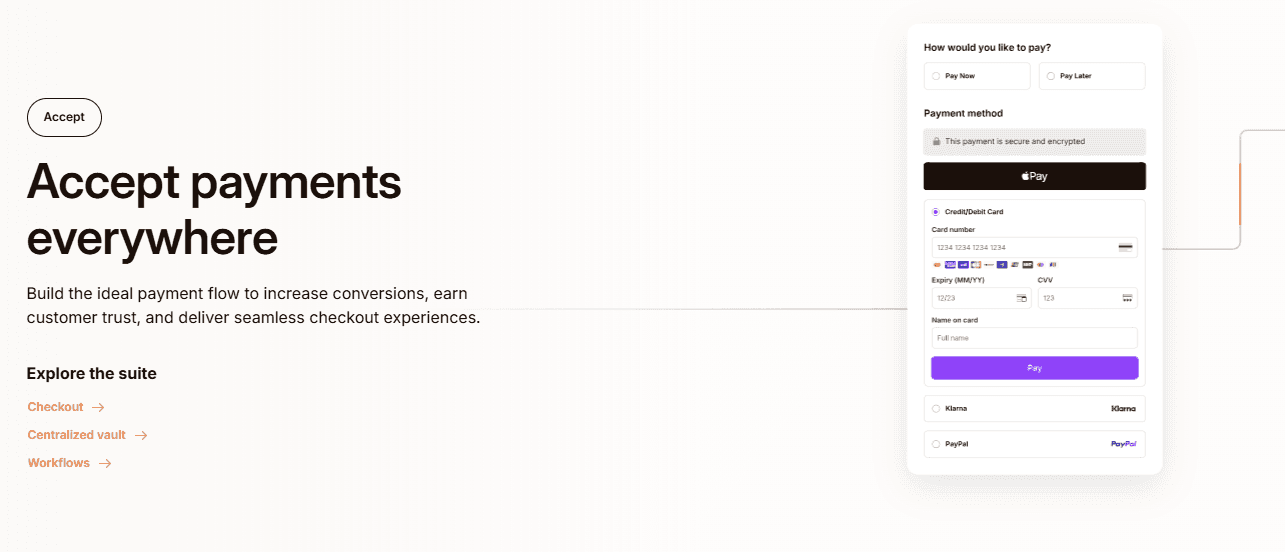
Primer is a payment orchestration platform that gives businesses greater control over their payment infrastructure.
Its visual workflow builder lets you manage payment flows and change routing logic without writing code for every adjustment.
Source: Primer.io
For example, you can direct transactions to different payment processors based on customer location or automatically retry eligible failed payments through backup providers.
Primer also offers AI-powered insights to help identify payment performance issues and improve approval rates.
One limitation is its focus on payment acceptance and transaction optimization. If your SaaS business uses complex usage-based pricing, you'll likely need separate software for consumption metering and credit management.
Best Features
No-code payment workflows: Create and modify payment flows using a visual workflow builder.
Dynamic payment routing: Route transactions based on provider performance and processing costs.
Automatic fallbacks: Retry eligible failed transactions through alternative payment providers.
Network tokenization: Protect sensitive card information using secure tokens.
AI Companion: Analyze payment performance and identify opportunities to improve authorization rates.
Payment reconciliation: Compare payment records and monitor transaction activity through centralized reporting.
2. Spreedly
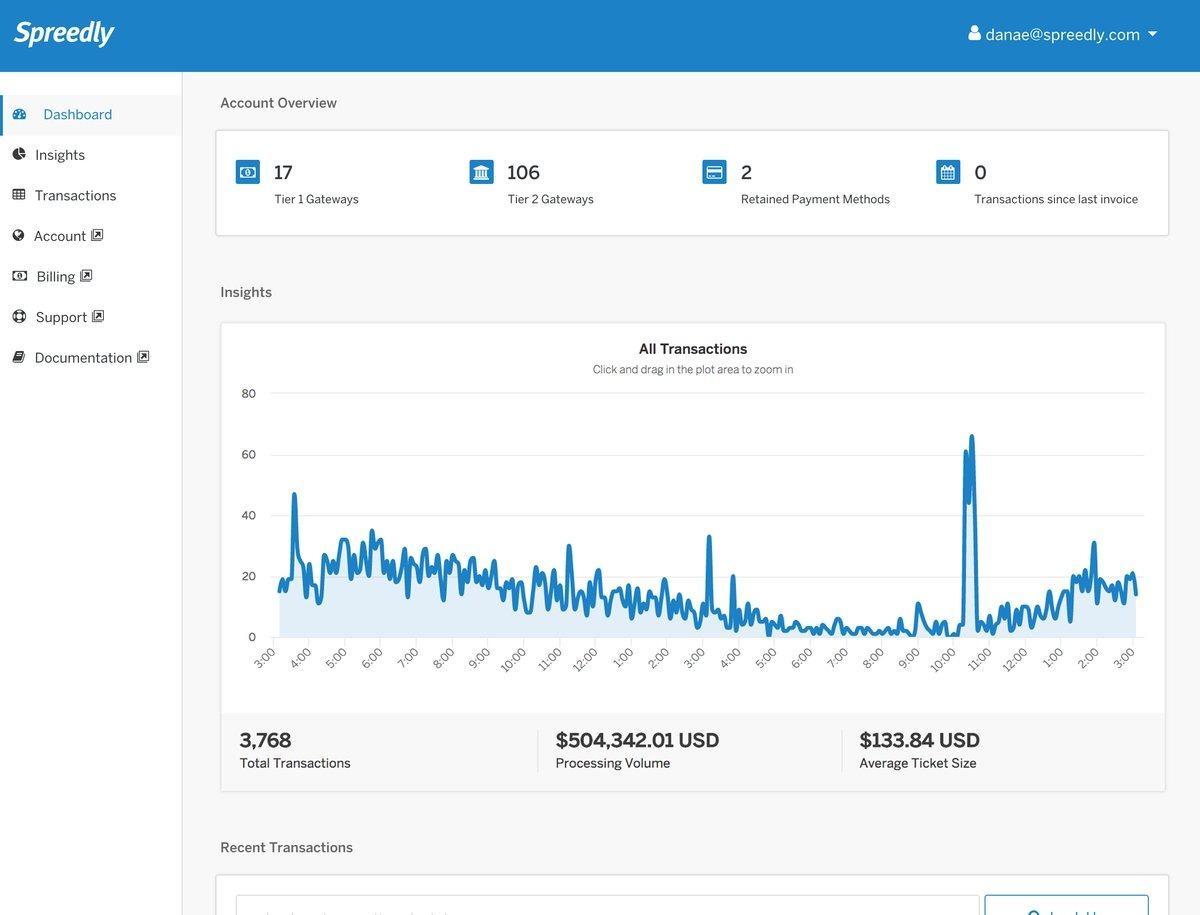
Changing payment processors can become complicated when your customers' stored payment credentials are tied to one provider. Spreedly addresses the problem through payment orchestration and independent payment data storage.
Source: G2
Its platform lets businesses connect multiple payment gateways through a single integration while securely managing customer payment credentials.
Suppose you want to introduce a new acquiring bank or move transactions away from an underperforming processor. Spreedly's tokenization capabilities can make the transition easier without asking customers to reenter their payment information.
The tradeoff is that its broader payment infrastructure capabilities may require considerable technical planning, particularly for businesses with limited development resources.
Best Features
Independent payment vault: Store customer payment credentials without depending on one processor.
Payment gateway integrations: Connect multiple payment providers through a unified API.
Smart payment routing: Configure routing rules to select providers for different transactions.
Network tokenization: Protect stored card credentials and support payment authorization.
Account updater: Keep stored card information current to reduce recurring payment failures.
Fraud prevention integrations: Connect external fraud detection and authentication services.
Payment analytics: Monitor transaction performance and identify opportunities to recover failed payments.
3. Gr4vy
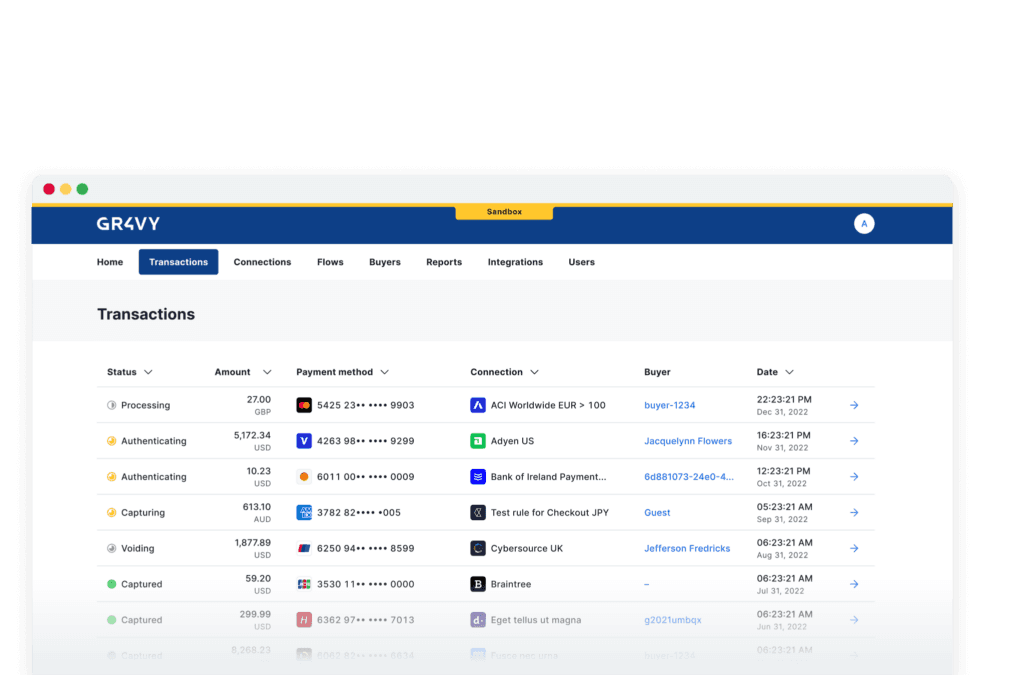
Gr4vy is a cloud-based payment orchestration platform that connects merchants with multiple payment service providers and alternative payment methods through one integration.
Its no-code dashboard lets your payment team introduce new providers and adjust payment routing without building separate integrations every time.
Source: G2
For instance, if your primary payment gateway experiences an outage, Gr4vy can redirect eligible transactions to another available provider.
You can also use performance-based routing to direct payments toward providers with stronger approval rates.
Although Gr4vy offers considerable flexibility, businesses with straightforward payment requirements may find its infrastructure more extensive than necessary. Integration costs and ongoing management are also worth considering.
Best Features
No-code payment orchestration: Configure payment providers and workflows through a centralized dashboard.
Intelligent routing: Select processors based on transaction details and provider performance.
Automated failover: Redirect eligible transactions when the primary provider fails.
Independent payment vault: Store payment credentials separately from individual processors.
Global integrations: Support local payment methods and regional payment providers.
Dedicated cloud infrastructure: Use isolated cloud instances with regional data residency options.
4. Yuno
Planning to accept payments internationally? Your current payment stack might not support the payment methods customers prefer in different countries. Yuno helps businesses manage global payments through a single integration.
Source: Y.uno
Its payment orchestration platform connects international payment providers and supports local payment methods, giving customers more payment options.
You can also use intelligent routing to direct transactions to providers with stronger approval rates.
Yuno's automated monitoring tools help identify performance problems and redirect payment traffic when necessary.
One consideration is the platform's extensive international coverage. Businesses operating in a single market with limited payment requirements may not need its broad network of regional providers.
Best Features
Global payment integrations: Connect international providers and local payment methods through one API.
Smart payment routing: Select providers based on authorization rates and transaction costs.
Automatic payment retries: Recover eligible declined transactions through alternative routes.
Real-time monitoring: Track approval rates and respond to changes in provider performance.
AI-powered optimization: Identify opportunities to improve payment success rates and recover revenue.
Fraud prevention: Apply risk controls and authentication tools to payment transactions.
5. IXOPAY
IXOPAY is designed for businesses that want detailed control over their payment operations without depending on a single payment processor.
Its payment orchestration platform provides a unified API for connecting multiple payment service providers and acquiring banks.
You can configure intelligent routing based on processing fees, customer location, or provider performance.
Source: Ixopay.com
A particularly useful capability is automated reconciliation.
If you're managing multiple payment providers, IXOPAY can help consolidate transaction data and compare payment records against settlements.
Its Payments Intelligence offering also helps identify unusual transaction patterns and investigate changes in approval rates.
The main consideration is implementation complexity. Its enterprise-focused capabilities may be excessive for smaller businesses with straightforward payment flows.
Best Features
Unified payment API: Connect different payment gateways and acquiring banks through one integration.
Intelligent routing: Direct transactions based on processing costs and provider performance.
Universal tokenization: Manage payment credentials independently of individual processors.
Automated reconciliation: Match payment transactions against settlement records.
Payments Intelligence: Analyze approval rates, transaction trends, and payment costs.
IXONav AI assistant: Investigate payment issues and receive recommendations through conversational analytics.
Anomaly detection: Identify unusual transaction patterns and payment performance changes.
6. Payrails
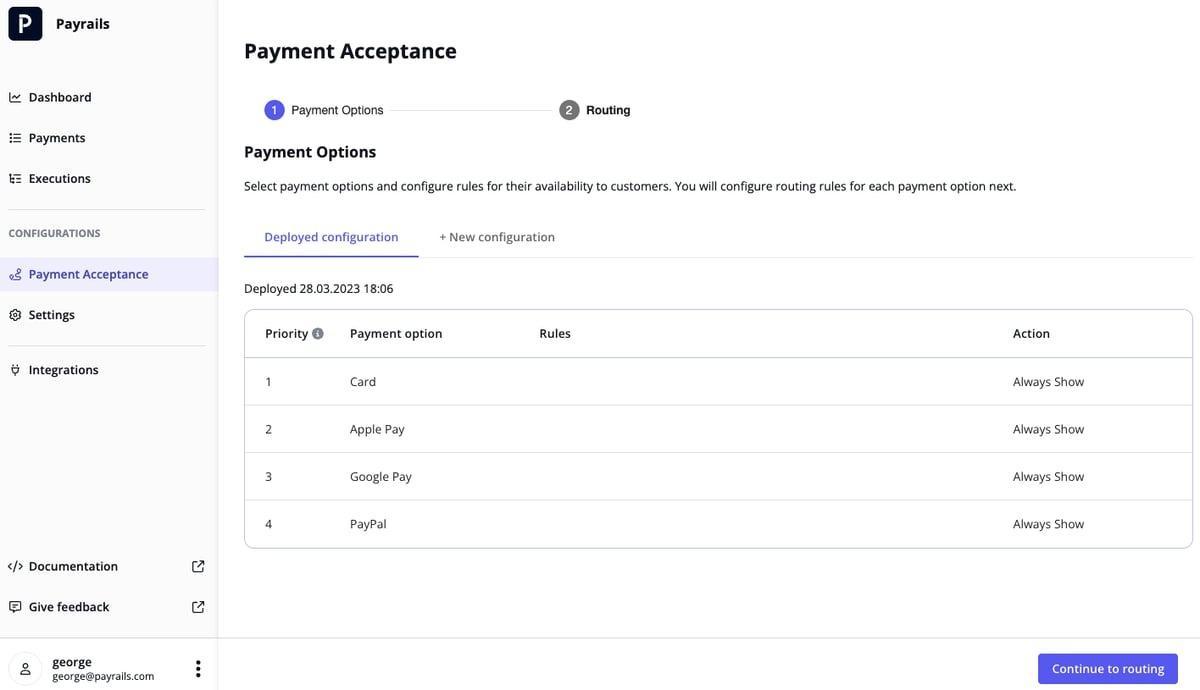
Payrails combines payment orchestration with several financial operations capabilities, making it useful if you want to manage more of your payment process through one platform.
Its modular system includes payment routing, tokenization, reconciliation, and chargeback management.
Source: G2
For example, suppose your business uses multiple payment providers and frequently encounters failed transactions.
Payrails can help you configure payment retries based on issuer responses and transaction conditions. You can also monitor processing fees and compare provider performance.
The potential drawback is that implementing several financial modules can introduce additional setup work. Businesses primarily looking to improve payment routing may find some of its broader capabilities unnecessary.
Best Features
Visual workflow builder: Create payment flows and configure routing rules through a no-code interface.
Intelligent payment routing: Select providers based on transaction data and performance.
Automated payment retries: Recover eligible failed payments using configurable fallback rules.
Independent token vault: Store payment credentials separately from individual providers.
Automated reconciliation: Match payment records with settlement information.
Chargeback management: Manage payment disputes and automate parts of the dispute process.
Fee monitoring: Track processing fees and identify opportunities to reduce payment costs.
7. BR-DGE
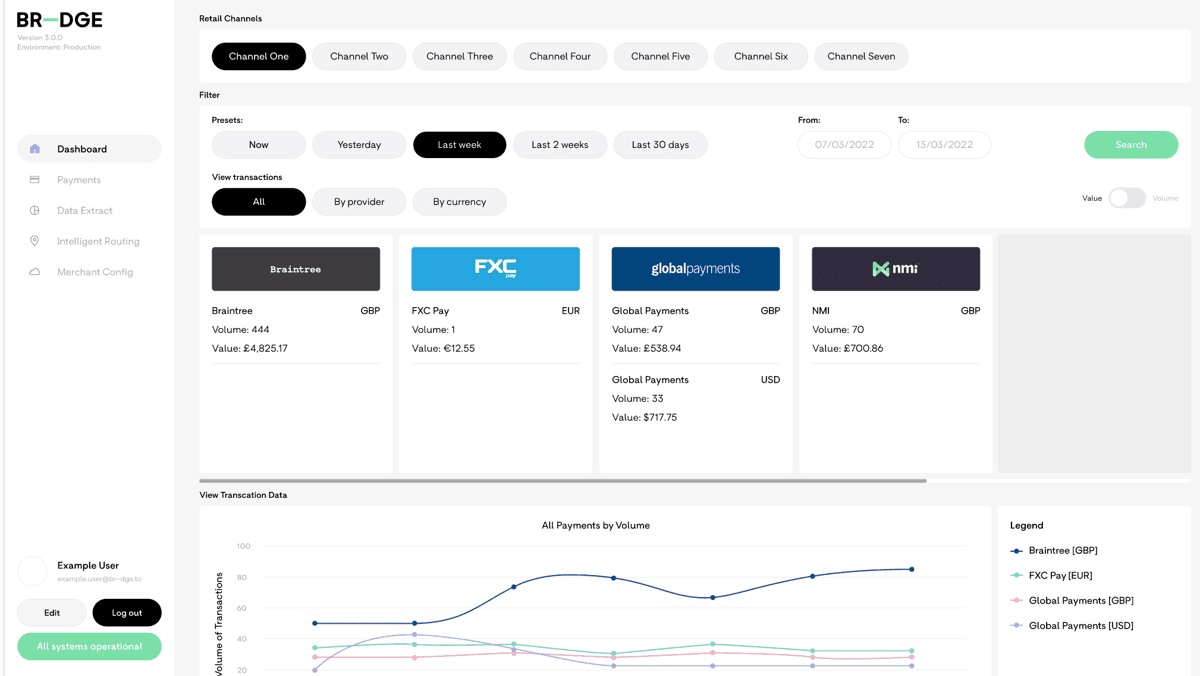
BR-DGE is a payment orchestration platform that helps businesses connect multiple payment service providers through a single integration.
The tool's smart routing capabilities let you direct transactions based on conditions such as currency, card issuer, or payment amount.
Source: G2
For example, if your primary payment processor becomes unavailable, BR-DGE can redirect new transactions to another provider using configured failover rules.
The platform also supports tokenization and integrations with fraud-prevention services, letting businesses manage different parts of their payment process.
BR-DGE could be useful if you want greater flexibility over your existing payment providers without building every connection yourself.
Still, configuring multiple payment routes requires careful planning. Businesses need suitable backup providers and routing rules to get the full benefit of its failover capabilities.
Best Features
Smart payment routing: Direct transactions based on predefined rules and payment conditions.
Multiple provider integrations: Connect payment processors and alternative payment methods through one platform.
Payment failover: Redirect transactions when the primary provider becomes unavailable.
Tokenization: Securely manage payment credentials and support network tokenization.
Fraud prevention integrations: Connect external fraud detection and authentication services.
Custom routing rules: Configure payment flows based on transaction details and business requirements.
Payment Orchestration vs. Usage-Based Billing
Payment orchestration helps businesses improve how they accept and process payments. But for SaaS and AI companies, managing the payment transaction is only one part of the billing process.
Consider a company selling an AI application that charges customers based on token consumption. A payment orchestration platform can help route transactions to the appropriate processor and recover eligible failed payments.
But it doesn't necessarily calculate how many tokens a customer consumed or determine when their usage exceeds an agreed limit. Those responsibilities require usage metering and billing capabilities.
A usage-based billing platform like Schematic helps software companies manage consumption-based charges and enforce customer-specific usage limits.
The two types of platforms solve different problems:
Payment orchestration: Manages transaction routing, payment provider connections, and payment performance.
Usage-based billing: Tracks product consumption, calculates charges, and manages customer usage allowances.
If your software business faces challenges in both areas, you may need capabilities from both categories rather than relying on payment orchestration alone.
Manage Usage-Based Billing Alongside Payment Orchestration
A payment orchestration platform can help you route transactions to the right processor. But how do you determine what customers should be charged in the first place?
For SaaS and AI companies using consumption-based pricing, the billing process starts with tracking product usage.
Let's look at a simple example. Imagine an enterprise customer purchasing 100,000 credits for your AI application. Your billing system needs to track consumption, deduct credits correctly, and apply spending limits before calculating charges.
Schematic helps you manage these requirements through its complete usage-based billing platform.
You can configure enterprise credit wallets, support custom pricing agreements, and give customers real-time visibility into their spending.
Schematic also lets you update pricing plans and enforce usage limits without repeatedly changing application code.
As Rahul Gill, Customer Experience Lead at Macabacus, explains:
"Schematic's ability to offer usage caps, bundles, and top-ups gave our customers the cost predictability they need."
Payment orchestration handles transaction routing. Schematic helps manage the usage-based billing requirements behind those charges.
Book a demo to see how Schematic works.
FAQs About Payment Orchestration Platform
What is the difference between payment orchestration and payment processing?
Payment processing handles digital payments, including transaction authorization and settlement. Payment orchestration determines which payment provider should process each transaction.
A payment orchestration layer connects multiple gateways through a single integration point, allowing businesses to adjust routing rules without building separate direct provider integrations. It can also help reduce payment processing costs and recover failed transactions, while payment processors handle the actual movement of funds.
What is the best payment orchestration platform?
The best payment orchestration platform depends on your business needs. Primer and Gr4vy offer configurable payment routing, while Spreedly focuses on tokenization and provider flexibility. Yuno supports global payments and local payment methods, while IXOPAY and Payrails offer broader payment management tools.
BR-DGE is another option for businesses that need smart routing and connections to multiple payment providers. Compare each platform's supported providers and technical requirements before making a decision.
Do SaaS companies need payment orchestration?
Not necessarily. If your SaaS business processes transactions reliably through one provider, adding a payment orchestration layer may introduce unnecessary operational complexity. Payment orchestration becomes useful when you need multiple payment channels or better transaction recovery.
If your biggest challenge is billing customers based on product consumption, you may benefit more from usage-based billing software like Schematic, which helps manage metering, enterprise credits, and spending limits.
Can payment orchestration improve payment success rates?
Yes. Payment orchestration platforms use smart routing to dynamically route transactions to an optimal provider based on factors like approval rates and transaction data. If a payment fails because a processor is unavailable, the platform may retry it through another provider.
These capabilities can help recover failed payments and reduce lost revenue. Still, not every transaction can be recovered. Issues like insufficient funds or fraud-related declines may prevent a successful payment, even with alternative routing options.