All posts
Enterprise Entitlement Management System: Why Do You Need It?
Blog· Ryan Echternacht·May 17, 2026
Ryan Echternacht·May 17, 2026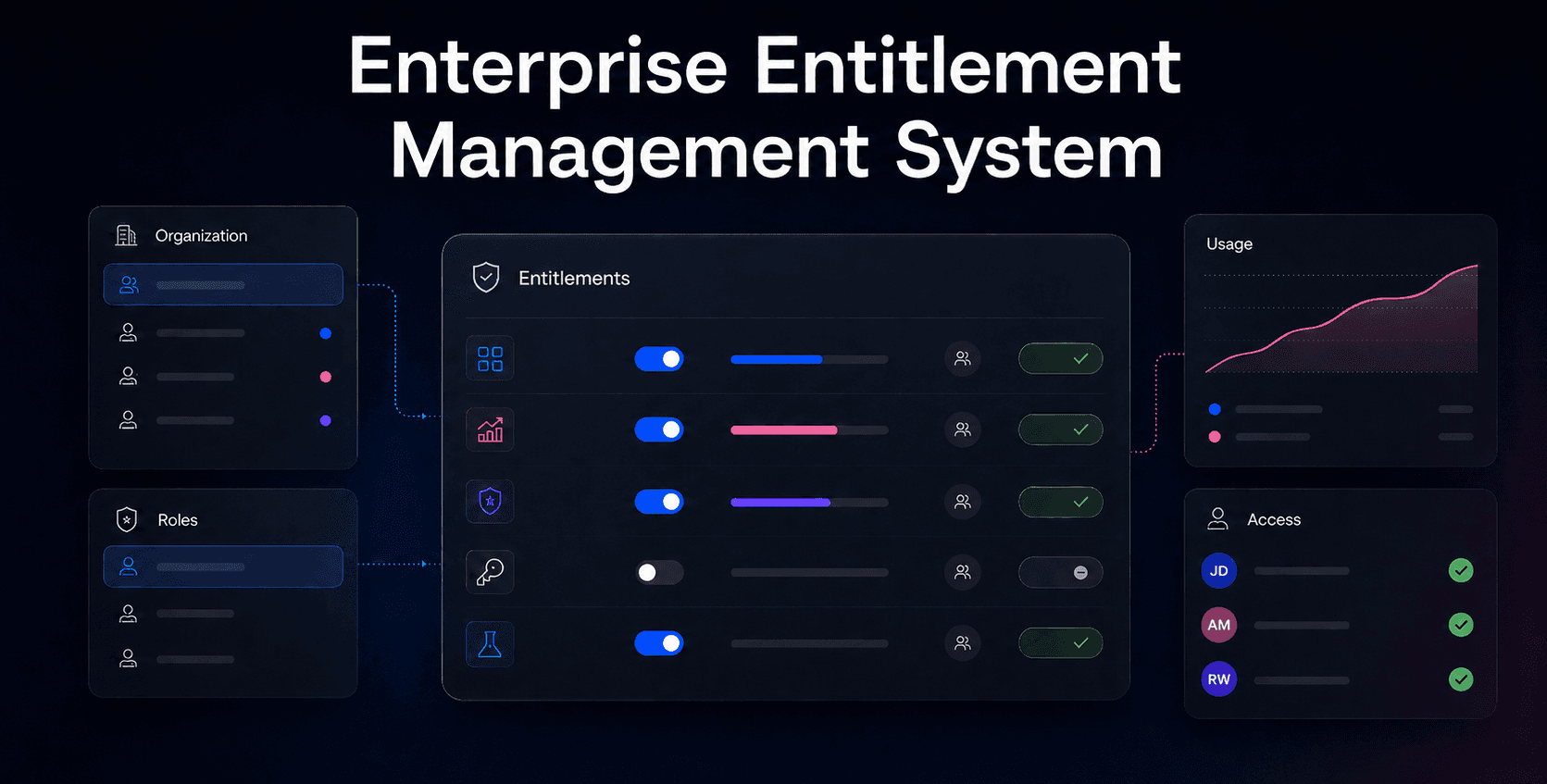
Software monetization is no longer simple. Many SaaS companies now sell tiered plans, add-ons, usage limits, credits, custom contracts, and enterprise packages.
That creates a difficult question for sales, RevOps, and engineering teams: How does your product know what each customer account can use?
This is where an enterprise entitlement management system comes in. It evaluates whether an account is allowed to use a specific feature or complete an action inside the product. Access is granted based on what the customer has purchased instead of what role they have.
Below, we'll discuss why you need an enterprise entitlement management system, its benefits, and popular use cases.
TL;DR
- An enterprise entitlement management system evaluates what a customer can use inside the product based on what they've purchased.
- Enterprises need the system when hard-coded entitlements create technical debt, slow down pricing changes, and lead to customer friction.
- The right entitlement management software helps teams centralize software entitlements, enable faster pricing changes, prevent revenue leakage, improve customer experience, and reduce engineering dependency.
- Common use cases include usage-based billing, enterprise contracts, free trials, plan downgrades, and upsells.
- Schematic helps SaaS and AI companies manage software entitlements and usage limits directly from Stripe without hard-coded logic.
What Is an Enterprise Entitlement Management System?
An enterprise entitlement management system decides what a customer account can use inside a SaaS product based on their plans or contract terms.
It does not define what each user can do. That is handled by the identity and access management (IAM) system and role-based access control (RBAC) tools.
Instead, the software entitlement management system works at the account or company level. It answers the following questions:
- Can this account use advanced reporting features?
- How many seats can the company use?
- How many projects can they create?
- What's their API rate limit?
For example, an account subscribed to the Pro plan may include 5 seats, 10 projects, and 1,000 API calls per month. If usage exceeds the plan limit, the entitlement management platform can deny access, block further activity, or allow continued usage while charging overage fees.
For enterprise SaaS companies, the entitlement system connects billing, packaging, contracts, and product access rights. It turns what a customer has purchased into what the product allows at runtime.
Why Do Enterprises Need an Entitlement Management System?
Here are the top reasons why enterprises need a dedicated entitlement management platform:
Software Monetization Is Becoming More Complex
Enterprise SaaS businesses rarely sell a single subscription plan anymore. They often provide many pricing tiers, paid add-ons, automatic top-ups, and enterprise contracts with custom overrides.
Software monetization is also moving away from static seat-based pricing. Many SaaS companies now use hybrid pricing. A customer may pay for a tiered plan, API calls, credits, storage, and premium features at the same time.
This creates user access problems if not managed well. The product needs to know what each account can use, how much it can use, and when access should change.
An enterprise entitlement management system gives SaaS companies a clear way to manage user entitlements. It connects pricing and packaging to the product experience, so each customer receives the appropriate access based on their plan, contract, and subscription terms.
Hard-Coded Entitlements Slow Down Teams
Many SaaS businesses rely on traditional billing systems that hard-code software access rules into the product. This may work early on, when there are only a few plans and features.
However, for enterprises with multi-product offerings, hard-coded entitlements can slow down workflows and affect operational efficiency.
Sales, GTM, and product teams depend on engineering every time they need to add a new plan, trial, or limit.
A simple pricing update can turn into a code change. A sales deal can create a one-off rule. A new package can take longer to launch because developers need to update logic across the application.
An enterprise entitlement management system solves this problem by decoupling entitlement logic from application code.
Instead of relying on engineering for every access change, the people closest to the customer relationship can control access and monetization.
This is especially important when running enterprise sales alongside a self-serve go-to-market strategy.
Setting up a custom plan for a strategic account no longer requires a ticket and days of waiting. It becomes a simple configuration change with the right entitlement management solution.
Sales can close the deal faster. The customer gets the right access immediately. Engineering does not need to touch the access request workflow.
Poor Entitlement Management Creates Customer Friction
Poor entitlement management often shows up as a customer experience problem. A customer upgrades, but they don't receive access right away. A paid feature does not appear inside the application. A user completes a trial, but access privileges continue to work.
These product access issues create confusion. Customers may contact support to ask why their account is wrong. Sales and customer success teams may need to check billing, contracts, and product settings to find the cause.
Poor entitlement management can also damage trust. Enterprise customers expect the product to reflect their contract, plan, and purchased add-ons without delay.
An entitlement management system helps prevent these risks. It serves as the authoritative source for plan and entitlement data.
When a plan changes, an add-on is purchased, or a limit is reached, the product can instantly respond based on the correct entitlement rules.
Enterprise Contracts Require Flexible Entitlement Logic
Enterprise SaaS contracts often include terms that do not fit standard pricing pages and access policies.
One customer may need a custom seat limit. Another may require temporary access to a beta feature. A large account may have special usage caps, regional limits, premium support, or a custom bundle that covers access to multiple systems.
Without a proper entitlement system, these contract terms often become manual notes, support tickets, admin changes, or hard-coded exceptions. That creates risk.
Teams may lose track of what was promised. Product access may not match the signed contract. Renewals and expansions can become harder to manage at scale.
An enterprise entitlement management system gives companies a better way to support custom terms. It lets teams model enterprise deals as account-level rules inside the product. It can effectively serve large customers without turning every contract into a new engineering project.
Key Benefits of Using Enterprise Entitlement Management Software
Using entitlement management software can benefit enterprises in several ways.
Centralized Control Over Software Entitlements
Enterprise entitlement management software gives teams one place to manage what each account can use. This is especially important when a SaaS product has many plans, trials, limits, and contract terms.
Without a central system of record as a key component, entitlement logic often spreads across application code, billing systems, and customer relationship management (CRM) software. That leads to confusion. One team may think a customer has access to a feature, while the product code says something else.
An entitlement system solves this by acting as the source of truth for account-level access. Product, engineering, sales, finance, support, and customer success teams can work from the same rules.
This simplifies entitlement management and makes the product easier to handle as it evolves. Teams can see which features are tied to what plans, which accounts have custom access, and which limits apply to each customer.
Faster Pricing and Packaging Changes
Enterprise companies often need to test and update pricing to keep up with customer needs and market demands. According to OpenView Partners, around 50% of SaaS businesses changed pricing and packaging.
A dedicated entitlement management platform makes this much easier.
Internal teams can manage access in a system separate from the application. They can add a new plan, adjust a plan bundle, change a usage limit, or create a trial without waiting for engineering.
This gives SaaS companies more room to adapt. They can support self-serve plans, sales-led packages, custom enterprise deals, and product-led growth motions using the same system.
Less Revenue Leakage
Revenue leakage occurs when customers use features, seats, credits, or services they have not paid for. This can happen when trials do not expire, usage limits are not enforced, add-ons stay active after cancellation, or downgraded accounts keep premium access permissions.
Enterprise entitlement management software prevents these issues by automatically tying product access to the account’s plan, contract, and usage rules.
For example, if a customer pays for a plan with 50 AI credits, the entitlement system can track usage against that usage limit. Once the credit balance reaches zero, it can instantly block further account activity or prompt the customer to purchase more credits.
The software helps SaaS businesses protect revenue without recurring access reviews.
Better Customer Experience
A robust entitlement system helps the product feel clear and predictable for every customer. They can immediately use the features, seats, and limits that match their plan or contract without requesting access.
This matters because confusion inside the product can hurt trust. If a feature appears but is not actually available, the customer may feel blocked. If an add-on is active in billing but missing in the app, the customer may think the product is broken.
An enterprise entitlement management platform keeps the product experience tied to the appropriate entitlements for each account. It can show the right features, hide unavailable options, trigger upgrade prompts, and apply the correct usage limits.
That leads to fewer access issues, fewer support tickets, and higher customer satisfaction.
Reduced Engineering Dependency
Engineering teams should not update code every time pricing changes. They also don't need to create custom logic for every enterprise deal, trial, or override request.
The right enterprise entitlement management software reduces manual burden by moving business access rules out of the application code.
This does not mean engineering is removed from the process. Developers still need to add the right checks inside the product. But once those checks are in place, teams can manage entitlements through a simple configuration change instead of new code.
Engineering stays focused on core product development. Meanwhile, sales, product, and revenue teams can ship pricing and access changes faster.
Stronger Security and Compliance
An enterprise entitlement management system can reduce access mistakes at the company level. It provides a clear record of which accounts can use certain features, seats, data exports, integrations, admin tools, and usage limits.
This matters because weak access control can create security risks. A canceled account may retain access. A downgraded customer may still use restricted features. A free trial user may reach areas meant only for paid customers.
By preventing unauthorized access, an entitlement system helps enhance security and reduce the chance of data breaches tied to incorrect product access.
It also supports compliance by keeping change history, approval records, and access rules in one place.
Question to Ask When Choosing an Enterprise Entitlement Management System
When evaluating different entitlement management platforms, you should ask the vendor several questions. These will help you find the right entitlement management solution for your enterprise needs.
Does It Handle Plans and Exceptions Without Hard-coding Logic?
Look for a system that separates entitlement logic from the application. This helps teams efficiently manage access, limits, and exceptions without changing product code each time.
Sales and RevOps can add a package, adjust a limit, or grant user access rights through simple configuration. Engineering can focus on shipping product features instead of maintaining a complex entitlements architecture.
Can It Support Usage-Based and Other Complex Pricing Models?
Modern SaaS and AI companies often sell software using seats, usage caps, credits, API calls, storage limits, and flexible pricing models.
Choose an entitlement system that can track entitlement usage, enforce limits, support overages, and create upgrade paths when accounts exceed predefined thresholds.
Does It Integrate With Your Existing Tech Stack?
Make sure you can integrate entitlement management with existing systems, such as billing, CRM, and subscription management software.
Built-in integrations help keep product access in sync with plan, subscription, contract, and account changes.
Can It Scale With Enterprise Contracts?
Enterprise deals often include custom terms. The entitlement management system should support account-level feature access, custom quotas, special bundles, trial extensions, and negotiated plan overrides.
It should also let teams manage enterprise terms without creating one-off messes. This helps sales close larger deals while making sure user access aligns with customers' purchases.
Common Enterprise Entitlement Management Use Cases
Here are the different applications of enterprise entitlement management.
Supporting Usage-Based Billing
Successful usage-based billing depends on clear limits. An entitlement system can track what an account is allowed to use, such as API calls, credits, storage, projects, transactions, or messages.
When the account reaches its limit, the product calls on the entitlements layer to respond in the right way. It may block more usage, show an upgrade prompt, or allow continued product access while tracking extra usage for billing.
Managing Enterprise Contracts
In enterprise contracts, one customer may get a custom feature bundle. Another may receive higher usage limits, extra seats, beta access, or special support.
An enterprise entitlement management platform lets teams turn those special contract terms into product access rules.
Instead of relying on multiple systems, support tickets, or hard-coded exceptions, SaaS companies can manage entitlements from one place.
Running Free Trials and Product-Led Growth Motions
Trials and product-led growth depend on smooth access control processes. A customer may start with limited access, test premium features, and then upgrade to a paid plan.
An enterprise entitlement management system can control which features are available during the trial and when temporary access should expire.
If the user decides to subscribe to a paid plan, the system automatically updates product access rights.
Handling Plan Downgrades and Cancellations
Downgrades and cancellations can create access problems if they are handled manually.
Enterprise entitlement software can update product access based on the new plan state. It can remove premium features, lower usage limits, or block new actions tied to the old plan.
Managing Add-Ons and Upsells
Many SaaS companies sell add-ons outside the base plan. These may include advanced features, automated workflows, single sign-on, multi-factor authentication, premium support, or higher usage limits.
An entitlement management system can activate add-ons when they are purchased and remove them when they are canceled. It can also show upgrade prompts when customers hit limits or try to use a feature they do not have. This makes upsells easier to manage inside the product.
Schematic Supports Runtime Entitlement Enforcement
Schematic is the system of record for plans, software entitlements, limits, credits, trials, add-ons, overrides, and exceptions. It enables SaaS teams to control pricing, packaging, and access in-product without a billing rebuild.
The platform, built on Stripe, turns billing state into application behavior. Stripe manages payments, invoices, and revenue recognition. Schematic ensures access inside the product lines up with billing and subscription status in Stripe.
Schematic centralizes the entitlement state and decouples it from application code, giving businesses the control plane they can use to continuously iterate on monetization.
Engineering writes two calls instead of two hundred lines. Product teams can freely adjust packaging, limits, and enforcement without waiting for developers. GTM teams can sell flexibly while staying aligned with what the product allows.
FAQs About Enterprise Entitlement Management System
What is an entitlement management system?
An entitlement management system controls what a customer account can use inside a SaaS product. It enforces feature access, usage limits, seats, rate limits, and custom contract terms at the account or company level. This can prevent revenue leakage and strengthen an organization's security posture.
How does an enterprise entitlement management system work?
An enterprise entitlement management system evaluates the account’s plan, limits, current usage, contract overrides, and subscription status against predetermined access policies. It decides whether to allow the activity, limit access, or deny further actions.
When do companies need an entitlement management system?
Businesses need an entitlement management system when pricing, packaging, and product access become hard to manage in code. This often happens with multiple plans, usage-based pricing, add-ons, exceptions, and custom enterprise contracts.
What is the difference between entitlements and user permissions?
Entitlements work at the account level. They define what the company paid for, such as features, seats, plans, and usage limits. User permissions answer what an individual user can do. They consider user roles and job functions when enforcing access policies for each person. They also make sure that only authorized users can access the software.