 Ryan Echternacht
SaaS businesses should quickly launch pricing to stay competitive and keep up with customers' needs.
An agile monetization platform (AMP) helps companies adjust pricing, billing, and offerings through configuration instead of code.
However, most vendors fail to include software entitlements in their AMP stack. This leads to heavy engineering involvement and slower pricing changes.
In this guide, we'll explain why entitlements matter and how they fit into your monetization stack. But first, we'll discuss the definition and key components of an agile monetization platform.
TL;DR
- An agile monetization platform is a reference architecture designed to launch new pricing plans quickly.
- It connects 13 core components, such as agile billing, e-commerce, payments, and order management, to enable faster pricing changes.
- Most AMP stacks do not include entitlements, which control product access based on the customer's plan.
- Businesses need an entitlements layer to eliminate engineering bottlenecks, prevent revenue leakage, support flexible pricing, and accelerate go-to-market motions.
- Schematic helps AI and SaaS companies quickly launch any pricing model, iterate on packaging, enforce in-product access, and set limits without hard-coded logic.
What Is an Agile Monetization Platform?
An agile monetization platform is a reference architecture that combines the necessary tools and processes to help SaaS companies execute their monetization strategy.
It serves as the central system that connects pricing, billing, and other revenue-related functions across an organization.
Instead of operating in silos, businesses monetize products and services through a flexible and configurable system.
An AMP enables finance teams and other non-technical users to implement most changes in pricing without waiting for engineering support.
Key Components of an Agile Monetization Platform
An agile monetization platform includes 13 components that contribute to monetization success.
- Agile billing: Handle recurring billing, invoicing, and subscription management.
- Customer relationship management (CRM): Store customer data and relationships.
- E-commerce: Manage self-serve checkouts and account upgrades.
- Automated revenue management (ARM): Use software to automatically track the revenue lifecycle.
- Configure, price, quote (CPQ): Apply complex pricing rules and deliver accurate quotations.
- Financials: Handle general ledger, reporting, and financial data.
- Mediation: Collect and process usage data before billing.
- Payments: Process payments and invoices.
- Order management: Oversee order tracking and fulfillment.
- Contract lifecycle management: This involves contract creation, renewals, and amendments.
- Financial close: Support revenue recognition.
- Taxation: Calculate taxes to meet compliance.
- AR automation: Automate accounts receivable and collections.
What Do Most Agile Monetization Platforms Lack?
Most AMP stacks do not include an entitlement layer. While they cover billing, pricing, and revenue processes, they often miss the component that defines what a customer can actually access in real time inside your product.
Entitlements refer to the rules that control product access, features, usage thresholds, and rate limits based on the customer's plan.
They connect pricing to product delivery and experience. Without entitlements, there is no clear link between what is sold and what is delivered.
Missing entitlements create bottlenecks. Engineering teams are forced to write and maintain entitlement code to manage access. At first, they use feature flags, database tables, and conditional logic to get the job done.
However, as the product scales and pricing changes, this setup becomes hard to manage. Every new plan, feature, or tier adds more code, which makes updates slower and prone to error. Over time, it becomes the system that nobody wants to own.
Why Do You Need an Entitlements Layer in an Agile Monetization Platform?
An entitlements layer should be a key component of any agile monetization solution for several reasons.
Reduce Engineering Bottlenecks
Without an entitlements layer, engineering teams must manage access logic in code. Every change in SaaS pricing and packaging requires updates to feature flags, databases, or backend logic.
This leads to bottlenecks and creates constant dependency on developers.
An entitlements layer moves this logic out of product code and into a central system.
Product teams can define access rules directly within the application. It reduces back-and-forth with engineering and allows faster updates without code changes.
Prevent Revenue Leakage
When access rules are not tightly controlled, customers may use features they did not pay for or consume beyond their plan limits.
This often happens when entitlement logic is spread across systems or handled manually. Over time, those gaps lead to lost revenue.
An entitlements layer creates a single source of truth for what each customer should receive. It can enforce limits, restrict access, and align product usage with billing and subscription state.
That means every functionality, limit, and add-on is billed correctly. Nothing is given away for free, which protects your revenue.
Enable Flexible Pricing
Modern SaaS and AI products are moving away from traditional subscriptions and seat-based pricing. According to Growth Unhinged, the adoption of flat-fee subscriptions fell from 29% to 22%. Seat-based pricing also dropped from 21% to 15%.
Many companies are adopting usage-based, outcome-based, and hybrid pricing models to manage costs and protect margins.
However, this shift introduces complexity. For example, in usage-based billing, you need tighter control over limits and track usage patterns to identify churn risks.
When this logic is handled in code, it's difficult to launch pricing, packaging, and entitlements.
An entitlements layer solves this by decoupling pricing from application code. It lets you define usage limits, feature gates, and overrides in one place and outside the product. This makes it easier to support new pricing models as your business expands.
Accelerate Your Go-to-Market Strategy
Shipping new pricing or features should not depend on long development cycles. Without an entitlements layer, every change requires engineering work, testing, and deployment. This hinders your business's ability to respond to market demand.
An entitlements layer provides go-to-market (GTM) teams with direct control over access rules. They can sell flexibly while staying within product limits.
GTM teams can also release new plans, trials, and feature bundles to meet customers' needs. That means self-serve and sales-led enterprise deals close faster.
How Entitlements Fit Into an Agile Monetization Solution
Entitlements sit between billing systems and the product. It acts as the link that connects what a customer pays for to what they can access in real time.
While billing systems process payments and invoices, they do not control feature access or usage inside the product. This is where entitlements come in.
When a customer makes a purchase, the entitlements layer evaluates their plan and enforces access inside your product in real time. It controls features, usage limits, seat-based entitlements, and rate limits based on the pricing model.
By adding this layer to the monetization platform, SaaS companies can manage pricing and access separately. Billing handles payment processing, while entitlements control the product experience. This separation makes systems easier to manage as pricing and products grow.
Schematic Supports Agile Monetization
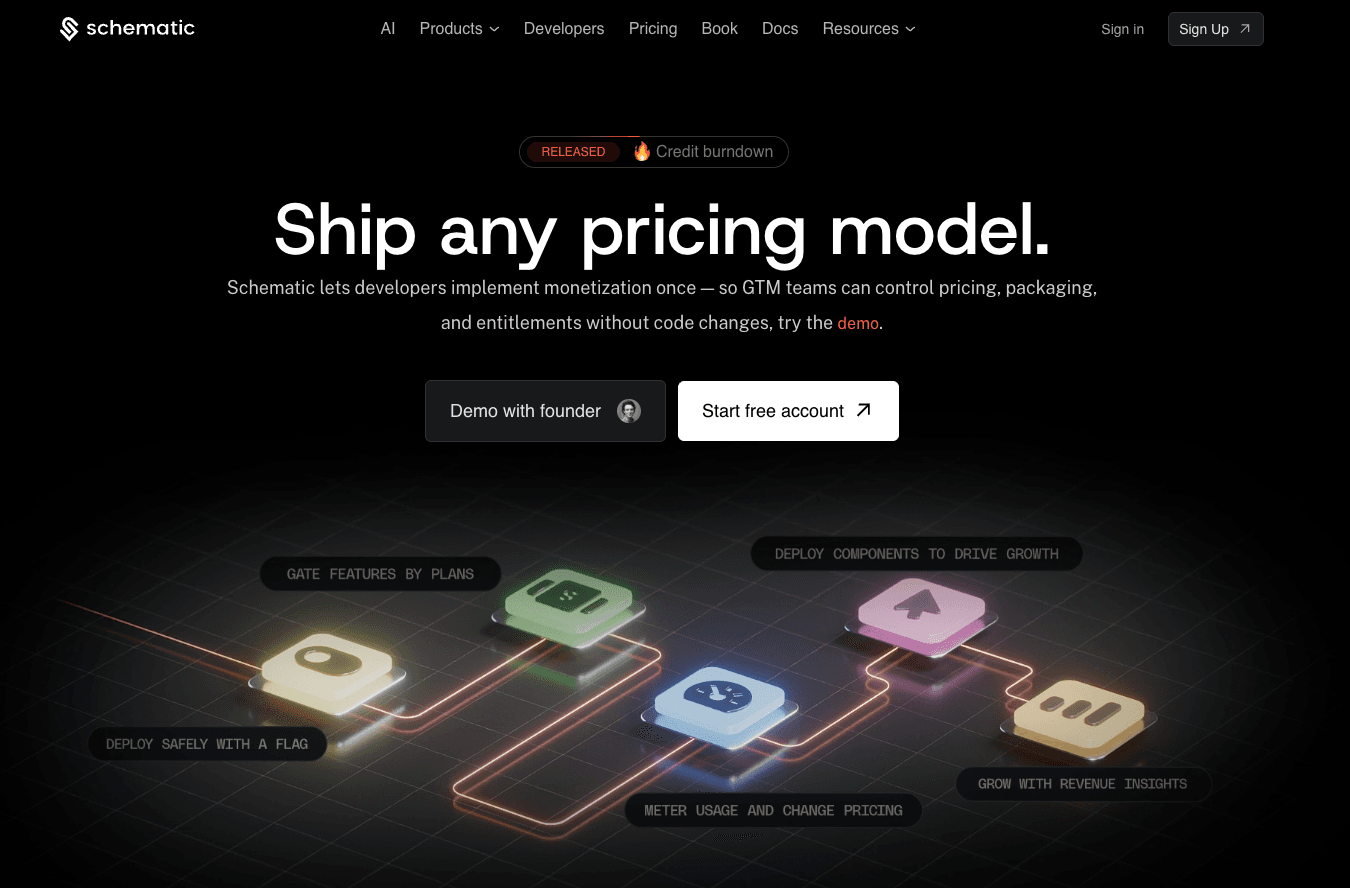
Schematic enables SaaS and AI companies to control pricing, packaging, and entitlements faster without code changes.
It acts as the system of record for your product catalog, which includes plans, limits, entitlements, trials, add-ons, and exceptions.
Schematic, built on Stripe, enforces access in-product at runtime without hardcoding logic or building integration glue. It also aligns product access with billing and subscription state in Stripe.
Engineering stops writing and maintaining entitlement code. Product teams can continuously iterate on packaging, limits, and enforcement in real time.
FAQs About Agile Monetization Platform
Why is agile monetization important in the SaaS industry?
SaaS companies need pricing agility to keep up with changing customer needs and market demand. Agile monetization helps GTM teams launch and adjust plans quickly. This enhances customer satisfaction, improves retention, and supports long-term growth.
Do you need an agile monetization platform if you already have a billing system?
Yes. A billing system handles invoices and payments, but it does not control pricing logic or product access. An agile monetization platform connects these pieces. It gives you better control over how pricing, billing, and entitlements work across your product.
What are entitlements in an agile monetization platform?
Entitlements define what a customer can access based on their plan. In an agile monetization platform, they play a key role by connecting pricing changes to actual product behavior.
When plans, add-ons, or pricing models change, entitlements update access rules without requiring code changes. They enable GTM teams to roll out pricing updates faster while keeping product access aligned with the customer’s plan.