
Pricing can make or break your SaaS or AI business. Set prices too high, and you risk customer churn. On the other hand, underpricing can lead to negative margins and revenue loss.
This is where an AI pricing engine helps.
It uses artificial intelligence and machine learning algorithms to determine the right price for your product. It's designed to maximize revenue by dynamically adjusting prices based on market conditions.
In this guide, we'll discuss how an AI-powered pricing engine works, its benefits, and its use cases.
TL;DR
- An AI pricing engine is software that uses artificial intelligence and data analysis to recommend the most profitable prices for your product.
- It works by analyzing customer behavior, demand, market conditions, and other relevant data to set the best pricing.
- Businesses benefit from reduced errors, higher revenue, faster response times, improved decisions, and positive customer experiences.
- Popular use cases include dynamic pricing, A/B testing, personalized pricing, demand forecasting, and competitor pricing analysis.
- AI pricing engines find pricing opportunities, while complete monetization platforms like Schematic help you ship any pricing model, meter usage, enforce limits at runtime, and give users real-time visibility into their consumption.
What Is an AI Pricing Engine?
An AI pricing engine is specialized software that uses artificial intelligence to identify the most profitable pricing strategies for a product or service.
Think of it as the brain behind pricing decisions. Instead of relying on fixed formulas, it analyzes market dynamics, customer behavior patterns, historical sales data, competitor prices, and other relevant factors to decide what pricing makes sense.
AI-driven pricing systems are especially useful in SaaS because these markets move fast. Products, features, and demand change often. To stay competitive, companies need to adjust SaaS pricing and packaging strategies.
AI pricing engines help these businesses make data-driven decisions instead of relying on guesswork.
Traditional vs. AI-Powered Pricing Engines
A traditional or rule-based pricing engine follows rigid formulas set by humans. These pricing rules are simple and do not change unless updated manually. Here are some examples:
- If a competitor lowers their price, reduce ours by 3%.
- Once demand drops, offer a 10% discount.
A traditional pricing engine is often reactive. It cannot anticipate demand fluctuations and fails to optimize revenue.
An AI-powered pricing engine works differently. It goes beyond static rules by analyzing data (e.g., competitor pricing strategies, customer demand, market trends, etc.) in real time. Then, it automatically sets and updates pricing without manual intervention.
Many pricing engines also adapt and improve over time with more data. They can support highly granular and dynamic pricing strategies.
How Do AI Pricing Engines Work?
AI pricing engines work by using artificial intelligence and machine learning algorithms to analyze vast datasets and set optimal prices.
First, it studies market data, customer behavior, sales history, competitor prices, inventory levels, events, and other relevant factors.
It looks at how customers respond to different price points, what drives demand, and how pricing changes affect sales volume.
Next, it calculates the best prices to meet specific business goals, such as maximizing profitability, increasing market share, or enhancing customer satisfaction.
The pricing engine keeps learning over time. As new data comes in, some platforms automatically update pricing through APIs or direct data flow integration.
Key Benefits of Using AI Pricing Engines
AI-enabled pricing engines can benefit businesses in several ways.
Reduce Human Errors
Manual pricing often leads to mistakes. Teams often rely on spreadsheets, fixed rules, and manual updates to manage pricing. Errors can happen when data is outdated or misread. Even small mistakes can impact revenue.
An AI pricing engine significantly reduces this risk. It processes large amounts of data without manual input. It applies consistent pricing logic across all decisions to remove guesswork and limit human bias. It also automates complex calculations to reduce errors and ensure accurate pricing.
Some pricing engines instantly update prices based on predefined rules to avoid missing demand or market shifts.
With fewer manual tasks, teams can improve operational efficiency and spend more time optimizing pricing strategies.
Increase Revenue and Profit Margins
Many companies leave money on the table due to poor pricing decisions.
An AI pricing engine helps you find the best price point. It learns how customers respond to different prices. Then, it offers pricing recommendations that balance profitability with customer-perceived value.
It can also test different pricing strategies. For example, it can adjust pricing across plans, usage levels, customer segments, or multiple sales channels. This helps SaaS and AI companies capture significant value from each user, leading to higher revenue and better profit margins.
According to a Market.us report, businesses using AI pricing optimization can see a 10 to 15% increase in revenue.
Respond Faster to Market Changes
Markets change fast. Competitors adjust pricing. Product demand shifts. And customer expectations and behavior evolve.
Traditional pricing engines cannot keep up with all these changes in the competitive landscape.
Fortunately, AI pricing tools react to market fluctuations in near real time. They analyze different datasets, track pricing performance, and adjust pricing based on varying conditions.
For example, if demand increases, the pricing engine can adjust to match this need. If a competitor lowers prices, it can respond in real time.
Pricing engines help SaaS and AI companies maintain competitive pricing without delays. They can respond to market and customer preferences faster and reduce churn.
Improve Decision-Making
Some SaaS businesses rely on past trends or gut feeling when pricing their product. However, this can lead to poor outcomes.
An AI pricing engine uses relevant data sources to guide pricing decisions.
It analyzes historical sales data, demand patterns, customer behavior, and ongoing trends. Then, it provides clear recommendations to help you price based on actual insights rather than guesswork.
Enhance Customer Experiences
An AI-powered pricing engine enhances customer satisfaction by making pricing more relevant and easy to understand. Instead of charging a fixed subscription fee, it adjusts pricing based on how customers use the product.
Launching usage-based pricing means users only pay for their actual consumption. Heavy users can access plans that fit their usage, while light users are not forced into expensive tiers. This reduces friction during sign-up and upgrades.
An AI pricing engine can also present the right pricing at the right time. For example, users may see special offers or enable automatic top-ups that match their product behavior.
Fair, transparent pricing can improve customer value perception and build stronger customer loyalty over time.
Popular Use Cases of AI Pricing Engines
Here are the common applications of AI-powered pricing engines.
Dynamic Pricing
AI pricing engines support dynamic price optimization. They enable SaaS and AI companies to adjust pricing based on usage, competitor prices, and market trends.
For example, a cloud platform can increase pricing during peak periods. During low usage, it may offer lower rates to attract more users. This helps balance demand and revenue.
AI-powered dynamic pricing also works well with usage-based billing. Let's say a customer exceeds the plan limits and uses more API calls or AI credits.
The dynamic pricing engine recommends offering volume discounts to reduce churn or prompting customers to upgrade.
Businesses stay flexible, remain competitive, and enhance their market position by aligning prices with current conditions.
A/B Testing and Experimentation
AI pricing engines can test different pricing strategies.
Product and go-to-market (GTM) teams can easily experiment with pricing pages, plans, or discounts. For instance, they can test two pricing tiers with different price points.
The pricing engine tracks which version drives more sign-ups or upgrades. It can also compare subscription billing cycles, such as monthly vs. yearly plans.
Then, it analyzes the results and suggests the better option. It reduces the need for manual testing and data analysis.
Personalized Pricing
An AI pricing engine can set different price points for different users based on data. It considers factors like usage, company size, and in-product behavior.
It supports customer segmentation by grouping users with similar needs or patterns. Each group can receive pricing that fits how they use the product.
SaaS companies can offer custom pricing for enterprise clients, lower-cost plans for small teams, and free tiers for hobbyists. They can also provide targeted offers depending on user actions.
By implementing personalized pricing strategies, organizations improve conversions and reduce friction. Users feel the pricing matches their needs instead of a one-size-fits-all model.
Demand Forecasting
AI pricing engines use historical data and trends to estimate what will happen next.
Accurate forecasting helps prevent underpricing or overpricing. If demand is expected to grow, pricing can reflect that shift early.
SaaS teams have more control over pricing strategy. Instead of reacting late, they can prepare in advance. It leads to more stable revenue and better planning.
Competitor Pricing Analysis
AI-enabled pricing engines track competitor pricing and market changes. They monitor how similar companies charge for their products.
This pricing data is useful in highly competitive industries. If a competitor lowers prices, the system can suggest a response. When a company increases pricing, it may signal room to adjust your own pricing.
Your business can remain competitive, protect market share, and improve positioning without constant manual checks.
Promotion Optimization
Promotion optimization helps SaaS and AI companies run better discounts and offers. Instead of applying random discounts, the AI pricing engine includes rebate and incentive management capabilities to analyze which strategies work best.
For example, it can test different discount levels that align with the customer's willingness to pay. It also decides when to show a promotion based on user behavior. A customer who is about to churn may see a targeted offer.
It tracks how each promotion affects sign-ups, upgrades, or retention. Then, it adjusts current pricing strategies based on results.
Scenario Simulation
Scenario simulation allows SaaS teams to test pricing changes before applying them. The AI pricing engine models outcomes using historical and real-time data.
Teams can explore different pricing scenarios without affecting customers. For example, you can test a 10% price increase and see how it may impact conversions or churn.
You can also switch between various pricing models, such as pay-as-you-go, feature-based tiers, credit-based pricing, and value-based pricing.
By using an AI pricing engine, you can see potential results and risks before implementing changes. This helps you avoid negative impacts from sudden pricing adjustments.
Inventory Management
AI pricing engines can manage limited resources. For SaaS and AI businesses, these usually refer to digital constraints like compute, storage, and capacity.
For example, if compute resources are limited, pricing can increase to control demand. If there is unused capacity, pricing can decrease to attract more usage.
The pricing engine can balance supply and demand. It ensures resources are used efficiently without overload.
SaaS companies can avoid wasted capacity while maximizing revenue from available resources. Pricing becomes a tool to manage system load, not just revenue.
Customer Feedback Analysis
AI pricing engines analyze feedback to improve pricing decisions. This includes reviews, survey responses, and support tickets.
The system combines this feedback with customer data to find patterns. For example, it can detect if users often mention pricing as too high or confusing. It can also identify common issues that lead to drop-offs or cancellations.
These insights help companies understand how pricing impacts user behavior. Instead of guessing, they can adjust pricing to better match customer perceptions and expectations.
AI Pricing Engines Find Opportunities, Schematic Helps With Execution
AI pricing engines are great at telling you what to do next. They analyze data and surface monetization opportunities you might miss.
But turning those insights into live pricing changes is often slow. Product, GTM, and sales teams often depend on engineering to update plans or feature access.
That's where Schematic fits in.
It's the complete monetization platform for software and AI companies selling to enterprises. One engine unifies billing, usage metering, price modeling, credits, and SaaS entitlements.
Schematic includes a real-time ledger where pricing lives as data. A plan change becomes a config change instead of an engineering sprint.
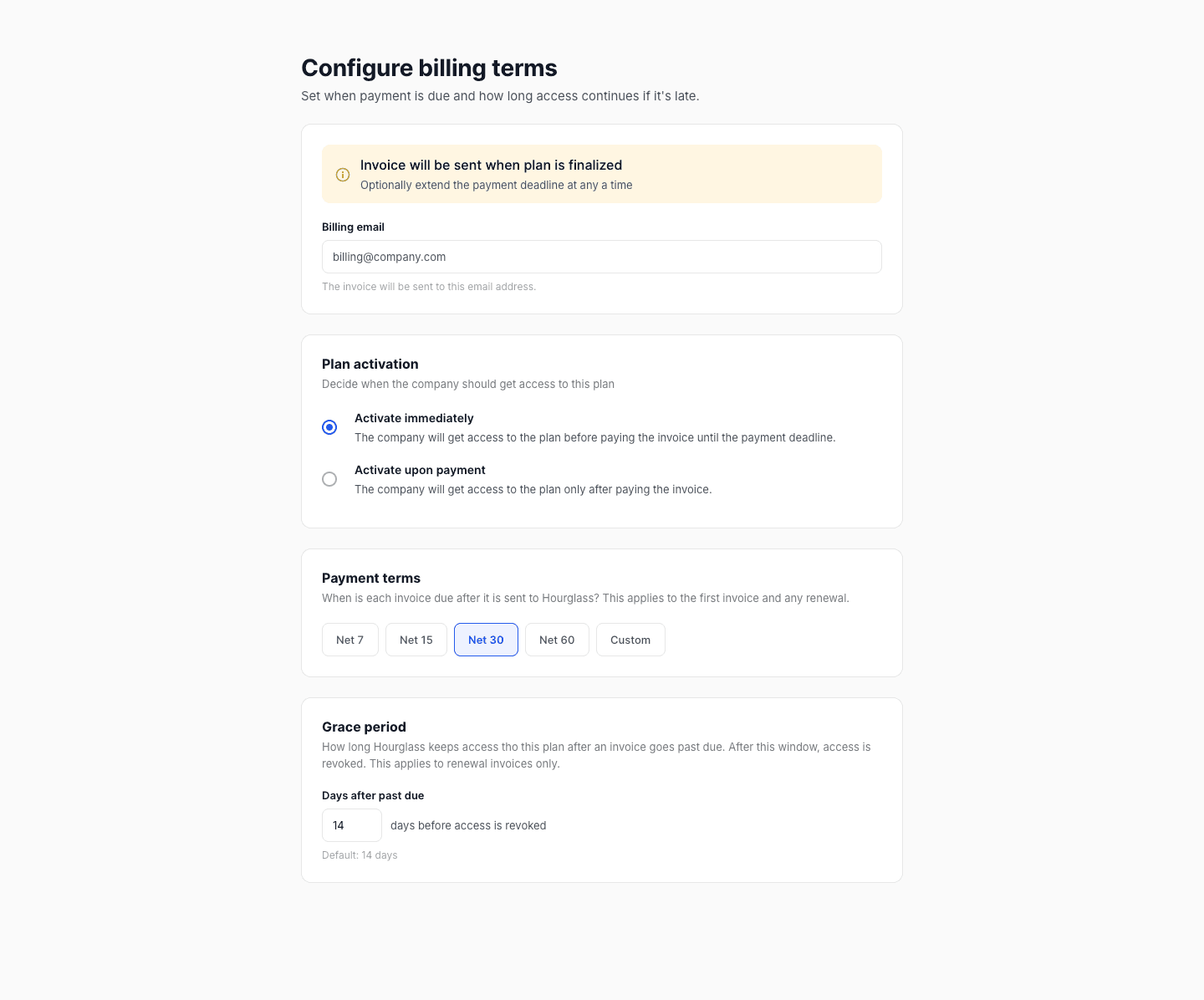
Commercial teams can create custom plans, configure billing terms, define payment terms, and set grace periods. They can also offer sales-led overrides and exceptions without filing a support ticket.
Max Ade from Pickleheads shares, "The ability to give customers overrides and exceptions to their plan limits is a must-have feature for any billing platform."
Other standout features include enterprise credit wallets and the real-time entitlement engine. Wallets give customers real-time visibility and control over their usage.
The entitlement engine enforces limits at runtime, gates features, and returns access decisions from the same ledger that bills customers. This gives both buyers and sellers confidence that usage will stay within budget.
FAQs About AI Pricing Engine
What is an AI-enabled pricing engine?
An AI-enabled pricing engine is a system that uses artificial intelligence and machine learning to suggest optimal prices. It replaces manual pricing decisions with automated ones. The system analyzes both internal data and external data to set pricing.
The software can also integrate with a company's existing tech stack, such as enterprise resource planning systems, customer relationship management software, and billing solutions, to improve data quality.
How does an AI pricing engine optimize revenue?
An AI pricing engine looks at how customers respond to different pricing strategies. It finds the price points that drive the most sales and profit. By adjusting prices based on demand and behavior, it can increase conversions and overall revenue.
What are the popular AI pricing models?
Common AI pricing models include usage-based, credit-based, outcome-based, tiered, and hybrid pricing. These models align with how AI products are used and delivered. Unlike seat-based or flat subscriptions, they reflect actual usage, value delivered, or results to make pricing more flexible and accurate.