 Ryan Echternacht
Recurly, one of the most popular billing platforms for many finance teams, works well when pricing stays simple, subscriptions renew on schedule, and invoices go out on time. Billing feels predictable, and reports stay clean.
That changes when pricing starts shaping product behavior. Usage, limits, trials, and sales terms begin to control what customers can access in real time.
Many B2B SaaS companies reach that point and start evaluating Recurly alternatives. This guide covers the top options in 2026 for those who need a billing state to reflect what happens inside the product.
TL;DR
These are the top Recurly alternatives for AI and software companies:
- Stripe Billing
- Chargebee
- Stigg
- Maxio
- Lago
- Orb
What Is Recurly?
Recurly is a subscription billing platform designed to manage recurring charges for SaaS products that sell fixed plans. Teams use it to handle invoicing, payment retries, and renewal flows tied to predictable billing cycles.
Recurly supports plan configuration, add-ons, and discounts, with tooling focused on operational billing needs rather than product control. Its recurring billing system tracks what customers are charged and when invoices close.
That scope is intentional. Recurly is not designed to decide feature access, enforce limits, or evaluate usage during product interaction.
Those decisions typically live outside the platform. This boundary defines where Recurly fits well and where additional systems become necessary.
Where Teams Start to Feel Limits
Limits appear once pricing behavior extends beyond invoices and recurring payments. Usage-based billing, credits, and mid-cycle changes typically require custom billing logic that lives in application code or internal tooling.
Product access and limits drift from the billing state because Recurly updates on billing events, not during feature use. Sales-led contracts add more friction when custom terms or temporary overrides need engineering support.
Reporting also becomes harder to reconcile as pricing becomes dynamic. Finance and RevOps teams often struggle to connect usage, invoices, and downstream revenue recognition without additional systems.
7 Best Recurly Alternatives in 2026
Here are the top Recurly competitors to consider.
1. Schematic
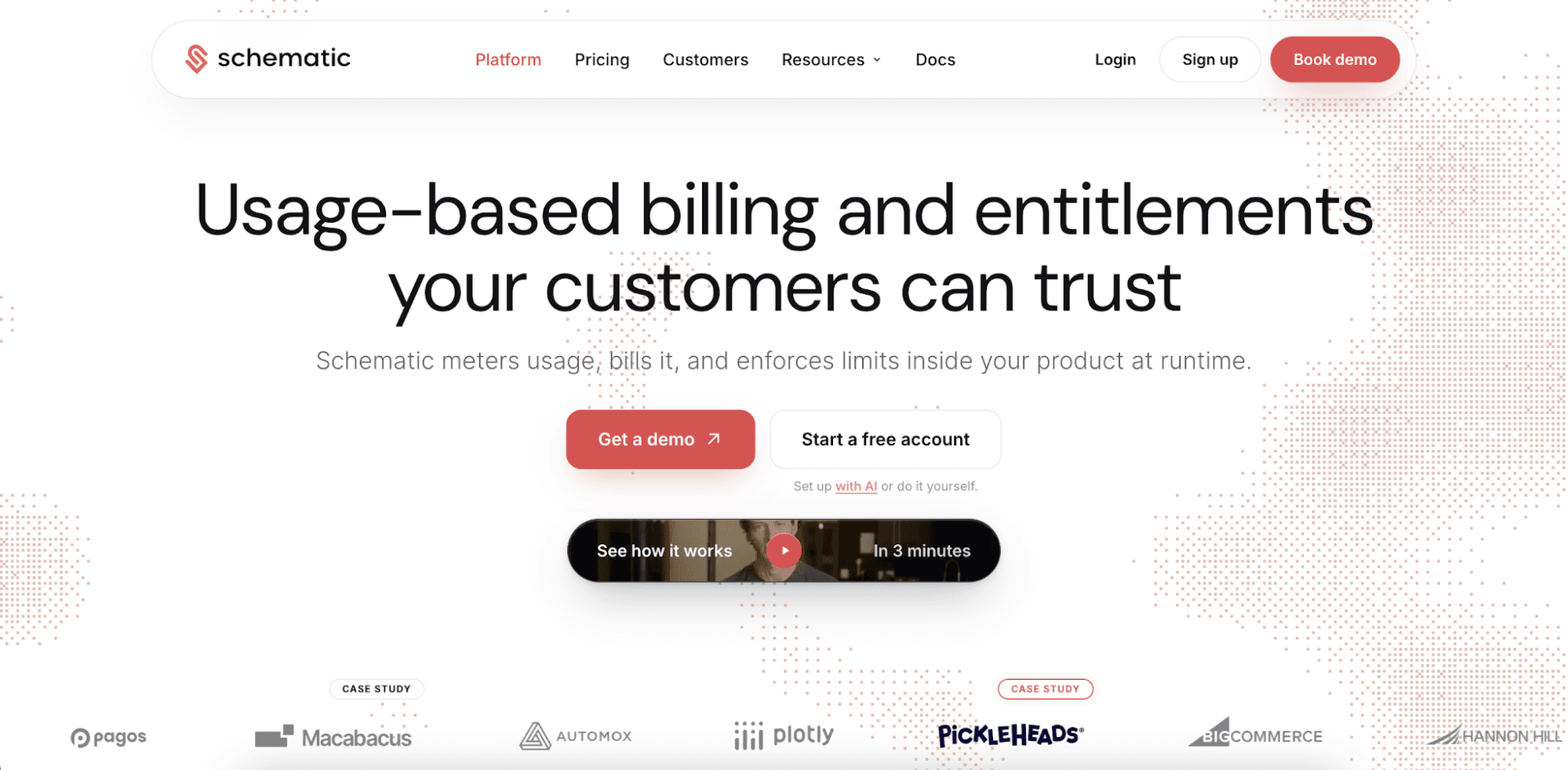
Schematic is the best Recurly alternative for software and AI companies that sell usage-based plans to enterprises. It can meter consumption, bill customers, enforce limits at runtime, and give buyers full visibility and control over their spending.
Schematic stands out for its enterprise credit wallets. Record credit grants, rollovers, auto top-ups, and burn-down that your finance team can reconcile.
Native wallets also give enterprise buyers spend forecasts, self-service controls, and configurable spending limits. They can set usage caps, receive warnings before access stops, and decide what happens at the limit so that they are only charged for what they expect.
Rahul Gill from Macabacus reviews, "Schematic's ability to offer usage caps, bundles, and top-ups gave our customers the cost predictability they need."
Schematic's runtime entitlement engine applies policies and answers access questions from the same ledger that bills customers. Every check and meter event streams back in milliseconds. Balances, limits, and usage stay current everywhere your product reads them.
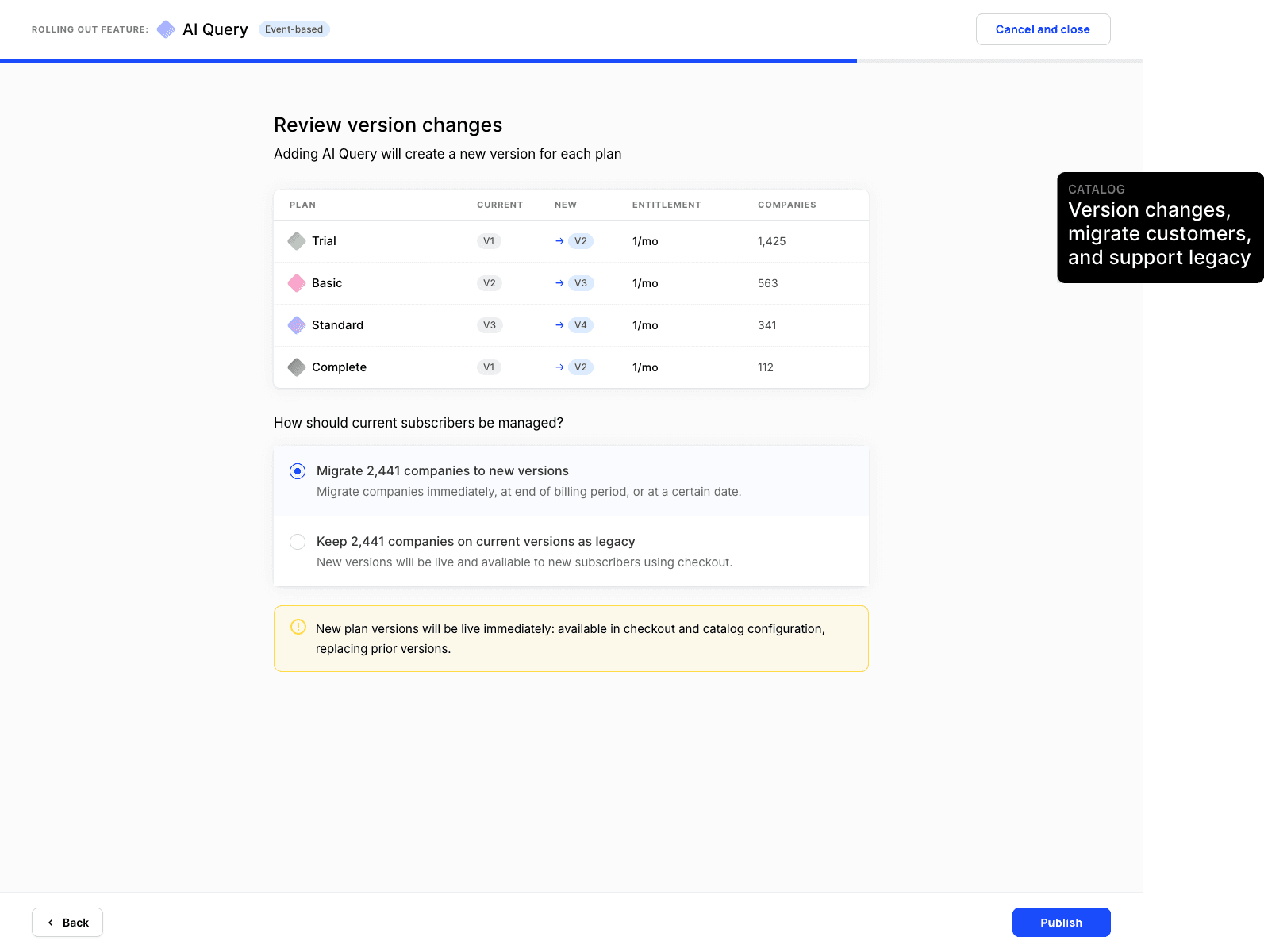
Schematic also provides out-of-the-box billing tools designed for AI monetization. These include plan versioning, customer migration, credit rollovers, concurrency-safe holds, and ASC 606-compliant revenue recognition.
Key Features
- Enterprise credit wallets: Manage prepaid credit balances, grants, rollovers, burn-down, and top-ups on a real-time ledger.
- Runtime entitlements: Decide feature access, limits, and trials during product use, not billing events.
- Usage tracking and limit enforcement: Meter usage, enforce limits, and trigger overage or metered paywalls in real time.
- Self-service controls: Let customers view real-time usage, set spend caps, configure warnings, change auto top-up rules, and purchase additional credit bundles.
- Plan versioning: Version plans, migrate customers, and support legacy pricing without filing an engineering ticket.
- Credit rollovers, expiry windows, and priority consumption: Allow unused credits to roll into the next billing period, decide when credits expire, and prioritize which credits are consumed first.
- Concurrency-safe holds: Reserve credits before work starts, then commit or release them so concurrent agents cannot double-spend the same balance.
- Real-time event log: Record every grant, deduction, and entitlement check for faster implementation and debugging.
- Revenue recognition: Use an append-only and export-ready ledger to support ASC 606 revenue recognition workflows.
- Schematic MCP: Connect AI agents to Schematic's billing data so they can check plans, usage, balances, entitlements, and customer limits.
2. Stripe Billing
Source: stripe.com
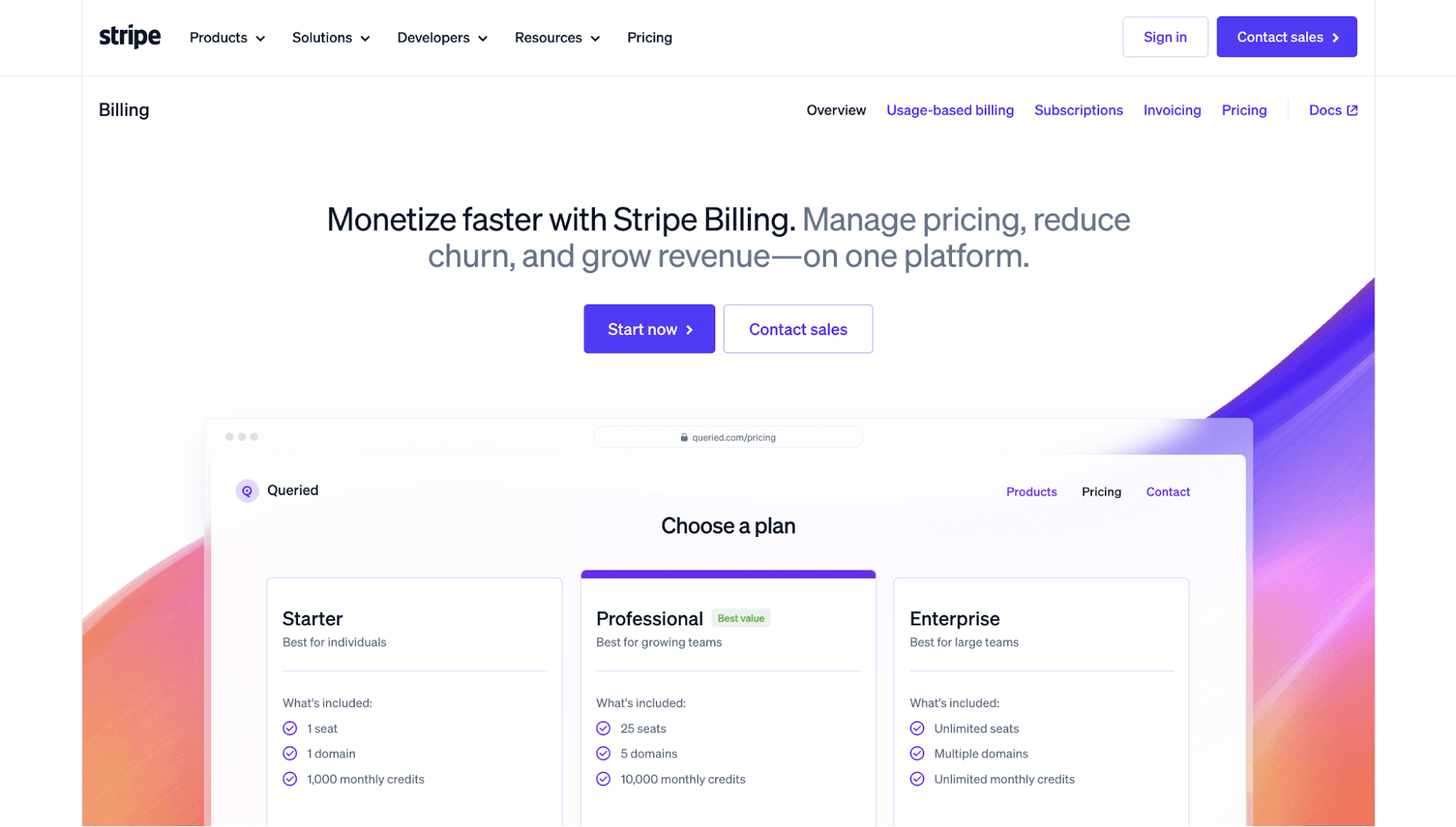
Stripe Billing is a subscription billing solution built for companies that want to manage billing directly within Stripe. It supports recurring subscriptions, usage-based billing, and invoicing in one platform.
The platform is frequently evaluated alongside Recurly when teams decide whether to centralize billing inside Stripe or use a dedicated subscription platform.
Unlike Recurly, which operates as a standalone subscription management platform, Stripe Billing is tightly coupled with Stripe’s payment processing and payments infrastructure.
This setup works well when you want billing, taxes, and payment collection handled in one place, especially for products with complex billing scenarios or recurring revenue models.
Stripe Billing focuses on billing execution and financial workflows. Subscription businesses usually handle product access, limits, and Stripe entitlements outside the platform.
Key Features
- Recurring subscriptions: Manage plans, renewals, and recurring revenue inside Stripe.
- Usage-based billing: Meter usage and charge variable amounts per billing cycle.
- Automated invoicing and payment processing: Generate invoices and process payments tied to subscription models or one-time charges.
- Revenue recognition: Pair Billing with Stripe’s revenue management and reporting tools when finance needs recognized revenue outputs.
- Customer portal: Let customers manage standard subscription plans, payment details, and billing history
3. Chargebee
Source: chargebee.com
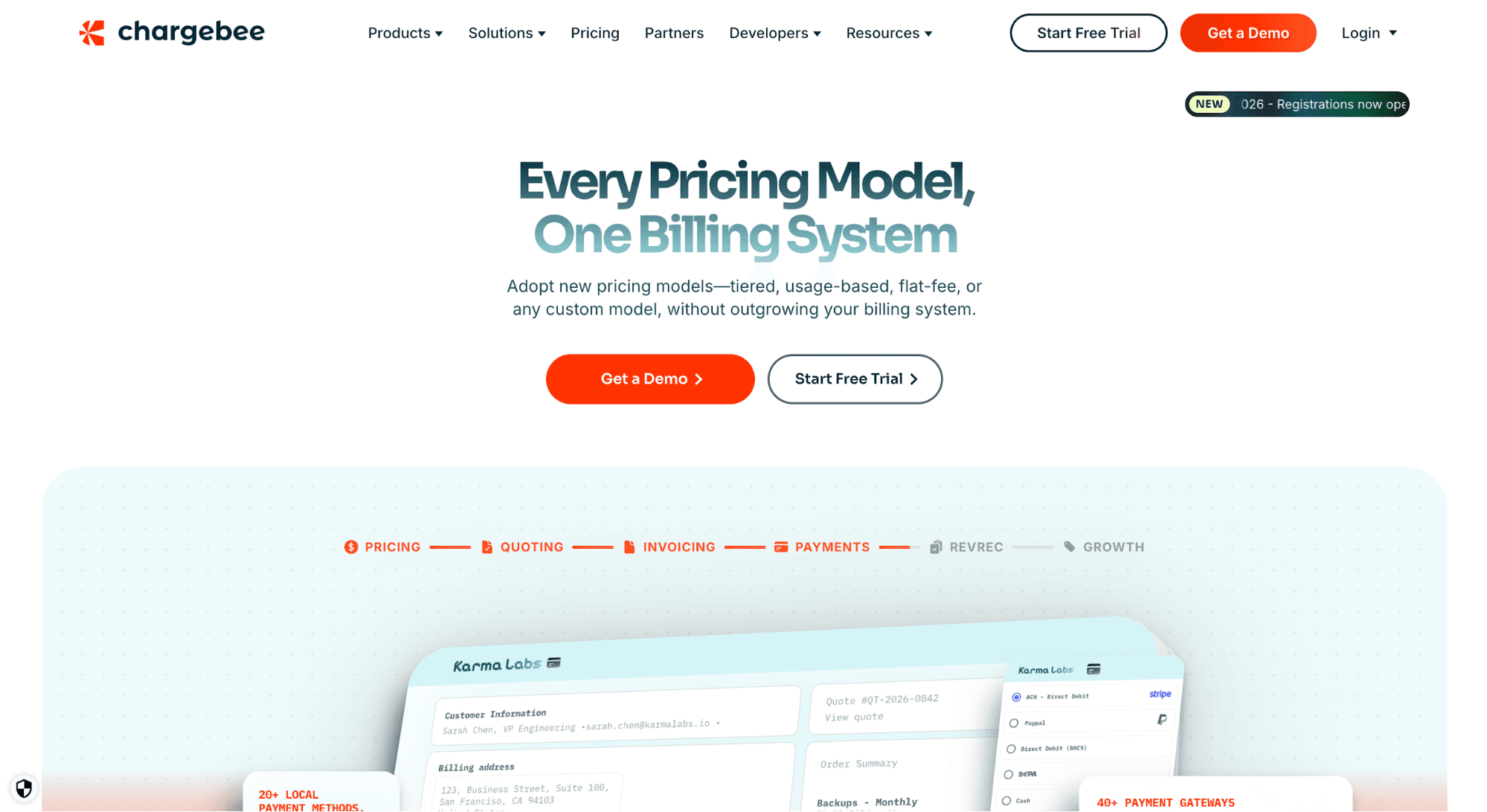
Chargebee is a subscription billing platform used by growing businesses that need to manage subscriptions, invoices, and revenue workflows at scale.
Compared to Recurly, Chargebee offers broader support for different business models, including usage-based pricing, CPQ flows, finance-led controls, and global operations.
Teams use it when they move beyond basic subscription management and require stronger revenue recognition, tax workflows, payment gateway integrations, and native connections to accounting and ERP systems.
Chargebee focuses on billing operations and financial accuracy rather than in-product access control, similar to Recurly. However, it offers a more powerful solution for finance teams handling high event volumes, multiple entities, and pricing adjustments over time.
Key Features
- Subscription billing capabilities: Support recurring billing processes, plan changes, proration, and renewals for long-running customer accounts.
- Automated revenue recognition: Built-in ASC 606 and IFRS support for accurate revenue recognition and audit readiness
- Tax and compliance tooling: Handles sales tax, VAT, and global tax compliance through native and partner integrations.
- Payment gateway coverage: Works with multiple payment solutions and supports different payment methods and currencies.
- Reporting and exports: Provides financial reporting, invoice data, and exports for finance and revenue teams.
4. Stigg
Source: stigg.io
Stigg positions itself as a monetization layer that manages pricing, plans, and entitlements outside of application code.
You can consider this tool when you want pricing and entitlements to evaluate the product, while billing stays with your existing provider.
Unlike Recurly, which centers on subscription billing and invoicing workflows, Stigg focuses on defining custom pricing logic, usage limits, and access rules that the product enforces at runtime.
It typically sits alongside existing billing software, such as Stripe Billing, rather than replacing it.
This makes Stigg relevant for SaaS products running complex pricing models, usage-based features, or hybrid plans where product behavior needs to react to usage and plan state more frequently than billing cycles allow.
Key Features
- Plan and entitlement modeling: Define features, limits, and usage allocations as structured entitlements rather than hardcoded rules.
- Usage metering: Track consumption events, such as API calls, tokens, and agent actions.
- Product-side access control: Enforce plan rules inside the application instead of relying on post-invoice billing state like Recurly.
- API and SDK integrations: Instrument usage and entitlement checks through developer-focused APIs and monetization SDKs.
- Environment-aware configuration: Version and test pricing changes in environments before promotion.
5. Maxio
Source: maxio.com
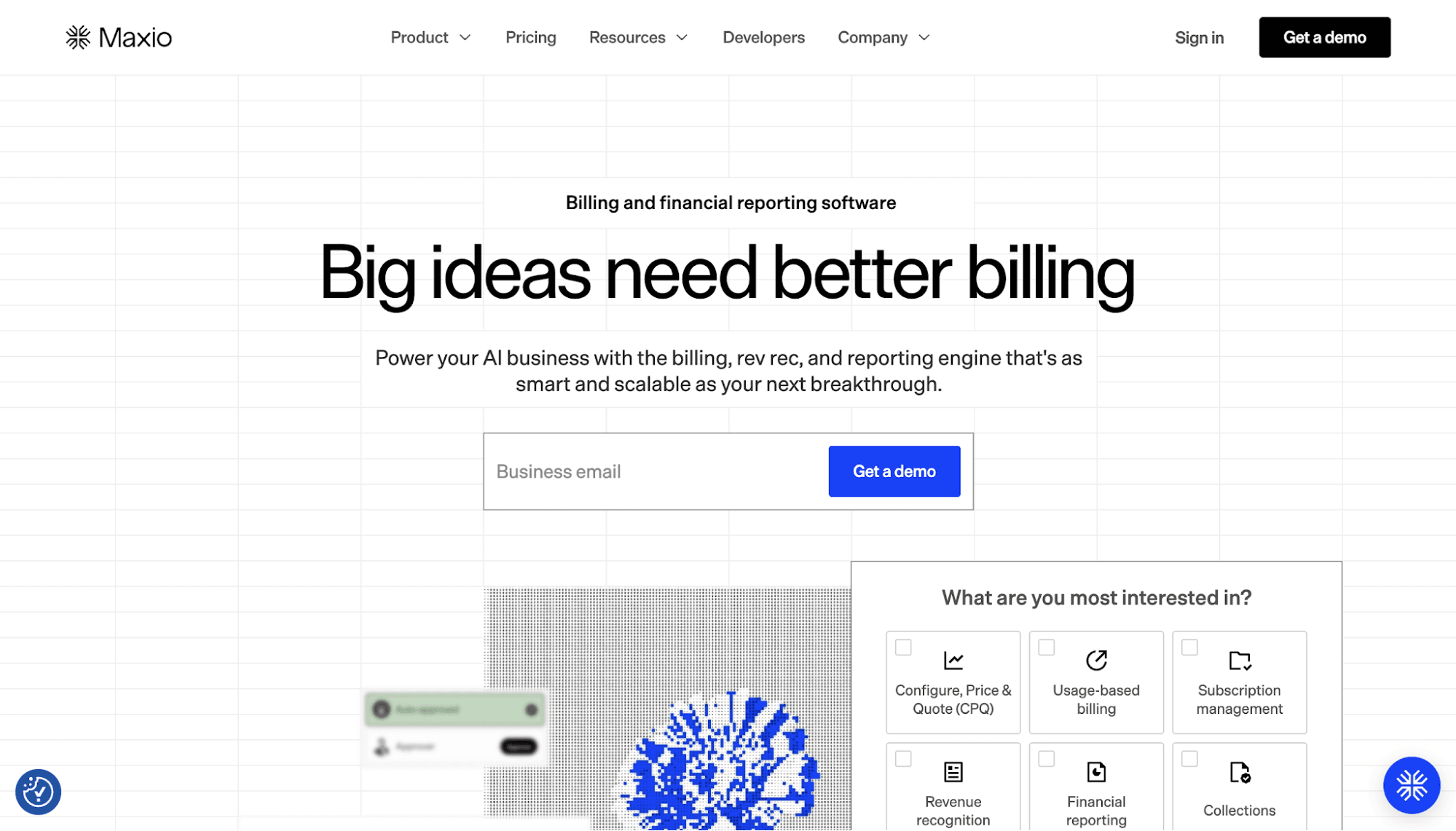
Maxio's financial operations platform brings subscription billing, financial reporting, and revenue workflows into one system.
It is frequently evaluated alongside Recurly when finance teams need deeper visibility into billing data, stronger revenue recognition capabilities, and tighter integration with downstream accounting tools and ERP systems, rather than focusing only on subscription billing models.
While Recurly focuses on managing the subscriber lifecycle and billing events, Maxio places greater emphasis on financial reporting, SaaS metrics, and alignment with GAAP and IFRS requirements.
B2B SaaS companies typically adopt Maxio when they run complex billing needs, multiple pricing plans, or hybrid go-to-market motions that require finance to manage billing, collections, and revenue metrics in one system.
Key Features
- Subscription and invoice management: Manage recurring charges, invoicing, and billing cycles for SaaS subscriptions.
- Revenue recognition and reporting: Support advanced revenue recognition workflows with clear reporting.
- SaaS metrics and analytics: Track annual recurring revenue, churn, and basic subscription metrics tied to billing data.
- Multi-entity and currency support: Handle multi-entity structures and multiple currencies for business expansion.
- Integrations for finance systems: Connect billing and revenue data to tools like NetSuite, QuickBooks, and Xero.
6. Lago
Source: getlago.com
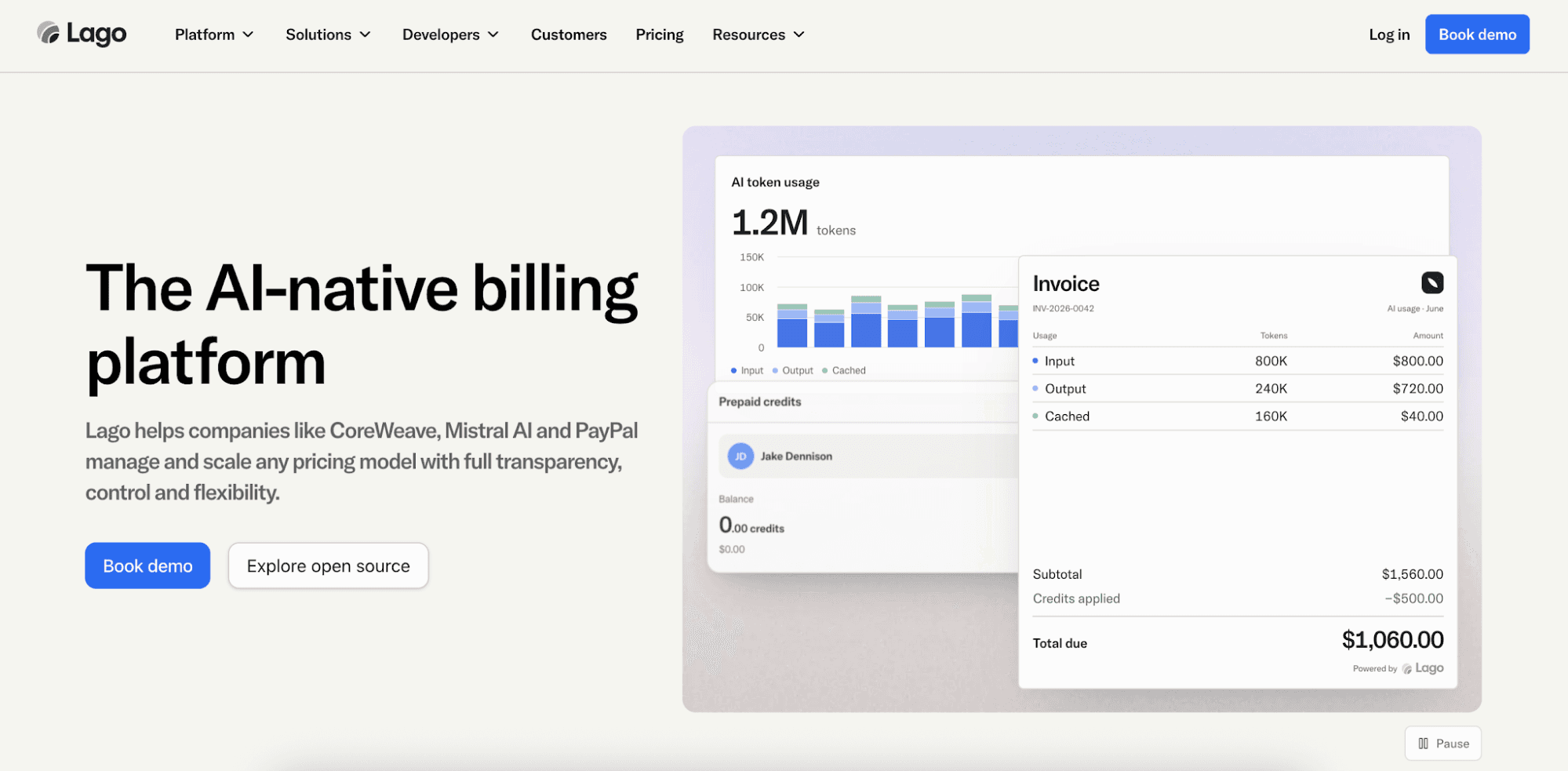
Lago is an open-source billing software built for usage-based and hybrid billing. It combines metering, invoicing, and an API-first workflow in a single platform.
Teams often consider Lago when they want to move beyond fixed plans and need greater control over usage tracking, rating logic, and billing customization.
Unlike Recurly, which centers on subscription billing mechanics, Lago emphasizes developer ownership, transparency, and extensibility through its open-source code.
It is commonly adopted by B2B SaaS and AI companies running complex billing needs, such as credit-based pricing, hybrid plans, or high-volume usage events, where engineering wants direct control over billing behavior and data flows.
Key Features
- Usage metering and rating: Track and rate high-volume usage events in near real time for consumption billing.
- API-first billing workflows: Build and manage billing logic programmatically using developer-friendly APIs.
- Open-source code: Self-host or extend the platform to meet internal requirements and compliance needs.
- Flexible pricing logic: Support hybrid plans, tiered pricing, prepaid credits, and custom pricing structures.
- Stripe integration: Sync billing and payment flows with Stripe for invoicing, payment collection, and fraud management.
7. Orb
Source: withorb.com
Orb is a usage-based billing platform built for companies that treat pricing as a first-class system rather than a downstream billing task.
It is often suitable when subscription billing expands into complex billing needs, such as high-volume usage, contract-based pricing, or hybrid models that combine subscriptions with consumption.
While Recurly focuses on recurring billing mechanics and renewals, Orb centers on metering accuracy, pricing logic, and finance-grade workflows that connect usage data to invoices and customer experiences.
AI- and infrastructure-focused SaaS companies adopt it when high transaction volumes require precise billing inputs, spend controls, and accurate financial reporting tied to usage.
Key Features
- Usage metering infrastructure: Capture and process granular usage data for consumption-based pricing.
- Flexible billing options: Support tiered pricing, usage-based charges, and contract-aligned billing logic.
- Revenue recognition workflows: Align billing outputs with finance processes and close requirements.
- Invoicing and spend controls: Generate detailed invoices and apply controls to reduce failed payments.
- Payment provider integrations: Connect Orb to invoicing, tax, and finance systems, then run payments through your payment provider.
When Switching Away From Recurly Makes Sense
The decision to move on from Recurly usually comes down to timing. You are ready to switch when billing still works, but it no longer drives how your product behaves.
You reach that point when pricing decisions need to be evaluated during feature use, not after a billing event closes. Usage limits, trials, and credits start affecting access in real time, and invoice-based logic falls behind what users see inside the product.
Readiness also shows up when product teams need direct control over limits and access without deployments. Hybrid pricing and sales-led terms demand changes that apply immediately, not at the next billing cycle.
Another signal appears when billing becomes one part of a broader revenue delivery platform. Payment handling and global payment support remain necessary, whether through Stripe, Zoho Billing, or a merchant of record, but they stop defining product behavior.
If these shifts sound familiar, the question is no longer whether Recurly works. The question becomes whether it still fits how you ship pricing today and supports future business growth.
Schematic Is Built for Teams Who Have Outgrown Recurly
Recurly works when billing stays separate from product behavior. Many teams reach a point where that separation breaks down. Pricing starts to shape access, limits, and usage while customers are active in the product.
Schematic is built for that shift. It provides a complete usage-based billing platform for software and AI companies.
Teams can meter consumption, bill customers, enforce limits at runtime, configure credit grants, and give enterprise buyers live visibility into their usage.
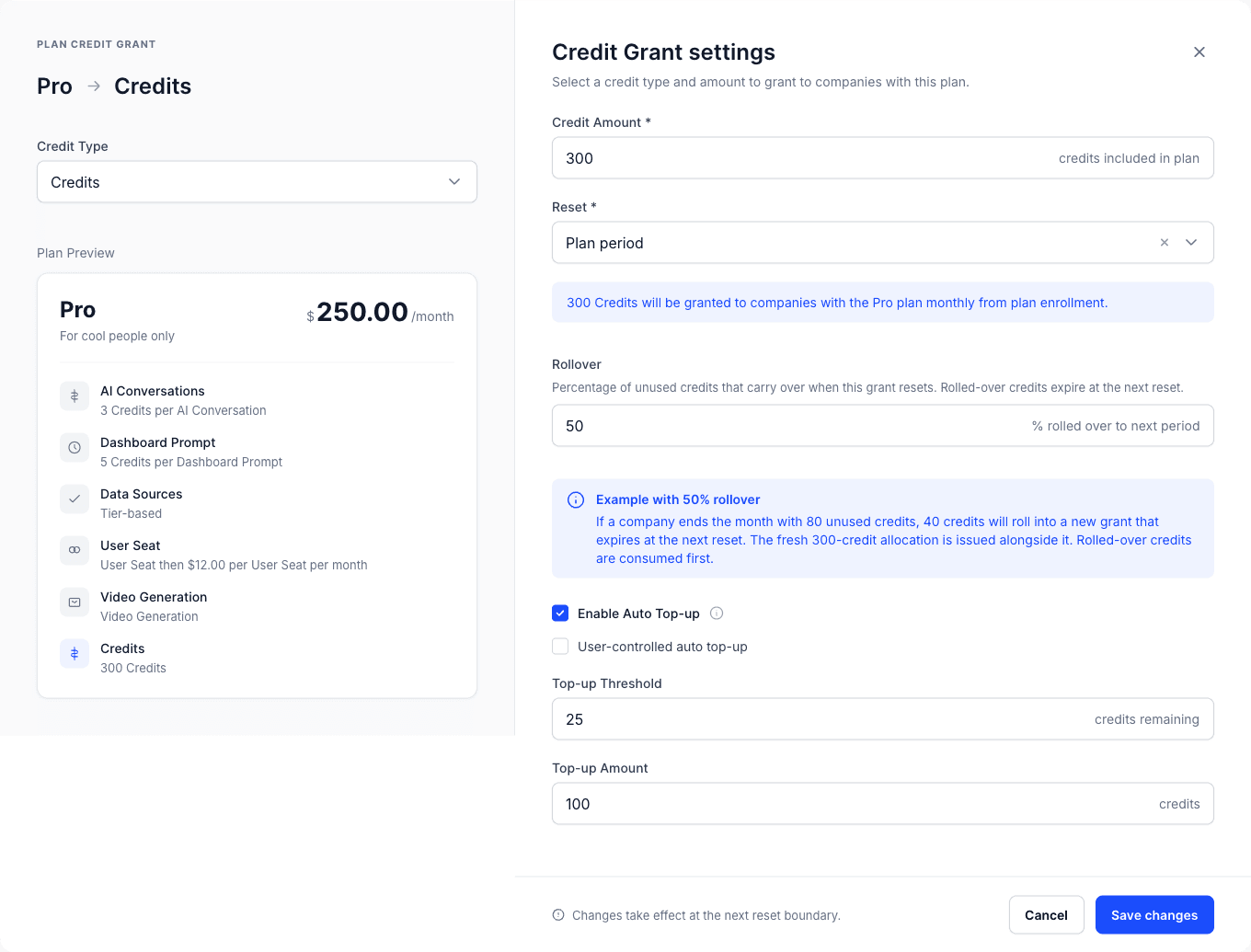
Schematic is the only billing software that addresses customer trust structurally. Enterprise credit wallets, spend forecasts, self-service controls, configurable spending limits, and runtime entitlements prevent runaway bills and unexpected access throttling.
Pricing lives as data on a real-time ledger. That means a plan change can happen through configuration instead of code deployment.
Max Ade from Pickleheads shares, "With Schematic, pricing changes and experiments are really easy to execute, and we iterated on our pricing model in the first week after launch."
Plus, the Schematic MCP powers agents with billing context. Claude, Codex, or your own agent can list plans, check usage, and find companies near their limits to prevent churn.
FAQs About Recurly Alternatives
Do Recurly alternatives replace billing systems entirely?
Not always. Some Recurly alternatives complement existing billing systems by managing entitlements, usage evaluation, and access control inside the product, while billing and payment recovery continue to run through platforms like Stripe. Tools like Schematic provide a complete usage billing platform that combines metering, billing, and runtime entitlements.
Is switching away from Recurly always a migration project?
No. Some alternatives let you keep Recurly or Stripe for billing while adding a separate system that controls product access and usage in real time. This avoids a full billing migration and shifts the change to how pricing affects the product, not invoices.
Is Recurly still a good choice for early-stage SaaS companies?
Recurly remains a good choice for early-stage SaaS companies with simple subscription pricing and predictable billing cycles. Complexity usually appears later, when pricing begins to influence product access and usage in real time.
At that stage, some teams switch to a complete monetization platform, such as Schematic, to manage pricing, metering, entitlements, and usage enforcement, without replacing their billing system.