 Ryan Echternacht
Most SaaS billing problems don’t start in finance, but in the product.
A new pricing tier launches. Usage limits get introduced. Sales signs a custom contract. Each of the changes makes sense on its own. But together, they sometimes create gaps between what customers are allowed to do and what they’re charged for.
Modern SaaS billing has to connect pricing, usage, and access in one consistent system. When that connection breaks, teams rely on workarounds instead of rules.
That's why this guide outlines the best practices that keep billing aligned as your pricing model expands beyond simple subscriptions.
TL;DR
- SaaS billing best practices keep pricing, usage, and product access aligned as teams move beyond simple subscriptions to more complex billing models.
- Strong billing practices start with defining clear billable units and translating pricing into explicit, enforceable rules.
- Accurate billing also depends on tracking usage at the source and enforcing limits, trials, and access inside the product.
- Regular audits and standardized proration reduce billing errors as pricing complexity grows.
- Schematic helps teams manage entitlements, usage, and billing state in one layer, keeping product behavior synced with Stripe billing as pricing evolves.
What SaaS Billing Means in Modern Products
SaaS billing is how you charge customers for ongoing access to your product. It covers recurring invoices, plan changes, contract terms, and usage-based billing tied directly to how customers use the application.
In modern products, the SaaS billing process often requires product-side enforcement in addition to invoicing and payments. It connects plans to software entitlements, limits, trials, credits, and overages, then enforces those rules inside the product at runtime.
Billing must stay aligned with usage data, not lag behind it.
Strong subscription management plus automated systems can keep pricing changes, billing cycles, and payment collection in sync.
This alignment improves customer experiences, supports accurate financial reporting, enhances operational efficiency, and helps SaaS teams scale without manual billing work.
Why SaaS Billing Breaks as Products Grow
Billing starts to fracture when the pricing model expands beyond a single subscription. Usage, credits, limits, and add-ons layer on top of the original pricing structure. What once fit a simple recurring revenue model now spans multiple pricing tiers and contract terms.
Tension appears when sales-led contracts live beside self-serve plans. Product access follows entitlements, while invoices follow billing data pulled from a separate billing infrastructure. It’s a gap that forces teams into manual adjustments to keep customers informed.
With billing complexities growing, exceptions accumulate. Payment data no longer maps cleanly to usage, which leads to revenue leakage. Finance teams struggle to support accurate revenue recognition and cash flow forecasting.
Bessemer Venture Partners has consistently highlighted usage-based pricing as a core go-to-market strategy for many SaaS companies, reflecting how modern products outgrow static subscription models as usage and value scale.
These issues surface most often in enterprise companies, where hybrid pricing and hybrid selling push SaaS billing operations beyond what invoice-driven models were designed to support.
12 SaaS Billing Best Practices for Scaling Teams
Billing holds together when pricing, usage, and access follow the same rules. These best practices help you manage complex billing scenarios as pricing expands between self-serve and sales-led motions.
1. Define Billable Units Before You Write Billing Logic
Think about what customers pay for. That usually includes plans, usage metrics, seats, AI credits, and add-ons. Each unit must map cleanly to product behavior and pricing tiers.
Ambiguity here leads to billing errors later, especially when flexible pricing models enter the picture.
Enterprise SaaS companies feel this first because custom contracts introduce variation early.
2. Translate Pricing Into Explicit Billing Rules
Pricing strategies only work when they become a rule that the SaaS billing software can enforce. Plans should map to entitlements, entitlements to limits, and limits to overages.
Usage-based billing and tiered pricing need clear thresholds to avoid edge cases.
A billing solution should represent the pricing structure cleanly and consistently, not approximate it.
3. Provide Transparent Pricing and Invoices
Customers should understand what they are paying for before the invoice arrives. Clear pricing pages, plan details, usage summaries, and invoice line items reduce confusion between product value and billing outcomes.
Transparent SaaS invoicing is especially important when pricing includes usage, seats, credits, add-ons, or overages. The invoice should reflect the same billing logic as the product.
If the customer cannot connect a charge to an action, limit, or contract term, support teams inherit the billing problem.
4. Track Usage at the Source of Product Activity
Usage tracking should happen where actions occur. Events like API calls, credits consumed, or features accessed must generate reliable billable usage data.
Delayed or aggregated tracking breaks billing communications and hurts customer trust.
Reliable usage data helps teams create accurate invoices, which can reduce disputes.
5. Enforce Billing Rules Inside the Product
Access rules belong in the product, not only in invoices. Trials, limits, and feature access should respond to entitlements at runtime.
Customers expect outcomes to match usage, not surprises that hurt customer retention. This alignment improves customer satisfaction and customer relationships.
6. Keep Billing State in Sync With Product Access
Payment confirmations, cancellations, renewals, and grace periods should update product access automatically. Closed-loop updates, often via webhooks, prevent drift between the billing infrastructure and runtime enforcement.
When billing state lags, failed payments are treated as support issues rather than system behavior.
7. Standardize Proration and Mid-Cycle Changes
Upgrades, downgrades, and add-ons happen mid-cycle in every SaaS business model. Proration rules should stay consistent within subscription management flows.
Predictable rules outweigh flexibility here. Inconsistent proration damages customer expectations and complicates managing recurring billing.
8. Audit Billing Accuracy Continuously
Billing accuracy depends on alignment between usage, entitlements, and invoices. Regular audits surface mismatches before customers do.
Treat discrepancies as system issues, not manual fixes. Analytics tools help identify patterns tied to compliance, revenue reporting, or sales tax handling.
9. Support Exceptions Without Hard-Coding
Sales overrides, custom contracts, and temporary extensions are normal in hybrid billing models. Hard-coded logic slows deals and creates risk during pricing changes.
A comprehensive SaaS billing system should handle exceptions as configuration, not code. This approach supports customer loyalty and protects customer data.
10. Provide Customer Visibility Tools
Customer self-service portals help users manage plans, see upcoming payments, view billing status, change payment details, and track usage from one place.
This visibility matters when SaaS pricing expands beyond flat subscriptions. Customers want to know where they stand before they hit a limit, trigger an overage, or renew.
Providing direct access to billing information helps reduce billing inquiries. Support teams can focus on higher-value issues instead of routine account questions.
11. Offer Multiple Payment Methods
Payment flexibility is important when you sell to different audience segments worldwide.
The right payment method depends on customer preferences, the contract size, geography, and sales motion.
Self-serve customers usually need fast checkout using credit cards or digital wallets. Enterprises might prefer ACH transfers and automated invoicing. Global customers, on the other hand, may expect flexible payment options.
Supporting multiple options reduces friction at purchase and renewal. It also helps billing teams collect recurring payments without forcing every customer through the same process.
12. Review Pricing and Packaging Regularly
SaaS pricing and packaging should evolve as the product, customer base, and go-to-market motion mature.
Review plan limits, usage thresholds, add-ons, discounts, and tiers.
These reviews help identify where customers outgrow plans, where revenue is leaking, and where billing rules no longer match product value.
Effective billing strategies are not static. They change as you learn what drives product adoption, customer retention, and revenue expansion.
How to Apply SaaS Billing Best Practices
Here's a step-by-step guide to implementing SaaS billing best practices.
Step 1: Map Pricing Models to Product Entitlements
Map each plan and contract to explicit entitlements. Define feature access, limits, trials, and add-ons in one place. Include sales-led exceptions alongside self-serve plans.
This map becomes the reference for managing recurring billing as you adopt complex pricing models.
Step 2: Connect Usage Tracking to Billing Rules
Route usage events directly into billing rules that govern limits, overages, and credit consumption. Each event should be evaluated as it occurs, not batched or inferred later.
A usage-based billing model only works when usage data flows continuously into billing rules. Delays create gaps that surface as invoice disputes, manual adjustments, or mismatches between access and charges.
Step 3: Close the Loop Between Billing and Product
Feed billing state back into the product as events occur. Payments, renewals, cancellations, and failed payments should update access without manual steps.
Automated billing software usually relies on event-driven updates for this loop. Product behavior stays aligned with billing outcomes.
Step 4: Review Billing Changes on a Fixed Cadence
Review billing behavior on a regular schedule. Monthly reviews help spot usage patterns, edge cases, and support signals.
Quarterly reviews focus on pricing structure, contract terms, and upcoming changes. These checkpoints can help adjust billing logic without reworking the SaaS billing platform.
When you follow this sequence, SaaS billing remains predictable as pricing shifts. Hybrid selling, flexible pricing, and multiple payment methods fit into one operating model.
That consistency reduces friction and streamlines billing processes.
When Invoices Alone Are No Longer Enough
Teams add a subscription management layer when pricing logic no longer fits inside invoices alone. Usage-based pricing introduces real-time limits, overages, and credits that invoices cannot enforce on their own.
Sales-led contracts add exceptions that sit next to self-serve plans. Product access starts depending on the billing state, not just billing cycles.
Here are common signs that invoices are not enough:
- Usage and credit models that must be evaluated at runtime
- Hybrid self-serve and sales-led contracts sharing one product
- In-product enforcement tied to payment events and renewals
- Growing gaps between usage tracking and invoices
At this point, enforcing pricing, usage, and entitlements inside the product becomes necessary. Teams look for billing systems that connect usage, entitlements, and subscription state within a cohesive billing architecture, without turning invoices into product logic.
This shift reflects what makes SaaS billing work as pricing and selling models mature. Subscription management becomes a supporting layer around billing, keeping product behavior aligned with what customers are billed for as complexity increases.
Ship Any Pricing Model With Schematic
As pricing expands into usage, limits, credits, and custom contracts, SaaS billing requires product access to stay consistent with the billing state. Invoices alone do not handle in-product limits or SaaS entitlements changes.
Schematic provides a subscription management layer for plans, entitlements, limits, trials, credits, add-ons, and contract exceptions.
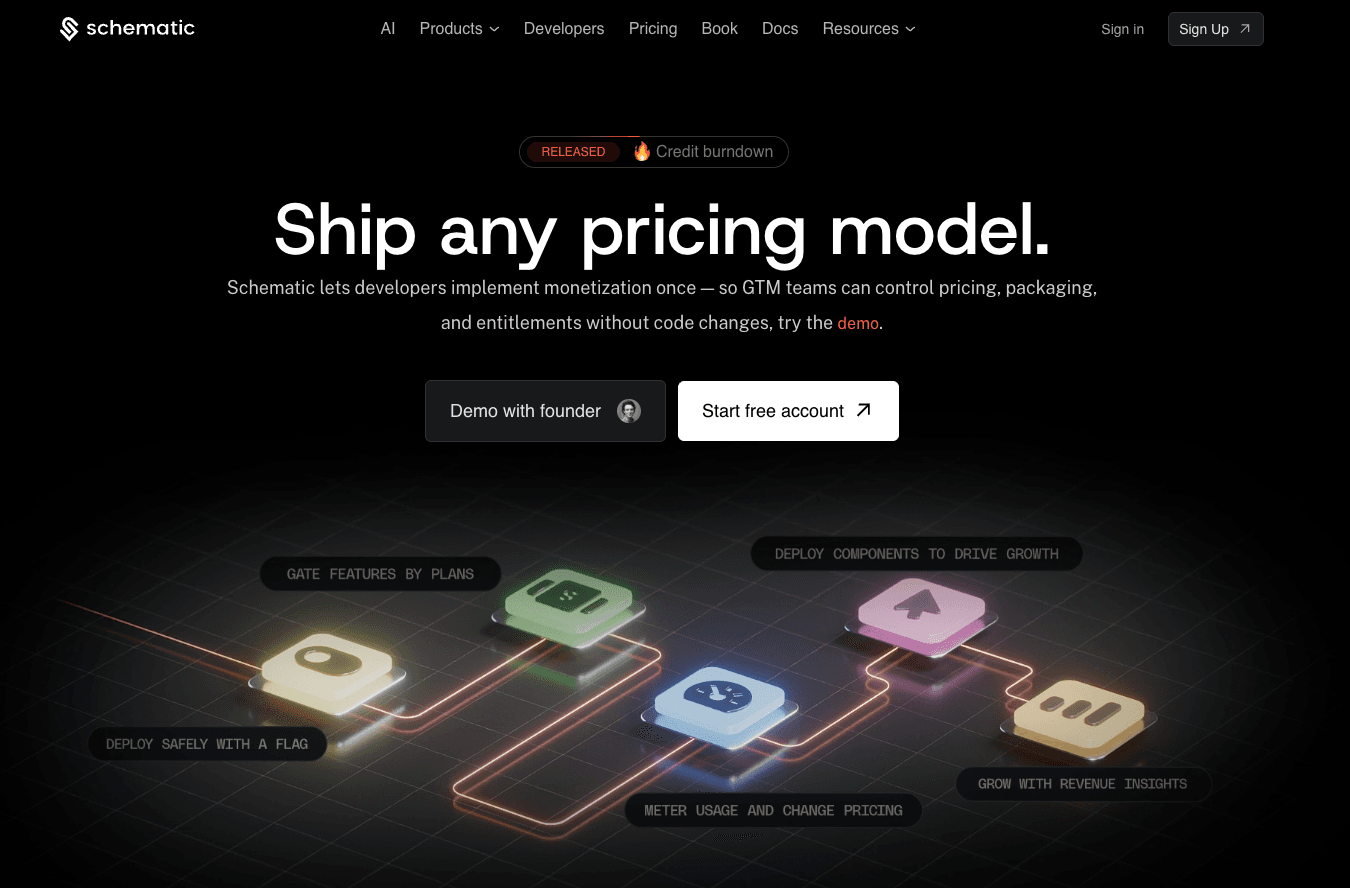
Schematic is built on Stripe, allowing your product to evaluate access based on Stripe billing and subscription state.
Teams can use Schematic to track usage against entitlements, enforce limits in-product, and respond to billing state changes without one-off logic in the application.
Engineering implements monetization once. Product and RevOps can adjust entitlements and packaging without shipping a new release.
FAQs About SaaS Billing Best Practices
How do SaaS billing best practices change as customer trends shift?
SaaS billing best practices shift as customer trends move toward usage-based pricing, hybrid plans, and flexible contracts. Teams place more emphasis on real-time usage tracking, in-product enforcement, and tighter alignment between billing state and product access. Teams move from end-of-cycle reconciliation to continuous evaluation of usage, limits, and entitlements.
What billing data should product teams monitor to reduce churn and disputes?
Product teams should monitor usage against limits, entitlement changes, failed payments, proration events, and plan transitions. Tracking when customers approach limits or trigger overage pricing helps prevent surprises on invoices. Early visibility into payment failures and access changes reduces churn and improves customer loyalty.
How do SaaS billing practices differ between B2B and B2C products?
B2B SaaS billing supports custom contracts, negotiated pricing, usage limits, and account-level entitlements. B2C billing typically relies on standardized plans and simpler renewal flows. B2B teams also require tighter coordination between billing, product access, and sales terms, especially when self-serve and sales-led models coexist.
What data should SaaS teams audit regularly to maintain billing accuracy?
SaaS teams should audit usage events, entitlement mappings, invoice line items, proration logic, and payment status updates. Regular checks confirm that usage data matches charges and that access reflects the current billing state. Auditing these areas helps catch drift before it results in revenue leakage or customer disputes.