 Ryan Echternacht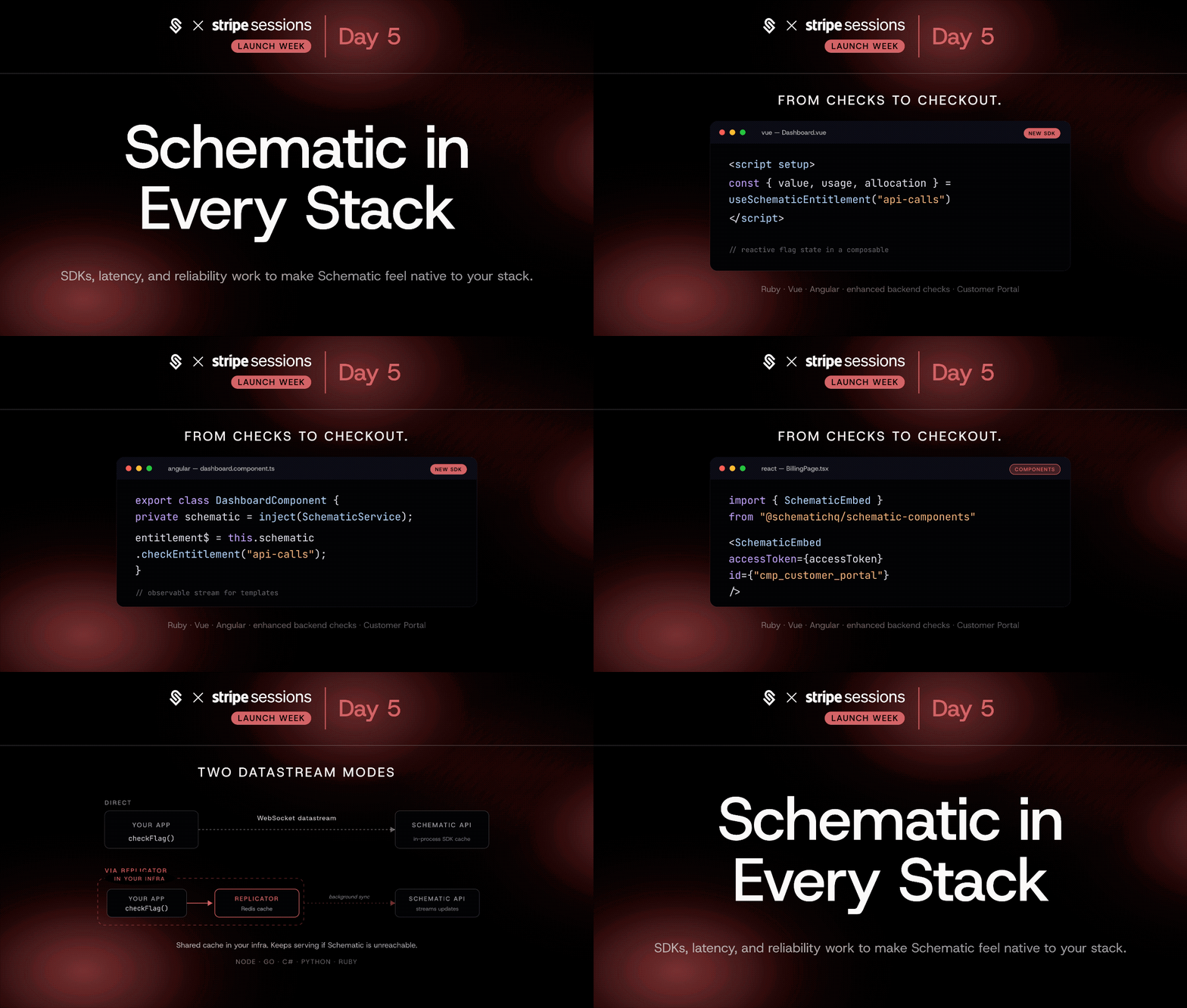
Entitlement-native development, wherever your code runs.
Every product team eventually has the same realization about entitlement checks. They're everywhere.
A paywall on the feature your PM just shipped. A usage meter in the admin dashboard. A seat-limit guard on the invite flow. A credit-burndown read on every API call. A feature-flag check in the React component that renders the upsell. These aren't three or four checks. They're dozens, scattered through the hot path of your product.
When that many checks live in code, the tooling around them has to be boring, fast, idiomatic, and available in whatever language or framework you already write in. Otherwise every entitlement check becomes a judgment call about whether to take on one more integration, and the answer is usually "not right now." That's how you end up with entitlement logic smeared across a feature flag service, an internal config, and a billing webhook handler.
Schematic in every stack
We shipped a run of dev tooling that makes Schematic feel native wherever your code runs.
Recent releases:
- Enhanced entitlement checks across all backend SDKs, returning usage, allocation, and credit balance in one call
- Replicator deployment mode for improved performance and reliability
- More control over timeouts and fallback values in the frontend SDKs
- Read-only API keys for agents, internal tooling, and analytics pipelines
- Extended React Native support inside the React SDK
Whatever language you're in, whatever latency you need, whatever platform you're on, there's a clean path.
What teams are doing with it
Three patterns we see most often.
Idiomatic language coverage. A Vue app checks entitlements through a composable. An Angular app wires Schematic into the same state model as every other service. A Ruby on Rails team drops in the SDK and calls it from a controller. The point isn't just that the language is supported. It's that the integration looks like idiomatic code in that language, not a wrapper around an HTTP client that the team has to maintain forever.
Single-call entitlement evaluation. The enhancement across backend SDKs is subtle but load-bearing. For any feature that needs to render a usage meter, an upgrade prompt, or a hard-limit wall, one call now returns the entire picture. Whether the flag is on, what the usage is, what the allocation is, where the credit balance sits. That's the shape a product UI actually needs. Stitching it together used to be the developer's problem.
Local evaluation for hot paths. Replicator is Schematic's answer for teams that want flag evaluation to happen as close to the code as possible. Data syncs into your own infrastructure, evaluation is local, and the sync model serves data as it arrives instead of after a full load. Cold starts feel instant, which matters for autoscaling environments where cold starts happen all the time.
What this requires from engineering
Less than most teams expect. Entitlement checks stop being a foreign object in the codebase once the SDK speaks your language. New features don't need a separate flag-wiring project. When pricing changes, the code doesn't. When an enterprise customer needs a custom entitlement, there's no code path to deploy.
Read-only API keys round out the security story. Internal dashboards, analytics pipelines, and the growing set of AI agents your team is wiring up all need visibility into entitlements without write access to anything. Scoped credentials keep the read paths open to the tools that need them, and the write paths closed to everything else.
Timeouts and fallback values on the frontend mean a degraded Schematic call doesn't mean a degraded product. You define the behavior. The check either returns fast with the right answer, or fast with a defined default. No silent hangs. No surprise empty states.
Coming next
The platform surface is the foundation. The next wave is what we build on top of it.
Deeper framework integrations. More SDKs where customers are asking for them. Streaming entitlement updates for live-reloading paywalls and limits. Richer observability into entitlement evaluation, surfaced into your own telemetry stack.
The goal through all of it stays the same. Wherever your code runs, there's a clean path. Entitlement-native isn't something you have to build yourself anymore.